
EPA Method 537.1 Instrumentation Guide
EPA Method 537.1 determines 18 selected per- and polyfluoroalkyl substances (PFAS) in drinking water. A 250 mL sample is extracted on a polystyrenedivinylbenzene (SDVB) solid phase extraction (SPE) cartridge, concentrated to 1 mL, and analyzed by LC-MS/MS.
Single-laboratory lowest concentration minimum reporting levels (LCMRLs) in the method range from 0.53 to 6.3 ng/L. A lab’s actual reporting levels depend on its instrument, background contamination, and calibration.
Read EPA Method 537.1, Version 2.0.
Looking for an LC-MS/MS system for EPA Method 537.1? Browse refurbished LC/MS systems or request a configuration quote.
EPA Method 537.1 Summary
| Item | Detail |
|---|---|
| Method | EPA Method 537.1, Version 2.0, March 2020 (EPA/600/R-20/006) |
| Analytes | 18 PFAS: HFPO-DA, NEtFOSAA, NMeFOSAA, PFBS, PFDA, PFDoA, PFHpA, PFHxS, PFHxA, PFNA, PFOS, PFOA, PFTA, PFTrDA, PFUnA, 11Cl-PF3OUdS, 9Cl-PF3ONS, ADONA |
| Matrix | Drinking water |
| Technique | SPE with LC-MS/MS |
| Sample | 250 mL |
| SPE cartridge | 0.5 g, 6 mL SDVB |
| Final extract | 1 mL in 96:4 methanol:water |
| Injection | 10 µL used in method development |
| Ionization | Negative ion electrospray (ESI) |
| LCMRLs | 0.53 to 6.3 ng/L, depending on analyte |
| Holding times | Extract samples within 14 days; analyze extracts within 28 days |
Method 537.1 applies to drinking water. Other sample types need a different method. EPA Method 1633 covers matrices such as wastewater, soil, and tissue.
Instrument requirements
The LC must inject up to 10 µL reproducibly and run binary linear gradients at a constant flow rate near 0.3 mL/min. The LC-MS/MS must perform negative ion electrospray at that flow rate and produce unique product ions within set retention time segments. The method requires at least 10 scans across each chromatographic peak.
The data system must integrate ion abundance, calculate response factors, and build linear or quadratic calibration curves. The method names no required LC-MS/MS brand. Its validation data were generated on a Waters XEVO TQMS triple quadrupole.
| Setting | Method development condition |
|---|---|
| Column | C18, 2.1 × 150 mm, 5 µm (Waters Atlantis dC18 or equivalent) |
| Mobile phase A | 20 mM ammonium acetate |
| Mobile phase B | Methanol |
| Gradient | 40% to 90% methanol over 25 min, with a total program of 37 min |
| Flow rate | 0.3 mL/min |
| Injection | 10 µL |
| Polarity | Negative ion |
| Capillary voltage | -3 kV |
| Desolvation temperature | 350 °C |
| Collision gas | Argon; nitrogen allowed with sufficient sensitivity |
Labs may change the LC column, mobile phase composition, LC conditions, and MS and MS/MS conditions. Each change requires repeating the initial demonstration of capability. Sample collection, preservation, extraction steps, and QC requirements cannot be changed.
PFOS, PFBS, and PFHxS must be quantified with the precursor to m/z 80 transition. A system that cannot measure this transition cannot be used for those three analytes.
Know the configuration you need? Request an EPA 537.1 LC-MS/MS quote.
What to look for in a refurbished LC-MS/MS system
The right refurbished system combines the required capabilities with evidence that it performs reliably. Use these checks when comparing systems.
| System area | Method 537.1 need | What to check |
|---|---|---|
| Mass spectrometer | MS/MS with negative ion ESI | Negative ion performance and source condition |
| Required transitions | Precursor to m/z 80 for PFOS, PFBS, and PFHxS | Demonstrated response for these transitions |
| Scan speed | At least 10 scans across each peak | Peak sampling at your planned run time |
| LC pump | Binary linear gradients near 0.3 mL/min | Gradient accuracy and flow stability |
| Autosampler | Reproducible injections up to 10 µL | Injection repeatability and polypropylene vial compatibility |
| PFAS background | Reagent blanks below 1/3 of the MRL | PTFE in the flow path, PEEK replacements, and any delay column |
| Software | Peak integration and calibration | Included workstation and data system |
| Documentation | The lab must prove system performance | Test reports, calibration data, and configuration records |
EPA found that PFAS built up in PTFE solvent lines during idle periods. The method’s developers replaced those lines with PEEK tubing and replaced PTFE solvent frits with stainless steel frits.
SPE equipment is also part of the workflow. Plan for a vacuum manifold or an automated SPE system, along with a nitrogen evaporation system.
Need help comparing systems? Tell our team about your sample volume, reporting levels, and preferred platform. Talk to an instrument specialist or call (844) AMP-TECH.
Example LC-MS/MS configurations
The platforms below are examples that may be configured for EPA Method 537.1. The method names no required brand or model, so your choice can reflect budget, platform preference, and service needs.
| Platform | Configuration for Method 537.1 | Key Benefits for EPA 537.1 |
|---|---|---|
| 1260 Infinity II binary pump, Vialsampler, multicolumn thermostat, PFAS background controls | Agilent has published second-lab data for EPA 537.1 on the Ultivo using a 1290 Infinity II LC. | |
| ACQUITY I-Class binary solvent manager, FTN sample manager, column manager, PFAS background controls | Waters has published EPA 537.1 work on this mass spectrometer with an I-Class PLUS and PFAS kit. | |
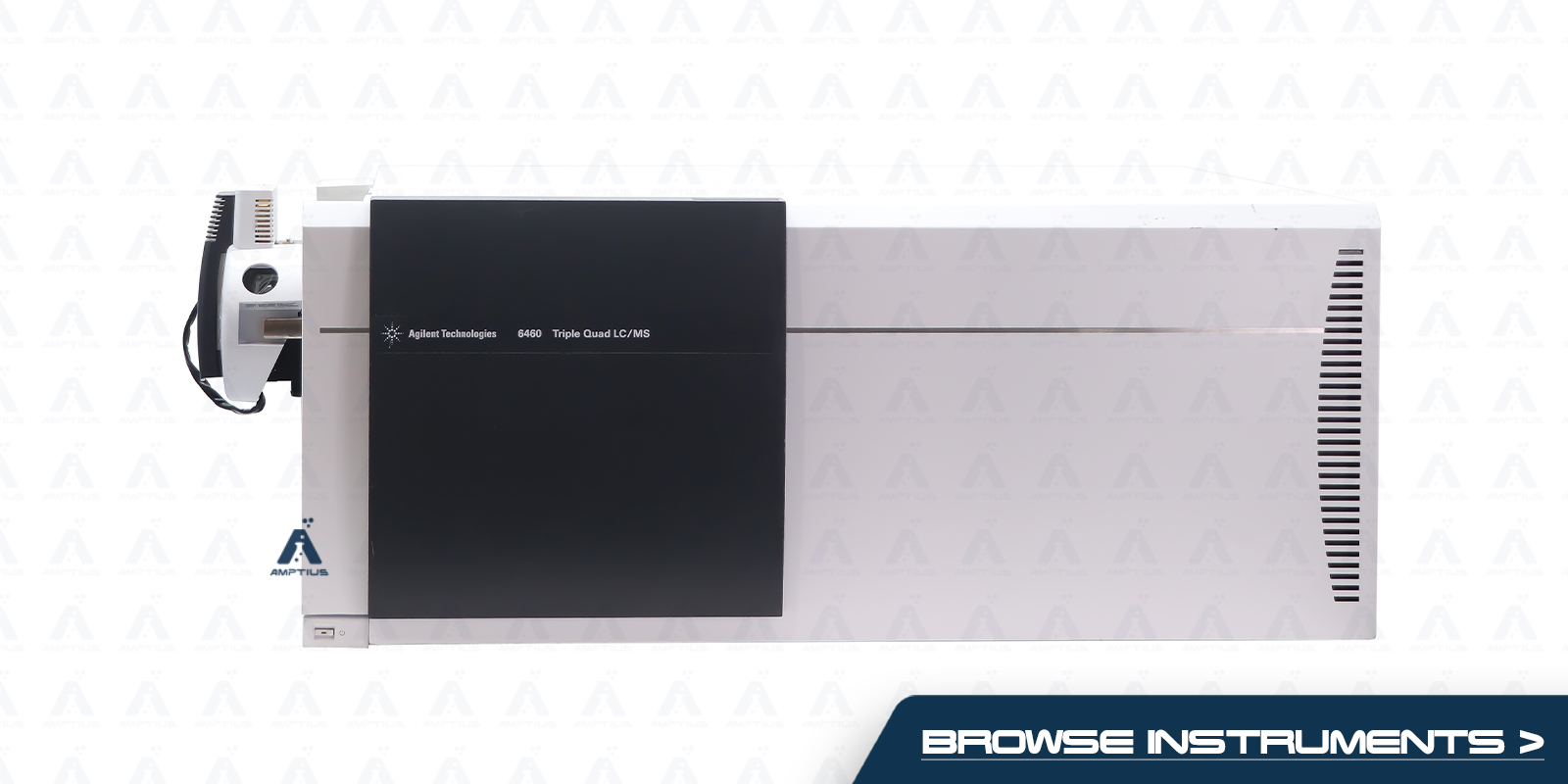
| 1260 Infinity binary pump, ALS autosampler, column compartment, PFAS background controls | A complete triple quadrupole system with Agilent Jet Stream ESI and a mass range of m/z 5 to 3,000. | |
| 1260 Infinity II binary pump, Vialsampler, PFAS background controls | A higher-sensitivity iFunnel platform for labs targeting low reporting levels. The DAD is not required by the method. | |
| 1260 Infinity binary pump, 1200 autosampler, column compartment, PFAS background controls | An iFunnel triple quadrupole with a complete binary LC stack. The VWD is not required by the method. | |
| Vanquish binary pump, split sampler, column compartment, HESI source, PFAS background controls | Includes a binary UHPLC stack and a mass range of m/z 5 to 3,000. The VWD is not required by the method. | |
| Pair with a compatible binary LC, PFAS background controls | A mass spectrometer-only option for labs that already have a compatible Agilent LC. |
Confirm each system’s negative ion performance, m/z 80 response, and PFAS background during configuration. Our team can review LC hardware, delay column options, and your target reporting levels before you buy.
Don’t see the right configuration in the store? Tell us what you need, and we’ll check the available options.
Choosing a configuration
Start with your target reporting levels, sample load, and existing LC.
- Published method data: compare the Agilent Ultivo and Waters Xevo TQ-S micro if vendor-published EPA 537.1 work matters to your team.
- Lower capital cost: compare complete systems such as the Agilent 6460 with 1260 HPLC.
- Lower reporting targets: consider a higher-sensitivity platform, then verify your MRLs and system background.
- Existing LC: consider a mass spectrometer-only option after confirming LC compatibility and PFAS background controls.
- Compliance monitoring: confirm laboratory certification and reporting requirements with your EPA or state program.
- Other drinking water PFAS: review EPA Method 533 if you need additional shorter-chain compounds.
Amptius Certified Refurbished Instruments
AMP Tech offers refurbished analytical instruments and can help you configure a refurbished LC-MS/MS system for EPA Method 537.1. Amptius Certified refurbished instruments go through a six-stage certification process, including repair, analytical testing, and documentation before shipment, giving your lab a lower-cost alternative to buying new.
Certified instruments include a 6-month limited warranty covering parts and labor for covered defects in materials or workmanship.
AMP Guard Service Plans
For support beyond the warranty, AMP Guard offers optional service plans with remote support, service facility repair, and on-site options. Coverage depends on the plan and instrument.
Request a quote with your sample volume, reporting levels, and preferred platform. Our documentation and technical support can help your team prepare for method validation and ongoing QC.
Sell or Trade in your lab equipment
Upgrading your lab or clearing surplus equipment? AMP Tech buys GC/MS, LC/MS and triple quad, HPLC, ICP-OES and ICP-MS, and FTIR and spectroscopy systems, along with supporting lab equipment. We buy everything from a single instrument to an entire lab, anywhere in the country.
You get a firm, no-obligation offer within 48 hours with no fees or commission. Our team handles decommissioning, packing, and removal, and you can apply your equipment’s value toward an Amptius Certified instrument.
Sell your equipment or check your trade-in value.