
EPA Method 521 Instrumentation Guide
EPA Method 521 is a U.S. EPA-approved procedure designed to detect and quantify nitrosamines in drinking water using gas chromatography-tandem mass spectrometry (GC-MS/MS). This method is critical for monitoring carcinogenic nitrosamines at ultra-trace levels and ensuring compliance with regulatory limits. It relies on advanced instrumentation with chemical ionization (CI), large-volume injection capability, and precise multiple reaction monitoring (MRM) for reliable quantification of target analytes.
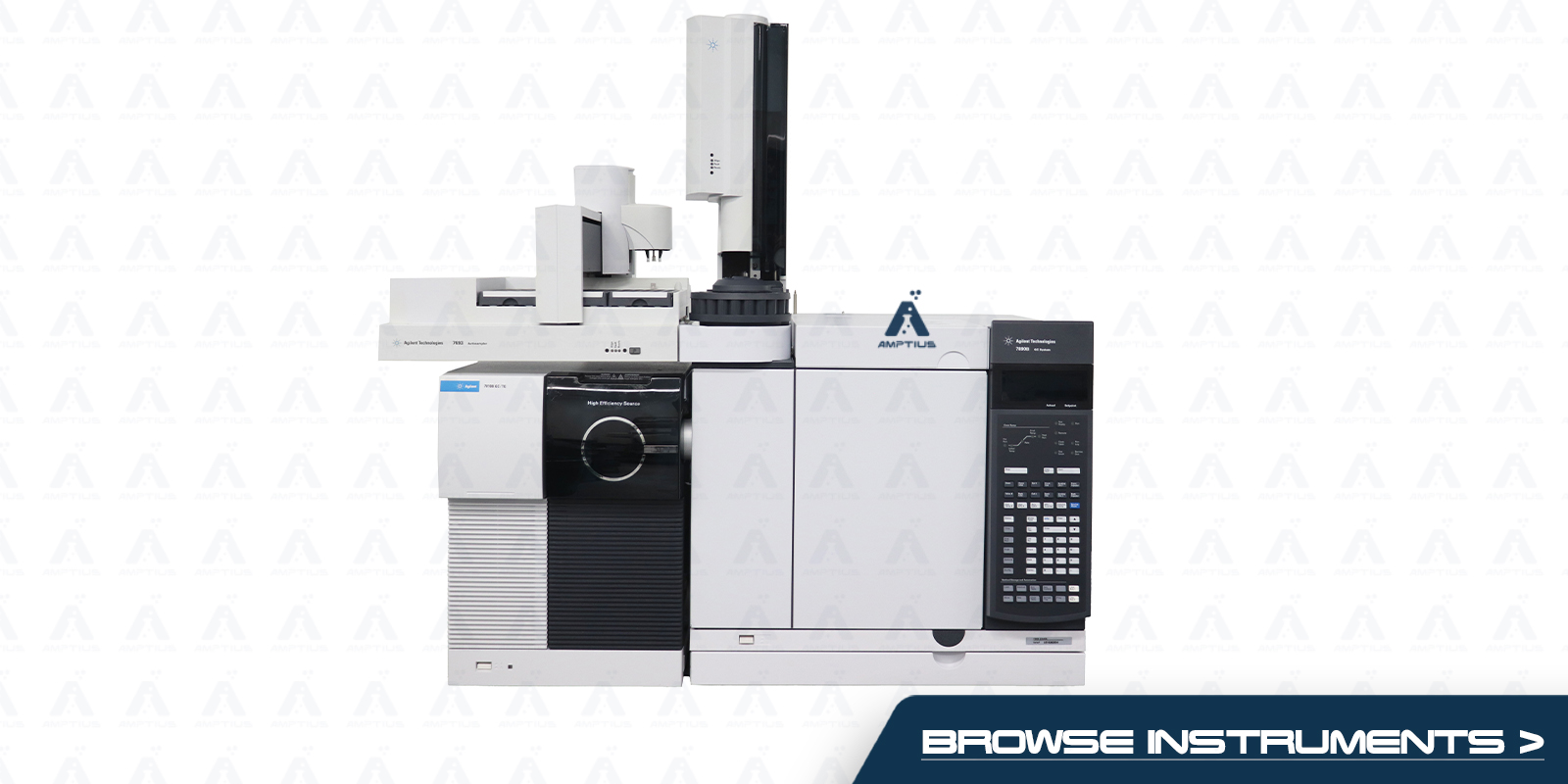
To meet the performance criteria of EPA Method 521, laboratories must utilize high-sensitivity GC-MS/MS systems that deliver low detection limits, excellent reproducibility, and robust automation. Choosing the right analytical instrument is key to maintaining data quality, improving lab efficiency, and staying in compliance with EPA standards. Below, we explore high-performance systems from Agilent, Waters, PerkinElmer, Thermo Scientific, and Bruker—all of which are fully compatible with the method’s stringent technical and regulatory requirements.
Please click here to learn more about Method 521.
Agilent 7890B / 7010B Triple Quadrupole GC-MS with 7693 Autosampler for EPA Method 521
The Agilent 7890B GC paired with the 7010B Triple Quadrupole Mass Spectrometer offers unmatched sensitivity for nitrosamine detection in drinking water. This configuration meets all EPA Method 521 requirements, including chemical ionization (CI), large-volume injection, and MRM. The system delivers accurate results at trace levels, providing regulatory-ready performance for high-throughput laboratories. Its advanced electronic pneumatic control enhances chromatographic precision, making it ideal for environmental testing where low detection limits are mandatory.
With the Agilent 7693 Autosampler, laboratories gain consistent, hands-free injection for reproducible sample introduction. The MassHunter software platform supports automated data analysis, calibration checks, and EPA-compliant reporting. Together, these features improve laboratory productivity while maintaining data integrity. This GC-MS/MS system is highly recommended for labs requiring reliable quantification, superior sensitivity, and efficient workflow for regulatory monitoring of nitrosamines in drinking water under EPA Method 521.
Waters Xevo TQ-GC with Agilent 8890 GC and PAL RSI Autosampler for EPA Method 521
The Waters Xevo TQ-GC, integrated with the Agilent 8890 GC and PAL RSI Autosampler, provides a robust platform for sensitive nitrosamine analysis. Designed for EPA Method 521, this system supports chemical ionization and offers enhanced MRM selectivity, crucial for low-level detection in complex matrices. Its advanced ion optics reduce noise while increasing analytical precision, making it ideal for labs that prioritize both performance and regulatory compliance in drinking water testing.
The PAL RSI Autosampler streamlines large-volume injections, delivering consistent throughput across multiple runs. Combined with Waters’ intuitive software for method development and batch analysis, this system minimizes manual intervention while improving data traceability. Whether used in public utilities, contract labs, or research environments, the Xevo TQ-GC with Agilent 8890 GC provides scalable, high-performance capabilities tailored for EPA Method 521 applications and nitrosamine monitoring workflows.
PerkinElmer Clarus 690 GC with Clarus SQ 8 T Triple Quadrupole MS for EPA Method 521
The PerkinElmer Clarus 690 GC coupled with the Clarus SQ 8 T Triple Quadrupole MS is engineered for precise, cost-effective nitrosamine detection. It supports both electron ionization (EI) and chemical ionization (CI), aligning with EPA Method 521 requirements. The system’s rapid scanning capabilities enable efficient MRM analysis, allowing environmental labs to analyze multiple compounds with confidence. Its rugged design ensures long-term operation, even under demanding high-throughput conditions common in regulatory monitoring.
Integrated with TotalChrom software and compatible with Turbomatrix sample handling systems, this PerkinElmer setup simplifies complex workflows. The software automates data acquisition, calibration, and report generation, improving compliance documentation and minimizing operator error. For labs needing dependable nitrosamine detection in drinking water, the Clarus 690 and SQ 8 T combination offers a strong balance of sensitivity, versatility, and regulatory-grade performance in an accessible, easy-to-maintain format.
Thermo Scientific TSQ 9000 Triple Quadrupole GC-MS/MS for EPA Method 521
The Thermo Scientific TSQ 9000 is a powerful GC-MS/MS system that meets the sensitivity and selectivity demands of EPA Method 521. Featuring full support for chemical ionization and optimized MRM transitions, it provides ultra-low detection limits for nitrosamines. Coupled with the TRACE 1310 GC and TriPlus RSH autosampler, it supports automated large-volume injection, minimizing variability and operator workload. This configuration is particularly suited for high-throughput laboratories focused on environmental and compliance-based testing.
Equipped with Thermo’s Chromeleon CDS software, the TSQ 9000 system simplifies method development, data processing, and regulatory reporting. It offers real-time system monitoring and automated quality control checks, enhancing operational efficiency. The platform’s rugged reliability and flexible workflow options make it a strategic investment for labs aiming to exceed regulatory standards in nitrosamine monitoring under EPA Method 521, while reducing turnaround time and maximizing laboratory productivity.
Bruker SCION TQ-Premium GC-MS/MS System for EPA Method 521
The Bruker SCION TQ-Premium GC-MS/MS system is designed to deliver precise, regulatory-grade nitrosamine analysis under EPA Method 521. Its advanced triple quadrupole design ensures exceptional sensitivity and accuracy through fast, noise-reducing MRM transitions. With chemical ionization capabilities and full support for large-volume injection, this system meets the strict analytical standards required for nitrosamine quantification in drinking water. It’s an excellent solution for laboratories prioritizing both performance and ease of maintenance.
Paired with the SCION 436 or 456 GC and the CP-8400 Autosampler, the TQ-Premium system offers flexibility and automation for consistent sample handling. Bruker’s Compass CDS software supports EPA-compliant workflows, including QA/QC validation, calibration tracking, and comprehensive data review. For environmental compliance labs and utilities seeking reliable, high-throughput instruments for trace-level nitrosamine detection, the SCION TQ-Premium offers powerful capabilities backed by robust engineering and user-friendly operation.
Choosing the Right GC-MS/MS System for EPA Method 521
- Agilent 7890B / 7010B – Reliable high-sensitivity platform with efficient CI and MRM detection.
- Waters Xevo TQ-GC – High-resolution detection with robust automation for large-volume injections.
- PerkinElmer Clarus SQ 8 T – Versatile and cost-effective solution with full regulatory support.
- Thermo TSQ 9000 – Ideal for automated, high-throughput labs focused on EPA compliance.
- Bruker SCION TQ-Premium – Rugged system with user-friendly automation and stable long-term performance.
Each GC-MS/MS system featured here is fully compatible with the technical and regulatory requirements of EPA Method 521. Whether your laboratory prioritizes throughput, sensitivity, or ease of compliance, these instruments provide powerful and reliable options for nitrosamine detection in drinking water. Contact us today to explore our refurbished instrument inventory and discover the ideal solution for your lab’s EPA 521 testing program.