
AOAC Method SMPR 2024.002 Instrumentation Guide
Standard Method Performance Requirements (SMPRs) for Determination of Trace Elemental Contaminants in Food and Beverages
AOAC SMPR 2024.002 defines performance standards for detecting trace metals like arsenic, cadmium, lead, and mercury in food and beverages. Laboratories must meet strict criteria for quantitation limits, precision, and recovery. Instruments should detect elements at sub-ppb levels while managing matrix interferences. This guide presents ICP-MS systems from trusted manufacturers. Each system meets or exceeds SMPR 2024.002 expectations. They deliver reliable results across diverse food types, including water, juice, infant formula, and grain-based products.
ICP-MS systems are ideal for multi-element trace metal analysis in compliance with AOAC SMPR 2024.002. These instruments must achieve LOQs of 10 ppb or lower for most metals, and 2 ppb for mercury. Labs also need high matrix tolerance, accurate calibration, and automated quality control. The models featured here—from PerkinElmer, Agilent, Thermo Scientific, Shimadzu, and Analytik Jena—support robust workflows. They help food safety laboratories deliver accurate results quickly and efficiently under regulatory conditions.
Please click here to learn more about AOAC Method SMPR 2024.002
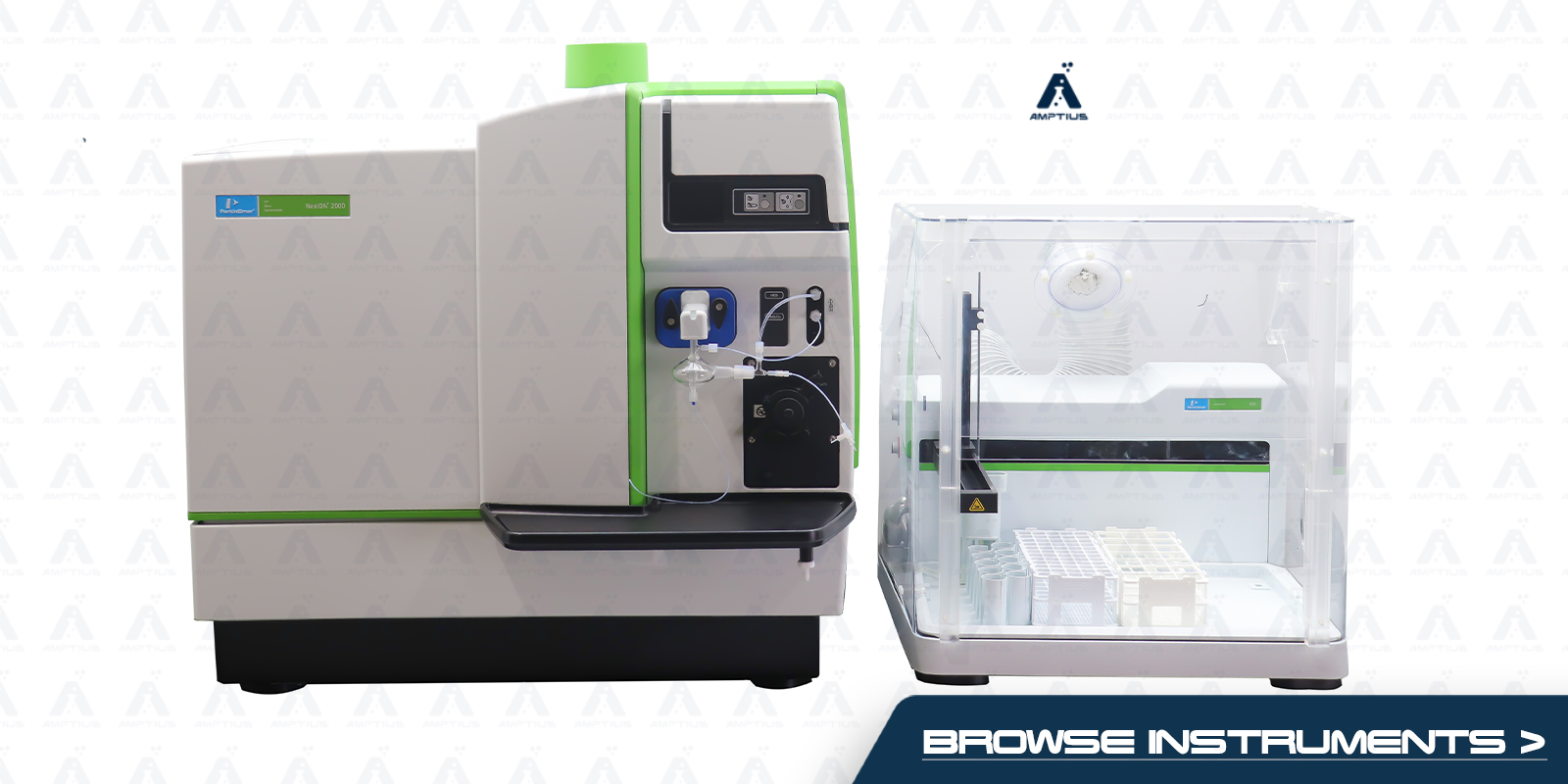
ICP-MS NexION 2000 B PerkinElmer Instrument w/ Autosampler, Chiller & UPS for AOAC Method SMPR 2024.002
The NexION 2000 B from PerkinElmer is built for ultra-trace metal analysis in food and beverage testing. It includes an autosampler, chiller, and UPS to support stable and automated operations. Universal Cell Technology (UCT) handles spectral interferences by switching between Standard, Collision, and Reaction modes. This ensures accurate measurements of metals like arsenic and cadmium in complex matrices. The system performs consistently across various sample types without compromising sensitivity or speed.
This instrument includes All Matrix Solution (AMS) mode, which allows direct analysis of high-TDS samples. It also features Extended Dynamic Range (EDR) technology that supports high and low concentration detection within one run. Automated QC features simplify compliance and verification. The NexION 2000 B is widely adopted in food safety labs for its accuracy, durability, and low detection limits. It meets every requirement outlined in SMPR 2024.002 and offers excellent reproducibility over time.
Agilent 7900 ICP-MS for AOAC Method SMPR 2024.002
The Agilent 7900 ICP-MS is a high-performance system designed for low-level elemental analysis. It features the ORS4 collision cell, which removes polyatomic interferences using helium mode. This results in accurate, interference-free results. Its wide dynamic range allows measurement of both trace and elevated concentrations. With ppt-level detection, the 7900 is ideal for monitoring toxic metals in food and beverages with confidence. Labs benefit from its strong matrix tolerance and consistent signal stability.
This model includes Ultra High Matrix Introduction (UHMI) technology. UHMI reduces sample dilution and supports up to 25% total dissolved solids. Intelligent auto-calibration and smart diagnostics simplify workflows and reduce downtime. Laboratories using the Agilent 7900 can easily comply with SMPR 2024.002 standards. It provides speed, reliability, and data accuracy across multiple food matrices. The system’s intuitive software makes it ideal for both routine and high-complexity regulatory testing programs.
Thermo Scientific iCAP RQ ICP-MS for AOAC Method SMPR 2024.002
The iCAP RQ ICP-MS by Thermo Scientific is a compact, robust system for trace metal testing. It includes QCell technology for interference control in complex samples. This enables reliable detection of regulated elements at ppb and ppt levels. The system’s stability and reproducibility make it ideal for food safety labs. Its automated method setup reduces training needs and improves productivity across multi-user workflows.
The iCAP RQ features a high-efficiency interface and collision cell that supports accurate multi-element quantification. It delivers precise results in high-matrix food products such as juices, grains, and dairy. With intelligent controls and minimal manual setup, it ensures a smooth and efficient workflow. Its data quality and throughput meet the strict expectations set by SMPR 2024.002. The system is widely adopted in labs focused on compliance and public health testing.
Shimadzu ICPMS-2030 for AOAC Method SMPR 2024.002
The Shimadzu ICPMS-2030 combines excellent sensitivity with user-friendly operation. It features Eco Mode for reduced gas consumption, making it cost-efficient for long-term use. Its collision cell technology helps minimize false positives from polyatomic interferences. This ensures accurate detection of trace elements like lead, cadmium, and mercury. The system is well-suited for routine and regulatory food safety applications.
The 2030 includes automatic torch alignment and internal standard correction to ensure consistent results. Pre-set methods reduce setup time and help new users achieve reliable data faster. It is optimized for mercury analysis and demonstrates reliable recovery and precision. The ICPMS-2030 supports low detection limits and strong reproducibility. It complies with AOAC SMPR 2024.002 and delivers dependable results across a wide range of sample types.
Analytik Jena PlasmaQuant® MS Elite for AOAC Method SMPR 2024.002
The PlasmaQuant MS Elite is engineered for ultra-trace metal analysis. Its unique ReflexION ion mirror ensures high resolution and sensitivity. This allows detection of elements at ppt levels with superior signal clarity. The instrument performs well with complex matrices, making it ideal for food and beverage testing. Its fast acquisition speed also improves throughput in busy lab environments.
This model includes automated calibration, internal standard correction, and high-speed scanning. It excels at handling high-throughput sample volumes without sacrificing accuracy. Labs benefit from low detection limits and strong signal stability. These features make it compliant with SMPR® 2024.002 for food safety testing. The PlasmaQuant MS Elite is a strong choice for labs that require maximum sensitivity and precision across varied matrices.
Choosing the Right ICP-MS System for AOAC SMPR 2024.002
- For high sensitivity and matrix flexibility: NexION 2000 B and Agilent 7900 offer robust performance and automation options.
- For routine multi-element workflows: Thermo iCAP RQ and Shimadzu ICPMS-2030 deliver stable, reproducible results.
- For ultra-trace detection in complex matrices: PlasmaQuant MS Elite provides precision and high throughput.
AOAC SMPR 2024.002 requires accurate and reliable trace metal detection across diverse food and beverage samples. Each system listed here meets or exceeds those requirements. Whether your lab focuses on compliance testing or advanced elemental profiling, these instruments deliver the sensitivity, reproducibility, and workflow efficiency needed for modern food safety programs. Their advanced capabilities ensure confident reporting of toxic elements in accordance with AOAC guidelines.
Need help choosing the right ICP-MS system for AOAC SMPR 2024.002? We provide expert guidance on instrument selection, system integration, and technical support. Our certified systems are fully tested and optimized for food safety applications. Contact us today to learn more about available models, and automation options, to help your lab meet regulatory and performance goals with confidence.
