
AOAC Method SMPR 2024.001 Instrumentation Guide
Standard Method Performance Requirements (SMPRs) for Selected Pesticides in Color Additives from Crop-Based Sources
AOAC SMPR 2024.001 defines performance standards for detecting selected pesticide residues in color additives from crop-based sources such as turmeric, beet juice, and paprika. These botanical ingredients often contain complex co-extractives, requiring analytical systems with high sensitivity and exceptional selectivity. Laboratories must use GC-MS/MS or LC-MS/MS systems that consistently deliver low detection limits, precise recovery, and strong matrix interference control. The following instruments are fully compatible with AOAC SMPR 2024.001 for routine regulatory and quality assurance testing.
The SMPR allows either gas chromatography or liquid chromatography paired with tandem mass spectrometry, depending on the pesticide’s volatility and polarity. GC-MS/MS systems are ideal for non-polar and thermally stable pesticides, while LC-MS/MS systems offer advantages for polar or thermally labile compounds. Each platform below meets the method’s required limit of quantitation of 10 µg/kg or lower, with acceptable recovery (70–120%) and precision (RSDr ≤ 15%). These instruments ensure high-throughput analysis with reliable quantitation across diverse color additive matrices.
Please click here to learn more about AOAC Method SMPR 2024.001
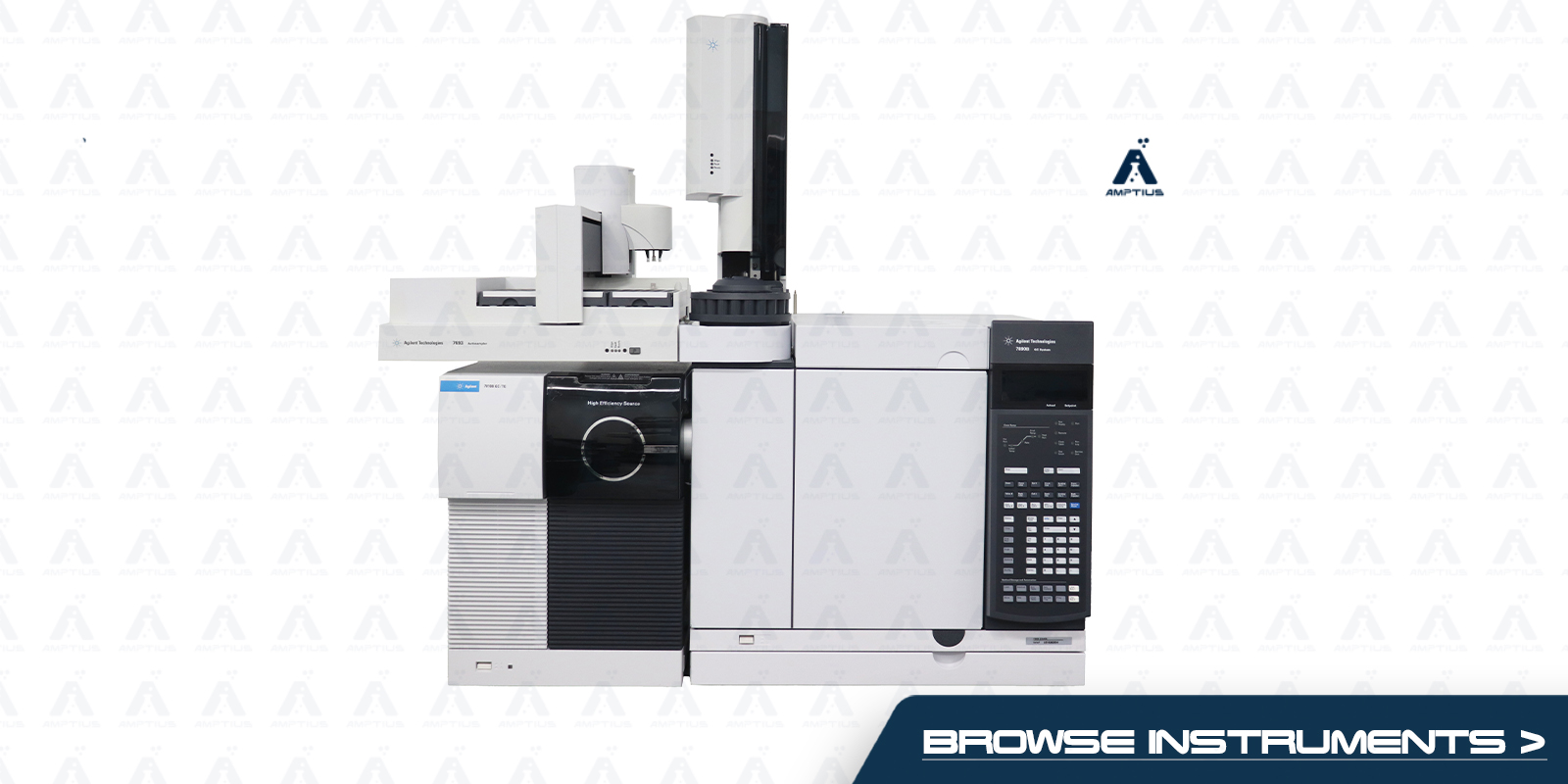
Agilent 7890B / 7010B Triple Quadrupole GC-MS/MS with 7693 Autosampler for AOAC Method SMPR 2024.001
The Agilent 7890B GC paired with the 7010B Triple Quadrupole Mass Spectrometer is a proven solution for trace pesticide analysis in botanical color additives. This system offers sub-ppb sensitivity and precise MRM transitions for targeted quantitation of organochlorines, organophosphates, and pyrethroids. The 7693 Autosampler enhances reproducibility and automation, streamlining the injection process for high-throughput workflows. Its robust hardware and software integration make it suitable for demanding regulatory environments.
Built for food safety and environmental testing, the 7010B system ensures low detection limits and strong selectivity in complex matrices like turmeric and beet. Its stable ion source, collision cell optimization, and retention time locking technology provide excellent reproducibility. Laboratories rely on this platform to meet AOAC performance requirements, including recovery and precision targets. It is an ideal GC-MS/MS choice for regulated pesticide residue testing under SMPR 2024.001.
Waters Xevo TQ-S Micro Triple Quadrupole LC-MS/MS with ACQUITY I Class Front End for AOAC Method SMPR 2024.001
The Waters Xevo TQ-S Micro LC-MS/MS system, paired with the ACQUITY I-Class UPLC, provides exceptional sensitivity for polar and thermally labile pesticides. It excels at resolving analytes in complex botanical matrices and is ideal for meeting the LOQ and precision targets in AOAC SMPR 2024.001. Its small footprint, high-resolution chromatography, and advanced signal stability make it a powerful addition to any food safety laboratory.
MRM capabilities allow for precise detection of multiple pesticide classes with minimal matrix interference. Its ACQUITY I-Class UPLC ensures sharp peak shapes and separation of co-extractives from analytes. This LC-MS/MS platform is particularly valuable for residues that degrade at GC temperatures. Laboratories benefit from its fast cycle times, reliable data integrity, and regulatory-grade performance in challenging sample types.
PerkinElmer QSight 420 LC-MS/MS Triple Quad System with UHPLC for AOAC Method SMPR 2024.001
The PerkinElmer QSight 420 LC-MS/MS is a versatile system for detecting a broad range of pesticide residues. Its dual-source ESI/APCI technology allows flexible ionization for different analyte classes. When paired with a UHPLC front end, the system delivers precise, fast separations even in matrices like beet juice or turmeric extract. It is designed to meet LOQ and recovery targets set by AOAC SMPR 2024.001.
Its autosampler, integrated software, and user-friendly interface make it accessible for both routine and advanced laboratories. The QSight 420 offers stable signal output and low background noise, improving sensitivity for difficult targets. It’s a strong option for labs seeking an affordable, high-performance LC-MS/MS system that complies with AOAC pesticide residue method requirements.
Thermo Scientific TSQ 9000 GC-MS/MS System for AOAC Method SMPR 2024.001
The Thermo Scientific TSQ 9000 GC-MS/MS system delivers high-sensitivity, high-throughput pesticide residue analysis. Equipped with a triple quadrupole analyzer and ExtractaBrite ion source, this platform offers excellent detection capabilities for regulated pesticides in crop-based color additives. It supports fast, reliable analysis of volatile and semi-volatile pesticides, including DDT and chlorpyrifos, even in matrices with pigments or essential oils.
With advanced scheduling, automated method setup, and robust matrix interference handling, the TSQ 9000 ensures precise quantitation across multiple analytes. It supports stringent LOQ and RSDr specifications, meeting the AOAC’s minimum method performance standards. Its high uptime and consistent performance make it an excellent fit for laboratories requiring continuous, regulated testing. This platform ensures complete confidence in pesticide monitoring for complex botanical samples.
Shimadzu GCMS-TQ8050 NX for AOAC Method SMPR 2024.001
The Shimadzu GCMS-TQ8050 NX offers ultra-trace detection with triple quadrupole precision and excellent reproducibility. Its high-speed scanning and advanced MRM mode support detection of challenging pesticide classes in pigment-rich matrices. Ideal for crop-based color additive testing, it combines low detection limits with robust chromatographic separation to meet AOAC SMPR 2024.001 specifications.
Designed for high-throughput laboratories, the TQ8050 NX provides automatic calibration, ion source stability, and simplified maintenance. Its intelligent software and sensitive detector enable confident quantitation of low-level pesticide residues with strong matrix tolerance. Whether analyzing turmeric, beet juice, or other plant extracts, this platform delivers the accuracy and selectivity required for AOAC-compliant pesticide residue analysis.
SCIEX Triple Quad 6500+ LC-MS/MS for AOAC Method SMPR 2024.001
The SCIEX Triple Quad 6500+ LC-MS/MS system sets the standard for ultra-low-level pesticide detection. Its Turbo V ion source and Scheduled MRM Pro ensure precise quantitation, even in difficult botanical samples. Designed for high-sensitivity applications, it reliably meets the LOQ and RSDr criteria defined by AOAC SMPR 2024.001. It is ideal for labs testing a wide panel of pesticide residues in pigment-rich or oily matrices.
This system handles high-throughput workflows with ease, delivering excellent peak fidelity and long-term consistency. The 6500+ supports advanced data processing and quantitation software for compliance with AOAC validation requirements. Whether used for targeted screening or confirmatory analysis, it provides the robust performance needed for pesticide monitoring in crop-based colorants under regulatory standards.
Choosing the Right Instrument for AOAC SMPR 2024.001
- For GC-compatible pesticides: Agilent 7890B/7010B, Thermo TSQ 9000, and Shimadzu TQ8050 NX offer robust GC-MS/MS solutions.
- For polar or thermally labile compounds: Waters Xevo TQ-S Micro, SCIEX 6500+, and PerkinElmer QSight 420 provide LC-MS/MS flexibility.
- For high-throughput or multi-residue labs: All systems listed offer automation options, excellent matrix tolerance, and precision.
AOAC SMPR 2024.001 requires selective and sensitive detection of diverse pesticide residues in complex botanical color additives. Whether using gas or liquid chromatography, your system must meet strict LOQ, recovery, and precision thresholds. The instruments listed above are fully aligned with these method requirements and provide the speed, accuracy, and regulatory readiness needed for confident pesticide monitoring. Each platform supports full compliance in both routine and confirmatory analytical workflows.
Need help selecting the best instrument for AOAC SMPR 2024.001 compliance? Contact our team for expert recommendations on GC-MS/MS or LC-MS/MS systems tailored to your sample types and testing volume. We offer certified refurbished instruments and technical consultation to help your lab meet regulatory standards with confidence and efficiency.
