
AOAC Method SMPR 2023.005 Instrumentation Guide
Standard Method Performance Requirements (SMPRs) for Determination of Heavy Metals in Cannabis-Containing Beverages
AOAC SMPR 2023.005 establishes the performance criteria for determining arsenic, cadmium, lead, and mercury in cannabis-containing beverages. These trace metals require instrumentation capable of ultra-low detection limits and exceptional matrix tolerance due to the complexity of cannabinoid-infused drinks. ICP-MS systems are the preferred technology, offering the sensitivity, selectivity, and throughput needed for compliance. The instruments below are fully compatible with AOAC SMPR 2023.005, supporting laboratories in achieving reliable, high-confidence results across regulatory and quality assurance workflows.
To meet the stringent LOQs—0.1 µg/L for As and Pb, 0.03 µg/L for Cd and Hg—instrumentation must deliver high sensitivity, minimal interference, and precision within RSDr ≤ 7%. Each platform listed achieves these benchmarks using advanced collision/reaction cell technologies, matrix-tolerant hardware, and automation options. These systems are suitable for routine analysis and method validation in the cannabis testing space, ensuring consistent performance across challenging beverage matrices.
Please click here to learn more about AOAC Method SMPR 2023.005
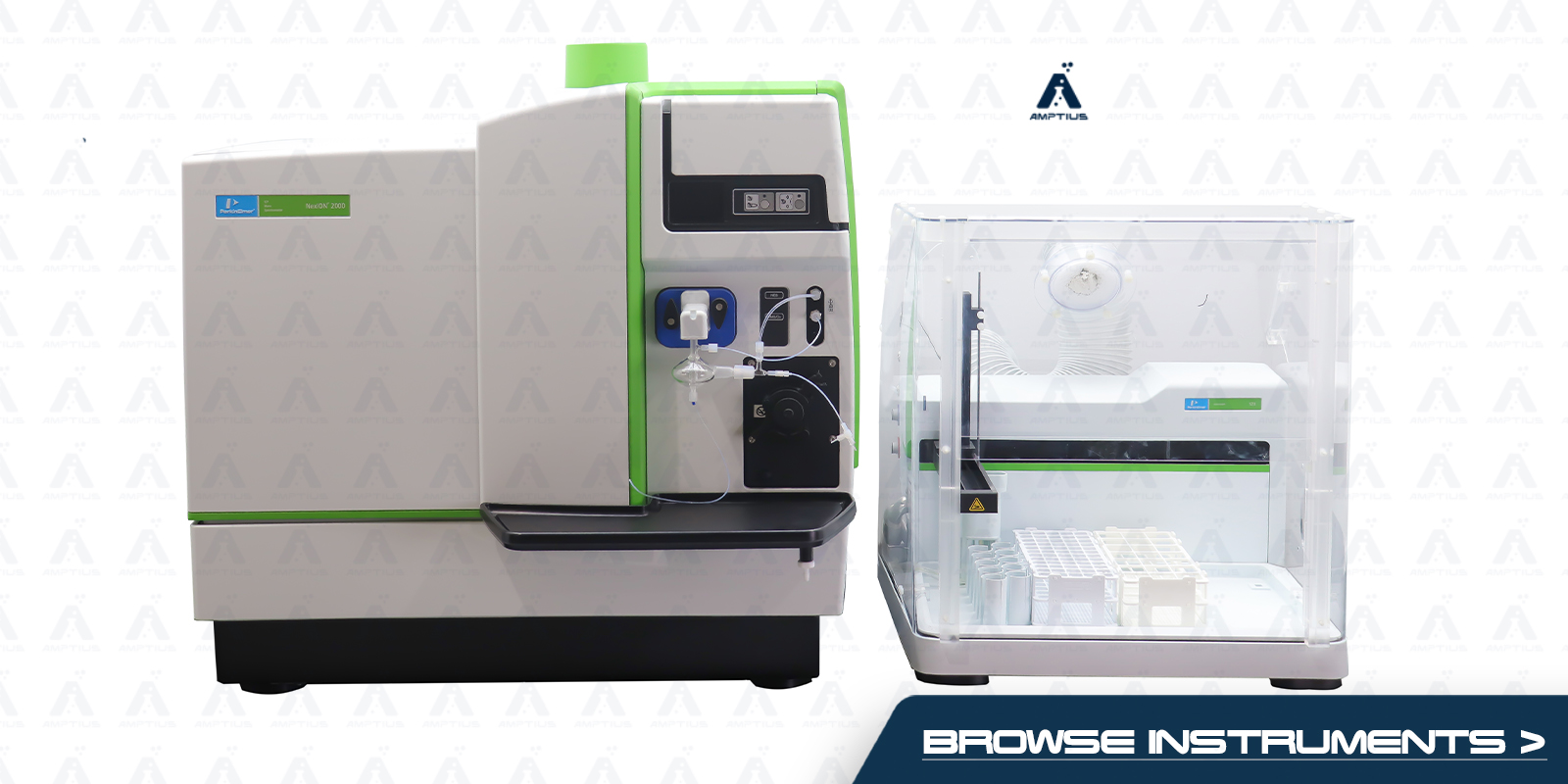
PerkinElmer NexION 2000 B ICP-MS with Autosampler, Chiller & UPS for AOAC Method SMPR 2023.005
The PerkinElmer NexION 2000 B ICP-MS is engineered for ultra-trace metal detection, making it a reliable choice for analyzing cannabis-infused beverages. Its Universal Cell Technology minimizes spectral interferences, ensuring precise quantification of As, Cd, Pb, and Hg even in pigment- and oil-rich matrices. The included autosampler, chiller, and UPS support stable, uninterrupted operation, reducing variability and enhancing system uptime in regulated lab environments.
This platform’s versatility is further supported by its robust plasma system and intuitive Syngistix software, making it ideal for high-throughput cannabis testing labs. With proven sensitivity below AOAC-required LOQs, the NexION 2000 B meets all performance targets for SMPR 2023.005. Laboratories benefit from its combination of accuracy, automation, and operational reliability, especially when testing beverage matrices with variable cannabinoid and terpene content.
Agilent 7850 ICP-MS for AOAC Method SMPR 2023.005
The Agilent 7850 ICP-MS delivers precise, interference-free quantification of trace metals in cannabis beverages. Its integrated Octopole Reaction System (ORS4) efficiently removes polyatomic interferences, ensuring accurate results down to sub-ppb levels. This platform is optimized for high-matrix tolerance and includes built-in intelligence to reduce errors and support regulatory compliance, aligning well with AOAC SMPR 2023.005 requirements.
With smart functionalities like automatic tuning and real-time interference checks, the 7850 minimizes manual intervention and supports data integrity. It achieves consistent recoveries and LOQs for heavy metals in challenging matrices like cannabinoid-infused drinks. Agilent’s MassHunter software also simplifies quantitation and validation workflows, making the 7850 a trusted solution for AOAC-aligned cannabis beverage testing.
Thermo Scientific iCAP RQ ICP-MS for AOAC Method SMPR 2023.005
The Thermo Scientific iCAP RQ ICP-MS system provides ultra-sensitive trace metal detection in complex beverage matrices. It features QCell collision/reaction cell technology that removes interferences for accurate quantitation of heavy metals required under SMPR 2023.005. The iCAP RQ also supports fast sample throughput with stable plasma performance, which is crucial for routine cannabis beverage testing.
This system achieves sub-LOQ detection for arsenic, cadmium, lead, and mercury, offering excellent repeatability and robustness. The intuitive Qtegra software platform enhances workflow automation, making it easy to meet AOAC validation and reporting standards. Thermo’s iCAP RQ is ideal for regulated laboratories requiring high-sensitivity instrumentation that performs reliably under demanding cannabis matrix conditions.
Shimadzu ICPMS-2030 for AOAC Method SMPR 2023.005
The Shimadzu ICPMS-2030 is a compact and powerful system that delivers sub-ppb detection for heavy metals in cannabis-infused beverages. Its Advanced Scanning Ion Lens and collision/reaction cell ensure effective interference removal, supporting compliance with AOAC SMPR 2023.005 criteria. This system is ideal for testing matrices that include pigments, oils, and co-extracted cannabinoids.
The ICPMS-2030 provides automated optimization and intelligent background correction, reducing the need for operator intervention. It features a user-friendly interface and robust hardware, enabling long-term stability and reproducible results. This system offers excellent performance for labs focused on regulated testing and ensures recovery and precision within AOAC-defined thresholds.
Analytik Jena PlasmaQuant MS Elite for AOAC Method SMPR 2023.005
The Analytik Jena PlasmaQuant MS Elite is designed for labs requiring extreme sensitivity and throughput in trace metal analysis. It offers industry-leading detection limits, well below the LOQ thresholds specified in AOAC SMPR 2023.005. The system features a dual-curve plasma and efficient ion optics for unmatched signal stability, even in cannabinoid-rich matrices.
Its intuitive software supports easy method development and real-time validation, streamlining compliance with AOAC performance standards. Whether analyzing turmeric-based cannabis beverages or terpene-rich drinks, this system delivers precise and reliable results. Laboratories benefit from its high-resolution capabilities, which minimize interference and enhance quantitation of regulated heavy metals.
SCIEX ICP-MS 2030 (co-branded with Shimadzu) for AOAC Method SMPR 2023.005
The SCIEX ICP-MS 2030, developed in collaboration with Shimadzu, is a reliable and high-precision platform for heavy metal testing in cannabis-based beverages. It includes powerful reaction cell technology and advanced ion optics to reduce background noise and achieve the required sub-ppb sensitivity for AOAC SMPR 2023.005.
Its streamlined software interface and low-maintenance design enable consistent performance across variable matrices. The ICP-MS 2030 is engineered for labs seeking cost-effective, compliant instrumentation for routine regulatory testing. It supports rapid calibration, reproducibility, and recovery validation, making it a strong candidate for cannabis labs focused on method-compliant heavy metal screening.
Choosing the Right ICP-MS System for AOAC SMPR 2023.005
- Best for matrix-rich cannabis beverages: PerkinElmer NexION 2000 B and Shimadzu ICPMS-2030 deliver strong matrix tolerance with accurate LOQ performance.
- High-throughput and automation-friendly: Agilent 7850 and Thermo iCAP RQ systems offer automated optimization and software-driven compliance checks.
- Ultra-trace detection and elite sensitivity: PlasmaQuant MS Elite and SCIEX 2030 provide sub-ppb quantitation with exceptional long-term stability.
To meet AOAC SMPR 2023.005 standards, laboratories require selective and sensitive detection of heavy metals in complex cannabis beverage matrices. The systems listed above meet or exceed the method’s performance requirements for detection limits, precision, and recovery. Whether you need high-throughput automation, ultra-trace sensitivity, or robust matrix handling, these platforms support full compliance for regulated metal testing. We offer certified refurbished analytical instruments to help your lab achieve AOAC compliance efficiently and affordably. Contact us today for expert guidance, customized recommendations, and affordable solutions tailored to your testing needs.
