
AOAC Method SMPR 2023.001 Instrumentation Guide
Standard Method Performance Requirements (SMPRs) for Determination of Pesticides in Cannabis-Containing Beverages
AOAC SMPR 2023.001 outlines stringent method performance requirements for detecting pesticide residues in cannabis-containing beverages. This category includes carbonated drinks, herbal teas, fruit juices, and tincture-based formulations. The SMPR supports analytical workflows using LC-MS/MS or GC-MS/MS based on the analyte’s volatility and polarity. Systems must achieve a limit of quantitation (LOQ) of 10 µg/kg or less, while maintaining selectivity, recovery, and matrix tolerance. Instruments listed here meet or exceed AOAC expectations and deliver compliance-ready data for cannabis safety laboratories.
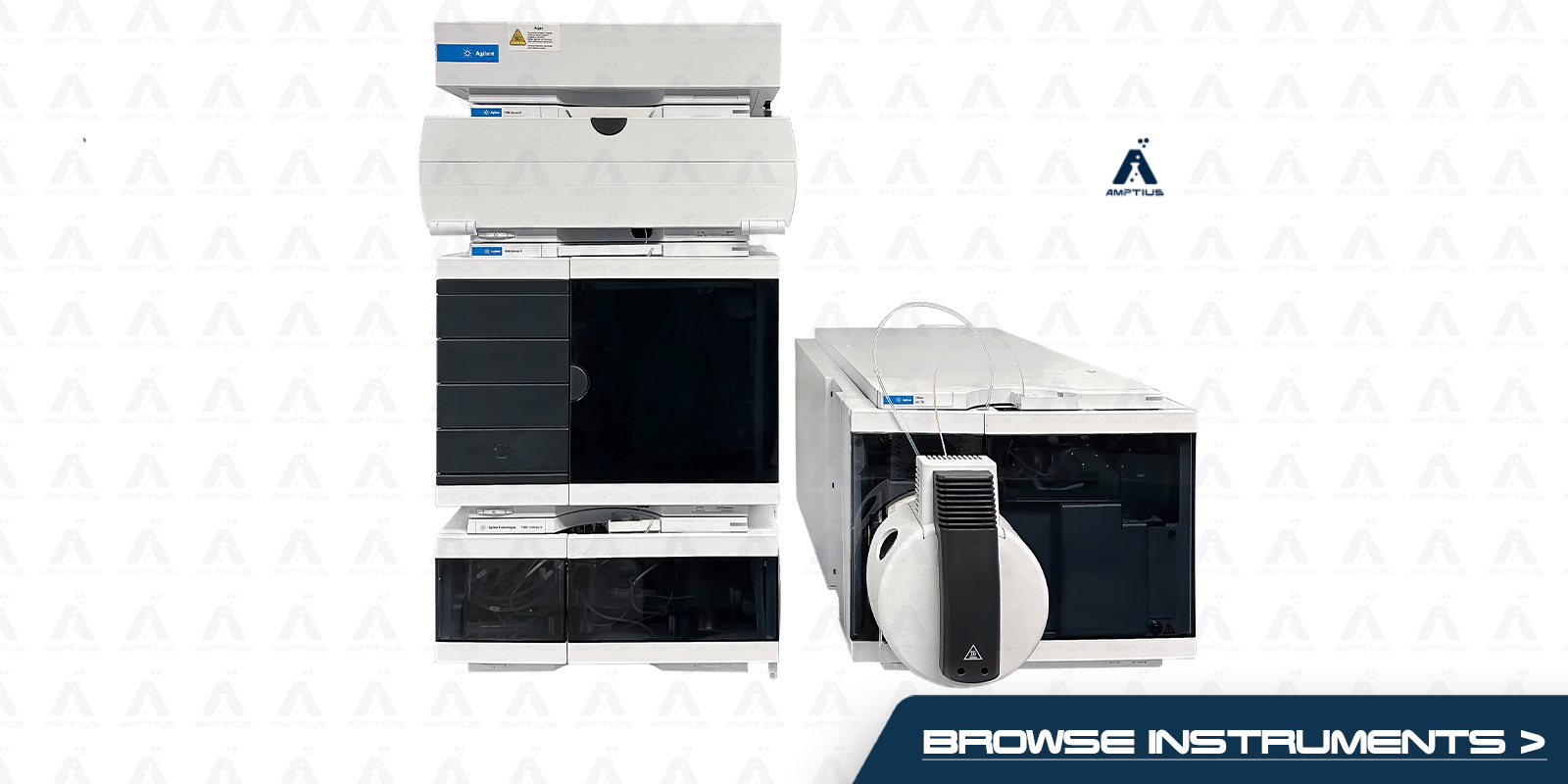
Suitable systems must support Multiple Reaction Monitoring (MRM), employ Electron Ionization (EI) for GC-MS/MS or Electrospray Ionization (ESI) for LC-MS/MS, and enable accurate quantitation in matrix-heavy beverage formulations. These platforms must also mantain chromatographic integrity, provide consistent autosampler injection precision, and support isotope dilution or matrix-matched calibration. Below is a curated list of LC-MS/MS and GC-MS/MS systems that fulfill all performance criteria outlined by AOAC SMPR 2023.001 and are routinely used in high-throughput regulatory testing environments.
Please click here to learn more about AOAC Method SMPR 2023.001
Agilent Ultivo Triple Quad LC/MS/MS System with 1260 Infinity II Front End for AOAC Method SMPR 2023.001
The Agilent Ultivo Triple Quad LC-MS/MS system, combined with the 1260 Infinity II UHPLC, offers a compact and powerful platform for detecting pesticide residues in cannabis beverages. It delivers strong ionization efficiency via Jet Stream ESI, enabling high sensitivity for a diverse range of pesticide analytes. Laboratories benefit from the system’s low carryover, consistent injection reproducibility, and robust signal stability even in complex cannabis beverage matrices.
With its MRM-based acquisition and compatibility with isotope dilution protocols, the Ultivo achieves quantitation limits at or below 10 µg/kg with strong reproducibility and accuracy. The integrated MassHunter software simplifies data acquisition, processing, and compliance documentation. This system’s small footprint and high-throughput performance make it especially valuable for cannabis laboratories with limited bench space that require high analytical confidence for regulatory compliance.
PerkinElmer QSight 420 LC-MS/MS Triple Quad System with UHPLC Front End for AOAC Method SMPR 2023.001
The PerkinElmer QSight 420 LC-MS/MS system, paired with a UHPLC front end, provides a reliable and high-sensitivity platform for cannabis beverage pesticide testing. Its dual-source ionization system allows flexible switching between ESI and APCI, accommodating a wide range of pesticide classes. This system supports low LOQs and provides strong matrix tolerance, critical when testing complex infused drinks and tinctures.
PerkinElmer’s intuitive QSight software streamlines method development and validation while enabling automated quality assurance workflows. With stable retention times and excellent quantitation reproducibility, the QSight 420 meets AOAC SMPR 2023.001 performance requirements. Cannabis laboratories seeking a rugged and scalable LC-MS/MS solution rely on this system to deliver dependable results for regulated pesticide detection, ensuring safety and compliance in high-throughput testing environments.
Waters Xevo TQ-S Micro Triple Quadrupole LC-MS/MS with ACQUITY I-Class Front End for AOAC Method SMPR 2023.001
The Waters Xevo TQ-S Micro LC-MS/MS system, when paired with the ACQUITY I-Class UPLC, is a compact yet high-performance solution for pesticide analysis in cannabis-infused beverages. It is engineered to meet trace-level detection requirements and delivers excellent retention time stability and matrix separation. This platform uses advanced MRM acquisition modes and rapid polarity switching, allowing laboratories to analyze a wide panel of pesticides efficiently across complex cannabis beverage matrices.
The system’s low background noise, small injection volumes, and fast analysis cycle times support high-throughput testing with minimal downtime. Waters’ software interface simplifies workflow management, while built-in quantitation tools ensure precise reporting for compliance with AOAC SMPR 2023.001. From validation to routine analysis, the Xevo TQ-S Micro maintains LOQs under 10 µg/kg and consistently produces high-quality, reproducible data. It is ideal for labs prioritizing throughput, analytical confidence, and space-efficient design.
SCIEX Triple Quad 6500+ LC-MS/MS with ExionLC AD UHPLC for AOAC Method SMPR 2023.001
The SCIEX Triple Quad 6500+ LC-MS/MS system, paired with the ExionLC AD UHPLC, delivers industry-leading sensitivity for multi-residue pesticide analysis in cannabis beverages. Its Turbo V ionization source and Scheduled MRM Pro capability provide sub-10 µg/kg detection limits across challenging matrices. This system handles rapid polarity switching and is engineered for high throughput, which is essential for cannabis testing labs managing large sample volumes. SCIEX OS software provides a streamlined platform for method development, data analysis, and secure regulatory reporting.
Regulatory laboratories consistently choose the 6500+ for its accuracy, reproducibility, and adaptability to complex sample matrices. It provides robust matrix suppression handling and supports isotope dilution workflows that align with AOAC SMPR 2023.001 precision requirements. From infused teas to botanical-based drinks, the SCIEX 6500+ reliably quantifies pesticide residues and has become a trusted solution for cannabis compliance programs worldwide. Laboratories benefit from high system uptime and analytical confidence across a wide pesticide spectrum.
Agilent 7890B / 7010B Triple Quadrupole GC-MS/MS with 7693 Autosampler for AOAC Method SMPR 2023.001
The Agilent 7890B GC coupled with the 7010B Triple Quadrupole MS is a proven and powerful system for GC-based pesticide analysis in cannabis beverage applications. Using EI ionization, this system offers unmatched precision in quantifying volatile and semi-volatile pesticides. It is optimized for trace-level MRM acquisition, ensuring high selectivity and sensitivity even in matrices with significant background complexity. Paired with the 7693 autosampler, this platform ensures consistent sample delivery and batch reproducibility for high-throughput labs.
Agilent’s Inert Flow Path technology minimizes analyte loss and carryover, while the MassHunter software suite provides robust data processing, calibration, and regulatory reporting features. Cannabis laboratories rely on the 7890B / 7010B combination for LOQs at or below 10 µg/kg with high accuracy and reproducibility. It is especially effective for detecting pesticide residues in cannabis-infused beverages where regulatory limits are stringent, and matrix complexity can impact analytical performance.
Waters Xevo TQ-GC Triple Quad GC-MS/MS with Agilent 8890 GC and PAL RSI Autosampler for AOAC Method SMPR 2023.001
The Waters Xevo TQ-GC system, integrated with the Agilent 8890 GC and PAL RSI Autosampler, brings a high-sensitivity GC-MS/MS platform to pesticide analysis in cannabis beverages. This system utilizes EI ionization and fast, efficient MRM acquisition to target a broad range of pesticide residues. Its enhanced chromatographic performance enables excellent resolution of compounds, even in complex matrices such as herbal teas and carbonated cannabis drinks. The PAL RSI autosampler contributes to throughput efficiency with precise, automated injections.
With its ability to achieve detection limits of 10 µg/kg or lower and support for robust quantitation workflows, this platform aligns fully with the expectations of AOAC SMPR 2023.001. Waters’ software provides comprehensive control over method setup, data acquisition, and final reporting. This system is a preferred option for regulatory testing laboratories that require high sensitivity, rugged performance, and reproducibility across high sample loads.
Thermo Scientific TSQ 9000 Triple Quadrupole GC-MS/MS for AOAC Method SMPR 2023.001
The Thermo Scientific TSQ 9000 Triple Quadrupole GC-MS/MS system is engineered for high-performance pesticide residue detection using electron ionization (EI) and highly selective MRM acquisition. It is equipped with ExtractaBrite ion source technology, which offers long-term robustness and consistent signal intensity for extended analytical runs. With its fast scan speeds and superior signal-to-noise ratio, the TSQ 9000 achieves quantitation limits below 10 µg/kg and maintains reliable precision even in complex cannabis-infused beverage matrices like carbonated drinks and botanical extracts.
This system integrates seamlessly with Triplus RSH autosamplers for enhanced injection reproducibility and automated batch processing. Thermo’s TraceFinder software supports intuitive method development, calibration, and regulatory reporting workflows. The TSQ 9000 system is a top-tier solution for high-throughput cannabis labs conducting routine pesticide screening under strict regulatory guidelines. It meets all AOAC SMPR 2023.001 criteria and ensures confident results across challenging analytical conditions.
Shimadzu GCMS-TQ8050 NX Triple Quadrupole GC-MS/MS for AOAC Method SMPR 2023.001
The Shimadzu GCMS-TQ8050 NX is a flagship GC-MS/MS system designed for ultra-trace pesticide analysis in cannabis products. It features an advanced ion source with superior thermal stability, high-speed MRM acquisition, and wide dynamic range. This system enables precise and repeatable quantification of volatile pesticides at or below the 10 µg/kg threshold specified in AOAC SMPR 2023.001. Its capability to maintain excellent chromatographic resolution under rapid conditions makes it especially effective for cannabis-infused beverages, including carbonated and high-residue matrices.
The platform supports automated sample injection with the AOC-6000 Plus autosampler and includes Shimadzu’s LabSolutions Insight software for streamlined method development and real-time data review. The TQ8050 NX supports isotope dilution methods and matrix-matched calibration, offering unmatched confidence in regulatory pesticide workflows. Laboratories benefit from its durability, throughput, and exceptional performance, making it a reliable choice for SMPR 2023.001-compliant cannabis beverage testing.
Choosing the Right GC-MS/MS or LC-MS/MS System for AOAC Method SMPR 2023.001
- Best for broad pesticide panels: SCIEX 6500+, Agilent Ultivo, Waters TQ-S Micro, and QSight 420
- Top GC-MS/MS sensitivity: Thermo TSQ 9000, Agilent 7010B, Shimadzu TQ8050 NX
- Integrated solutions: Waters Xevo TQ-GC with 8890 GC and PAL RSI Autosampler
To meet AOAC SMPR 2023.001 standards, laboratories require analytical systems that deliver excellent sensitivity, strong matrix separation, and consistent quantitation. The instruments listed above meet or exceed these requirements for detecting pesticide residues in cannabis-infused beverages. We offer certified refurbished LC-MS/MS and GC-MS/MS systems that align with AOAC compliance standards. Contact us today for expert guidance, tailored system recommendations, and comprehensive support to help your laboratory achieve full regulatory compliance efficiently and affordably.
