
AOAC Method SMPR 2021.014 Instrumentation Guide
Standard Method Performance Requirements (SMPRs) for Targeted Testing (TT) of Saffron Adulterants
AOAC SMPR 2021.014 defines method performance requirements for detecting adulterants in saffron threads, powders, and botanical extracts. Laboratories must detect both synthetic dyes and plant-derived adulterants with high sensitivity and low false results. Accepted techniques include LC-MS/MS, LC-HRMS, HPLC-DAD, FT-IR, and microscopy. The instruments listed below fully meet these technical requirements. They provide reliable solutions for food safety, authenticity verification, and regulatory compliance under AOAC SMPR 2021.014 standards.
Instruments must deliver low detection limits, strong specificity, and consistent reproducibility. Methods must detect adulterants at levels of 5% or lower by weight. Laboratories must achieve low false positive and false negative rates while maintaining precise recovery rates. Whether targeting synthetic dyes or visually identifying botanical adulterants, laboratories need validated, robust instrumentation. The systems outlined below provide the capabilities needed to establish AOAC-compliant workflows for saffron authenticity testing programs.
Please click here to learn more about AOAC Method SMPR 2021.014
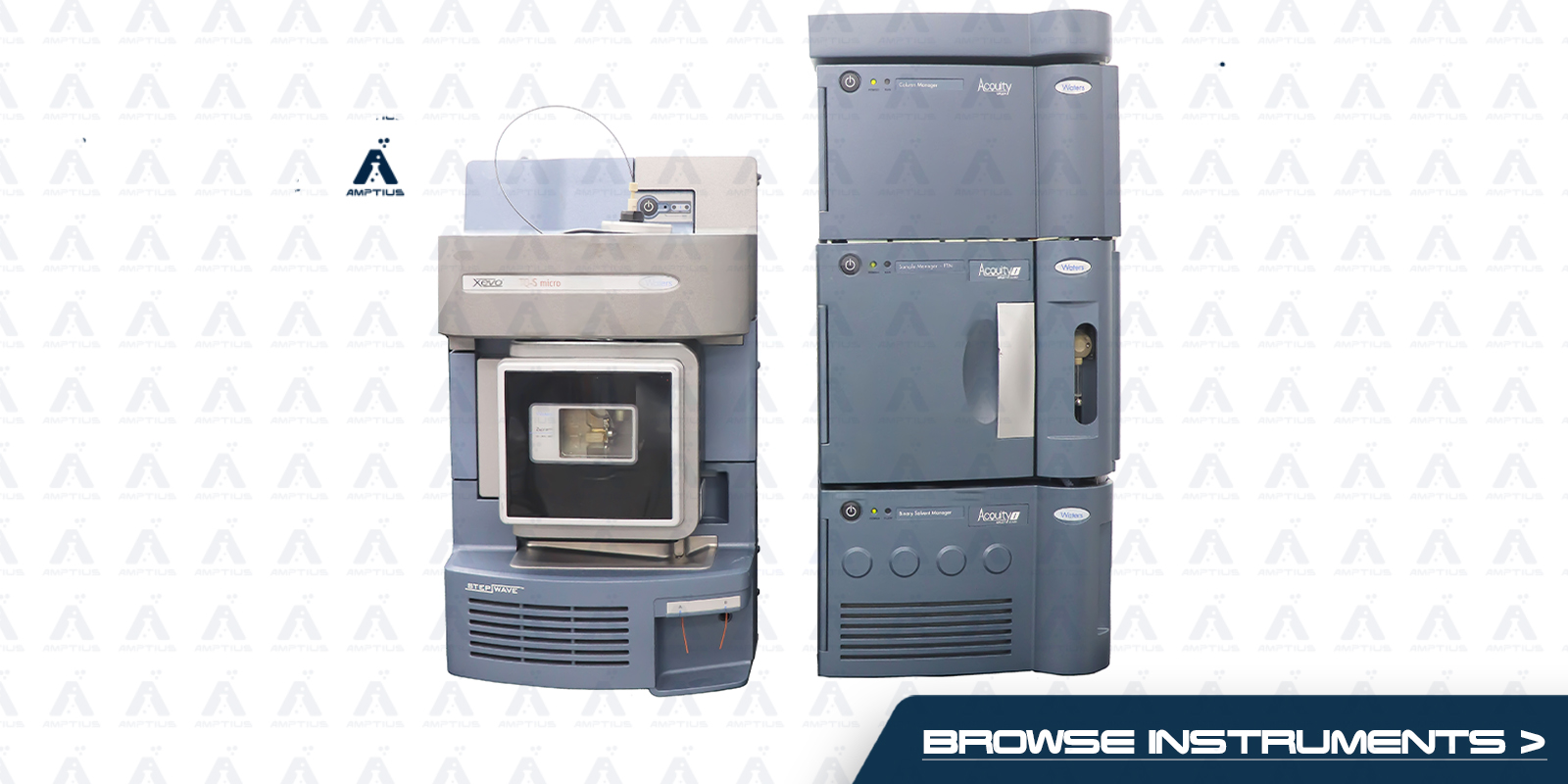
Waters Xevo TQ-S Micro Triple Quadrupole LC-MS/MS with ACQUITY I-Class UPLC for AOAC Method SMPR 2021.014
The Waters Xevo TQ-S Micro LC-MS/MS system with ACQUITY I-Class UPLC offers outstanding sensitivity for synthetic dye detection in saffron. Its StepWave ion guide technology improves ion transmission, reducing background noise and enhancing reliability. Laboratories can detect dyes like Sudan I–IV and Rhodamine B at trace levels while maintaining strong precision. This system consistently meets AOAC SMPR 2021.014 performance criteria for sensitivity, specificity, and reproducibility in saffron matrices.
TargetLynx software streamlines peak integration, quantitation, and compliance reporting. Analysts can simplify workflows, reduce analysis time, and improve batch reproducibility. The Xevo TQ-S Micro system provides rugged performance for high-throughput laboratories. It remains a trusted platform for ensuring saffron authenticity and compliance with regulatory food safety standards.
Agilent Ultivo Triple Quad LC-MS/MS System with 1260 Infinity II Front End for AOAC Method SMPR 2021.014
The Agilent Ultivo Triple Quadrupole LC-MS/MS system paired with the 1260 Infinity II UHPLC offers powerful synthetic dye detection for saffron authenticity testing. Its orthogonal spray technology enhances ionization efficiency while minimizing matrix effects. Laboratories can achieve low detection limits and excellent reproducibility, fully meeting AOAC SMPR 2021.014 precision and sensitivity requirements.
MassHunter software supports easy method development, rapid data acquisition, and automated compliance reporting. Analysts benefit from simplified workflows and strong reproducibility across saffron matrices. The Ultivo system is compact, robust, and well-suited for high-throughput environments. It provides reliable, AOAC-compliant performance for detecting saffron adulterants and safeguarding botanical ingredient integrity.
PerkinElmer QSight 420 LC-MS/MS Triple Quad System with UHPLC Front End for AOAC Method SMPR 2021.014
The PerkinElmer QSight 420 LC-MS/MS system with UHPLC delivers high-sensitivity synthetic dye detection for saffron matrices. Its dual-source ESI/APCI ionization technology provides flexible screening of diverse dye compounds. Laboratories consistently achieve low LOQs, strong recovery, and robust reproducibility while meeting AOAC SMPR 2021.014 guidelines. The QSight 420 excels in complex botanical matrices where synthetic dyes may be difficult to detect.
Simplicity 3Q software automates method optimization, sample management, and result validation. Analysts streamline regulatory workflows and improve throughput. The QSight 420 system offers rugged durability and strong matrix resilience, making it a dependable platform for ensuring saffron authenticity and compliance with food safety standards.
Shimadzu LCMS-8060NX Triple Quadrupole LC-MS/MS with Nexera X3 UHPLC for AOAC Method SMPR 2021.014
The Shimadzu LCMS-8060NX system paired with Nexera X3 UHPLC delivers rapid, sensitive detection of synthetic dyes in saffron. Its UF-Qarray ion guide enhances ion transmission, while its fast polarity switching improves throughput. Laboratories can achieve excellent reproducibility, low false positives, and strong recovery in saffron testing workflows. The LCMS-8060NX meets all AOAC SMPR 2021.014 precision and specificity targets for saffron adulterant detection.
LabSolutions Insight software simplifies method development, data acquisition, and batch reporting. Analysts can perform real-time optimization and automate quality assurance workflows. The LCMS-8060NX ensures high sensitivity, reproducibility, and robustness in high-volume food authenticity testing programs focused on saffron adulteration detection under AOAC regulatory standards.
Thermo Scientific Orbitrap Exploris 120 HRMS with Vanquish UHPLC for AOAC Method SMPR 2021.014
The Thermo Scientific Orbitrap Exploris 120 HRMS system with Vanquish UHPLC provides high-resolution accurate mass (HRAM) detection for saffron adulterant identification. Its Orbitrap analyzer delivers sub-ppm mass accuracy, critical for targeted and non-targeted analysis of synthetic dyes and plant-based adulterants. Laboratories benefit from excellent reproducibility and low detection limits that fully support AOAC SMPR 2021.014 performance requirements.
Compound Discoverer and TraceFinder software streamline spectral library creation, targeted screening, and compliance reporting. Analysts benefit from easy suspect analysis and strong automation features. The Exploris 120 HRMS system ensures accurate saffron authenticity verification by enabling comprehensive detection of both known and unknown adulterants in botanical matrices.
Agilent 1260 Infinity II HPLC System with DAD Detector + BinPump for AOAC Method SMPR 2021.014
The Agilent 1260 Infinity II HPLC-DAD system enables pigment fingerprinting for saffron authenticity verification. Its diode array detector provides strong spectral resolution to differentiate authentic saffron pigments from potential color adulterants. Laboratories can build validated pigment profiles to verify product authenticity in support of AOAC SMPR 2021.014 supplementary requirements for saffron testing workflows.
ChemStation software enables simplified method development, spectral analysis, and regulatory documentation. Analysts can process samples efficiently while ensuring traceability and repeatability. The 1260 Infinity II system offers a rugged solution for pigment verification and supports comprehensive saffron authentication programs in food laboratories worldwide.
Waters Alliance 2695 HPLC System with 2487 UV-Vis Detector for AOAC Method SMPR 2021.014
The Waters Alliance 2695 HPLC system with 2487 UV-Vis detector provides dependable pigment fingerprinting capabilities for saffron authenticity studies. Laboratories benefit from precise chromatographic separation, strong baseline stability, and reproducible UV-visible absorbance profiles. When validated, this system fully supports saffron pigment verification aligned with AOAC SMPR 2021.014 authenticity guidelines.
Empower software simplifies chromatographic method setup, data acquisition, and reporting. Analysts can streamline batch management and optimize workflows for pigment profiling. The Waters Alliance 2695 platform offers durability, sensitivity, and high sample throughput, ensuring saffron authenticity programs maintain full regulatory compliance under AOAC method standards.
Shimadzu Prominence-i LC-2030C 3D Plus with PDA Detector for AOAC Method SMPR 2021.014
The Shimadzu Prominence-i LC-2030C 3D Plus HPLC system with PDA detector provides efficient pigment analysis for saffron authenticity verification. Its integrated design and high-resolution PDA detection allow fast identification of authentic saffron pigment markers. Laboratories benefit from simplified workflows, consistent retention times, and reproducible spectral data aligned with AOAC SMPR 2021.014 pigment profiling standards.
LabSolutions software automates batch analysis, peak identification, and regulatory report generation. Analysts achieve streamlined validation of saffron pigment profiles to detect color adulteration. The Prominence-i LC-2030C platform ensures efficient and reliable saffron authentication, complementing targeted synthetic dye detection workflows in food authenticity laboratories.
PerkinElmer Frontier FT-IR / FIR Spectrometer with UATR for AOAC Method SMPR 2021.014
The PerkinElmer Frontier FT-IR/FIR system with UATR module provides non-targeted saffron authenticity screening. Its infrared fingerprinting capabilities allow rapid identification of unexpected plant-based adulterants. Although FT-IR screening is supplementary, it enhances saffron verification workflows by enabling rapid authenticity checks before confirmatory LC-MS/MS testing, aligning with AOAC SMPR 2021.014 recommendations.
Spectrum 10 software automates spectral analysis, library searching, and regulatory reporting. Analysts benefit from easy spectral matching and quick batch analysis. The Frontier FT-IR system complements targeted synthetic dye workflows and ensures laboratories can rapidly screen saffron powders and botanical matrices for authenticity deviations.
Bruker Alpha II FT-IR Spectrometer for AOAC Method SMPR 2021.014
The Bruker Alpha II FT-IR spectrometer provides compact and high-performance screening for saffron authenticity. Its excellent spectral resolution supports fingerprinting and authenticity checks against reference standards. Laboratories can rapidly detect plant-based adulterants and anomalies in saffron powders, helping meet AOAC SMPR 2021.014 supplementary screening requirements for botanical food testing.
OPUS software automates method setup, spectral library management, and batch reporting. Analysts can streamline sample acquisition and result interpretation. The Alpha II system offers durable performance and fast turnaround times, enhancing non-targeted saffron authenticity workflows in food laboratories focused on safeguarding botanical integrity.
Thermo Scientific Nicolet iS50 FT-IR System for AOAC Method SMPR 2021.014
The Thermo Scientific Nicolet iS50 FT-IR system provides high-accuracy, full-range infrared analysis for saffron authenticity verification. Laboratories can perform rapid spectral fingerprinting of saffron samples, detecting unexpected plant tissue adulterants. The system’s broad spectral coverage supports full compliance with AOAC SMPR 2021.014 supplementary screening guidelines for botanical food authenticity workflows.
OMNIC software streamlines spectral acquisition, library creation, and regulatory reporting. Analysts benefit from flexible analysis modes and reliable reproducibility. The Nicolet iS50 system complements LC-MS/MS synthetic dye workflows, ensuring comprehensive saffron authenticity verification in food safety programs worldwide.
Leica FS CB Motorized Forensic Comparison Microscope for AOAC Method SMPR 2021.014
The Leica FS CB Motorized Forensic Comparison Microscope enables detailed visual inspection of saffron threads and powders. Laboratories use this system to compare authentic saffron structures against possible botanical adulterants like safflower or calendula petals. Visual microscopy is essential for confirming authenticity when plant-derived adulterants are suspected, supporting AOAC SMPR 2021.014 supplemental verification workflows.
Leica’s motorized controls simplify side-by-side comparisons, and its imaging software supports full documentation. Analysts can perform high-contrast comparisons efficiently and maintain traceable authenticity records. The FS CB system ensures reliable saffron authenticity verification through detailed tissue-level visual analysis workflows aligned with AOAC requirements.
Olympus BX53 Research Microscope for AOAC Method SMPR 2021.014
The Olympus BX53 Research Microscope offers high-resolution visual examination of saffron samples. Its advanced optics and ergonomic design support efficient differentiation between authentic saffron threads and foreign plant materials. Microscopy complements targeted chemical workflows, enhancing saffron authenticity verification in compliance with AOAC SMPR 2021.014.
CellSens software automates sample imaging, annotation, and reporting. Analysts can capture clear, reproducible images for forensic documentation. The BX53 system provides robust support for visual tissue verification, complementing LC-MS/MS synthetic dye detection and pigment fingerprinting workflows in saffron authenticity programs aligned with regulatory standards.
Choosing the Right Instrumentation for AOAC SMPR 2021.014
- For synthetic dye detection: Waters Xevo TQ-S Micro, Agilent Ultivo, PerkinElmer QSight 420, Shimadzu LCMS-8060NX, and Thermo Exploris 120 HRMS offer robust targeted testing.
- For pigment fingerprinting: Agilent 1260 Infinity II, Waters Alliance 2695, and Shimadzu Prominence-i LC-2030C provide validated pigment verification solutions.
- For non-targeted screening: PerkinElmer Frontier FT-IR, Bruker Alpha II FT-IR, and Thermo Nicolet iS50 FT-IR ensure rapid preliminary saffron screening.
- For botanical tissue adulterant detection: Leica FS CB and Olympus BX53 microscopes offer critical visual verification capabilities.
If you are looking for a reliable and cost-effective solution to meet AOAC SMPR 2021.014 requirements, we offer a wide range of certified refurbished LC-MS/MS, HPLC, FT-IR, and microscopy systems. Each instrument undergoes rigorous testing to ensure compliance with regulatory standards while delivering excellent performance for saffron adulteration detection. Contact us today to learn how our refurbished systems can help your laboratory implement efficient, AOAC-compliant workflows at a fraction of the cost of new equipment.
