
AOAC Method SMPR 2021.001 Instrumentation Guide
Standard Method Performance Requirements (SMPR) for Determination of Chlorate and Perchlorate in Baby Foods, Infant/Adult Formulas, and Their Ingredients
AOAC SMPR 2021.001 defines the method performance criteria for quantifying chlorate and perchlorate in baby foods, infant/adult formulas, and their ingredients. The method supports LC-MS/MS systems capable of ultra-trace quantitation in complex food matrices with high matrix interference potential. Laboratories must achieve limits of quantitation (LOQ) of ≤ 0.005 mg/kg (5 µg/kg) for both chlorate and perchlorate in as-consumed products like reconstituted formulas and baby foods. Higher LOQs are permitted for dry ingredients: ≤ 0.01 mg/kg for major ingredients (>10%) and ≤ 0.1 mg/kg for minor ingredients (≤10%). These systems must also provide strong selectivity to differentiate target anions from nitrate, chlorite, and other ionic interferences.
Analytical platforms must utilize triple quadrupole mass spectrometry and offer chromatographic separation suitable for polar analytes. HILIC or ion-pairing techniques are commonly used to achieve retention and resolution of chlorate and perchlorate. According to SMPR 2021.001, recovery must be between 80–120%, repeatability (RSDr) must not exceed 20%, and reproducibility (RSDR) must be ≤ 25%. Additionally, matrix validation is required across multiple categories, including cereal-, fruit-, and meat-based baby foods, as well as various formula ingredients like whole milk powder, maltodextrin, and premixes. The use of matrix-matched calibration and isotopically labeled internal standards is strongly recommended for accuracy and regulatory compliance.
Please click here to learn more about AOAC Method SMPR 2021.001
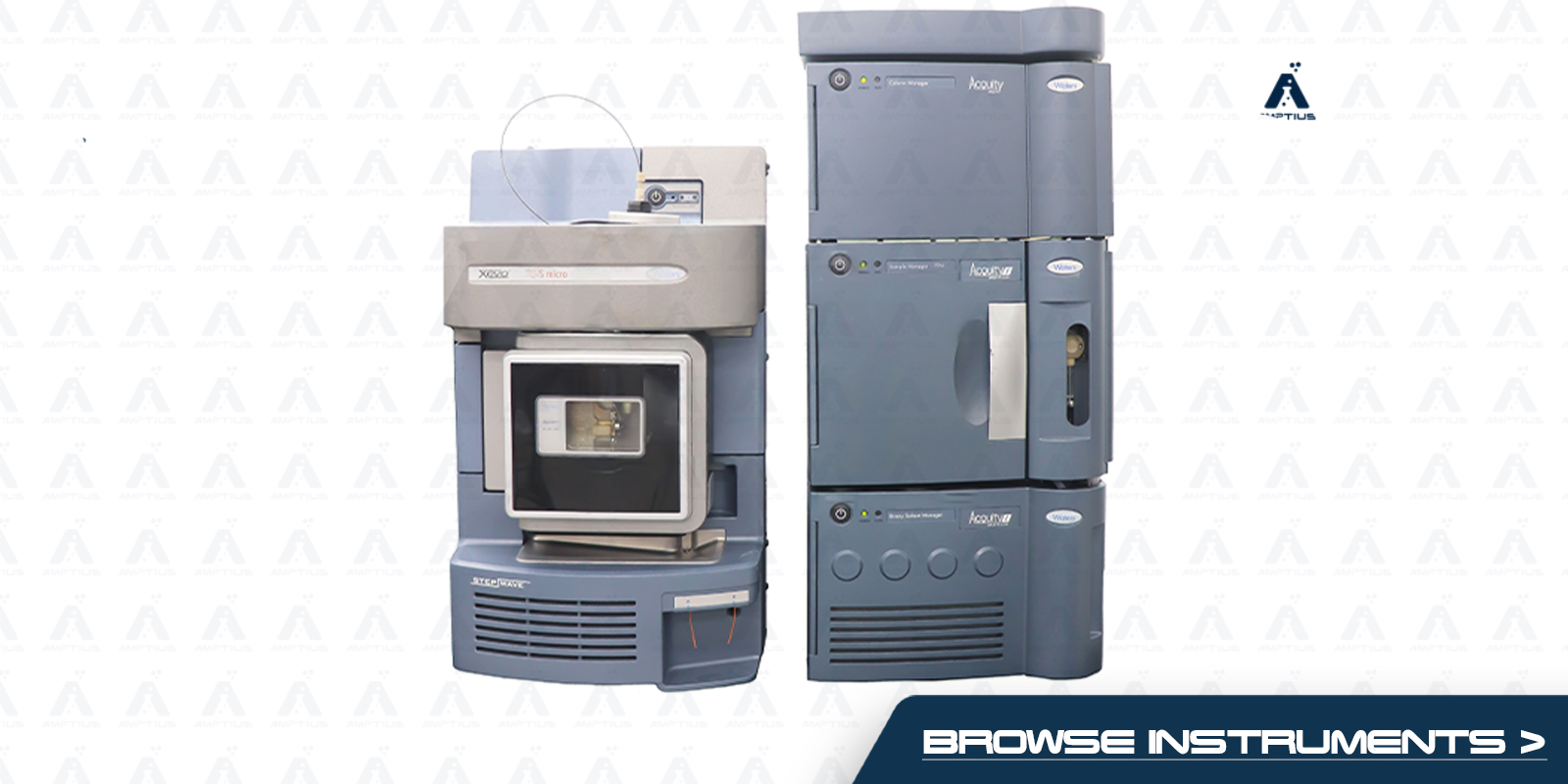
Waters Xevo TQ-S Micro Triple Quadrupole LC-MS/MS with ACQUITY I-Class Front End for AOAC Method SMPR 2021.001
The Waters Xevo TQ-S Micro with ACQUITY I-Class UPLC is engineered for ultra-trace detection of polar contaminants like chlorate and perchlorate in complex nutritional samples. With StepWave ion optics and advanced MRM acquisition, it provides low background noise and strong selectivity against ionic interferences. This system consistently meets the LOQ requirement of ≤ 0.005 mg/kg in baby foods and formulas, even with high sugar and salt matrices. The ACQUITY I-Class front end enhances peak capacity and resolution for difficult analyte separations. Its robustness and reproducibility make it a strong candidate for high-throughput regulatory labs.
Trace quantification is supported by built-in tools for calibration verification, system suitability, and QC monitoring. The Xevo platform is compatible with both HILIC and ion-pairing columns, offering flexibility for diverse matrices. Its compact design is ideal for labs with space constraints while maintaining analytical power. This system’s strong matrix tolerance allows for extended sequence runs without compromising precision or recovery. Widely used in residue monitoring programs, it aligns well with the strict performance criteria of AOAC SMPR 2021.001.
Agilent Ultivo Triple Quad LC/MS/MS System with 1260 Infinity II Front End for AOAC Method SMPR 2021.001
The Agilent Ultivo LC-MS/MS with 1260 Infinity II delivers high sensitivity in a small footprint, ideal for routine quantitation of chlorate and perchlorate in regulated food products. Featuring Jet Stream ESI technology, it enhances ionization efficiency for highly polar species while maintaining low detection limits. The system achieves LOQs of ≤ 0.005 mg/kg in as-consumed baby food and formula, with excellent reproducibility across repeated runs. The 1260 Infinity II UHPLC ensures reliable retention and sharp peak shapes even under complex sample conditions. Its modular design allows seamless expansion and method flexibility.
MassHunter software supports customizable workflows, system suitability testing, and matrix-specific method validation. Analysts can integrate internal standards and manage traceability across multi-analyte panels. The Ultivo’s compact size makes it accessible to smaller labs without compromising analytical robustness. It is also compatible with multiple chromatographic modes for improved resolution of co-eluting interferences. This system is widely accepted for routine compliance testing and aligns fully with SMPR 2021.001 expectations.
PerkinElmer QSight 420 LC-MS/MS Triple Quad System with UHPLC Front End for AOAC Method SMPR 2021.001
The PerkinElmer QSight 420 with UHPLC is built for high-throughput regulatory applications and offers consistent performance in trace-level chlorate and perchlorate analysis. Its dual-source ionization design ensures high stability across varied food matrices including plant-based purees and powdered formulas. The system readily achieves LOQs ≤ 0.005 mg/kg for both analytes in as-consumed matrices and ≤ 0.01–0.1 mg/kg in raw ingredients. It delivers repeatability within 20% RSDr and maintains recovery within 80–120% as outlined in the SMPR. The integrated UHPLC delivers sharp, well-resolved peaks for reliable quantitation.
Simplicity software allows for method setup, validation tracking, and compliance documentation in a user-friendly format. Analysts can apply matrix-matched standards and isotopically labeled surrogates for added confidence. Its automated workflows minimize manual intervention and reduce turnaround time for routine batch testing. This platform supports both HILIC and ion-pairing chromatography and adapts well to different formulation types. It is frequently used in infant food safety monitoring and meets the full criteria of AOAC SMPR 2021.001 when validated appropriately.
Thermo Scientific TSQ Altis Plus Triple Quadrupole LC-MS/MS with Vanquish UHPLC for AOAC Method SMPR 2021.001
The Thermo Scientific TSQ Altis Plus with Vanquish UHPLC is an advanced triple quadrupole platform capable of high-sensitivity quantitation of ionic residues like chlorate and perchlorate. Active Ion Management and Smart Tune capabilities ensure reproducibility, even under variable matrix conditions. This system has demonstrated LOQs ≤ 0.005 mg/kg in reconstituted formula and baby food matrices and supports precision and recovery within SMPR specifications. Its UHPLC front end ensures tight retention time control and reproducible chromatography over long sequences. These features make it ideal for regulated food contaminant testing.
TraceFinder software provides full compliance support including automated method qualification, recovery tracking, and QA oversight. The Altis Plus accommodates both ion-pair and HILIC columns, enabling tailored retention strategies for various nutritional products. Whether testing dairy-based, soy-based, or mixed-ingredient samples, this system delivers consistent and accurate results. Its rugged design supports 24/7 workflows in government and third-party labs. Laboratories using this configuration can confidently meet SMPR 2021.001 requirements with proper validation.
Shimadzu LCMS-8060NX Triple Quadrupole LC-MS/MS with Nexera X3 UHPLC for AOAC Method SMPR 2021.001
The Shimadzu LCMS-8060NX with Nexera X3 UHPLC provides fast, sensitive detection of polar contaminants such as chlorate and perchlorate. Its high-speed MRM and efficient desolvation enable precise quantitation in high-salt, high-sugar matrices like formula powders and purees. The system supports LOQs ≤ 0.005 mg/kg in finished products and ≤ 0.1 mg/kg for minor ingredients with high repeatability and recovery. Its UHPLC module delivers strong gradient stability and excellent flow control during extended batch runs. These performance features make it suitable for both routine QA and enforcement testing.
LabSolutions software allows for automated calibration tracking, system suitability monitoring, and regulatory reporting. The LCMS-8060NX can be configured for HILIC or ion-pairing methods, ensuring robust performance across matrix classes. Its enhanced matrix tolerance minimizes carryover and signal suppression, even in fatty or protein-rich samples. This system is frequently validated for food and nutritional product testing under AOAC, ISO, and EU regulations. When paired with validated methods, it fully meets SMPR 2021.001 performance standards.
SCIEX Triple Quad 6500+ LC-MS/MS with ExionLC AD UHPLC for AOAC Method SMPR 2021.001
The SCIEX 6500+ with ExionLC AD UHPLC is one of the most sensitive LC-MS/MS platforms for quantifying trace-level chlorate and perchlorate. Its Turbo V ion source and Scheduled MRM Pro optimize ion transmission and dwell time, achieving LOQs below 0.005 mg/kg in challenging food matrices. The ExionLC AD provides robust flow stability and gradient accuracy for reliable separation of polar compounds. This system meets all SMPR 2021.001 requirements including recovery, precision, and reproducibility across a wide matrix scope. It is widely used in public health and contract laboratories for contaminant monitoring.
SCIEX OS software includes full compliance features such as audit trails, automated system suitability checks, and matrix validation workflows. The 6500+ system supports ion-pairing or HILIC strategies to separate chlorate and perchlorate from co-eluting ions. Analysts benefit from high-throughput capabilities with minimal signal drift or matrix interference. This platform ensures strong traceability and documentation support in regulatory environments. It is an excellent fit for labs conducting surveillance or confirmatory analysis under AOAC guidelines.
Choosing the Right LC-MS/MS System for AOAC SMPR 2021.001
- High-sensitivity contaminant detection: SCIEX 6500+, Waters Xevo TQ-S Micro, and Thermo TSQ Altis Plus
- Compact and high-throughput platforms: Agilent Ultivo and PerkinElmer QSight 420 for QA and regulatory testing
- Fast, matrix-tolerant systems: Shimadzu LCMS-8060NX for polar residue monitoring across formula and food ingredients
AOAC SMPR 2021.001 mandates ultra-trace quantitation of chlorate and perchlorate across varied food and nutritional matrices. Laboratories must meet LOQs of 0.005 mg/kg for most products, with higher limits allowed for minor ingredients. All systems listed here support compliance with recovery, RSDr, RSDR, and matrix selectivity criteria when properly validated. These LC-MS/MS platforms are optimized for regulatory food safety testing and support advanced chromatographic strategies for polar compound separation. Contact us today to explore certified refurbished LC-MS/MS systems tailored to your compliance needs.