
AOAC Method SMPR 2020.016 Instrumentation Guide
Standard Method Performance Requirements (SMPRs) for Characterization and Quantitation of Component Fractions from Glycerol Esters of Wood Rosin (GEWR)
AOAC SMPR 2020.016 outlines the minimum performance criteria for analytical methods used to quantify and characterize glycerol monoesters, free resin acids, and neutral compounds in Glycerol Esters of Wood Rosin (GEWR). The required limits of quantitation (LOQ) are ≤ 0.01% for both resin acids and neutrals, and ≤ 0.5% for monoesters. Analytical range requirements include 0.01–10% for resin acids, 0.5–10% for monoesters, and 0.01–20% for neutral compounds. Linearity for all analytes must meet or exceed a correlation coefficient (R²) of 0.99.
Method accuracy and precision must also meet strict thresholds. Acceptable recovery is 90–107% for free resin acids and neutrals, and 95–105% for monoesters. Repeatability, expressed as relative standard deviation of repeatability (RSDr), must be ≤ 5.3% for acids and neutrals, and ≤ 3% for monoesters. Reproducibility (RSDR) limits are set at ≤ 8% for acids and neutrals, and ≤ 4.4% for monoesters. These performance criteria ensure that validated methods can reliably separate, quantify, and report on the required GEWR component fractions with high confidence and consistency across different laboratory environments. Suitable platforms include LC-MS/MS systems from Waters, SCIEX, Thermo Scientific, Shimadzu, and PerkinElmer, as well as UV-based HPLC systems like the Agilent 1260 Infinity II.
Please click here to learn more about AOAC SMPR 2020.016
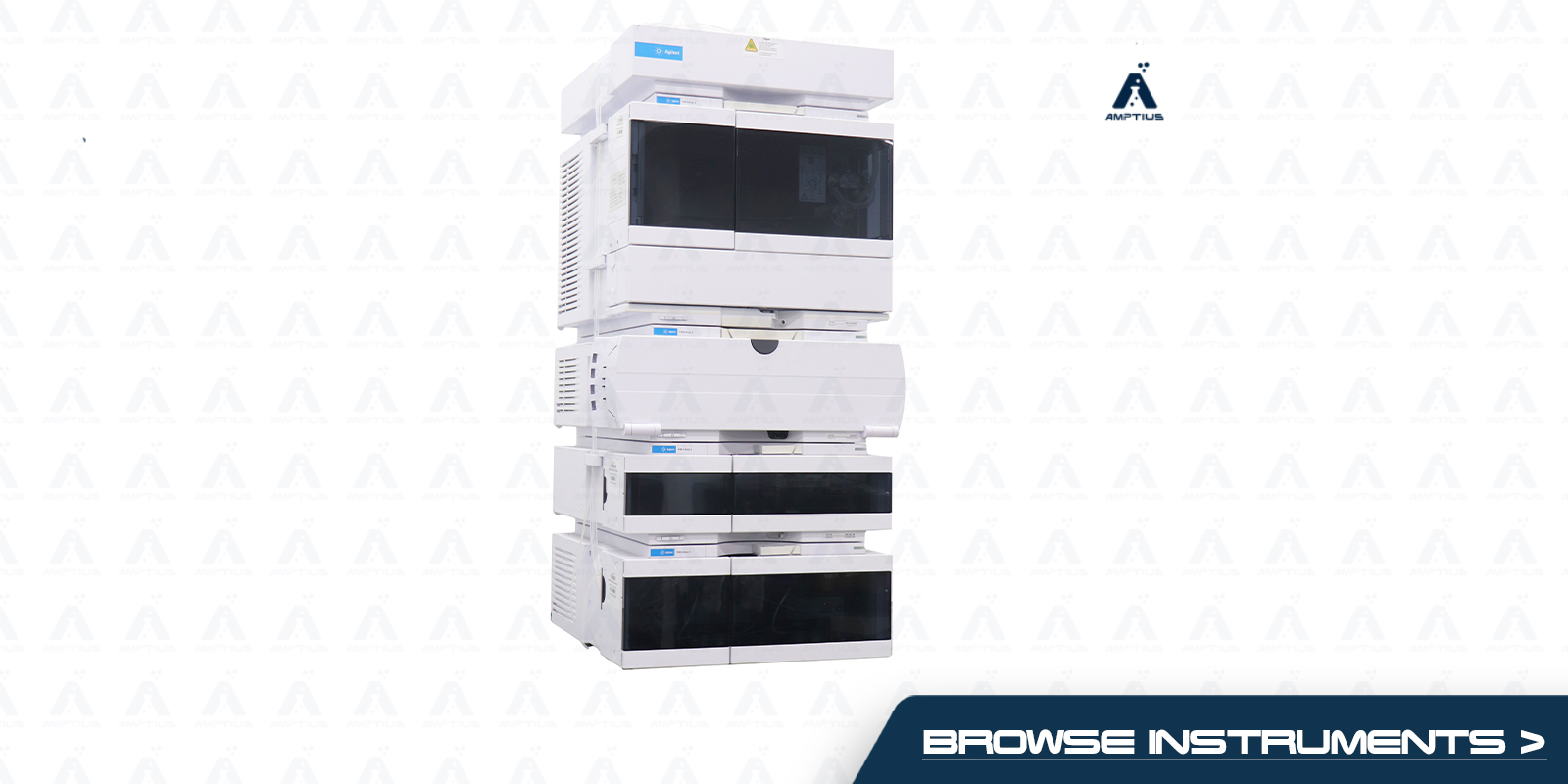
Agilent 1260 Infinity II HPLC System with DAD Detector and BinPump for AOAC Method SMPR 2020.016
The Agilent 1260 Infinity II HPLC system with DAD and BinPump offers precise chromatographic resolution for UV-active fractions in GEWR analysis. Dual-wavelength DAD detection enables quantification of both free resin acids and glycerol monoesters when properly resolved. The binary pump delivers gradient stability essential for maintaining retention time reproducibility and peak fidelity. With method optimization, it can meet all LOQ, recovery, and reproducibility criteria defined by SMPR 2020.016. It serves as a reliable and efficient solution for UV-detectable GEWR components.
Although DAD detection is limited to UV-absorbing compounds, the platform can be paired with ELSD to quantify non-chromophoric neutrals. Agilent’s OpenLab CDS software supports real-time data monitoring, system suitability checks, and audit-ready reports. The system is suitable for matrix-specific validation across diverse GEWR samples. Its user-friendly interface and modular design support long-term workflow efficiency. With proper calibration and validation, the 1260 Infinity II provides full SMPR-compliant performance.
Waters Xevo TQ-S Micro LC-MS/MS with ACQUITY I-Class UHPLC for AOAC Method SMPR 2020.016
The Waters Xevo TQ-S Micro, coupled with the ACQUITY I-Class UHPLC, delivers high-sensitivity quantitation of free resin acids, monoesters, and neutral compounds in GEWR matrices. The StepWave ion optics increase signal intensity and reduce background, supporting trace-level detection. MRM transitions can be configured for each component group, allowing reliable separation and quantification in a single analytical run. Retention time consistency and signal stability meet the ±1% and LOQ criteria of the SMPR.
MassLynx software enhances regulatory readiness through automated calibration curve tracking and integrated QA/QC tools. This platform supports flexible method validation using internal standards or matrix-matched calibration. It is ideal for regulated labs seeking high throughput and repeatable performance. With validated retention and accurate quantification, the Xevo TQ-S Micro meets all SMPR 2020.016 method performance criteria. It remains a top choice for compositional GEWR profiling.
PerkinElmer QSight 420 LC-MS/MS with UHPLC for AOAC Method SMPR 2020.016
The PerkinElmer QSight 420 LC-MS/MS system with UHPLC provides strong ionization stability and robust fraction-specific quantitation. The dual-source architecture enhances detection of glycerol monoesters, resin acids, and neutrals, even in complex sample matrices. The system achieves all performance targets for precision, linearity, and sensitivity set by SMPR 2020.016. With its UHPLC capabilities, analysts can achieve sharp resolution and minimal carryover, ensuring fraction isolation and method reproducibility.
QSight software enables complete workflow automation, including calibration curve setup, peak integration, and audit-ready documentation. The platform supports consistent method execution across varying lab skill levels and testing frequencies. It offers exceptional reproducibility for regulated applications, including product batch release and specification validation. The QSight 420 has been adopted widely for compositional analysis of industrial-grade GEWR. Its rugged performance and user-friendly software make it a dependable platform.
Thermo Scientific TSQ Altis Plus LC-MS/MS with Vanquish UHPLC for AOAC Method SMPR 2020.016
The TSQ Altis Plus LC-MS/MS system, integrated with Vanquish UHPLC, excels in component separation and quantitation of GEWR fractions. Its fast polarity switching and Active Ion Management technology help analysts resolve and quantify all three required component groups. Vanquish UHPLC ensures gradient stability and consistent retention times across extended runs. This combination supports reliable detection down to LOQ thresholds and maintains R² values of ≥ 0.99.
TraceFinder software simplifies method validation and quality control with automated system checks and customizable reporting modules. The Altis Plus is suited for high-throughput workflows in regulatory and industrial settings. Analysts benefit from minimal reanalysis and stable batch-to-batch reproducibility. This platform supports matrix-specific method development and is compatible with internal standard workflows. It is a strong candidate for AOAC-compliant GEWR characterization.
Shimadzu LCMS-8060NX with Nexera X3 UHPLC for AOAC Method SMPR 2020.016
The Shimadzu LCMS-8060NX, paired with the Nexera X3 UHPLC system, enables high-speed quantitation of GEWR component fractions with excellent precision. Its ultra-fast MRM acquisition and rapid polarity switching minimize cross-talk and enhance resolution between fraction classes. Nexera X3 ensures stable gradient delivery and sharp peak definition, key for accurate quantitation across complex rosin samples. The system consistently delivers LOQs and reproducibility values within SMPR 2020.016 thresholds.
LabSolutions software supports integrated QA monitoring, calibration setup, and full method traceability. Analysts can build robust validation files tailored to the distinct physical properties of monoesters, acids, and neutrals. The 8060NX is frequently used in compositional profiling workflows for regulatory submissions and batch release. Its scalability and robust signal stability reduce method drift over time. This system is a leading solution for SMPR-compliant fraction-specific analysis.
SCIEX Triple Quad™ 6500+ LC-MS/MS with ExionLC AD UHPLC for AOAC Method SMPR 2020.016
The SCIEX 6500+ LC-MS/MS system, combined with ExionLC AD UHPLC, offers ultra-trace detection capabilities for all three GEWR fractions. Turbo V source ionization and Scheduled MRM Pro ensure fast, accurate quantitation with low carryover. The ExionLC AD system maintains high chromatographic precision, even in high-throughput applications. This platform consistently meets all performance benchmarks outlined in AOAC SMPR 2020.016, including fraction separation, linearity, and precision.
SCIEX OS software integrates acquisition, compliance, and reporting functions in a user-friendly interface. Analysts benefit from consistent method reproducibility and automated QA tools. It is ideal for contract testing labs and manufacturers requiring validated methods for regulatory documentation. The 6500+ is well-known for handling diverse sample matrices while maintaining high analytical performance. It delivers trusted results across large-scale GEWR fraction profiling studies.
Choosing the Right System for AOAC SMPR 2020.016
- UV-based workflows: Agilent 1260 Infinity II HPLC with DAD for free resin acids and monoesters
- Comprehensive LC-MS/MS solutions: SCIEX 6500+, Waters Xevo TQ-S Micro, and Thermo Altis Plus for all three GEWR fractions
- High-throughput and rugged options: Shimadzu LCMS-8060NX and PerkinElmer QSight 420 for batch-ready performance
AOAC SMPR 2020.016 requires instruments capable of separating and quantifying glycerol monoesters, free resin acids, and neutral compounds in GEWR formulations. The systems listed above meet or exceed all method performance requirements including LOQ, accuracy, and reproducibility. Whether for QA, regulatory compliance, or R&D, these validated systems provide reliable data and scalable throughput. Contact us today to find certified refurbished systems that meet your GEWR characterization and quantitation needs.