
AOAC Method SMPR 2020.011 Instrumentation Guide
Standard Method Performance Requirements (SMPR) for Detection of Adulterants in Raw Bovine Milk
AOAC SMPR 2020.011 defines the minimum method performance requirements for detecting formaline/formaldehyde, starch, and soy protein in raw bovine milk. The method must achieve limits of quantitation (LOQs) as low as 0.01 ppm for formaldehyde and 10 ppm for starch and soy protein. Acceptable recovery ranges are 80–120%, with accuracy ±20%, repeatability (RSDr) up to 21%, and reproducibility (RSDR) up to 30%, depending on the analyte. Any analytical technique may be used provided it meets these performance metrics through proper validation.
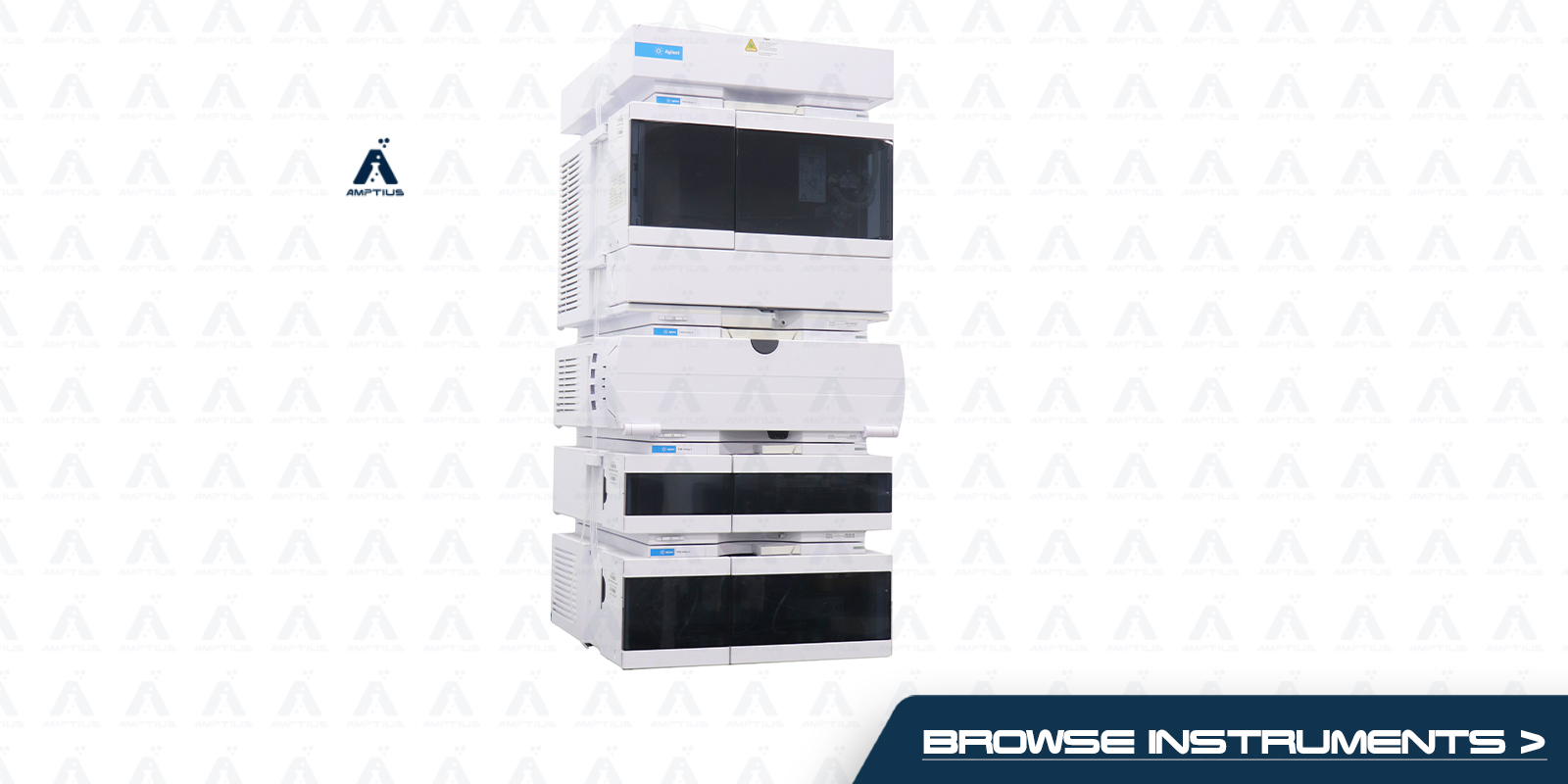
Targeted instrumentation must demonstrate reliable quantification in a milk matrix, including derivatization-based methods for formaldehyde, colorimetric analysis for starch, and ELISA or LC-based detection for soy protein. Given the low detection limits and matrix complexity, precision and method validation are critical. Each platform listed below has demonstrated compatibility with one or more of the targeted adulterants. Labs should confirm full validation before regulatory use under AOAC SMPR 2020.011.
Please click here to learn more about AOAC Method SMPR 2020.011
Agilent 1260 Infinity II HPLC System with DAD Detector for AOAC Method SMPR 2020.011
The Agilent 1260 Infinity II HPLC System with Diode Array Detector (DAD) provides a powerful and modular platform for formaldehyde detection when coupled with derivatization chemistry such as DNPH. This setup supports precise separation and quantification of formaldehyde down to 0.01 ppm, in line with AOAC LOQ criteria. Its robust binary pump ensures reproducible retention times, while the DAD offers spectral confirmation for analyte specificity. This system is widely used for trace-level aldehyde monitoring in complex matrices like milk.
OpenLab CDS software simplifies system calibration, suitability checks, and batch reporting to support regulated workflows. Its integration with validated columns and reagents enables full compliance with the recovery, accuracy, and precision thresholds of SMPR 2020.011. The 1260 Infinity II is a preferred solution for formaldehyde analysis where cost-effective HPLC platforms are favored. When validated appropriately, it provides a stable and reproducible method for formaline adulteration detection.
Shimadzu Nexera X2 HPLC with RF-20AXS for AOAC Method SMPR 2020.011
The Shimadzu Nexera X2 HPLC System with RF-20AXS fluorescence detector is highly suited for detecting formaldehyde in raw milk using sensitive derivatization techniques. The system’s fluorescence detection improves sensitivity over UV methods, achieving LOQs below 0.01 ppm. Its high-pressure capability and stable flow rates enable reliable separation even in complex dairy matrices. This configuration meets the method’s precision requirements, with RSDr and RSDR well within the specified limits when operated under validated conditions.
LabSolutions software provides integrated calibration, system suitability monitoring, and traceable result logging, ideal for regulatory environments. The Nexera X2 with RF-20AXS is often chosen for food safety labs seeking improved formaldehyde detection without relying on mass spectrometry. With appropriate validation and derivatization, this system enables laboratories to comply fully with AOAC SMPR 2020.011 for formaline analysis.
PerkinElmer Clarus 590 GC with FID or MS for AOAC Method SMPR 2020.011
The PerkinElmer Clarus 590 GC equipped with either Flame Ionization Detector (FID) or Mass Spectrometry (MS) is a robust solution for formaldehyde detection following headspace sampling or derivatization (e.g., PFBHA). GC-based systems offer exceptional selectivity and sensitivity, and the Clarus 590 reliably achieves the required LOQ of ≤ 0.01 ppm. Whether using FID for routine analysis or MS for confirmation, this platform meets recovery and precision expectations outlined in AOAC SMPR 2020.011.
TotalChrom software ensures compliance through calibration traceability and automated performance checks. The Clarus 590 system is ideal for labs familiar with gas-phase analysis and seeking high sensitivity for volatile adulterants. It provides rugged, validated workflows for formaline analysis when paired with appropriate sample preparation methods and derivatization protocols.
Thermo Scientific Dionex UltiMate 3000 HPLC with DAD or FLD for AOAC Method SMPR 2020.011
The Thermo Scientific Dionex UltiMate 3000 HPLC system with either Diode Array Detector (DAD) or Fluorescence Detector (FLD) offers versatile capabilities for formaldehyde detection. Using common derivatization approaches, this system achieves low-parts-per-billion sensitivity while maintaining excellent reproducibility. Its advanced flow control and temperature stability allow for consistent separation and integration of target analytes, supporting full compliance with AOAC’s precision and accuracy thresholds.
Chromeleon CDS software facilitates audit trail generation, system suitability tracking, and report automation. The UltiMate 3000 is widely used in regulated labs that require HPLC-based analysis for adulterants. When paired with a validated method, this system fulfills all analytical requirements for formaldehyde under SMPR 2020.011 and is a trusted platform for dairy adulteration testing.
Agilent Cary 60 UV-Vis Spectrophotometer for AOAC Method SMPR 2020.011
The Agilent Cary 60 UV-Vis Spectrophotometer is well-suited for the colorimetric analysis of starch and formaldehyde in milk using iodine-based or chromotropic acid methods. The Cary 60 offers stable wavelength accuracy and rapid scanning, essential for quantifying starch in the 10–50 ppm range and formaldehyde at levels as low as 0.01 ppm. With proper calibration and method validation, this system meets the LOQ, recovery, and repeatability requirements of SMPR 2020.011.
Its fiber-optic design minimizes drift, while UV-Vis software modules support method validation and result reporting. The Cary 60 is ideal for laboratories seeking a compact and cost-effective platform for high-throughput screening of milk adulterants. Its performance reliability makes it a practical solution for starch detection and validated formaldehyde assays.
Shimadzu UV-1900i UV-Vis Spectrophotometer for AOAC Method SMPR 2020.011
The Shimadzu UV-1900i UV-Vis Spectrophotometer provides excellent performance for starch quantification via iodine-based colorimetric methods. Its high optical resolution and low stray light ensure precise absorbance readings at 580–620 nm, suitable for starch assays in the 10–50 ppm range. With appropriate validation, the UV-1900i also supports chromotropic acid-based formaldehyde detection meeting the ≤ 0.01 ppm LOQ.
UVProbe software enables system suitability checks, calibration monitoring, and documentation, making it compliant with analytical quality requirements. The instrument’s fast scanning and stability support consistent results across large batches. This system is a strong choice for labs focused on starch and formaldehyde screening in raw milk using validated spectrophotometric methods.
BioTek Synergy H1 Hybrid Reader for AOAC Method SMPR 2020.011
The BioTek Synergy H1 Hybrid Reader is a flexible multimode microplate reader suitable for ELISA-based soy protein detection in raw milk. With absorbance detection capabilities and Gen5 software, the system quantifies soy protein concentrations down to 10 ppm with high precision and reproducibility. It meets AOAC criteria for recovery and accuracy through use of validated immunoassay kits.
The reader’s onboard shaking, temperature control, and multiple wavelength detection enable robust ELISA workflows. It is widely adopted in allergen detection and food authenticity testing. With proper validation and matrix-matched calibration, the Synergy H1 supports full method compliance under SMPR 2020.011 for soy protein analysis.
Tecan Infinite 200 PRO for AOAC Method SMPR 2020.011
The Tecan Infinite 200 PRO offers reliable absorbance-based ELISA quantitation for soy protein detection in raw bovine milk. Its wavelength flexibility and temperature stability make it ideal for high-throughput testing using validated immunoassay protocols. The instrument supports detection limits of ≤ 10 ppm with acceptable recovery and precision, aligning with AOAC performance standards.
Magellan software provides complete validation support, including calibration curve generation, QC sample tracking, and audit trail functionality. The Infinite 200 PRO is widely used in food safety labs for allergen detection. It ensures AOAC-compliant soy protein measurement when used with validated assay kits and milk-specific controls.
Choosing the Right Instrument for AOAC Method SMPR 2020.011
- For formaldehyde: Agilent 1260 HPLC, Shimadzu Nexera X2 HPLC, PerkinElmer Clarus 590 GC, and Thermo UltiMate 3000 HPLC systems
- For starch: Agilent Cary 60 UV-Vis and Shimadzu UV-1900i UV-Vis Spectrophotometers
- For soy protein: BioTek Synergy H1 Hybrid Reader and Tecan Infinite 200 PRO
AOAC SMPR 2020.011 outlines stringent requirements for detecting adulterants in raw bovine milk. The instruments listed above meet these requirements when configured with validated methods, appropriate derivatization, or ELISA protocols. We offer certified refurbished systems tailored for dairy authenticity and food safety testing. Contact us today to explore cost-effective solutions for AOAC-compliant analysis.
