
AOAC Method SMPR 2020.008 Instrumentation Guide
Standard Method Performance Requirements (SMPRs) for Nontargeted Testing (NTT) of Ingredients for Food Authenticity/Fraud Evaluation of Pasteurized Whole Liquid Bovine Milk
AOAC SMPR 2020.008 sets forth the minimum performance criteria for nontargeted testing (NTT) of adulteration in pasteurized whole liquid bovine milk. The method requires instruments to detect economic adulterants like melamine, urea, starch, and vegetable oils, even at concentrations as low as 0.015%. Analytical systems must establish baseline fingerprints using authentic milk samples and distinguish them from adulterated ones using statistical models. Classification must be based on chemometric approaches such as PCA, SIMCA, or other multivariate techniques. All systems must also show high reproducibility and accuracy across 30 independently tested validation samples.
Suitable instrumentation must support spectral or compositional fingerprinting, accommodate chemometric integration, and produce consistent results across replicates. The platforms listed below meet the method’s stringent performance expectations when configured with validated workflows. These systems cover a range of analytical technologies including FT-IR, NIR, NMR, and QTOF-MS, allowing broad flexibility in laboratory implementation. Each has demonstrated strong performance in food fraud detection, particularly in dairy authenticity testing. Laboratories should confirm their validation approach aligns with the method’s scope and sample preparation guidance.
Please click here to learn more about AOAC Method SMPR 2020.008
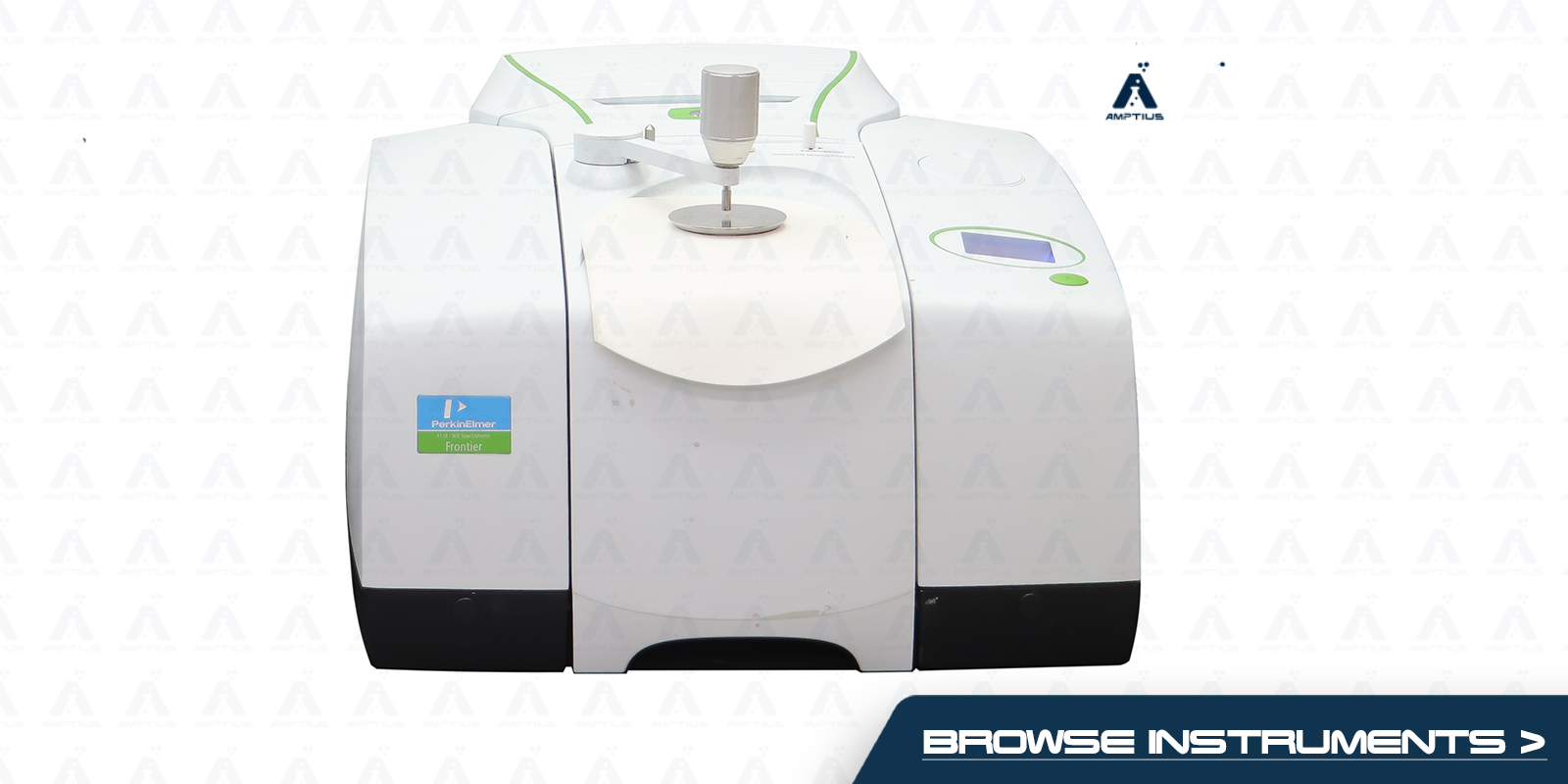
PerkinElmer Frontier FT-IR / FIR Spectrometer with UATR for AOAC Method SMPR 2020.008
The PerkinElmer Frontier FT-IR Spectrometer with UATR accessory delivers strong spectral fingerprinting for liquid milk samples. Its ability to detect slight compositional changes makes it ideal for identifying adulterants like starch, sucrose, maltodextrin, and vegetable oils. The UATR interface simplifies sample handling, enabling direct application and rapid throughput. Spectrum 10 software allows users to build and apply chemometric models that differentiate authentic from adulterated samples. This configuration supports repeatable analysis and meets the 100% adulterant detection requirement outlined by AOAC.
This system performs consistently across different milk matrices and adulterant types. Its rugged build and modular software tools make it ideal for quality control laboratories and food authenticity screening facilities. The Frontier FT-IR system can be deployed quickly with minimal operator training, providing efficient implementation of SMPR 2020.008. When used with representative authentic samples, it provides reliable baseline generation and model performance. It stands out as a high-throughput solution for routine nontargeted screening.
Agilent Cary 630 FTIR Spectrometer for AOAC Method SMPR 2020.008
The Agilent Cary 630 FTIR Spectrometer offers a compact, durable platform for rapid milk fingerprinting. It includes a standardized ATR module that enables consistent sample interaction and minimal preparation time. This system is especially effective for detecting milk adulteration from added whey, water, or sugar-based compounds. With spectral resolution suitable for classification modeling, it supports real-time analysis when paired with PCA-based workflows. Its small footprint and robust construction make it practical for field or benchtop use in QA labs.
Chemometric models built on this system show strong separation between authentic and adulterated samples. Users benefit from simplified workflows and reduced downtime, which enhances testing efficiency. Spectral data can be processed in compatible software environments to ensure classification precision. This instrument has seen wide adoption in food testing programs due to its reliability and cost-effectiveness. With appropriate validation, it satisfies all performance requirements in SMPR 2020.008.
Thermo Scientific Antaris II FT-NIR Analyzer for AOAC Method SMPR 2020.008
The Thermo Scientific Antaris II FT-NIR Analyzer delivers rapid screening capabilities using near-infrared fingerprinting. It excels at detecting adulterants such as sucrose, water, and whey based on spectral pattern deviations. The system’s compatibility with software like TQ Analyst allows laboratories to build statistical models for classification. Milk samples can be analyzed quickly with little need for complex handling, making the Antaris II ideal for high-throughput workflows. Analysts can detect shifts in compositional structure across large sample batches.
This analyzer meets the method’s strict reproducibility and adulterant detection requirements when properly calibrated. Its speed, spectral resolution, and flexibility make it suitable for in-line or benchtop use. Many dairy labs prefer FT-NIR for routine authenticity checks because of its short cycle time. Users can export data into multivariate platforms for enhanced interpretation. The Antaris II provides dependable results in both commercial and regulatory environments.
FOSS MilkoScan FT3 for AOAC Method SMPR 2020.008
The FOSS MilkoScan FT3 is purpose-built for dairy product analysis and supports AOAC-compliant fingerprinting workflows. It quantifies milk composition and identifies adulteration through changes in fat, protein, and carbohydrate levels. Users can integrate this system with statistical modeling tools to establish and apply classification protocols. Its spectral data output is well-suited for PCA or SIMCA analysis and supports accurate comparison with authentic milk profiles. The FT3 provides consistent results across multiple validation samples, satisfying SMPR reproducibility standards.
It is a proven solution for quality assurance teams seeking high-throughput, low-maintenance instruments. Operators can implement automated sample queues and manage results through intuitive software dashboards. This system supports daily production testing while still delivering forensic-level insight for fraud detection. It is often used in milk collection centers and dairy manufacturing lines. When integrated with chemometrics, it becomes a powerful tool for authenticity control under SMPR 2020.008.
Bruker Avance III HD 400 MHz NMR Spectrometer for AOAC Method SMPR 2020.008
The Bruker Avance III HD 400 MHz NMR Spectrometer provides molecular-level profiling of milk composition. It offers unmatched specificity in detecting trace adulterants such as melamine and urea. The system generates high-resolution proton spectra that can be analyzed using supervised learning methods. Researchers can build statistical models that classify samples based on authentic milk fingerprints. The Avance III NMR delivers superior repeatability and resolution across long sample runs.
This instrument is typically used in reference or regulatory labs with advanced analytical capacity. Its performance meets or exceeds every aspect of SMPR 2020.008, including LOQ, classification accuracy, and validation scope. Analysts benefit from its advanced calibration, automation, and data export features. The platform also integrates with software like TopSpin and AMIX for chemometric evaluation. For advanced authenticity testing, this NMR system offers industry-leading capabilities.
Magritek Spinsolve Benchtop NMR Spectrometer for AOAC Method SMPR 2020.008
The Magritek Spinsolve Benchtop NMR Spectrometer is a compact solution for labs needing basic nontargeted fingerprinting. While it does not match the resolution of high-field NMR systems, it still detects adulterants such as sucrose, maltodextrin, and oils effectively. Its simplified interface and low maintenance make it accessible to educational and mid-scale labs. Analysts can use third-party chemometric software to create classification models using spectral data. The Spinsolve produces consistent results when operated under validated conditions.
This instrument supports rapid testing and occupies minimal bench space. Users can run multiple samples with limited infrastructure and deliver actionable insights. Its moderate cost and ease of operation allow smaller labs to implement NMR-based fraud detection. The Spinsolve meets SMPR 2020.008 benchmarks for detection and repeatability when configured correctly. It offers a practical entry point into molecular fingerprinting workflows.
Waters Xevo G2-XS QTOF with UPLC for AOAC Method SMPR 2020.008
The Waters Xevo G2-XS QTOF is a high-resolution mass spectrometer capable of ultra-trace detection. When paired with UPLC, it separates and identifies adulterants like melamine and urea with exceptional sensitivity. This system supports nontargeted analysis workflows that combine accurate mass measurement with statistical pattern recognition. MassLynx software enables batch processing and real-time classification using ion-specific fingerprints. Analysts can achieve the required sensitivity and classification precision across all target compounds.
The Xevo G2-XS meets every validation criterion outlined in SMPR 2020.008. It is commonly used in advanced food labs, regulatory agencies, and research institutions. This platform is especially effective for low-level contamination detection and complex matrix analysis. Its reproducibility and dynamic range make it suitable for extended validation studies. When used with validated methods, the Xevo QTOF ensures full compliance with AOAC requirements.
Agilent 6546 LC/Q-TOF MS System for AOAC Method SMPR 2020.008
The Agilent 6546 Q-TOF MS System is designed for high-resolution, untargeted analysis of complex food samples. It detects both small molecules and macronutrient adulterants with excellent mass accuracy. Its integration with UPLC enables fast chromatographic separation of milk components. MassHunter software supports fingerprint-based classification models, including PCA and supervised learning approaches. The system provides rapid, repeatable analysis of adulterated versus authentic milk samples.
Analysts can deploy the 6546 in regulatory, research, or commercial settings with confidence. It satisfies all SMPR 2020.008 metrics for accuracy, LOQ, and validation scope. The system supports automated workflows for consistent throughput in milk authenticity testing. Labs looking for a robust HRMS solution will find this instrument meets their needs. It is especially effective for detecting economically motivated adulteration at trace levels.
Choosing the Right Instrument for AOAC Method SMPR 2020.008
- FT-IR systems: PerkinElmer Frontier FT-IR, Spectrum Two, Agilent Cary 630
- NIR analyzers: Thermo Antaris II, FOSS MilkoScan FT3
- NMR systems: Bruker Avance III HD, Magritek Spinsolve
- HRMS platforms: Waters Xevo G2-XS QTOF, Agilent 6546 LC/Q-TOF
AOAC SMPR 2020.008 requires analytical platforms that support reproducible, statistically validated detection of adulterants in dairy products. The instruments listed above meet those requirements when paired with chemometric models and properly validated methods. Each supports classification accuracy, low detection limits, and repeatable performance across independent samples. Whether using spectroscopy or spectrometry, labs must validate each platform within the scope of the method. We offer certified refurbished systems optimized for food authenticity testing. Contact us today to explore AOAC-compliant instrumentation options.
