
AOAC Method SMPR 2018.009 Instrumentation Guide
Standard Method Performance Requirements (SMPR) for Lactose in Low-Lactose or Lactose-Free Milk, Milk Products and Products Containing Dairy Ingredients
AOAC SMPR 2018.009 sets performance standards for detecting and quantifying lactose in low-lactose and lactose-free milk, dairy products, and foods containing dairy ingredients. Laboratories must detect lactose at low levels with strong precision and specificity. Acceptable instrumentation includes HPLC-RID, HPAEC-PAD, and LC-MS/MS systems capable of reliable lactose separation. The instruments listed below fully meet the method’s criteria for sensitivity, recovery, and repeatability, making them excellent choices for regulatory lactose verification workflows.
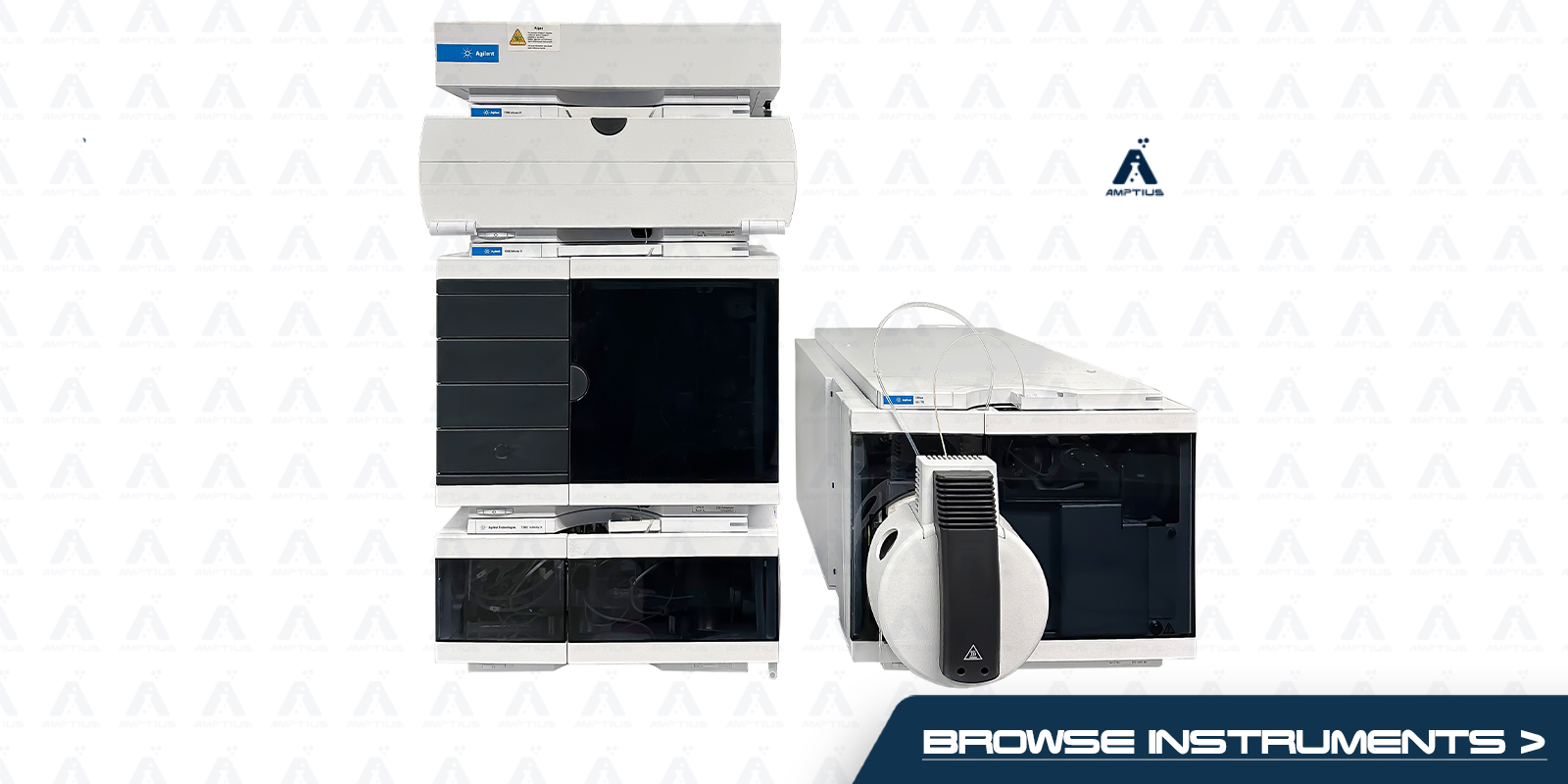
Instruments must differentiate lactose from similar carbohydrates like glucose and galactose. Methods must deliver an LOQ of 0.01% or lower and achieve recoveries between 90% and 110%. Precision must meet the strict AOAC RSDr and RSDR thresholds. Laboratories can choose technologies based on sample matrix complexity and regulatory goals. Whether using chromatography or mass spectrometry, the systems highlighted here support accurate, reproducible lactose analysis in compliance with AOAC SMPR 2018.009 requirements for labeling low-lactose and lactose-free products.
Please click here to learn more about AOAC Method SMPR 2018.009
Agilent Ultivo Triple Quad LC/MS/MS System with 1260 Infinity II Front End for AOAC Method SMPR 2018.009
The Agilent Ultivo LC-MS/MS system with the 1260 Infinity II UHPLC delivers high sensitivity and reproducibility for lactose analysis. Its orthogonal spray design improves ionization while reducing matrix effects, supporting accurate quantitation in milk, cheese, and yogurt. Laboratories can consistently reach the required LOQ of 0.01% or lower with strong signal stability. Its compact footprint and efficient batch processing make the Ultivo an ideal choice for high-throughput lactose testing in regulated environments.
MassHunter software simplifies batch setup, quantitation, and compliance-ready reporting. Analysts benefit from consistent retention time stability and precise MRM transitions. Automated integration tools streamline result validation for lactose detection. The Agilent Ultivo system provides the sensitivity, speed, and reliability that food safety laboratories need when verifying lactose concentrations in dairy matrices, ensuring full alignment with AOAC SMPR 2018.009 method criteria and industry standards for low-lactose product testing.
PerkinElmer QSight 420 LC-MS/MS Triple Quad System with UHPLC Front End for AOAC Method SMPR 2018.009
The PerkinElmer QSight 420 LC-MS/MS system, coupled with UHPLC, offers robust low-level lactose quantitation across a variety of dairy and food products. Its dual-source ESI/APCI ionization ensures flexible method development for challenging matrices like infant formulas and dairy beverages. The system meets AOAC recovery and LOQ targets while delivering excellent precision. Its rugged design supports consistent high-throughput workflows, making it ideal for busy regulatory and quality control laboratories focused on lactose verification.
Simplicity 3Q software enables efficient method setup, batch processing, and automated regulatory reporting. Analysts can manage calibration curves, sample runs, and compliance results with ease. The QSight 420 provides reliable lactose measurements across matrix-rich dairy samples, minimizing variability and analytical drift. Laboratories benefit from stable signal performance, durable system architecture, and simple maintenance, ensuring AOAC-compliant lactose testing across routine and specialized food safety workflows.
Waters Xevo TQ-S Micro Triple Quadrupole LC-MS/MS with ACQUITY I-Class UPLC for AOAC Method SMPR 2018.009
The Waters Xevo TQ-S Micro LC-MS/MS system with ACQUITY I-Class UPLC delivers strong quantitative performance for lactose detection at trace levels. Its StepWave ion guide improves ion transmission while reducing chemical noise, enabling precise MRM transitions. Laboratories achieve consistent LOQs well below the 0.01% threshold while maintaining high recovery rates across various dairy matrices. This system is a reliable choice for those requiring fast lactose analysis in milk, whey, cheese, and processed foods.
TargetLynx software supports automated peak integration, result validation, and batch reporting. Its user-friendly interface simplifies compliance tracking for AOAC SMPR 2018.009 workflows. Analysts can streamline data processing while maintaining robust sensitivity and reproducibility. The Xevo TQ-S Micro system offers trusted performance for laboratories tasked with verifying low-lactose and lactose-free labeling claims while adhering to stringent regulatory and food safety standards worldwide.
Agilent 1260 Infinity II HPLC GPC/SEC System with RID Detector + IsoPump for AOAC Method SMPR 2018.009
The Agilent 1260 Infinity II HPLC system with RID detector provides a traditional approach to lactose quantitation. Its refractive index detection allows selective analysis of carbohydrates without the need for derivatization. Laboratories consistently separate lactose from glucose and galactose, meeting AOAC SMPR 2018.009 sensitivity and recovery targets. With its precise flow control and excellent baseline stability, this platform supports reliable lactose measurement across milk, whey, cheese, and yogurt matrices.
ChemStation software simplifies instrument operation, chromatographic analysis, and full traceability for regulatory reporting. The 1260 Infinity II ensures consistent performance during extended batch runs, minimizing drift and baseline noise. Analysts can confidently achieve robust lactose quantitation workflows, supporting compliance with AOAC standards for low-lactose and lactose-free labeling. Its rugged construction and proven technology make it a preferred solution for dairy testing laboratories worldwide.
Thermo Scientific Dionex ICS-6000 HPAEC-PAD System for AOAC Method SMPR 2018.009
The Thermo Scientific Dionex ICS-6000 HPAEC-PAD system offers highly selective lactose detection using pulsed amperometric detection. Its anion-exchange chromatography columns provide excellent separation of lactose from other carbohydrates without chemical derivatization. Laboratories achieve low LOQs and high recoveries even in processed dairy matrices like infant formula and yogurt drinks. This system is well-suited for advanced carbohydrate analysis workflows requiring strict compliance with AOAC SMPR 2018.009.
Chromeleon CDS software automates system control, peak analysis, and compliance documentation. Analysts benefit from streamlined method development and simplified reporting workflows. The ICS-6000 delivers sharp peak resolution, low background noise, and reproducible lactose quantitation across a wide range of sample types. Laboratories seeking a reliable, matrix-tolerant platform for low-lactose and lactose-free product verification can confidently rely on the ICS-6000 for regulatory testing applications.
Metrohm 940 Professional IC Vario with PAD Detector for AOAC Method SMPR 2018.009
The Metrohm 940 Professional IC Vario with pulsed amperometric detection provides accurate lactose quantitation in complex food matrices. Its high-resolution chromatography separates lactose from interfering sugars, ensuring accurate quantification at trace levels. The system meets AOAC SMPR 2018.009 requirements for recovery, precision, and specificity. It is an excellent choice for laboratories that must validate low-lactose or lactose-free product claims across dairy foods and ingredient formulations.
MagIC Net software supports simple instrument setup, batch sample analysis, and regulatory report generation. The 940 Professional IC Vario offers excellent matrix resilience, sharp peak resolution, and stable baseline performance, even across extended analytical runs. Its flexible configuration and proven system stability help laboratories maintain AOAC-compliant lactose detection while supporting high sample throughput and minimal maintenance. It is a versatile solution for demanding carbohydrate analysis applications.
Shimadzu Prominence HPLC System with RID-20A Detector for AOAC Method SMPR 2018.009
The Shimadzu Prominence HPLC System with RID-20A detector offers stable, precise lactose quantitation workflows for dairy products and foods containing dairy ingredients. Its refractive index detection technology provides accurate carbohydrate separation without complex sample preparation. Laboratories achieve LOQs below 0.01%, meeting AOAC SMPR 2018.009 performance standards with excellent repeatability across sample types like milk, whey powders, and infant formulas.
LCsolution software provides intuitive batch control, chromatographic analysis, and full audit trails for regulatory compliance. The RID-20A maintains excellent thermal stability and low noise, supporting high-quality lactose quantitation even across large sample loads. Laboratories that seek proven, cost-effective lactose analysis solutions can rely on the Prominence HPLC system to deliver reproducible results for labeling and food safety applications in compliance with AOAC standards.
Choosing the Right Instrumentation for AOAC Method SMPR 2018.009
- For HPLC-RID workflows: Agilent 1260 Infinity II HPLC, Shimadzu Prominence HPLC, and Thermo ICS-6000 provide reliable lactose separation solutions.
- For LC-MS/MS workflows: Agilent Ultivo, Waters Xevo TQ-S Micro, and PerkinElmer QSight 420 deliver excellent trace lactose detection.
- For advanced carbohydrate analysis: Metrohm 940 IC Vario and Thermo ICS-6000 offer high-resolution specificity and strong matrix resilience.
If you are looking for a reliable and cost-effective solution to meet AOAC SMPR 2018.009 requirements, we offer a wide range of certified refurbished LC-MS/MS and chromatography systems. Each instrument undergoes rigorous testing to ensure compliance with regulatory standards while providing excellent performance for lactose detection. Contact us today to learn how our refurbished systems can help your laboratory implement efficient, AOAC-compliant workflows at a fraction of the cost of new equipment.