
AOAC Method SMPR 2018.007 Instrumentation Guide
Standard Method Performance Requirements (SMPR) for Identification of Skullcap in Raw Materials, Skullcap-Based Dietary Ingredients, and Dietary Supplements
AOAC SMPR 2018.007 outlines the minimum analytical performance requirements for identifying Scutellaria lateriflora (Skullcap) in raw botanical materials, extracts, and finished dietary supplements. The method must unambiguously distinguish Skullcap from known adulterants, especially Teucrium species such as Teucrium canadense and Teucrium chamaedrys. Chromatographic, spectroscopic, and DNA-based techniques are all acceptable if they are validated to meet the SMPR’s inclusivity and exclusivity requirements with high confidence. Performance must be demonstrated across multiple matrices, including powders, extracts, and capsules. Accuracy, repeatability, and selectivity are critical for ensuring compliance.
To comply with SMPR 2018.007, laboratories must use validated methods capable of reliably identifying Skullcap-specific markers or genetic sequences while excluding related or adulterant species. Each method must achieve 100% correct identification across all target samples (33/33) and no false positives in exclusion species. Instrumentation alone is not sufficient—only methods that meet these performance criteria are considered valid. The platforms below support workflows that, when properly configured and validated, can meet the expectations of this SMPR. They represent leading solutions for laboratories engaged in herbal authenticity verification.
Please click here to learn more about AOAC Method SMPR 2018.007
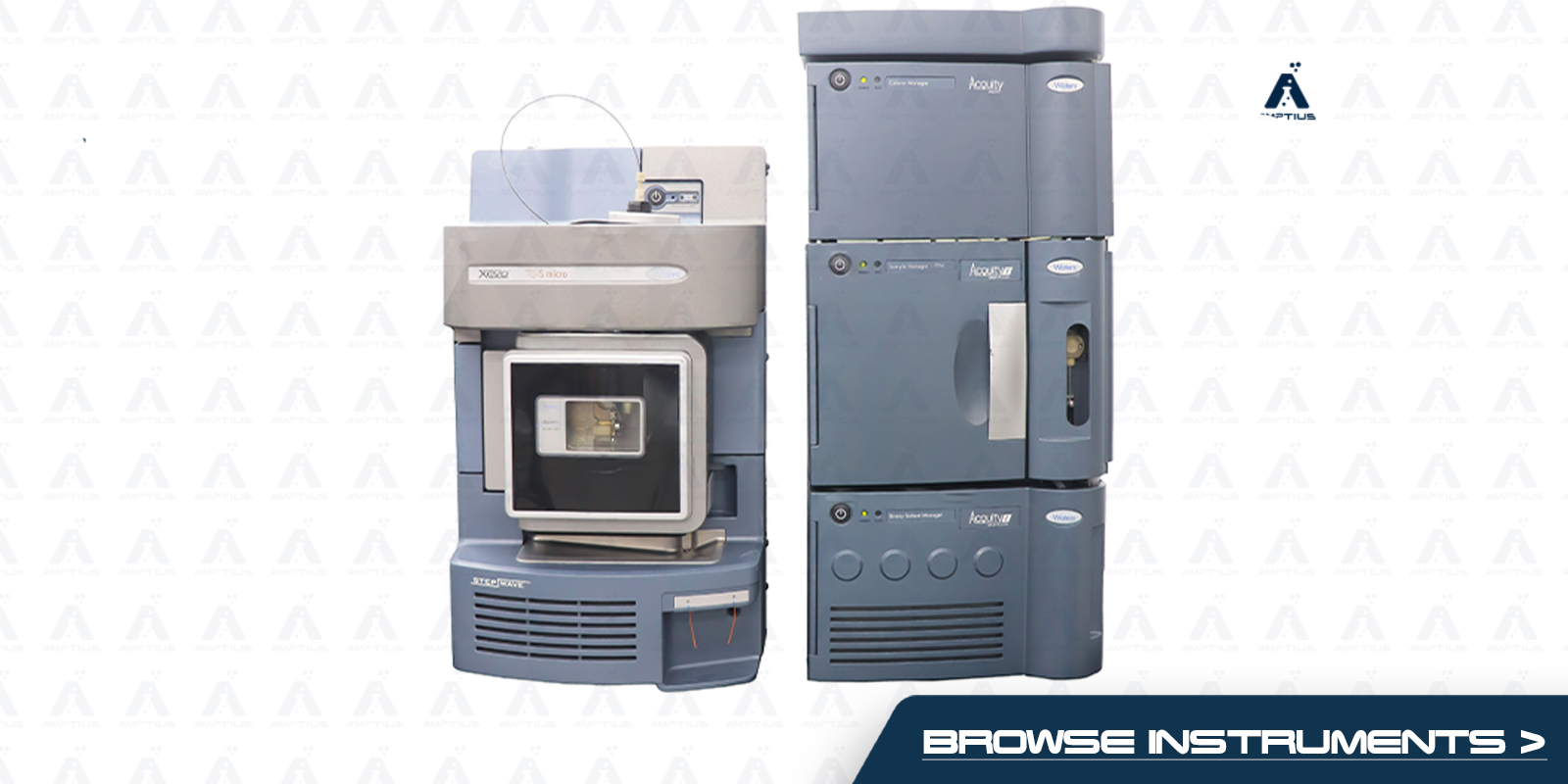
Waters Xevo TQ-S Micro Triple Quadrupole LC-MS/MS with ACQUITY I Class for AOAC Method SMPR 2018.007
The Waters Xevo TQ-S Micro with ACQUITY I Class UHPLC is a highly sensitive LC-MS/MS system ideal for flavonoid profiling in herbal identity testing. It enables reliable detection of marker compounds such as baicalin and baicalein, which are key to distinguishing Skullcap from adulterants. The system’s MRM mode offers strong selectivity and retention time precision, even in complex botanical matrices. MassLynx software supports real-time ion confirmation, recovery analysis, and regulatory reporting. This platform allows analysts to meet the strict inclusivity and exclusivity criteria required under SMPR 2018.007.
The Xevo TQ-S Micro is widely used in regulated laboratories due to its analytical stability and reproducible quantitation. Its rapid polarity switching and robust ion optics help achieve low limits of detection across varied sample types. When validated for Skullcap detection, the system delivers dependable results in both raw ingredients and multi-herb formulations. It also integrates smoothly into high-throughput environments where both precision and speed are critical. This instrument is a trusted solution for AOAC-compliant botanical testing workflows.
Agilent Ultivo Triple Quad LC-MS/MS with 1260 Infinity II for AOAC Method SMPR 2018.007
The Agilent Ultivo Triple Quadrupole LC-MS/MS system paired with the 1260 Infinity II UHPLC is well-suited for targeted metabolite profiling of Skullcap in botanical matrices. Its compact design does not compromise performance, offering high-resolution detection of chemical markers unique to Scutellaria lateriflora. Jet Stream ionization improves signal intensity and sharpens peak shape for greater confidence in quantifier and qualifier ratios. MassHunter software supports full validation, including ion ratio thresholds, calibration curves, and result traceability. Analysts can confidently deploy this system in both R&D and production environments.
Validated Ultivo methods can meet SMPR 2018.007 by reliably differentiating Skullcap from Teucrium species based on flavonoid content. The system performs well in extracts, powders, and complex supplements, ensuring consistent analytical precision. Its intuitive interface simplifies method optimization and supports high-throughput analysis without sacrificing data quality. With a strong reputation for reliability and regulatory alignment, Ultivo is a dependable choice for laboratories specializing in botanical authenticity. This system is especially valuable where space efficiency and analytical rigor are equally important.
PerkinElmer QSight 420 LC-MS/MS with UHPLC for AOAC Method SMPR 2018.007
The PerkinElmer QSight 420 system with UHPLC delivers sensitive, high-throughput analysis for herbal identity testing. Its dual-source ionization system supports flexible polarity switching, essential for resolving flavonoid profiles in Skullcap and related species. Analysts can quantify marker compounds with precision, even in challenging matrices containing multiple herbs. The system’s robust design ensures long-term performance consistency during routine QC or method validation. Its analytical stability supports AOAC method performance expectations with confidence.
Simplicity software enables easy calibration setup, automated ion monitoring, and detailed reporting for audit trails. When paired with validated Skullcap methods, the QSight 420 provides consistent differentiation from exclusion species. Its reproducible retention time and low detection limits enhance method robustness across different product forms. Laboratories benefit from reduced maintenance and efficient sample throughput, making this system well-suited for commercial testing. The QSight 420 is an excellent platform for botanical verification under regulatory standards.
Agilent 1260 Infinity II HPLC with DAD Detector and BinPump for AOAC Method SMPR 2018.007
The Agilent 1260 Infinity II HPLC with DAD Detector offers reliable UV-based chromatographic identification of Skullcap through full-spectrum flavonoid profiling. By comparing retention times and UV absorbance patterns to reference standards, analysts can differentiate Scutellaria lateriflora from Teucrium and other adulterants. This method is widely recognized for its simplicity and reproducibility in quality control applications. OpenLab software supports spectral library matching and peak purity assessments essential for compliance. It is a cost-effective tool for routine authentication when validated properly.
This system is ideal for raw materials, extracts, and tablet forms where flavonoids are preserved. It enables clear separation of target peaks and provides stable chromatographic performance across multiple runs. Analysts can create robust fingerprint profiles that meet AOAC identification criteria. For facilities prioritizing affordability and established methodologies, the 1260 Infinity II HPLC with DAD is an excellent fit. It continues to be one of the most widely used instruments in herbal authenticity programs.
PerkinElmer Frontier FT-IR / FIR Spectrometer with UATR for AOAC Method SMPR 2018.007
The PerkinElmer Frontier FT-IR with UATR is a powerful system for fast, non-destructive botanical screening using vibrational spectroscopy. It can differentiate Skullcap from Teucrium based on unique spectral features, especially when paired with validated chemometric models or reference libraries. The UATR attachment allows direct analysis of solid and powdered samples without complex preparation. Spectrum software enables real-time matching and PCA evaluation, supporting compliance with SMPR identification requirements. This instrument adds significant value to high-throughput screening workflows.
FT-IR is best used as an orthogonal confirmation method in conjunction with chromatographic or DNA-based testing. Its speed and low operating cost make it ideal for incoming raw material checks. With proper calibration and model training, FT-IR can offer high specificity for botanical ID. Analysts benefit from reduced reagent use and simplified testing protocols. The Frontier system is a practical, efficient solution for supplement and raw material verification.
QuantStudio 12k Flex Real-Time PCR System with AccuFill for AOAC Method SMPR 2018.007
The QuantStudio 12k Flex Real-Time PCR System offers scalable, high-throughput molecular authentication of Skullcap using species-specific primers or DNA barcoding. SMPR 2018.007 allows DNA-based methods as long as they achieve validated inclusivity and exclusivity. The system’s OpenArray technology and AccuFill loading streamline high-volume workflows with minimal error. Applied Biosystems software includes intuitive tools for melt curve analysis, quantitation, and quality control. This platform supports consistent DNA identification across processed, raw, or blended formulations.
QuantStudio is particularly valuable in cases where chemical markers are absent or degraded. Its accuracy and specificity at the genomic level help ensure correct identification even in complex products. Analysts can run dozens to hundreds of samples per batch, boosting operational efficiency. The system is widely used in regulated herbal and dietary supplement labs. When validated for Skullcap, it meets all SMPR performance criteria.
BioFire Diagnostics FilmArray Torch PCR System for AOAC Method SMPR 2018.007
The BioFire FilmArray Torch System is a fully integrated real-time PCR platform that automates DNA extraction, amplification, and detection within a closed cartridge. While developed for clinical diagnostics, it can support Skullcap identification if paired with a validated custom panel. SMPR 2018.007 accepts molecular techniques if they show strong specificity, zero cross-reactivity, and reliable reproducibility. FilmArray reduces manual handling and contamination risk while increasing testing speed. This makes it well-suited for consistent botanical screening in high-volume labs.
The system’s hands-free workflow enhances biosafety and minimizes user variability. When equipped with a validated herbal DNA assay, it can rapidly authenticate Scutellaria lateriflora and exclude adulterants like Teucrium. Although less flexible than open qPCR platforms, FilmArray excels in reproducibility and ease of use. Its compact footprint and efficient design help labs meet regulatory timelines. FilmArray is a strong option for standardized, DNA-based supplement verification.
Applied Biosystems ABI 7500 Fast DX Real-Time PCR System for AOAC Method SMPR 2018.007
The ABI 7500 Fast DX Real-Time PCR System offers fast and accurate molecular authentication of botanical species. It supports SYBR Green and TaqMan chemistries for identifying Scutellaria lateriflora based on validated genetic markers. This system is widely accepted in food and supplement labs for species-level identification. When paired with Skullcap-specific assays, it can easily meet AOAC SMPR requirements. Analysts benefit from rapid run times, strong fluorescence detection, and easy software navigation.
The ABI 7500 is compatible with degraded DNA found in processed supplements. Its robust software provides full melt curve analysis and customizable reporting templates. This platform allows for flexible throughput without compromising precision. With proper validation, it ensures zero false positives from Teucrium and other exclusion species. It remains a gold standard for regulated molecular testing in herbal quality control.
Choosing the Right Instrument for AOAC SMPR 2018.007
- For LC-MS/MS-based compound identification: Waters Xevo TQ-S Micro, Agilent Ultivo, and PerkinElmer QSight 420
- For UV-based chromatographic profiling: Agilent 1260 Infinity II HPLC with DAD
- For IR-based fingerprinting: PerkinElmer Frontier FT-IR with UATR
- For DNA-based species authentication: QuantStudio 12k Flex, ABI 7500 Fast DX, and BioFire FilmArray Torch (with validated panels)
AOAC SMPR 2018.007 allows the use of chromatographic, spectroscopic, or molecular methods for Skullcap identification, as long as they meet inclusivity and exclusivity requirements. The instruments listed above offer validated workflows capable of achieving method compliance when properly implemented. Each system supports accurate botanical authentication across raw, processed, and multi-component matrices. Whether you prioritize throughput, automation, or cost-efficiency, the right solution depends on your lab’s specific workflow needs. Contact us today to explore certified refurbished instrumentation for regulated herbal identity testing.
