
AOAC Method SMPR 2018.005 Instrumentation Guide
Standard Method Performance Requirements (SMPR) for Determination of Kavalactones and/or Flavokavains from Kava (Piper methysticum)
AOAC SMPR 2018.005 establishes method performance requirements for quantifying six primary kavalactones—kavain, dihydrokavain, methysticin, dihydromethysticin, yangonin, and desmethoxyyangonin—in kava raw materials and finished products. The standard also includes optional targets such as flavokavain A, B, and C. To comply with this SMPR, analytical methods must achieve limits of quantitation of ≤ 5.0 mg/g for kavalactones and ≤ 0.1 mg/g for flavokavains. Laboratories must also meet recovery between 90–110%, RSDr ≤ 5%, and RSDR ≤ 8% across different matrices. Validated HPLC or LC-MS/MS platforms can fulfill these requirements when method performance is confirmed through internal validation.
Instrumentation must deliver strong chromatographic resolution, reliable retention time stability, and reproducible quantitation across botanical sample types. While SMPR 2018.005 does not endorse specific brands or models, laboratories may consider platforms with proven capabilities for matrix-rich, multi-analyte workflows. The examples listed below are widely used in botanical testing labs and meet performance benchmarks when properly validated. In all cases, laboratories are responsible for ensuring methods meet AOAC SMPR criteria through formal system suitability testing and quality control procedures.
Please click here to learn more about AOAC Method SMPR 2018.005
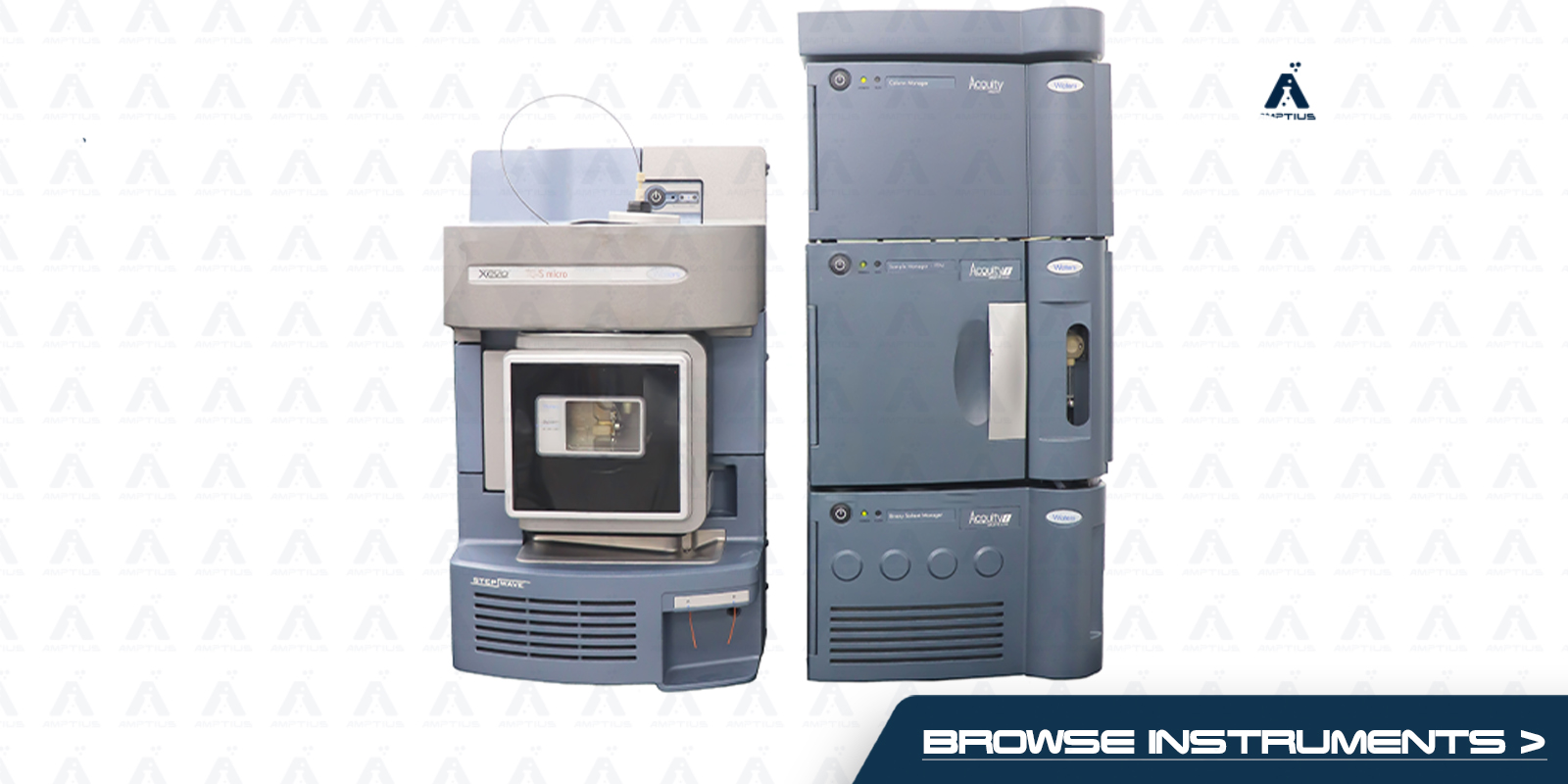
Waters Xevo TQ-S Micro Triple Quadrupole LC-MS/MS with ACQUITY I Class for AOAC SMPR Method 2018.005
The Waters Xevo TQ-S Micro, paired with the ACQUITY I Class UPLC, offers sensitive MRM-based quantitation of structurally similar kavalactones. Its StepWave ion optics and rapid polarity switching enhance signal acquisition and peak separation. Laboratories can configure this setup to achieve LOQs at or below SMPR thresholds, ensuring quantitative accuracy and selectivity. This system effectively resolves isobaric compounds like yangonin and kavain in powdered or encapsulated botanical forms.
MassLynx software facilitates robust method development, calibration setup, and validation tracking. Its compact design and throughput-friendly operation make it suitable for regulated herbal testing environments. While AOAC does not endorse specific instruments, the Xevo TQ-S Micro has gained widespread adoption in the dietary supplement industry. Laboratories should perform in-house validation to confirm compliance with SMPR 2018.005 precision and recovery requirements.
Agilent Ultivo Triple Quadrupole LC-MS/MS with 1260 Infinity II for AOAC SMPR Method 2018.005
The Agilent Ultivo LC-MS/MS system, integrated with the 1260 Infinity II UHPLC, delivers compact, high-sensitivity performance for quantifying kavalactones and flavokavains. Its Jet Stream ESI interface enhances signal response and ionization efficiency for low-level detection. With proper method optimization, this system supports LOQs meeting or exceeding SMPR thresholds, while maintaining RSDr and RSDR values within specification. Its consistent retention times and gradient reproducibility benefit analyses of botanical matrices.
MassHunter software streamlines method development, report generation, and system suitability monitoring. Many laboratories have validated this platform for dietary supplement testing, adapting it for AOAC compliance. However, each laboratory must confirm performance through specific validation protocols. The Ultivo’s compact footprint and flexible configuration make it an efficient choice for labs with limited space or high sample volumes.
PerkinElmer QSight 420 LC-MS/MS with UHPLC for AOAC SMPR Method 2018.005
The PerkinElmer QSight 420 system, combined with UHPLC, provides rugged and reproducible quantitation of kavalactones and flavokavains. Its dual-source ionization and robust signal processing ensure consistent results across various botanical matrices. When paired with validated analytical methods, this platform meets AOAC SMPR criteria for LOQ, recovery, and precision. Its consistent peak shapes and cycle times make it ideal for multi-analyte workflows in raw materials and finished kava products.
Simplicity software enhances method validation through automated calibration, recovery checks, and audit-ready reporting. Although AOAC does not specifically mention PerkinElmer instruments, the QSight 420 has demonstrated strong performance in supplement quality control environments. Laboratories must verify all SMPR criteria through internal validation, including matrix testing, repeatability, and system suitability. Proper configuration of this system supports accurate and compliant quantitation of flavonoids and lactones.
Thermo Scientific TSQ Altis Plus with Vanquish UHPLC for AOAC SMPR Method 2018.005
Thermo Scientific’s TSQ Altis Plus LC-MS/MS, integrated with the Vanquish UHPLC system, offers high-sensitivity analysis with Active Ion Management and rapid MRM switching. These features facilitate the separation and quantification of closely related kavalactones, even at low concentrations in complex matrices. With appropriate validation, this system meets AOAC SMPR thresholds for LOQ, precision, and recovery. Its robust hardware design and ion optics ensure consistent results during extended analytical runs.
TraceFinder software aids in system suitability tracking, calibration curve creation, and batch data review. The Altis Plus suits high-throughput laboratories conducting routine compliance testing for botanical ingredients. While AOAC does not endorse specific brands, this platform is frequently used in regulated natural products testing. Laboratories must perform comprehensive validation, including matrix-specific testing and recovery confirmation, to ensure suitability for SMPR 2018.005 applications.
Shimadzu LCMS-8060NX with Nexera X3 UHPLC for AOAC SMPR Method 2018.005
The Shimadzu LCMS-8060NX, coupled with Nexera X3 UHPLC, delivers fast and accurate quantitation of kavalactones and flavokavains in kava-based materials. Its high-speed MRM acquisition and enhanced desolvation system support reproducible transitions across challenging sample types. Laboratories can achieve LOQs below the 5.0 mg/g and 0.1 mg/g SMPR targets using this system. Stable ion source design and low baseline noise contribute to reliable performance in batch testing workflows.
LabSolutions software simplifies validation by providing system suitability checks, recovery tracking, and calibration control. Although AOAC does not directly name specific instruments, many natural product laboratories have adopted this system. Final compliance depends on method-specific validation, including assessments of repeatability, recovery, and linearity across various matrix forms. Implementing internal quality control and adhering to standard operating procedures are essential for SMPR-compliant reporting.
SCIEX Triple Quad™ 6500+ LC-MS/MS with ExionLC AD for AOAC SMPR Method 2018.005
The SCIEX 6500+ Triple Quad LC-MS/MS system, paired with ExionLC AD UHPLC, offers ultra-trace quantitation for botanical analytes like kavalactones and flavokavains. Turbo V ionization and Scheduled MRM Pro enable selective and reproducible detection, even in matrix-rich kava products. With proper method development, laboratories can achieve LOQs below AOAC SMPR thresholds and maintain precise measurements. This system is commonly used in high-throughput botanical screening and validation workflows.
SCIEX OS software integrates calibration, ion ratio monitoring, and repeatability validation to support compliance tracking. While AOAC does not approve specific brands, SCIEX platforms are widely accepted in regulated testing communities. Laboratories must verify system suitability, matrix recovery, and method linearity through in-house procedures to ensure performance aligns with SMPR specifications.
Agilent 1260 Infinity II HPLC with DAD for AOAC SMPR Method 2018.005 for AOAC SMPR Method 2018.005
The Agilent 1260 Infinity II HPLC with DAD provides a UV-based solution for quantifying kavalactones in laboratories not utilizing mass spectrometry. Multi-wavelength UV detection enables effective separation and monitoring of major kavalactones and optional flavokavains when combined with validated retention times. Although UV detection lacks the specificity of MS/MS, strong chromatographic separation and standard references can ensure compliant results.
OpenLab CDS facilitates spectral review, calibration management, and retention time tracking. This HPLC system is frequently employed for cost-effective quality control in the dietary supplement industry. Laboratories must validate methods for LOQ, recovery, and repeatability as required by SMPR 2018.005. This includes testing across raw materials, extracts, and finished products. With comprehensive method validation, the 1260 Infinity II serves as a reliable platform for SMPR-compliant kava testing.
Choosing the Right Instrument for AOAC SMPR Method 2018.005
- High-sensitivity LC-MS/MS platforms: SCIEX 6500+, Shimadzu LCMS-8060NX, and Thermo TSQ Altis Plus
- Compact, efficient solutions: Agilent Ultivo and Waters Xevo TQ-S Micro for small lab spaces
- High-throughput workflows: PerkinElmer QSight 420 and SCIEX 6500+ with validated recovery routines
- UV-based analysis options: Agilent 1260 Infinity II HPLC with DAD for cost-effective implementation
AOAC SMPR 2018.005 mandates validated methods that reliably quantify kavalactones and optional flavokavains across various kava product forms. Laboratories must ensure their selected instruments meet LOQ, recovery, and reproducibility requirements through formal validation. The platforms discussed above can support compliance when properly configured and verified. We offer certified refurbished LC-MS/MS and HPLC systems tailored to your kava testing needs. Contact us today to explore systems optimized for SMPR-aligned botanical analysis.
