
AOAC Method SMPR 2018.003 Instrumentation Guide
Standard Method Performance Requirements (SMPR) for Quantitation of Milk by ELISA-Based Methods
AOAC SMPR 2018.003 establishes method performance requirements for the quantitative detection of bovine milk proteins in food using ELISA-based assays. The method applies to both raw and processed foods, including baked goods, snack foods, and ready-to-eat products. It requires analytical systems capable of delivering precise absorbance measurements, typically at 450 nm, with strong repeatability and traceability. Systems must support interpolation of quantitative values from a calibration curve and meet limits of quantitation at or below 0.1 mg/kg. Below are instruments that meet these requirements and support compliance with SMPR 2018.003.
ELISA-based methods require validated microplate readers that can process 96-well plates and deliver consistent results across high-throughput workflows. Support equipment like temperature-controlled incubators also plays a key role in maintaining consistent assay development conditions. Instruments listed here provide strong performance across a range of food matrices when paired with proper method validation. Each platform includes advanced software for curve fitting and data export. These systems are not endorsed by AOAC but meet the analytical criteria necessary for milk protein quantification under the SMPR.
Please click here to learn more about AOAC Method SMPR 2018.003
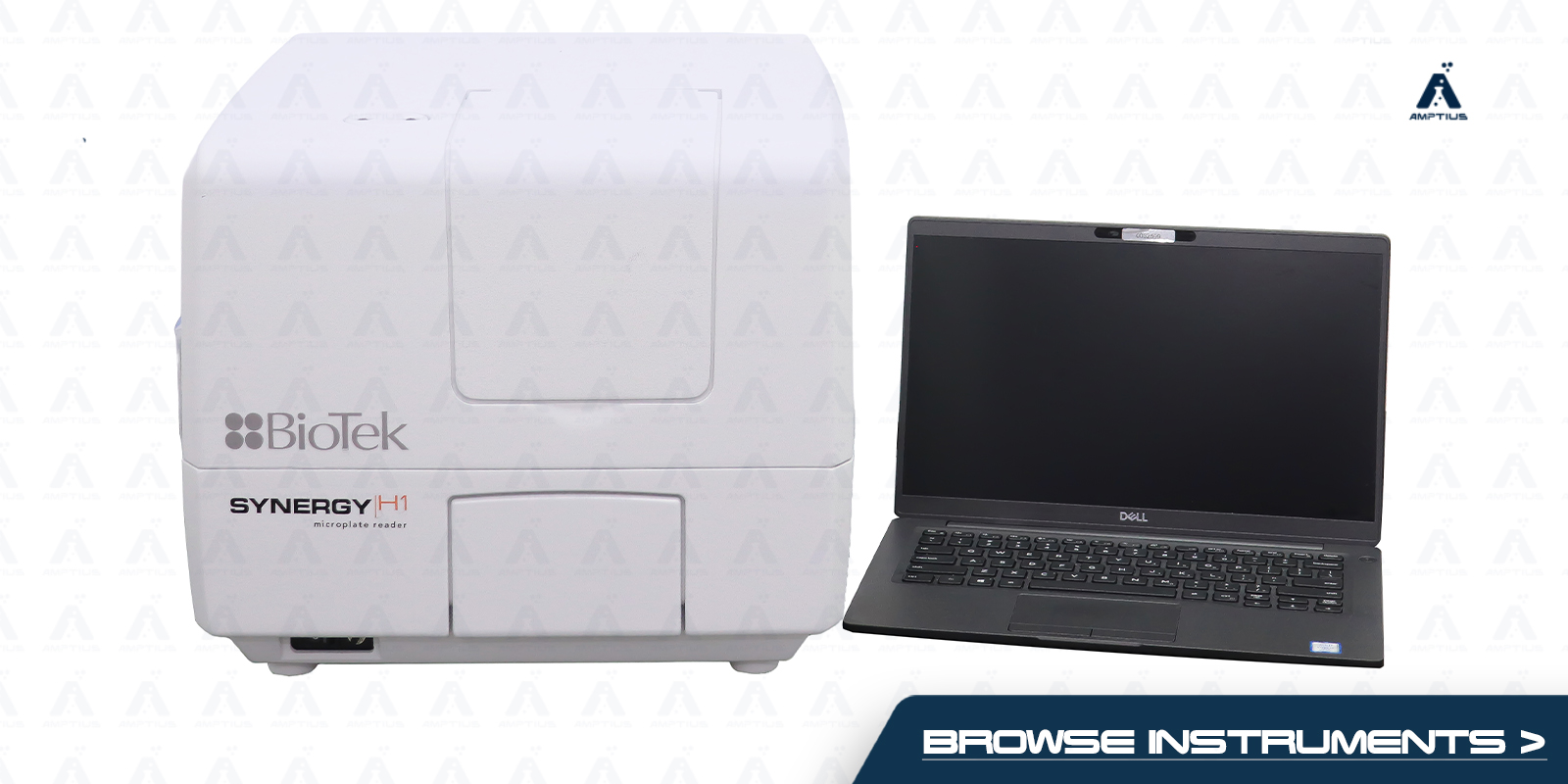
BioTek Synergy H1 MultiMode Microplate Reader with Gen 5 Software for AOAC Method SMPR 2018.003
The BioTek Synergy H1 is a reliable multimode reader well-suited for ELISA applications requiring accurate quantitation of milk allergens. With its monochromator-based absorbance mode and 450 nm filter, it offers precise measurement of colorimetric ELISA results. Gen5 software enables rapid curve fitting and automatic interpolation of sample concentrations, essential for SMPR compliance. Its compact footprint and flexible plate compatibility make it ideal for high-throughput or benchtop workflows. Users benefit from intuitive controls and reproducible assay performance.
This system supports multiple detection modes, which allows labs to expand to fluorescence or luminescence applications. However, for SMPR 2018.003, the absorbance function remains central. With its calibration management features, the Synergy H1 ensures traceability and reliable quantification. Labs implementing allergen control programs find this reader beneficial for routine monitoring of milk proteins. With proper validation, it meets all performance expectations for quantitative ELISA under AOAC guidelines.
Infinite® 200 PRO series M Plex | Multimode Reader by Tecan for AOAC Method SMPR 2018.003
The Tecan Infinite 200 PRO M Plex reader offers high-performance absorbance detection for quantitative ELISA workflows. Its 450 nm filter ensures accurate colorimetric readings, and the system includes a temperature control option to stabilize assay conditions. The Magellan software supports 4-parameter and 5-parameter curve fitting, helping users meet AOAC SMPR 2018.003 data validation requirements. With robust signal linearity and customizable plate layouts, it fits well in busy food allergen testing labs.
Designed for reproducibility and efficiency, this Tecan system also accommodates various ELISA formats. It delivers high sensitivity, low intra-assay variation, and flexible plate support, all of which are critical for milk allergen detection in complex matrices. With automated reporting and user-friendly operation, the Infinite 200 PRO ensures consistent compliance with performance thresholds. It is an excellent choice for laboratories seeking reliable, validated ELISA quantification in routine screening environments.
Thermo Scientific Multiskan FC Microplate Photometer for AOAC Method SMPR 2018.003
The Thermo Scientific Multiskan FC is designed specifically for high-precision absorbance-based ELISA applications. With built-in 450 nm and other standard filters, it offers excellent optical performance for milk allergen quantification. The SkanIt software simplifies result calculation using standard curves and provides built-in quality control checks. Laboratories benefit from fast reading times and the ability to store protocols and calibration routines directly within the software. This makes the Multiskan FC ideal for routine SMPR 2018.003 testing.
The system’s streamlined design and robust optical performance provide consistency across multiple sample types and batch runs. Users can rely on low detection limits and strong reproducibility, which are essential for meeting LOQ and RSDr requirements. It supports various microplate formats and includes onboard temperature control for assay stabilization. With its purpose-built features for ELISA, the Multiskan FC is a solid performer in regulated allergen detection workflows.
Molecular Devices SpectraMax ABS or ABS Plus for AOAC Method SMPR 2018.003
The SpectraMax ABS and ABS Plus readers from Molecular Devices are industry-standard microplate photometers that deliver high-quality absorbance measurements. Designed to detect analytes at 450 nm, they offer excellent accuracy for colorimetric ELISA workflows. The SoftMax Pro software provides comprehensive tools for generating standard curves and performing quantitative analysis. These systems are optimized for milk allergen testing in foods and can be validated to meet SMPR 2018.003 criteria.
Labs benefit from the ABS series’ stable optical path and automatic calibration features, which enhance result consistency. Whether used in basic or high-throughput workflows, these instruments perform reliably across a variety of food sample types. With easy export of compliance data and QC traceability features, the SpectraMax ABS models help ensure reproducible allergen quantitation. Their precision and flexibility make them suitable for long-term allergen monitoring programs in food manufacturing and testing labs.
BMG LABTECH SPECTROstar Nano for AOAC Method SMPR 2018.003
The SPECTROstar Nano from BMG LABTECH is a full-spectrum absorbance reader ideal for quantitative ELISA workflows. It covers a wavelength range from 220 to 1000 nm, offering precise 450 nm detection critical for milk protein assays. The system delivers fast, full-plate readings and supports both endpoint and kinetic measurements. Its MARS data analysis software includes customizable curve fitting and robust statistical tools for SMPR validation.
Compact and versatile, the SPECTROstar Nano handles both standard and specialized ELISA plates. With minimal warm-up time and high optical precision, it supports accurate allergen detection in processed food matrices. The software allows users to track assay performance over time, making it a trusted tool in regulated environments. When properly validated, this reader fulfills AOAC SMPR 2018.003 performance requirements with ease and efficiency.
Thermo Fisher Isotemp Gravity Convection Incubator (180L) for AOAC Method SMPR 2018.003
The Thermo Fisher Isotemp Gravity Convection Incubator offers reliable, uniform temperature control for ELISA plate incubation. Its gentle convection design minimizes sample evaporation and prevents temperature gradients across microplates. With a capacity of 180 liters, it accommodates multiple assay plates or other equipment simultaneously. This makes it ideal for high-throughput allergen testing workflows.
Temperature stability is critical for reproducible ELISA assay development, and the Isotemp performs well in this regard. It maintains consistent conditions without fan-driven airflow, preserving assay integrity. Its corrosion-resistant interior and energy-efficient operation support daily lab use. When used alongside AOAC-compliant microplate readers, this incubator ensures consistent results across batches. It is a key support system in SMPR 2018.003-aligned workflows.
Benchmark SureTemp Digital Incubator (S20 or S15) for AOAC Method SMPR 2018.003
The Benchmark SureTemp Digital Incubator series provides accurate temperature control for ELISA workflows. Its digital interface allows for precise setpoints and stable environmental conditions, critical for consistent plate development. Available in compact models like S20 and S15, these incubators fit well into space-limited laboratories while delivering performance suited to food allergen analysis. The built-in safety alarms and temperature uniformity features support reliable and repeatable results.
Designed with durability in mind, SureTemp incubators are well-suited for routine plate incubation. Their internal chamber accommodates multiple ELISA plates with minimal fluctuation in heat distribution. With low power consumption and user-friendly settings, these incubators enhance workflow efficiency. Their performance characteristics make them suitable for supporting SMPR 2018.003 test methods, especially where temperature stability is essential for assay precision.
Memmert IN Series Incubators (IN30, IN55) for AOAC Method SMPR 2018.003
Memmert IN Series incubators are precision laboratory ovens built for uniform temperature control during ELISA plate incubation. Models like IN30 and IN55 feature natural convection and high thermal stability, making them ideal for sensitive immunoassay procedures. Their stainless steel interior and adjustable shelving accommodate a wide variety of plate formats. The controlCOCKPIT interface offers programmable temperature settings for enhanced reproducibility.
Memmert’s design prioritizes accuracy and reliability, with internal temperature variation typically below ±0.3 °C. This level of control supports consistent antigen-antibody binding during ELISA plate incubation. Whether used in routine food testing or method validation, the IN Series contributes to assay reproducibility and data integrity. These incubators are highly compatible with AOAC 2018.003 workflows when paired with validated microplate readers.
Binder BD Series Incubators (BD56 or BD115) for AOAC Method SMPR 2018.003
Binder BD Series incubators provide highly stable temperature environments for ELISA assay incubation. With models like BD56 and BD115, users benefit from gravity convection airflow and uniform chamber conditions. The system includes an intuitive controller and multiple safety features for unattended operation. These characteristics make the BD Series ideal for allergen quantitation protocols requiring temperature precision.
Binder incubators maintain temperature stability across long incubation cycles, essential for developing consistent colorimetric signals. Their corrosion-resistant interiors and programmable profiles support repeatable performance over time. These incubators are widely used in food and pharmaceutical testing labs due to their reliability. When integrated into an AOAC-compliant ELISA workflow, they ensure controlled assay conditions and reproducible results.
Choosing the Right ELISA Platform for AOAC SMPR 2018.003
- Top ELISA Readers: BioTek Synergy H1, Tecan Infinite 200 PRO, SpectraMax ABS, Multiskan FC
- High-Sensitivity Options: BMG LABTECH SPECTROstar Nano with full-spectrum detection
- Reliable Incubators: Thermo Fisher Isotemp, Benchmark SureTemp, Memmert IN Series, Binder BD Series
AOAC SMPR 2018.003 requires precise, validated ELISA systems for milk allergen quantification in food products. The platforms listed above provide dependable absorbance detection and incubation control for regulated testing workflows. We offer certified refurbished ELISA systems and incubators to help your lab meet performance standards affordably. Contact us today to explore compliant options tailored to your operational needs.