
AOAC Method SMPR 2017.017 Instrumentation Guide
Standard Method Performance Requirements (SMPR) for Determination of 2- and 3-MCPD AND 2- and 3-MCPD Esters and Glycidyl Esters in Infant and Adult/Pediatric Nutritional Formula
AOAC SMPR 2017.017 outlines rigorous performance criteria for the accurate determination of 2- and 3-monochloropropanediol (MCPD), their esters, and glycidyl esters in infant and pediatric formula products. This includes both liquid and powdered matrices, with analytical methods required to achieve LOQs of ≤ 3 µg/kg for 3-MCPD, ≤ 2 µg/kg for glycidol, and ≤ 25 µg/kg for dry samples. Acceptable methods must also demonstrate recoveries within 70–125%, repeatability (RSDr) ≤ 22%, and reproducibility (RSDR) ≤ 44% at low concentrations. Instrument platforms such as GC-MS and LC-MS/MS are permitted as long as they meet these thresholds through properly validated workflows. Below are systems from leading manufacturers that fulfill these performance criteria with validated hydrolysis, derivatization, and quantitation protocols.
To ensure SMPR compliance, laboratories must select instruments capable of low-level detection, matrix robustness, and high precision under varied analytical conditions. Sample preparation is especially important, requiring effective release of bound esters before detection by GC-MS or LC-MS/MS. Many of the instruments featured here are proven in food safety and contaminant testing workflows and offer strong software integration for audit tracking and method validation. Internal quality controls, including matrix-matched standards and recovery verification, are essential to meeting AOAC requirements. Each system below supports full compliance when configured with method-specific extraction and analysis procedures.
Please click here to learn more about AOAC Method SMPR 2017.017
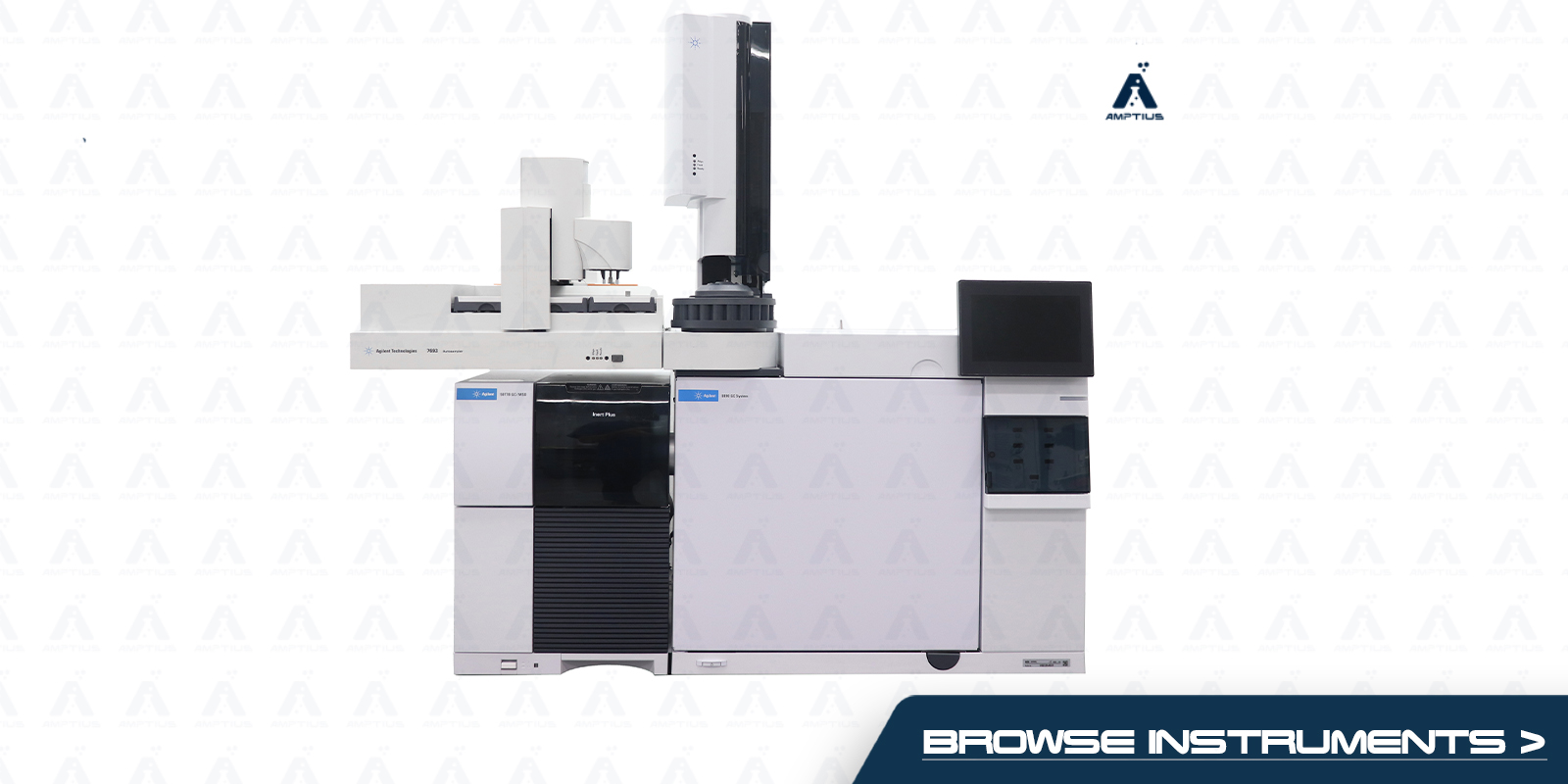
Agilent 8890 5977 Inert Plus GCMS System with 7693 Autosampler for AOAC Method SMPR 2017.017
The Agilent 8890 GC with 5977 Inert Plus Mass Selective Detector provides an ideal platform for MCPD and glycidyl ester analysis using derivatization-based GC-MS workflows. It features high thermal stability, a deactivated flow path, and sensitive electron ionization for derivatized targets like MCPD-PBA and glycidol derivatives. When used with validated hydrolysis and derivatization protocols, this system routinely meets the SMPR’s LOQ, recovery, and precision requirements. Its integrated 7693 autosampler enhances reproducibility and streamlines high-throughput analysis in routine food safety labs. This system is especially effective for fatty, protein-rich matrices such as infant formula powders and concentrates.
MassHunter software offers integrated tools for calibration tracking, system suitability, and internal standard recovery monitoring, supporting full traceability. With strong performance in food contaminant testing, this system enables labs to meet demanding quality control benchmarks under SMPR guidelines. Method validation using fortified samples and certified reference materials ensures compliance across both liquid and dry formula types. The 8890/5977 configuration is widely accepted by regulators and often used in surveillance programs requiring MCPD quantitation. Its robust performance and trace-level detection capabilities make it a dependable option for AOAC-compliant workflows.
Shimadzu GCMS-TQ8050 NX for AOAC Method SMPR 2017.017
The Shimadzu GCMS-TQ8050 NX is a triple quadrupole GC-MS/MS system designed for trace-level quantification in complex matrices such as nutritional formulas. Its ultrafast MRM acquisition and stable ion source ensure reproducible detection of MCPD and glycidol derivatives, even after extensive hydrolysis and sample prep. This system is particularly well suited for workflows requiring high sensitivity and isomer resolution, supporting LOQs well below the limits outlined in AOAC SMPR 2017.017. It integrates seamlessly with sample automation tools and validated derivatization workflows for high-throughput operations. Analysts can achieve consistent recovery and low background interference across replicate injections.
Shimadzu’s LabSolutions software provides built-in system suitability checks, automated batch validation, and comprehensive data review tools. Method development is streamlined with retention time locking and calibration curve tools designed for food safety applications. The TQ8050 NX has demonstrated strong performance in glycidyl ester and MCPD screening in oil-based and emulsified matrices, which closely resemble formula products. Its stability across long analytical runs supports batch testing under regulated conditions. For laboratories requiring fast, accurate, and compliant results, this system is a leading GC-MS/MS solution.
Thermo Scientific TRACE 1310 GC with TSQ 9000 Triple Quadrupole MS for AOAC Method SMPR 2017.017
The Thermo Scientific TRACE 1310 GC combined with the TSQ 9000 triple quadrupole mass spectrometer is engineered for high-performance MCPD and glycidyl ester analysis. It delivers precise quantitation of derivatized analytes at trace levels, supporting AOAC SMPR LOQ and reproducibility standards. The system’s fast polarity switching and optimized ion optics ensure clear separation and high recovery for MCPD isomers following PBA or HF derivatization. Modular injector and detector options provide flexibility to meet method-specific sample prep and analysis workflows. This platform is ideal for laboratories conducting compliance testing in high-fat, dairy-based nutritional products.
TraceFinder software allows for real-time monitoring of ion ratios, calibration curve linearity, and internal standard recoveries, essential for AOAC method validation. Data integrity and traceability features make this platform well suited for labs under regulatory oversight. The TSQ 9000 also offers extended uptime and reduced carryover for batch workflows. Its application in MCPD and glycidol monitoring has been demonstrated in both academic and regulatory laboratories. When paired with validated workflows, this system meets or exceeds all AOAC SMPR 2017.017 criteria.
Waters Xevo TQ-S Micro Triple Quadrupole LC-MS/MS with ACQUITY I Class for AOAC Method SMPR 2017.017
The Waters Xevo TQ-S Micro with ACQUITY I Class UPLC is a high-sensitivity LC-MS/MS platform used in post-hydrolysis MCPD and glycidyl ester workflows. Though GC-MS is more common, this system is effective in analyzing total MCPD or glycidol after enzymatic or chemical hydrolysis, particularly when derivatization is not preferred. Its StepWave ion guide provides improved ion transmission, helping achieve sub-µg/kg detection in matrix-rich samples. The system’s low noise and strong peak resolution enable repeatable quantification in liquid formula and powdered matrix extractions. It supports rapid polarity switching for efficient multi-analyte detection.
MassLynx software supports full method validation, audit logging, and internal standard monitoring to ensure compliance with AOAC SMPR recovery and precision thresholds. Laboratories can perform method-specific validation to demonstrate compliance with LOQ, RSDr, and RSDR limits across formula types. The Xevo TQ-S Micro is often used in regulatory food safety workflows and adapts well to laboratories with varied analyte portfolios. Its compact size and rapid acquisition cycles improve throughput without compromising sensitivity. For labs validating LC-MS/MS methods for SMPR 2017.017, this system offers reliable compliance potential.
Agilent Ultivo Triple Quadrupole LC-MS/MS with 1260 Infinity II for AOAC Method SMPR 2017.017
The Agilent Ultivo LC-MS/MS system, coupled with the 1260 Infinity II UHPLC, is a compact, powerful solution for glycidyl and MCPD ester quantification following validated hydrolysis protocols. Jet Stream ionization provides robust signal response, enabling quantification at the low levels specified in AOAC SMPR 2017.017. This platform supports gradient precision, retention time stability, and efficient separation of derivatized or hydrolyzed targets. Its modular UHPLC allows accurate control over pressure, flow, and column temperature, all of which are essential for complex food matrices. The system is optimized for throughput, making it a good choice for regulatory labs with space constraints.
Agilent’s MassHunter software provides a complete workflow from calibration to batch reporting, with features for monitoring internal standard recovery and system suitability. Labs can easily perform matrix-specific validation and document all required parameters for AOAC compliance. This system is used in food contaminant labs globally and has a growing application base in dietary and pediatric nutrition testing. Its compact design allows for integration into existing lab layouts without compromising performance. The Ultivo meets method performance expectations with validated extraction and analytical workflows.
Thermo Scientific TSQ Altis Plus Triple Quadrupole LC-MS/MS with Vanquish UHPLC for AOAC Method SMPR 2017.017
The TSQ Altis Plus LC-MS/MS system from Thermo Scientific, integrated with the Vanquish UHPLC, is a high-sensitivity solution for MCPD and glycidyl ester analysis post-hydrolysis. Its Active Ion Management and fast scanning modes enable selective and reproducible quantitation of low-level analytes in matrix-rich samples. This system supports analytical performance below the LOQs defined in AOAC SMPR 2017.017, with reproducibility that meets inter-lab testing requirements. The Vanquish UHPLC provides stable retention times and superior resolution, which are critical for consistent results across infant formula types. Its scalable configuration suits both R&D and high-throughput quality control labs.
TraceFinder software enables automated system suitability checks, calibration verification, and full audit trail compliance for regulated workflows. With the TSQ Altis Plus, laboratories can reduce variability while increasing analytical confidence through robust and repeatable MRM transitions. The system’s low carryover and stability across extended runs are advantageous for routine surveillance. Its proven application in MCPD workflows and glycidyl ester screening has made it a top-tier instrument for compliance labs. With proper validation, it supports full alignment with SMPR 2017.017 standards.
Shimadzu LCMS-8060NX with Nexera X3 UHPLC for AOAC Method SMPR 2017.017
The Shimadzu LCMS-8060NX with Nexera X3 UHPLC is an advanced LC-MS/MS system built for ultra-trace analysis in complex nutritional products. It is capable of meeting the sensitivity and precision targets required by SMPR 2017.017 for hydrolyzed MCPD and glycidyl esters. High-speed polarity switching, MRM scheduling, and enhanced desolvation allow for reproducible analysis at low µg/kg levels. The Nexera X3 UHPLC provides precise flow control and temperature regulation, maintaining chromatographic reproducibility across large batches. Its rugged design supports daily compliance testing in food and supplement laboratories.
LabSolutions software allows for seamless method validation, system suitability checks, and real-time monitoring of calibration accuracy. It supports flexible workflow automation and provides strong integration with QA/QC protocols. Shimadzu platforms are widely validated in the food safety industry for similar contaminants and align well with AOAC method performance goals. This system handles lipid-rich or emulsion-based matrices efficiently, reducing ion suppression. When paired with validated workflows, the LCMS-8060NX supports regulatory testing for MCPD and glycidyl esters.
SCIEX Triple Quad™ 6500+ LC-MS/MS with ExionLC AD for AOAC Method SMPR 2017.017
The SCIEX 6500+ Triple Quadrupole LC-MS/MS system with ExionLC AD UHPLC provides unmatched sensitivity for hydrolyzed MCPD and glycidyl esters in food and formula matrices. Turbo V ionization and Scheduled MRM Pro enable low-level quantitation even in fat-rich or protein-based nutritional products. The system consistently meets SMPR 2017.017 LOQ, accuracy, and RSD requirements, with reliable internal standard correction. Its wide dynamic range and fast dwell time transitions make it effective for high-throughput analysis. It has been used globally in regulatory programs focused on food process contaminants.
SCIEX OS software enables full system validation, calibration traceability, and audit-ready reporting for compliance testing. It simplifies batch management while providing high confidence in target ion ratios and peak integration. The platform is a gold standard in food safety and environmental testing, and supports extended method development flexibility. With validated workflows for MCPD ester and glycidol analysis, the 6500+ enables full SMPR compliance. Laboratories benefit from the system’s speed, reproducibility, and software-driven method robustness.
Choosing the Right Instrument for AOAC Method SMPR 2017.017
- Top GC-MS/MS performers: Agilent 8890/5977 Inert Plus, Shimadzu GCMS-TQ8050 NX, and Thermo TRACE 1310/TSQ 9000
- High-sensitivity LC-MS/MS options: Waters Xevo TQ-S Micro, SCIEX 6500+, and Thermo TSQ Altis Plus
- Compact and efficient systems: Agilent Ultivo and Shimadzu LCMS-8060NX
- Validated for food and formula matrices: All systems above meet or exceed method requirements when workflows are properly configured
AOAC SMPR 2017.017 requires instruments that can quantify free and esterified MCPD and glycidyl compounds in complex nutritional formulas. GC-MS/MS and LC-MS/MS platforms listed above support full compliance with method recovery, LOQ, and reproducibility criteria. With validated hydrolysis and derivatization workflows, these systems deliver reliable results under regulated conditions. We offer certified refurbished systems configured for AOAC testing needs. Contact us today to explore options tailored for SMPR-compliant testing workflows.