
AOAC Method SMPR 2017.008 Instrumentation Guide
Standard Method Performance Requirements (SMPR) for Determination of Lycopene in Infant and Adult/Pediatric Nutritional Formula
AOAC SMPR 2017.008 sets strict performance criteria for the quantification of lycopene in infant, adult, and pediatric nutritional formulas. This includes both powder and liquid formats, such as ready-to-feed liquids and reconstituted concentrates. The method targets total lycopene content, including both cis and trans isomers, requiring clear separation from other carotenoids like β-carotene and α-carotene. Systems must meet a limit of quantitation (LOQ) of ≤1 µg/100 g, with recoveries between 90–110%, repeatability (RSDr) ≤8%, and reproducibility (RSDR) ≤15%. Analytical techniques such as HPLC and UPLC equipped with UV, DAD, or PDA detectors are well-suited when validated for these parameters.
System suitability tests are also critical, including blank samples and check standards at low and mid calibration points. The instrumentation must ensure accurate separation, quantitation, and identification of lycopene in complex nutritional matrices. Methods that demonstrate stability, repeatability, and linearity under regulatory conditions can be used for reference testing and dispute resolution. Laboratories should ensure that their instrumentation meets the required performance criteria through internal validation using appropriate quality control protocols. The instruments listed below are widely used in compliant laboratories and have demonstrated reliable performance for lycopene analysis when validated properly.
Please click here to learn more about AOAC Method SMPR 2017.008
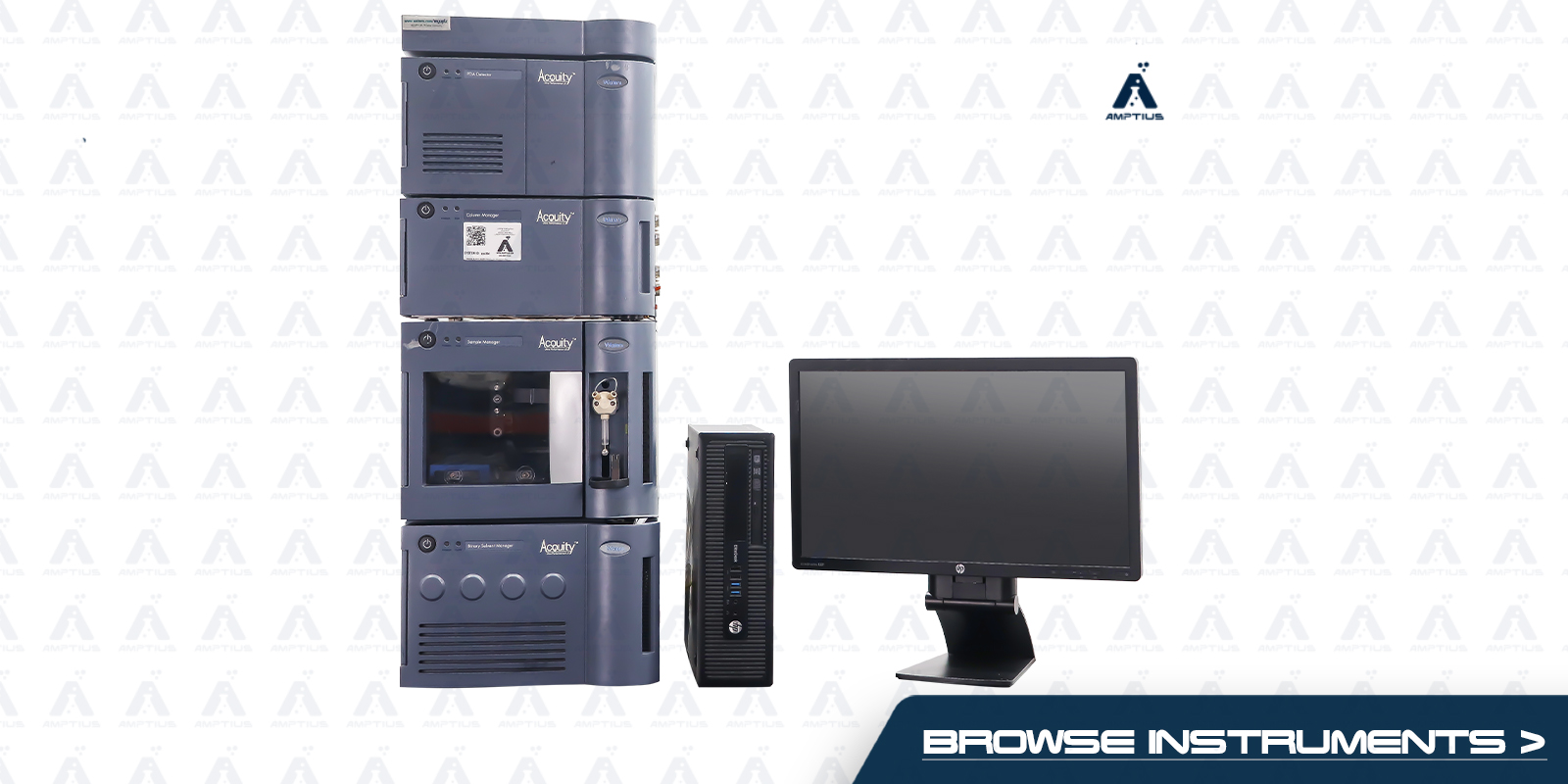
Waters Acquity UPLC System w/ Empower 3 PDA SM QSM CM for AOAC Method SMPR 2017.008
The Waters Acquity UPLC System is designed for high-throughput, high-resolution separations and is an excellent fit for AOAC SMPR 2017.008 lycopene testing. With its PDA detector, solvent manager, and column manager, the system offers advanced chromatographic control and spectral resolution necessary for lycopene isomer differentiation. It can resolve lycopene from other carotenoids like β-carotene and α-carotene with strong peak purity and reproducibility. Empower 3 software supports secure data management, traceability, and validation workflow, which are essential in dispute resolution scenarios. This system is commonly used in food and supplement laboratories that require compliance with AOAC performance standards.
The integrated software and hardware ensure seamless execution of complex methods, while robust temperature control enhances retention time stability and peak reproducibility. The modular design supports a wide range of sample types, including powders, reconstituted liquids, and concentrates. Its precise solvent delivery and consistent gradient formation ensure excellent linearity and low baseline noise. Method developers benefit from the software’s intuitive interface for rapid calibration and batch setup. With proper validation, this system ensures compliance with the method’s accuracy, precision, and sensitivity targets.
Agilent 1260 Infinity II HPLC System w/ DAD Detector + BinPump for AOAC Method SMPR 2017.008
The Agilent 1260 Infinity II HPLC System offers reliable performance for lycopene analysis in accordance with AOAC SMPR 2017.008 requirements. Its diode array detector provides multi-wavelength detection, essential for distinguishing lycopene from co-eluting carotenoids. The binary pump delivers precise flow control for reproducible retention times across a wide concentration range. Laboratories using this system can meet or exceed method performance targets for LOQ, recovery, RSDr, and RSDR with validated conditions. The system is also known for its robustness in repeated sample runs and ease of use.
Agilent’s OpenLab CDS software integrates data analysis, calibration management, and system suitability checks to support regulatory documentation. The platform offers strong baseline stability and detector linearity, which enhances data quality across matrix types. The temperature-controlled column compartment improves method repeatability and minimizes drift during extended testing periods. Validation packages can be easily configured to align with AOAC requirements. This setup is ideal for both routine QC testing and reference laboratory environments.
Shimadzu Prominence-i LC-2030 Plus with SPD-M30A PDA Detector for AOAC Method SMPR 2017.008
The Shimadzu Prominence-i LC-2030 Plus system with an SPD-M30A PDA detector provides an automated solution for lycopene analysis in nutritional formulas. Its integrated design offers excellent user interface capabilities while maintaining strong chromatographic performance. The PDA detector captures the full spectral profile of lycopene, enabling reliable identification and quantification of both cis and trans isomers. Its reproducibility and baseline stability make it ideal for compliance with AOAC SMPR 2017.008. This system offers strong performance in high-throughput testing environments.
LabSolutions software allows for automated calibration, data logging, and real-time system monitoring, supporting complete validation workflows. The system’s auto-sampler and solvent delivery modules reduce variation and improve batch consistency. Analysts can easily configure system suitability tests and performance verification checks. Consistent injection precision and gradient performance ensure accurate recovery results across complex matrices. When validated appropriately, this system meets the precision and recovery requirements set by the SMPR.
Thermo Scientific UltiMate 3000 HPLC with VWD-3000 or DAD-3000 Detector for AOAC Method SMPR 2017.008
The Thermo Scientific UltiMate 3000 HPLC system, when paired with either the VWD-3000 or DAD-3000 detector, is suitable for lycopene determination as outlined in AOAC SMPR 2017.008. The system offers excellent flow control and detector sensitivity, providing accurate quantitation of lycopene in complex samples. Its wide linear range and strong baseline stability contribute to high reproducibility and low detection limits. The detector’s wavelength flexibility supports selective identification of lycopene without interference from other carotenoids. With validated methods, this setup meets the performance benchmarks for lycopene recovery, RSDr, and RSDR.
The system’s Chromeleon CDS software simplifies method validation and audit documentation, ensuring regulatory traceability. Its intuitive interface supports easy configuration of methods, calibration standards, and reporting templates. Consistent oven temperature and solvent delivery optimize retention time and peak sharpness. The UltiMate 3000 is frequently used in food labs requiring validated methods for nutritional analysis. Laboratories can rely on its consistent performance across a broad range of formula matrices.
PerkinElmer Flexar HPLC System with PDA Detector for AOAC Method SMPR 2017.008
The PerkinElmer Flexar HPLC System, equipped with a PDA detector, delivers accurate and repeatable lycopene quantification in infant and adult nutritional matrices. Its high spectral resolution and gradient capabilities enable sharp separation of lycopene and its isomers. The system is designed to meet method performance requirements for LOQ, precision, and recovery under AOAC SMPR 2017.008. With robust gradient control and column heating, the Flexar ensures stable retention times and high chromatographic fidelity. It supports a variety of detection modes for comprehensive method development.
TotalChrom or Chromera software enhances compliance with AOAC validation procedures, including audit-ready data review and calibration tracking. The system’s autosampler and solvent management modules minimize carryover and ensure injection precision. Its modular architecture allows for future upgrades or customization for new methods. Peak integration and identity confirmation are simplified with the multi-wavelength PDA interface. This platform is well-suited for labs performing frequent batch analysis under strict regulatory oversight.
JASCO LC-4000 Series HPLC with UV-2075 or MD-4010 PDA Detector for AOAC Method SMPR 2017.008
The JASCO LC-4000 Series HPLC, configured with either the UV-2075 or MD-4010 PDA detector, is a powerful tool for lycopene separation and quantitation. These detectors provide full-spectrum data collection, supporting reliable peak identification and purity analysis. The system supports gradient and isocratic modes, delivering consistent results across lycopene’s wide concentration range. It performs well in resolving lycopene from structurally similar carotenoids, a key requirement under SMPR 2017.008. With proper validation, it consistently meets AOAC criteria for LOQ, recovery, and reproducibility.
ChromNAV software provides flexible method programming, calibration routines, and automated system suitability testing. Its real-time data visualization and spectral matching features help confirm analyte identity during batch runs. The column oven ensures thermal stability, reducing variation in retention times across replicates. Its compact footprint and robust performance make it a dependable system for labs with space constraints. The LC-4000 series is widely used in both R&D and routine testing environments that demand high-quality analytical results.
Choosing the Right Instrument for AOAC Method SMPR 2017.008
- High-resolution UPLC systems: Waters Acquity UPLC with PDA for isomer separation and rapid quantitation
- Reliable HPLC platforms: Agilent 1260 Infinity II, Shimadzu LC-2030 Plus, and Thermo UltiMate 3000 with strong detection options
- Flexible software integration: JASCO LC-4000 and PerkinElmer Flexar with comprehensive method tracking
AOAC SMPR 2017.008 requires instruments capable of resolving lycopene from similar carotenoids with excellent precision, sensitivity, and reproducibility. The systems listed above support validated workflows for lycopene testing in nutritional formulas. We offer certified refurbished HPLC and UPLC systems fully optimized for AOAC-compliant lycopene analysis. Contact us today to discuss your method-specific instrument needs.