
AOAC Method SMPR 2017.007 Instrumentation Guide
Standard Method Performance Requirements (SMPR) for Determination of Lutein in Infant and Adult/Pediatric Nutritional Formula
AOAC SMPR 2017.007 outlines the essential method performance requirements for identifying and quantifying all-trans lutein and its cis isomers in nutritional formulas. This method applies to all formats, including ready-to-feed liquids, reconstituted powders, and liquid concentrates. Validated methods must achieve a limit of quantitation (LOQ) of ≤1 μg/100 g and provide accurate measurements across an analytical range of 1–800 μg/100 g. Laboratories must also meet recovery rates of 90–110% and maintain repeatability (RSDr) of ≤8% and reproducibility (RSDR) of ≤15% for low concentrations. For higher ranges, RSDr must not exceed 5%, and RSDR should remain within 10%.
Any analytical technique is considered acceptable if it meets these performance criteria, with a strong emphasis on resolving lutein from zeaxanthin. Detection methods must also demonstrate strong accuracy, especially when separating cis and trans isomers of lutein. Proper validation, including blank and midrange check standards, ensures compliance with AOAC expectations. Suitable reference materials, such as NIST SRM 1869, are recommended to ensure reliable calibration. The instrumentation options listed below have demonstrated capability to support this method’s requirements when paired with validated SOPs and internal quality control procedures.
Please click here to learn more about AOAC Method SMPR 2017.007
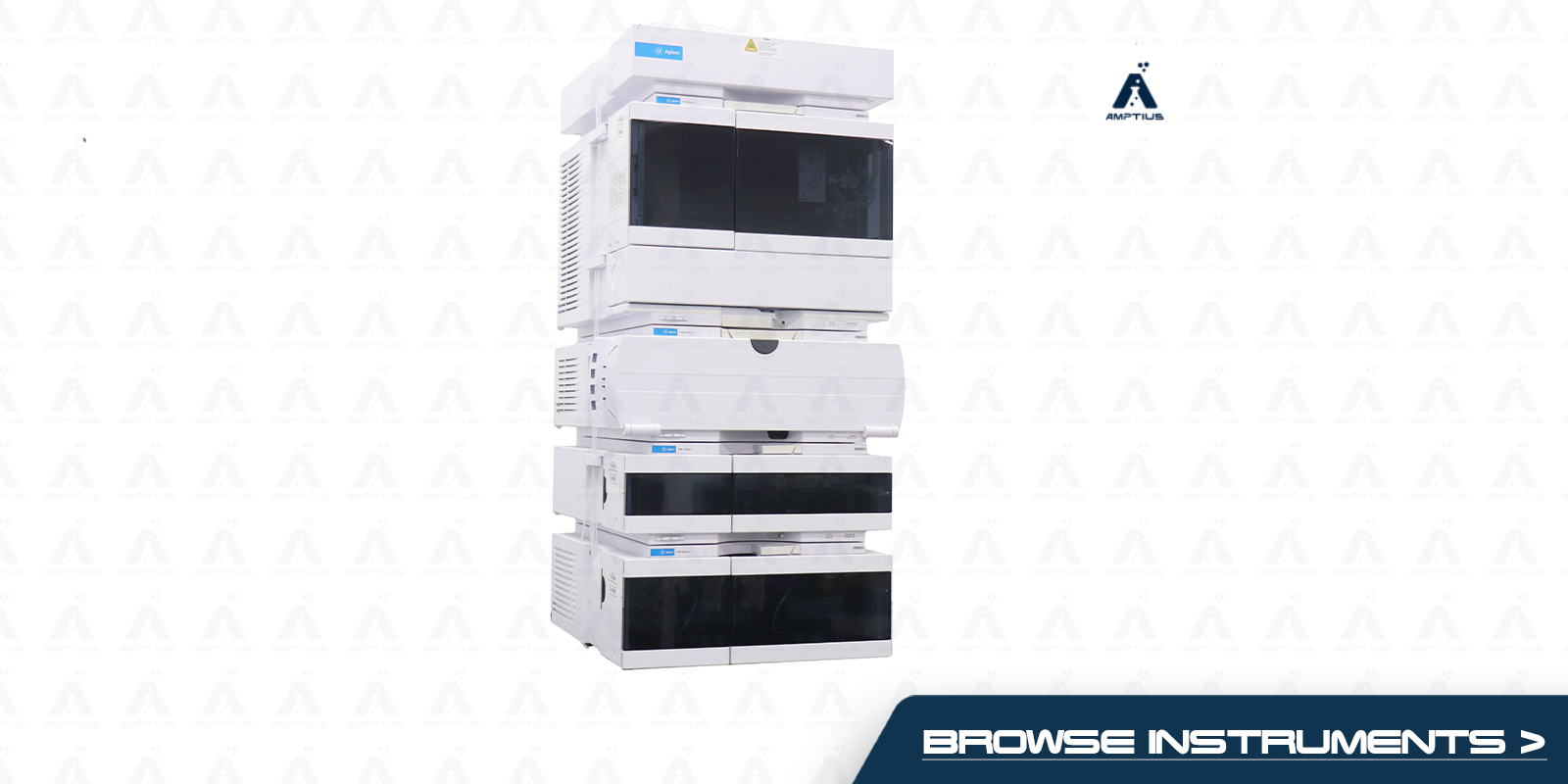
Agilent 1260 Infinity II HPLC System w/ DAD Detector + BinPump for AOAC Method SMPR 2017.007
The Agilent 1260 Infinity II HPLC System with DAD Detector and BinPump provides robust quantitation of lutein and its isomers. Its diode array detection enables precise spectral resolution, allowing for effective separation of lutein from interfering compounds such as zeaxanthin. The system supports reproducible peak identification and strong retention time stability, both critical to meeting SMPR 2017.007 guidelines. With method development optimized, the platform consistently achieves the required LOQ and recovery values. Agilent’s OpenLab software assists in data integrity and validation for consistent regulatory reporting.
Agilent’s flexible modular design makes this system suitable for both routine QC and advanced research applications. Its pressure range and flow accuracy support various column formats and gradient methods. Users can streamline workflows without compromising analytical precision or sensitivity. The DAD’s spectral matching capabilities further enhance compound verification. This system is a reliable choice for labs aiming to meet SMPR performance criteria with minimal instrument downtime.
Waters Acquity UPLC System w/ Empower 3 PDA SM QSM CM for AOAC Method SMPR 2017.007
The Waters Acquity UPLC System with Empower 3 software and PDA detection delivers ultra-high-performance resolution for lutein quantification. Designed for precision, this platform excels in separating isomers such as all-trans and cis-lutein, while maintaining low detection limits across complex nutritional matrices. The system’s Quaternary Solvent Manager (QSM) and Column Manager (CM) ensure consistent gradient control and temperature stability. When optimized, this setup delivers reliable quantitation across the full analytical range specified in AOAC SMPR 2017.007. The PDA detector enables spectral confirmation of analytes and improves accuracy in isomer discrimination.
Empower 3 software enhances analytical traceability, method validation, and secure data handling. Laboratories using this UPLC platform benefit from accelerated run times, which help increase sample throughput. The system’s rugged design supports continuous operation while maintaining precision and reproducibility. Waters’ platform has seen broad adoption in regulated laboratories focused on infant and pediatric formula testing. It offers an ideal balance of sensitivity, compliance, and operational efficiency for lutein analysis.
Shimadzu Prominence-i LC-2030 Plus with SPD-M30A PDA Detector for AOAC Method SMPR 2017.007
The Shimadzu Prominence-i LC-2030 Plus integrated with the SPD-M30A PDA Detector offers compact, high-throughput HPLC performance suited for lutein analysis. It supports AOAC SMPR 2017.007 compliance through accurate retention time precision, gradient reproducibility, and spectral verification. The system’s PDA detector enables multi-wavelength monitoring, making it ideal for distinguishing lutein isomers and co-eluting compounds. Its automated features help laboratories perform consistent sample injections and solvent delivery, critical for reproducibility. Shimadzu’s LabSolutions software further streamlines system suitability checks and data validation.
Designed with productivity in mind, this instrument enables seamless batch operation for high-volume testing environments. Users benefit from a low maintenance design and simplified method optimization workflows. The system supports rapid startup and self-diagnostics to ensure analytical continuity. Its built-in autosampler and user-friendly interface promote consistent and reliable operation across sample sets. For laboratories testing nutritional supplements and formulas, the LC-2030 Plus ensures robust compliance with lutein-specific SMPR criteria.
Thermo Scientific UltiMate 3000 HPLC with VWD-3000 or DAD-3000 Detector for AOAC Method SMPR 2017.007
Thermo Scientific’s UltiMate 3000 HPLC system offers a dependable platform for measuring lutein in complex matrices like infant formula. With either the VWD-3000 or DAD-3000 detector, this system provides high-sensitivity UV detection essential for identifying and quantifying lutein across a wide range. The system’s precision gradient control and column temperature stability ensure consistent retention times and peak resolution. Its modular design allows flexible method customization to accommodate various matrix challenges. The platform meets AOAC SMPR 2017.007 expectations for LOQ, accuracy, and reproducibility.
Chromeleon CDS software provides robust data acquisition, traceability, and audit-ready reporting. This system is especially suited for high-volume laboratories that demand accuracy and repeatability. Users can optimize workflows while maintaining compliance through built-in QA/QC features. The DAD detector enables detailed spectral analysis, useful for differentiating cis and trans lutein isomers. Thermo’s UltiMate 3000 stands out as a versatile and scalable solution for regulated HPLC applications.
PerkinElmer Flexar HPLC System with PDA Detector for AOAC Method SMPR 2017.007
The PerkinElmer Flexar HPLC system, paired with a PDA detector, offers strong performance for analyzing lutein and its isomers in nutritional formulas. Its advanced gradient control and low baseline noise support accurate quantification at low concentrations, making it suitable for SMPR 2017.007 applications. The PDA detector enhances peak purity assessment and spectral identification, improving confidence in lutein determination. With method optimization, the system can deliver results that consistently meet recovery, RSDr, and RSDR limits. This makes it a dependable platform for routine compliance testing.
SimplicityChrom software enhances operational efficiency with intuitive data analysis and report generation. The Flexar system allows fast method transfer and validation, supporting laboratories that manage multiple formulations and testing requirements. Its durable build and precision engineering make it ideal for long-term use in regulated testing environments. This system performs reliably across powder, liquid, and concentrate samples. Laboratories can depend on this configuration for compliant lutein quantitation and method reproducibility.
JASCO LC-4000 Series HPLC with UV-2075 or MD-4010 PDA Detector for AOAC Method SMPR 2017.007
The JASCO LC-4000 Series HPLC system, equipped with either the UV-2075 or MD-4010 PDA detector, delivers reliable UV-visible detection suitable for lutein quantification. Its detectors provide full-spectrum scanning, enabling effective monitoring of trans and cis-lutein isomers. When paired with appropriate column and gradient methods, this system meets the method performance criteria defined in AOAC SMPR 2017.007. It maintains strong resolution and retention time reproducibility even under varying sample conditions. These capabilities support accurate quantitation and differentiation of target carotenoids in nutritional matrices.
JASCO’s ChromNAV software allows detailed data processing and QA/QC tracking, essential for validation and compliance documentation. The LC-4000 platform features programmable autosamplers, temperature-stabilized column ovens, and flexible detector modules. Its scalability supports both basic and advanced workflows, accommodating evolving laboratory demands. This instrument is well-suited for analytical labs focused on formula composition and quality assurance. With correct method validation, JASCO’s system performs effectively for lutein testing across diverse sample forms.
Choosing the Right Instrument for AOAC Method SMPR 2017.007
- High-resolution PDA systems: Waters Acquity UPLC and Agilent 1260 Infinity II offer excellent selectivity and sensitivity for lutein isomers.
- Compact and integrated options: Shimadzu Prominence-i LC-2030 and PerkinElmer Flexar provide efficient workflows for routine analysis.
- Flexible modular configurations: Thermo UltiMate 3000 and JASCO LC-4000 series accommodate various throughput and compliance needs.
To meet AOAC SMPR 2017.007 requirements, laboratories must validate their method for selectivity, accuracy, and reproducibility across formula types. The instruments listed here provide a strong foundation for lutein analysis when paired with suitable method protocols. We offer certified refurbished HPLC and UPLC systems tailored for infant formula testing. Contact us today to find the right instrument for your analytical needs.