
AOAC Method SMPR 2017.002 Instrumentation Guide
Standard Method Performance Requirements (SMPR) for Quantitation of Cannabinoids in Dried Plant Materials
AOAC SMPR 2017.002 outlines the performance requirements for accurate quantitation of cannabinoids in dried plant materials, particularly for products derived from cannabis. The method applies to a wide range of cannabinoids as defined in Table 2 of the SMPR. Laboratories must meet a limit of quantitation (LOQ) of ≤ 0.1%, with an analytical range extending from 0.1% to approximately 50%, though lower concentrations may be acceptable depending on the analyte. To comply with this SMPR, recovery must fall between 95–105% (0.1–1%), 97–103% (>1–25%), and 98–102% (>25–50%). Repeatability (RSDr) and reproducibility (RSDR) must meet strict thresholds, ranging from ≤5% to ≤2% for RSDr and ≤7% to ≤3% for RSDR, depending on analyte concentration.
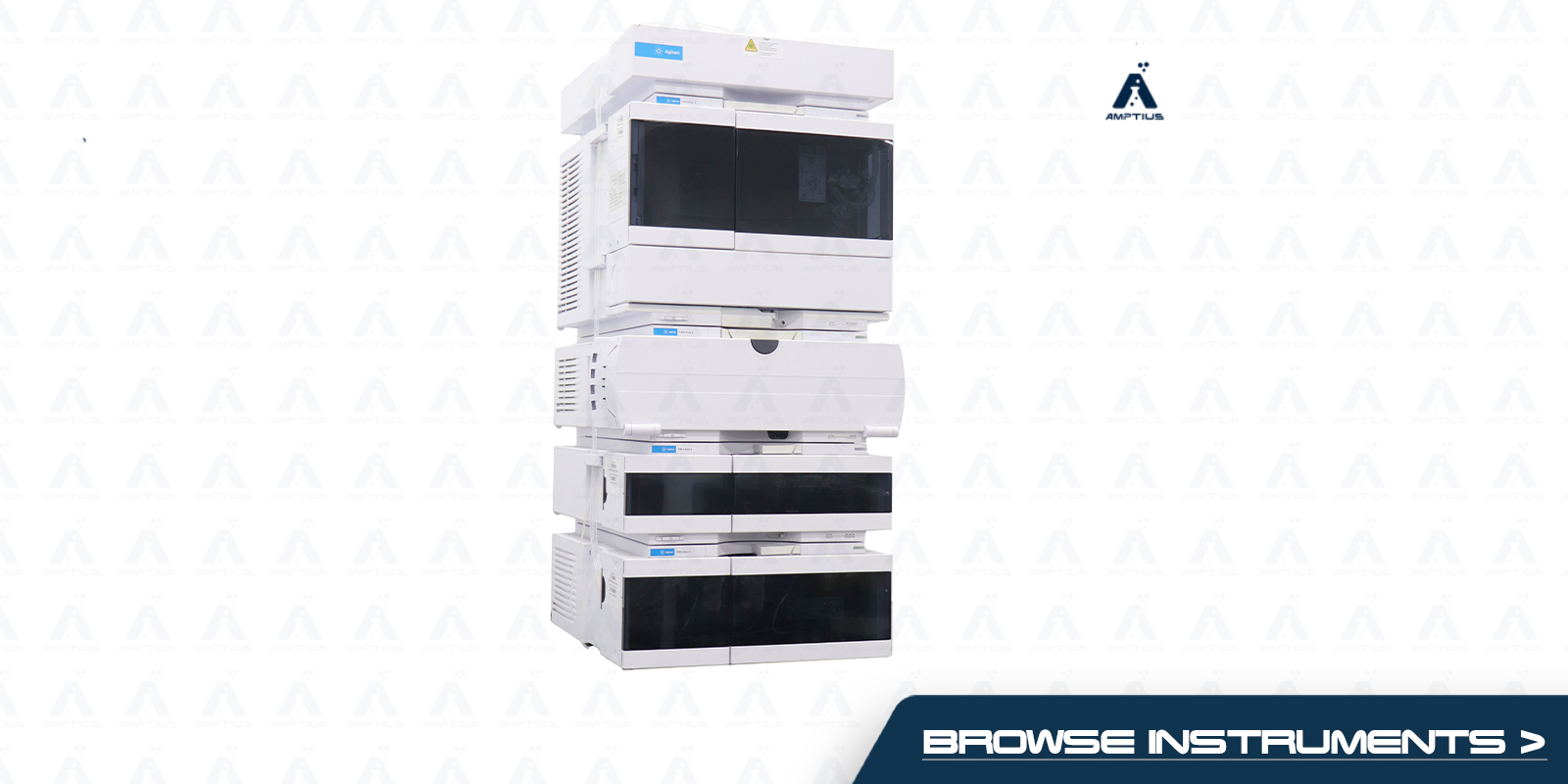
Instrumentation must support precise quantification, linearity across the target range, and resolution between closely eluting cannabinoid peaks. Although AOAC does not mandate specific systems, laboratories typically employ HPLC or LC-MS/MS platforms with PDA, DAD, or UV/Vis detection, depending on required sensitivity. Chromatographic separation should be robust enough to differentiate isobaric cannabinoids and degradation products. Validated methods must include system suitability testing and verification across representative dried plant matrices. The following systems are commonly used and, when validated internally, are capable of meeting the full performance criteria outlined in AOAC SMPR 2017.002.
Please click here to learn more about AOAC Method SMPR 2017.002
Agilent 1260 Infinity II HPLC System with Diode Array Detector (DAD) for AOAC Method SMPR 2017.002
The Agilent 1260 Infinity II HPLC system with DAD delivers high-resolution chromatographic separation ideal for the quantitation of cannabinoids in complex dried plant samples. Its photodiode array detection allows for multi-wavelength analysis, ensuring precise identification and quantification of cannabinoids such as THC, CBD, and CBN. This system supports the full analytical range required by AOAC SMPR 2017.002 and achieves LOQs of ≤ 0.1% with proper method development. It also enables robust performance for RSDr and RSDR across all cannabinoid concentration ranges.
OpenLab CDS software enhances data integrity with full traceability and batch validation tools. Method-specific calibration and retention time tracking support long-term system reliability. Labs can achieve high throughput and reproducibility, making the 1260 Infinity II a preferred choice in cannabinoid compliance testing. Laboratories should conduct full validation to confirm adherence to AOAC SMPR performance metrics.
Shimadzu Prominence-i LC-2030 Plus HPLC System with SPD-M40 PDA Detector for AOAC Method SMPR 2017.002
The Shimadzu LC-2030 Plus with SPD-M40 PDA detector is well-suited for cannabinoid testing in dried plant materials. Its integrated design offers streamlined workflows and high-resolution analysis across AOAC’s required concentration ranges. With optimized chromatographic methods, this system achieves recovery, repeatability, and reproducibility targets specified in SMPR 2017.002. Detection at multiple wavelengths enables selective quantitation of cannabinoids, even in complex plant matrices.
LabSolutions software simplifies method validation and system suitability checks. With precise gradient control and autosampler functionality, the LC-2030 Plus supports efficient batch analysis. This platform is favored by labs looking for ease of use, system integration, and consistent performance in regulatory cannabis testing. Validation across relevant cannabinoids and concentration levels is required to ensure compliance.
Waters Alliance HPLC System with 2998 PDA Detector for AOAC Method SMPR 2017.002
The Waters Alliance HPLC with 2998 PDA detector provides a robust solution for cannabinoid testing under AOAC SMPR 2017.002. Its high sensitivity and spectral confirmation capabilities enable precise quantitation of minor and major cannabinoids in dried plant matrices. When validated, the system can meet the LOQ of ≤ 0.1% and provide excellent linearity across the full 0.1–50% analytical range.
Empower software supports full chromatographic documentation, compliance reporting, and retention time verification. The 2998 PDA detector ensures excellent resolution for separating co-eluting cannabinoids and byproducts. This system is widely used in compliance labs and offers dependable accuracy and recovery in cannabis testing workflows. In-house method validation must confirm RSDr and RSDR performance criteria.
Thermo Scientific UltiMate 3000 HPLC with VWD-3400RS or DAD-3000RS Detector for AOAC Method SMPR 2017.002
The Thermo Scientific UltiMate 3000 HPLC, paired with either the VWD-3400RS or DAD-3000RS detector, delivers reliable performance for cannabinoid analysis in plant-based matrices. These detectors offer sensitive UV/VIS or diode array detection to quantify cannabinoids across AOAC’s required range. The system provides precise retention time stability and consistent peak symmetry for regulatory compliance testing.
Chromeleon CDS software ensures regulatory traceability, method standardization, and automated calibration tracking. With method optimization, the UltiMate 3000 system meets LOQ, recovery, and precision requirements for SMPR 2017.002. Its scalable design makes it suitable for labs handling varied sample volumes. Formal validation must confirm cannabinoid-specific accuracy and repeatability.
PerkinElmer Series 200 HPLC with UV/Vis Detector for AOAC Method SMPR 2017.002
The PerkinElmer Series 200 HPLC, equipped with a UV/Vis detector, offers cost-effective and compliant cannabinoid quantification in dried plant materials. The system is capable of meeting the ≤ 0.1% LOQ and ensures strong reproducibility across a wide concentration range. UV detection allows for selective analysis of primary cannabinoids when paired with validated retention time markers.
TotalChrom software supports system calibration, run tracking, and integration peak validation. The Series 200 platform is well-suited for routine quality control in both research and production labs. Though it offers less spectral information than PDA systems, its robustness and affordability make it a reliable tool for AOAC-compliant testing. Laboratories must complete full internal validation to ensure regulatory alignment.
JASCO LC-4000 Series HPLC with MD-4010 PDA Detector for AOAC Method SMPR 2017.002
The JASCO LC-4000 Series HPLC with MD-4010 PDA detector enables high-resolution cannabinoid analysis with full-spectrum detection capabilities. Its flexible wavelength monitoring and strong chromatographic resolution support AOAC SMPR 2017.002’s requirements for quantitation and accuracy. The system reliably handles complex plant extracts while maintaining precision and peak reproducibility.
ChromNAV CDS software provides method control, validation reporting, and system monitoring. Labs can leverage this platform for full-spectrum profiling and compliance testing in regulated environments. The LC-4000 Series is widely used in botanical and nutraceutical laboratories requiring robust and scalable systems. Performance must be verified through cannabinoid-specific method validation.
Choosing the Right Instrument for AOAC Method SMPR 2017.002
- Validated HPLC Systems for Cannabinoids: Agilent 1260 Infinity II, Shimadzu LC-2030 Plus, Waters Alliance with 2998 PDA, Thermo UltiMate 3000
- Cost-effective UV detection options: PerkinElmer Series 200 HPLC and JASCO LC-4000 Series with PDA or UV/Vis
- Key performance requirements: LOQ ≤ 0.1%, recovery from 95–105% to 98–102%, RSDr ≤ 2–5%, RSDR ≤ 3–7% depending on concentration
AOAC SMPR 2017.002 demands instrumentation capable of quantifying cannabinoids in dried plant materials with precise accuracy, reproducibility, and linearity. The systems listed above have demonstrated their capability to meet these standards when properly validated. Laboratories must perform full method validation to confirm all SMPR performance criteria, including LOQ, recovery, RSDr, and RSDR. We offer certified refurbished HPLC systems tailored to cannabinoid compliance testing. Contact us today to explore solutions aligned with AOAC regulatory requirements.