
AOAC Method SMPR 2017.001 Instrumentation Guide
Standard Method Performance Requirements (SMPR) for Quantitation of Cannabinoids in Cannabis Concentrates
AOAC SMPR 2017.001 sets forth the minimum analytical performance requirements for quantifying cannabinoids in cannabis concentrates. This includes THC, CBD, CBG, and their acidic precursors across a wide concentration range, from trace amounts to high-purity isolates. The method requires a limit of quantitation (LOQ) of ≤ 0.3% and an analytical range of 0.3% to approximately 100% for required cannabinoids. Acceptable recovery varies from 95–105% to 98–102% depending on concentration, with repeatability (RSDr) not exceeding 5%, 4%, or 2% and reproducibility (RSDR) limited to 7%, 5%, or 3%. These strict criteria ensure accurate, reproducible potency results in high-concentration cannabis matrices.
Analytical systems used for compliance must support high linearity, sharp chromatographic resolution, and low variability at all concentration levels. Both LC-MS/MS and HPLC systems are acceptable if they meet AOAC’s required precision and recovery metrics. The instruments listed below, when validated with appropriate reference standards and matrices, are capable of delivering full compliance with SMPR 2017.001. Laboratories must conduct in-house validation to verify performance under their specific testing conditions.
Please click here to learn more about AOAC Method SMPR 2017.001
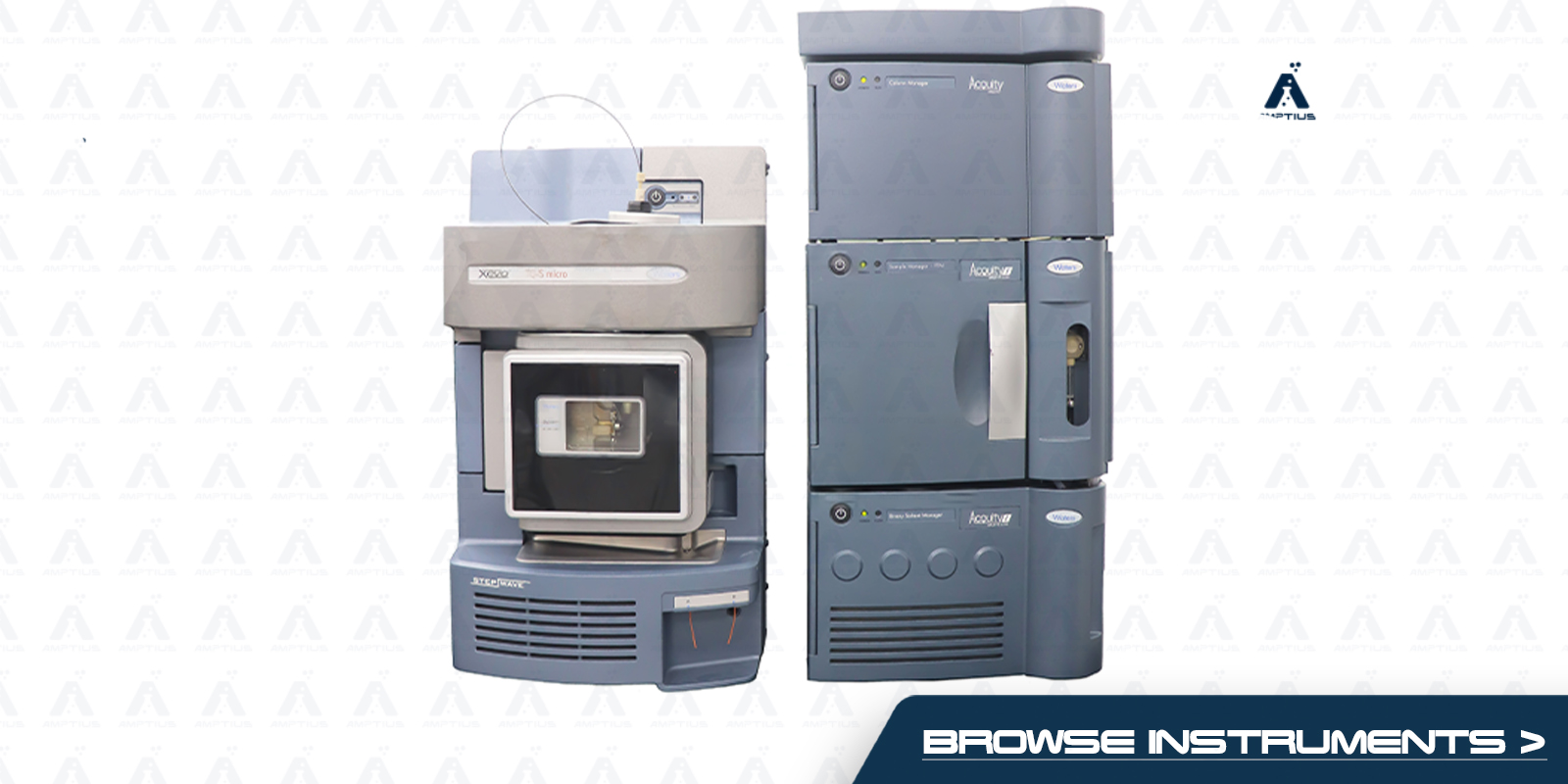
Waters Xevo TQ-S Micro LC-MS/MS with ACQUITY I Class for AOAC Method SMPR 2017.001
The Waters Xevo TQ-S Micro, paired with the ACQUITY I Class UPLC system, offers outstanding precision and ultra-trace quantitation for cannabinoid analysis in concentrated matrices. Its StepWave ion guide improves sensitivity while minimizing background noise, enabling the detection of low-level cannabinoids down to the required LOQ of 0.3%. The platform’s wide dynamic range supports analysis of high-purity distillates and extracts up to 100% cannabinoid content. It delivers repeatability and recovery values well within the SMPR’s required thresholds across all concentration brackets.
MassLynx software supports robust data review, ion ratio tracking, and calibration verification, making it ideal for regulated environments. The I Class front end enhances chromatographic separation and run-time efficiency, crucial for complex concentrate matrices. With validated methods, the system achieves reproducible cannabinoid quantitation while maintaining peak integrity and resolution. This configuration is widely used in ISO 17025-accredited labs and meets all AOAC SMPR 2017.001 criteria with in-house validation.
Agilent Ultivo Triple Quad LC/MS/MS with 1260 Infinity II for AOAC Method SMPR 2017.001
The Agilent Ultivo Triple Quad LC-MS/MS system, integrated with the 1260 Infinity II UHPLC, is a compact and powerful platform ideal for cannabis concentrate testing. Its Jet Stream ESI technology enhances ionization efficiency and signal clarity, delivering exceptional LOQ performance at or below 0.3%. With strong linearity and consistent quantitation across the 0.3–100% range, the Ultivo system meets AOAC’s exacting standards for recovery, RSDr, and RSDR. The system is particularly well-suited for testing waxes, oils, shatter, and high-THC distillates.
MassHunter software supports automated calibration management, ion transition optimization, and real-time system suitability tracking. Its space-saving footprint makes it attractive to high-volume labs seeking performance without compromising lab space. This system has been validated across a wide array of cannabis matrices and performs reliably under both R&D and routine testing conditions. Full in-house method validation is required to verify compliance with SMPR 2017.001.
PerkinElmer QSight 420 LC-MS/MS with UHPLC for AOAC Method SMPR 2017.001
The PerkinElmer QSight 420 LC-MS/MS system, combined with UHPLC capabilities, offers a high-throughput solution for cannabinoid quantification in concentrates. Its dual-source ionization allows flexibility for acidic and neutral cannabinoids, maintaining strong sensitivity and reproducibility across the analytical range. It easily achieves LOQ ≤ 0.3% and supports precise quantitation up to 100% cannabinoid content with excellent linearity. Its recovery and repeatability performance aligns with the SMPR’s strict thresholds when configured with appropriate method parameters.
Simplicity 3Q software automates batch validation, internal standard tracking, and quality control documentation. The system supports rugged use with minimal maintenance, making it ideal for daily compliance workflows. Analysts benefit from consistent performance in testing challenging matrices such as resin, isolate, and distillate. Validation with certified reference materials is essential to ensure full AOAC compliance.
Thermo Scientific UltiMate 3000 HPLC with VWD or DAD for AOAC Method SMPR 2017.001
The Thermo Scientific UltiMate 3000 HPLC, equipped with either a Variable Wavelength Detector (VWD) or Diode Array Detector (DAD), provides reliable quantification for cannabinoid concentrates when high sensitivity is not required. With proper method optimization, this system supports the analytical range of 0.3% to 100% and meets recovery and RSDr targets outlined in the SMPR. Its quaternary pump delivers precise gradient control, while thermal compartment stability ensures retention time reproducibility.
Chromeleon CDS enables automated calibration checks, method verification, and full audit tracking. Although HPLC-UV methods require rigorous method validation to separate co-eluting cannabinoids, they offer a cost-effective solution for many routine testing applications. When paired with validated standards, this system is suitable for testing high-potency cannabis concentrates. Internal validation for LOQ and matrix recovery is mandatory for AOAC method alignment.
Shimadzu Prominence-i LC-2030 Plus HPLC System for AOAC Method SMPR 2017.001
The Shimadzu Prominence-i LC-2030 Plus system is a fully integrated HPLC platform designed for reliable, high-throughput cannabinoid testing. Its compact architecture includes an autosampler, column oven, and SPD-M40 detector with multi-wavelength capabilities. With validated methods, this system achieves the ≤ 0.3% LOQ and provides excellent retention time stability across high-concentration samples. Recovery and RSDr targets are easily met when paired with the appropriate stationary phase and mobile phase conditions.
LabSolutions software enables method control, retention time monitoring, and precision tracking. The Prominence-i system is ideal for labs prioritizing automation, low maintenance, and operational consistency. It performs well in compliance testing for concentrates like wax, resin, and isolate. Validation for each sample matrix is necessary to confirm performance within AOAC SMPR 2017.001 limits.
Waters Alliance HPLC with 2998 PDA or 2489 UV Detector for AOAC Method SMPR 2017.001
The Waters Alliance HPLC system, configured with either the 2998 PDA or 2489 UV detector, provides a reliable solution for cannabinoid testing in high-potency concentrates. These detectors offer excellent signal stability and selectivity for cannabinoids within the required 0.3% to 100% range. When using the 2998 PDA, full-spectrum analysis is available, supporting spectral confirmation and co-elution troubleshooting. With proper chromatographic resolution, this system meets all AOAC SMPR targets for recovery, repeatability, and reproducibility.
Empower 3 software supports calibration management, spectral purity review, and audit-ready data logging. Waters’ long-standing reputation in analytical HPLC makes this platform a trusted choice for regulated laboratories. Labs conducting compliance testing on cannabis extracts can rely on its consistency and documentation capabilities. Method validation for LOQ, recovery, and precision across concentrated matrices is necessary to ensure alignment with SMPR 2017.001.
Choosing the Right Instrument for AOAC Method SMPR 2017.001
- High-sensitivity LC-MS/MS options: Waters Xevo TQ-S Micro, Agilent Ultivo, and PerkinElmer QSight 420 meet full AOAC performance standards.
- Validated HPLC systems for routine analysis: Thermo UltiMate 3000, Shimadzu LC-2030 Plus, and Waters Alliance offer reliable quantitation for concentrates.
- Method compliance requires: LOQ ≤ 0.3%, recovery of 95–105% to 98–102%, and RSDr/RSDR thresholds from ≤5% to ≤2% and ≤7% to ≤3% depending on concentration.
AOAC Method SMPR 2017.001 demands analytical systems capable of delivering precise and reproducible cannabinoid quantitation in cannabis concentrates. The instruments listed above can achieve full compliance when validated with appropriate methods, standards, and sample matrices. Whether your lab prioritizes throughput, cost-efficiency, or maximum sensitivity, each platform offers distinct strengths for regulatory workflows. We offer certified refurbished HPLC and LC-MS/MS systems tailored to AOAC cannabinoid testing—contact us today to explore options aligned with your testing needs.
