
AOAC Method SMPR 2016.017 Instrumentation Guide
Standard Method Performance Requirements (SMPR) for Quantitative Measurement of Vitamin B12 in Dietary Supplements and Ingredients
AOAC SMPR 2016.017 establishes the minimum performance requirements for the quantitation of vitamin B12 in dietary supplements and raw material ingredients. The method must achieve a limit of quantitation (LOQ) of ≤ 0.0005 ppm and cover a wide analytical range from 0.001 to 1,000,000 ppm. Recovery and precision requirements vary by concentration range, with recovery spanning from 75–115% at the lowest concentrations to 98–102% at the highest. Repeatability (RSDr) must not exceed 12% at trace levels, while reproducibility (RSDR) is limited to 3–20% depending on concentration. Methods must also include system suitability testing and be validated for each matrix type.
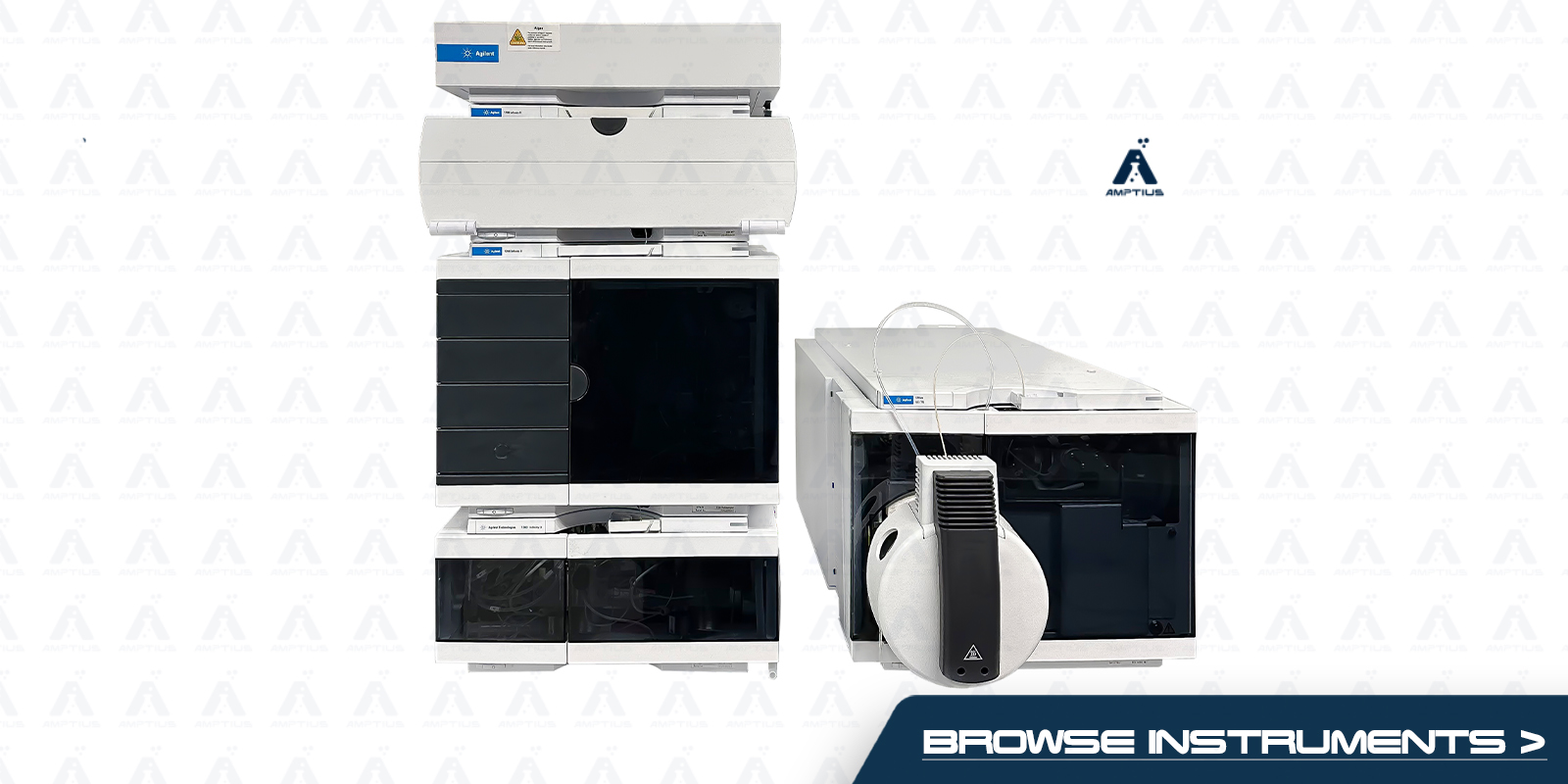
Analytical systems used under this SMPR must provide high sensitivity, broad dynamic range, and excellent reproducibility. LC-MS/MS platforms are strongly recommended for low-level detection (below 5 ppm), while HPLC systems are suitable for higher concentration ranges or fortified products. The following systems, when validated appropriately, are capable of meeting the requirements for vitamin B12 analysis in compliance with AOAC SMPR 2016.017.
Please click here to learn more about AOAC Method SMPR 2016.017
Agilent Ultivo Triple Quad LC-MS/MS System with 1260 Infinity II for AOAC Method SMPR 2016.017
The Agilent Ultivo Triple Quadrupole LC-MS/MS, combined with the 1260 Infinity II UHPLC, offers compact yet powerful performance for trace-level quantitation of vitamin B12. With Jet Stream ESI technology and ultra-sensitive MRM capabilities, the Ultivo consistently achieves the LOQ requirement of ≤ 0.0005 ppm. It also maintains linearity across the full 0.001–1,000,000 ppm range, making it ideal for both enriched and trace analysis. When properly validated, it meets all RSDr and RSDR specifications across concentration tiers.
MassHunter software streamlines method development, calibration tracking, and automated data analysis. Analysts benefit from real-time validation tools and audit-ready documentation, supporting compliance in regulated laboratories. The Ultivo is widely adopted in nutritional testing labs and has demonstrated strong performance in multi-matrix environments. With appropriate standards and recovery validation, this system fully supports AOAC SMPR 2016.017 compliance.
Waters Xevo TQ-S Micro LC-MS/MS with ACQUITY I Class for AOAC Method SMPR 2016.017
The Waters Xevo TQ-S Micro, paired with the ACQUITY I Class UPLC, delivers exceptional sensitivity and resolution for vitamin B12 analysis. StepWave ion optics and optimized MRM acquisition support low-level detection well below the 0.0005 ppm LOQ threshold. The system’s performance aligns with all recovery and precision targets for both trace and enriched supplement matrices. Its fast polarity switching and enhanced ion stability make it well-suited for high-throughput nutritional laboratories.
MassLynx software provides a robust platform for system suitability verification, ion ratio monitoring, and calibration curve tracking. With its compact footprint and reproducible performance, the Xevo TQ-S Micro is a top choice for laboratories requiring ultra-trace detection of vitamins and other micronutrients. Validation for each product type ensures full compliance with AOAC SMPR 2016.017 performance requirements.
PerkinElmer QSight 420 LC-MS/MS with UHPLC for AOAC Method SMPR 2016.017
The PerkinElmer QSight 420, coupled with a UHPLC front end, provides a rugged and sensitive solution for vitamin B12 quantitation. Its dual-source ionization technology supports consistent detection of cyanocobalamin at low parts-per-billion levels. This platform achieves LOQ ≤ 0.0005 ppm and maintains accurate recovery and repeatability across fortified and trace-level samples. Its cycle time and carryover performance make it ideal for labs handling complex dietary matrices.
Simplicity 3Q software allows for real-time QA checks, calibration verification, and recovery tracking. With appropriate method development and use of reference materials, the QSight 420 performs reliably under AOAC SMPR 2016.017. It is well-suited for contract labs and supplement manufacturers looking to meet compliance and throughput demands.
Agilent 1260 Infinity II HPLC with DAD Detector + BinPump for AOAC Method SMPR 2016.017
The Agilent 1260 Infinity II HPLC system with a DAD detector and binary pump configuration is well-suited for vitamin B12 quantitation at mid- to high-concentration levels. Its multi-wavelength detection capabilities offer precise monitoring of B12 and structurally related compounds across various supplement matrices. The system performs reliably above 5 ppm and supports recovery and precision requirements up to 1,000,000 ppm. Its robust chromatographic performance makes it suitable for routine quality control in production settings. Analysts can automate calibration and reporting using OpenLab CDS.
For low-level detection approaching the method’s LOQ (≤ 0.0005 ppm), this system may require derivatization of vitamin B12 to enhance UV absorbance and improve sensitivity. Derivatization chemically modifies the B12 molecule to increase its detection response, typically via pre-column conversion to a UV-active species. This step enables lower detection limits and greater linearity in trace analysis. When using derivatization protocols with validated standards, the 1260 Infinity II can meet SMPR 2016.017 criteria for fortified products. Validation should include spike recovery, repeatability, and system suitability across relevant matrices.
Thermo Scientific UltiMate 3000 HPLC with VWD or DAD for AOAC Method SMPR 2016.017
The Thermo Scientific UltiMate 3000 HPLC, configured with either a variable wavelength detector (VWD) or diode array detector (DAD), is a reliable platform for B12 analysis in dietary supplements. Its precise solvent delivery, temperature-controlled column oven, and spectral detection allow high reproducibility across fortified concentration ranges. The system provides accurate results above 5 ppm and supports RSDr and RSDR requirements when operated with validated methods. Chromeleon CDS software enhances method traceability, curve fitting, and result documentation.
To achieve quantitation near the LOQ of ≤ 0.0005 ppm, the method must incorporate a derivatization step to improve B12’s detectability via UV absorption. Derivatization enhances the signal response and selectivity of B12 in complex matrices, allowing the HPLC system to reach lower detection thresholds. Pre-column derivatization is the most common approach and should be optimized to avoid interfering peaks or degradation. When combined with careful matrix validation, the UltiMate 3000 can deliver compliant results under SMPR 2016.017. This system remains a dependable option for both routine and regulated vitamin analysis.
Shimadzu Prominence-i LC-2030 Plus HPLC System for AOAC Method SMPR 2016.017
The Shimadzu Prominence-i LC-2030 Plus provides fully integrated HPLC functionality with excellent baseline stability for the quantification of vitamin B12 in high-concentration matrices. Its user-friendly touchscreen interface and automated workflows support routine testing in supplement manufacturing environments. The system maintains excellent retention time repeatability and peak resolution across standard runs. Multi-wavelength detection allows for selective monitoring of B12 and degradation products in fortified samples. With proper calibration and quality control procedures, it can meet recovery and precision targets set by AOAC SMPR 2016.017 for concentrations above 5 ppm.
For trace-level B12 detection approaching the 0.0005 ppm LOQ, laboratories must apply derivatization techniques to enhance UV absorbance and detection sensitivity. This process chemically modifies B12 to improve its chromatographic and spectral properties, enabling quantification in challenging matrices. The LC-2030 Plus can handle derivatized B12 with high reproducibility when used with validated sample preparation protocols. Incorporating spike recovery tests and inter-batch precision studies ensures method robustness. When configured with proper derivatization workflows, this HPLC system can support broader applications beyond fortified products.
Choosing the Right Instrument for AOAC Method SMPR 2016.017
- Trace-level detection (≤ 0.0005 ppm): Waters Xevo TQ-S Micro, Agilent Ultivo, and PerkinElmer QSight 420
- Fortified and high-concentration matrices: Agilent 1260 Infinity II HPLC, Thermo UltiMate 3000 HPLC, and Shimadzu LC-2030 Plus
- Validation requirements: LOQ ≤ 0.0005 ppm, recovery from 75–115% to 98–102%, RSDr ≤ 2–12%, and RSDR ≤ 3–20% based on concentration
AOAC Method SMPR 2016.017 sets strict guidelines for vitamin B12 measurement in supplements and ingredients. Laboratories must ensure their instrumentation meets all required performance criteria, including trace-level LOQ, strong linearity, and matrix-specific recovery. The systems listed above provide reliable solutions for both trace and fortified applications when properly validated. We offer certified refurbished HPLC and LC-MS/MS systems configured for vitamin analysis—contact us today to find a solution aligned with your compliance needs.