
AOAC Method SMPR 2016.011 Instrumentation Guide
Standard Method Performance Requirements (SMPRs) for Detection of Botulinum Neurotoxins A1 and A2 in Field-Deployable, Department of Defense (DoD) Aerosol Collection Devices
AOAC SMPR 2016.011 outlines stringent performance requirements for the detection of botulinum neurotoxins A1 and A2 in aerosol matrices collected by field-deployable or Department of Defense (DoD) aerosol collection systems. The method must detect toxin concentrations at or below 1.25 ng/mL with a probability of detection (POD) ≥ 0.95. Additional requirements include system false positive and false negative rates ≤ 5%, complete inclusivity for toxin variants, and no detection of non-targets like tetanus toxin.
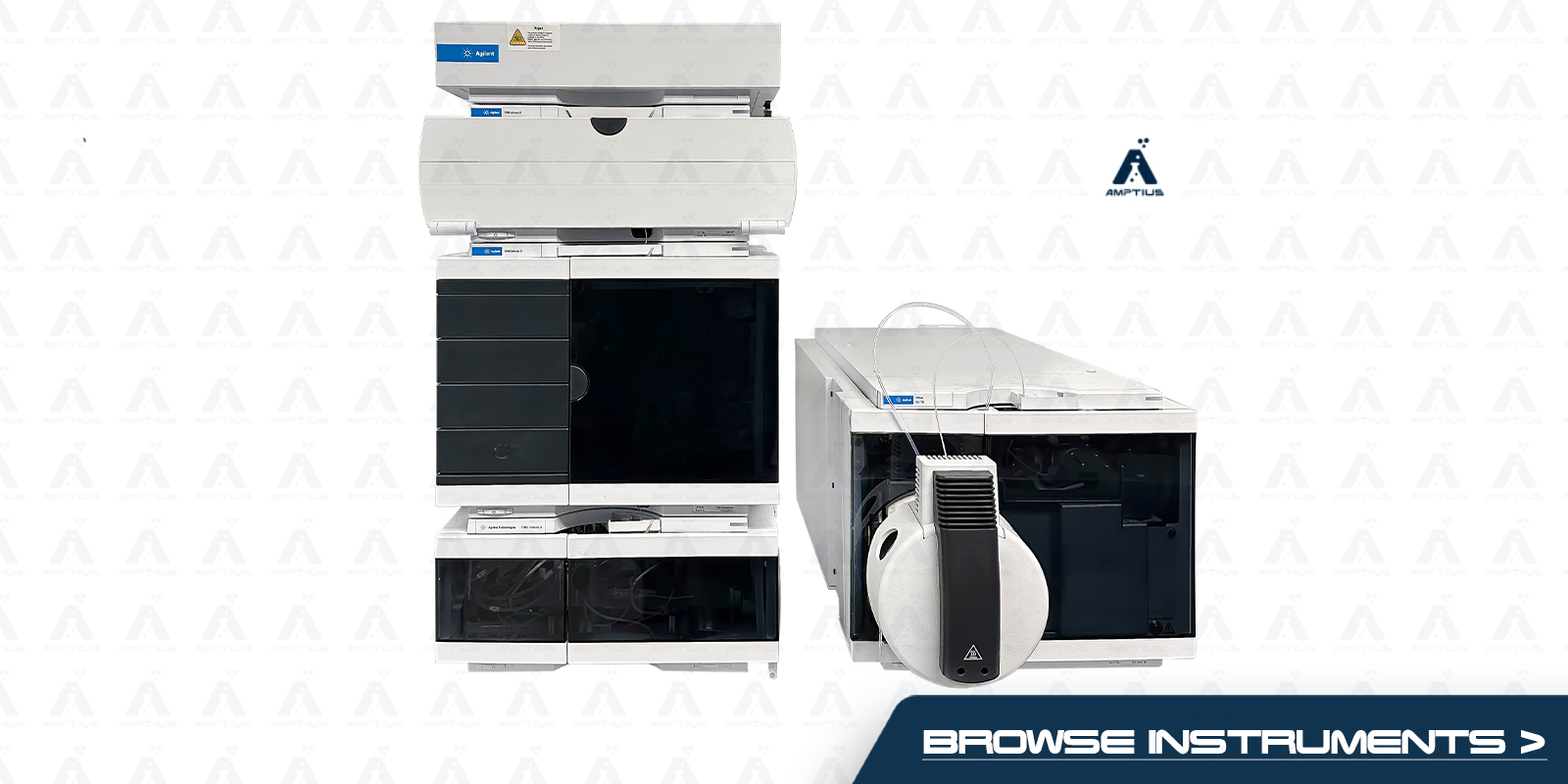
These LC-MS/MS systems are not only capable of achieving the low-level detection limits required by SMPR 2016.011 but also support robust method validation workflows across complex environmental matrices. All instruments listed are compatible with MRM-based workflows, enable high-resolution separations with UHPLC systems, and can be configured to meet the time-to-result and accuracy targets established by AOAC. Successful implementation requires validated sample preparation methods and internal performance verification.
Please click here to learn more about AOAC Method SMPR 2016.011
Agilent Ultivo Triple Quadrupole LC-MS/MS with 1260 Infinity II for AOAC Method SMPR 2016.011
The Agilent Ultivo Triple Quad LC-MS/MS system offers a compact yet powerful solution for trace-level toxin detection. When paired with the 1260 Infinity II UHPLC, this system delivers fast, reproducible separations and robust retention time stability, critical for reliable identification of botulinum neurotoxins. The Jet Stream ESI source enhances ionization efficiency for peptides and protein fragments, supporting detection levels well below the 1.25 ng/mL AMDL. This setup is ideal for laboratories with limited space that still require rigorous toxin detection performance.
MassHunter software supports automated MRM development, system suitability checks, and result reporting that aligns with SMPR 2016.011 standards. The Ultivo’s efficient design reduces maintenance downtime, while providing high-speed polarity switching and excellent signal-to-noise ratios. Labs can validate this platform for environmental matrices like buffer and aerosol extracts with method-specific calibration curves. Its small footprint, rugged design, and proven performance make it a reliable choice for mobile labs and compact laboratory installations.
Waters Xevo TQ-S Micro with ACQUITY I-Class UPLC for AOAC Method SMPR 2016.011
The Waters Xevo TQ-S Micro, integrated with the ACQUITY I-Class UPLC, delivers ultra-sensitive and reproducible MRM performance. This system is engineered to detect low-abundance protein toxins in complex sample backgrounds, making it highly compatible with the aerosol collection matrices defined by AOAC SMPR 2016.011. Its StepWave ion guide and advanced collision cell technology offer excellent ion transfer and fast acquisition times, improving throughput and signal fidelity.
MassLynx software provides method validation tools, scheduled MRM optimization, and automated calibration tracking. This system is capable of delivering sub-ng/mL LODs and maintains precision even in high-particulate or saline aerosol extracts. With its flexible column compatibility and powerful signal processing, the Xevo TQ-S Micro platform is ideal for laboratories performing high-consequence biotoxin screening. When validated with appropriate recovery and POD testing, it fulfills all SMPR 2016.011 performance expectations.
PerkinElmer QSight 420 LC-MS/MS with UHPLC for AOAC Method SMPR 2016.011
The PerkinElmer QSight 420 system features a dual-source ionization design that enables consistent quantitation of low-level protein toxins in aerosol matrices. Combined with a UHPLC front end, it provides fast chromatographic separation and peak resolution that enhances analytical selectivity. This system supports high-throughput MRM-based workflows and is optimized to detect analytes like botulinum neurotoxins below the 1.25 ng/mL threshold required by AOAC SMPR 2016.011.
Simplicity software offers automated calibration, system readiness checks, and integrated data reporting. The QSight 420 excels in complex environmental sample types due to its low background noise and high matrix tolerance. Its robust performance ensures repeatability and reliability in multi-point POD studies, while supporting validation across various toxin subtypes. This system is a practical solution for labs conducting biosecurity and emergency preparedness testing.
Thermo Scientific TSQ Altis Plus with Vanquish UHPLC for AOAC Method SMPR 2016.011
The Thermo Scientific TSQ Altis Plus system, paired with the Vanquish UHPLC, delivers high-speed, high-sensitivity quantification ideal for SMPR 2016.011 toxin detection protocols. Its Active Ion Management (AIM) technology improves ion focusing and reduces chemical noise, supporting ultra-trace analysis of botulinum neurotoxins. Fast polarity switching and rapid SRM transitions increase throughput, making it suitable for time-sensitive field sample processing.
TraceFinder software facilitates complete workflow automation, from scheduled MRM setup to result interpretation. Analysts can monitor calibration performance, track recovery rates, and generate compliance-ready documentation. The Altis Plus system supports robust method development and validation across various aerosol collection devices and matrices. With its analytical power and regulatory-friendly software, this platform is a dependable asset for high-stakes toxin surveillance.
Shimadzu LCMS-8060NX with Nexera X3 UHPLC for AOAC Method SMPR 2016.011
The Shimadzu LCMS-8060NX system provides ultrafast MRM acquisition and outstanding sensitivity for protein toxin detection in low-concentration field samples. Coupled with the Nexera X3 UHPLC, the system achieves sharp peak shapes and excellent reproducibility across high-salt or particulate-rich matrices. It is fully capable of meeting or exceeding the AMDL, POD, and false-positive/negative requirements of AOAC SMPR 2016.011.
LabSolutions software enhances validation workflows through customizable QA/QC templates, matrix recovery monitoring, and audit-ready reporting. Its patented ion guide design ensures stable ionization under varying field sample conditions. This configuration is well suited to emergency response testing and military-grade field operations requiring high confidence and short analysis windows. The LCMS-8060NX remains a trusted option for regulated botulinum toxin analysis.
SCIEX Triple Quad™ 6500+ LC-MS/MS with ExionLC AD for AOAC Method SMPR 2016.011
The SCIEX 6500+ system, equipped with the ExionLC AD UHPLC, delivers industry-leading sensitivity and quantitation precision. Its Turbo V ion source and Scheduled MRM Pro feature enable selective detection of botulinum neurotoxin A1 and A2 complexes down to the single-digit ng/mL range. This system is routinely used in critical contaminant screening and biodefense applications due to its reproducibility and robustness.
SCIEX OS software supports compliance with AOAC validation protocols through integrated QC tracking, calibration curve modeling, and customizable reporting. The system handles a wide range of aerosol matrices and allows rapid method deployment for new targets or assay updates. Whether operating in centralized labs or mobile deployment centers, the 6500+ platform offers the detection reliability and analytical power required for SMPR 2016.011 workflows.
Choosing the Right Instrument for AOAC Method SMPR 2016.011
- High-sensitivity systems: SCIEX 6500+, Waters Xevo TQ-S Micro, and Thermo TSQ Altis Plus deliver trace-level toxin detection in aerosol matrices.
- Compact and mobile-ready platforms: Agilent Ultivo and PerkinElmer QSight 420 offer space-saving designs for field and mobile lab deployment.
- High-throughput and robust performance: Shimadzu LCMS-8060NX and Agilent Ultivo enable fast, repeatable results under field-lab conditions.
AOAC Method SMPR 2016.011 requires instrumentation capable of ultra-trace protein toxin detection with validated precision, accuracy, and matrix selectivity. The LC-MS/MS systems listed above, when paired with validated methods and internal standards, support full compliance with AOAC’s requirements for botulinum neurotoxin A1 and A2 analysis in defense and public health applications. Contact us today to explore certified refurbished systems optimized for SMPR 2016.011 workflows.
