
AOAC Method SMPR 2016.008 Instrumentation Guide
Standard Method Performance Requirements (SMPRs) for DNA-Based Methods of Detecting Yersinia pestis in Field-Deployable, Department of Defense Aerosol Collection Devices
AOAC SMPR 2016.008 outlines specific performance criteria for detecting Yersinia pestis using DNA-based technologies within field-deployable platforms and Department of Defense aerosol collection systems. This method requires an acceptable minimum detection level (AMDL) of 2,000 cells/mL or lower, a probability of detection (POD) of at least 95%, and system false-positive and false-negative rates below 5%. These performance metrics apply to both buffer-based samples and environmental matrix materials to ensure consistent field application. Additionally, results must be obtained within four hours. The method also calls for inclusivity verification at 2× AMDL and exclusivity at 10× AMDL.
This guide presents instruments that support those performance goals through real-time PCR, isothermal amplification, or closed cartridge molecular workflows. While AOAC does not officially endorse specific products, all systems listed here offer the technical features required to meet the SMPR standards when paired with validated assays. Validation ensures that instruments perform within aerosol matrix environments and comply with all outlined detection metrics. Instruments suitable for field deployment must also offer portability, reliability, and ease of use under operational conditions. These platforms give laboratories and field teams viable solutions for rapid and accurate biothreat detection.
Please click here to learn more about AOAC Method SMPR 2016.008
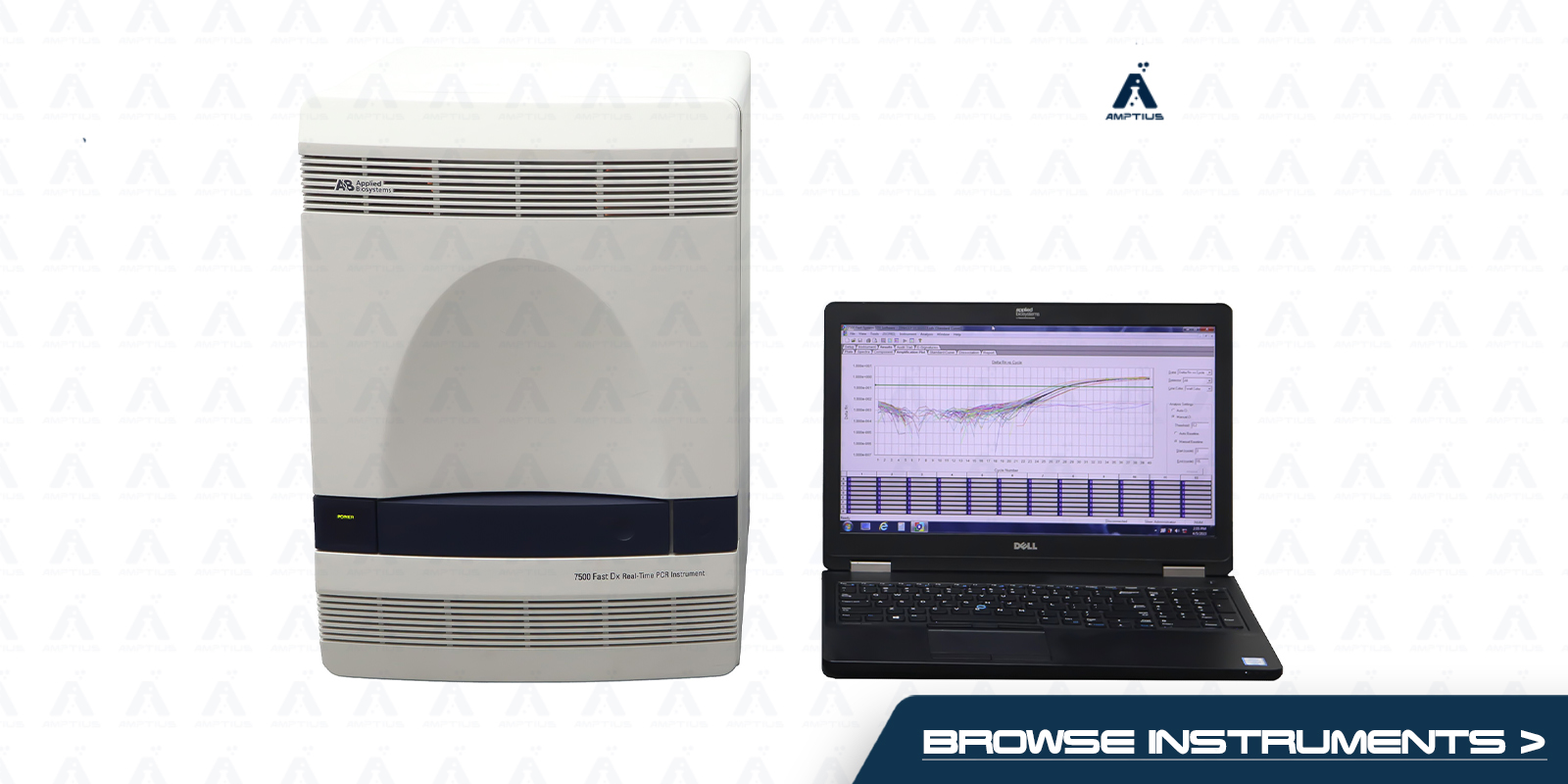
Applied Biosystems ABI 7500 Fast DX Real-Time PCR System for AOAC Method SMPR 2016.008
The ABI 7500 Fast DX Real-Time PCR System delivers reliable detection performance in regulated diagnostics and environmental monitoring workflows. Laboratories often use this system to detect Yersinia pestis DNA in low concentrations, leveraging its high sensitivity and stable thermal control. With a validated assay, the platform can meet SMPR 2016.008’s requirement of detecting ≤2,000 cells/mL while maintaining high POD. The system accommodates 96-well plates, enabling moderate sample throughput and rapid analysis. Its software supports real-time tracking and robust data integrity.
Teams can deploy the ABI 7500 Fast DX in mobile laboratories or secure container labs for confirmatory field testing. When integrated with validated assays, the system supports the required inclusivity and exclusivity performance thresholds. Its rugged design and established track record in outbreak response make it a strong choice for support roles. While not handheld, the instrument’s portability aligns with mission-based lab installations. Operators must ensure the assay meets the AOAC validation criteria before field application.
T-COR 8 Real-Time PCR/Isothermal Device (Tetracore) for AOAC Method SMPR 2016.008
The T-COR 8 from Tetracore is a compact and rugged device engineered for tactical field deployment. This platform supports both real-time PCR and isothermal amplification, giving field operators flexibility depending on assay configuration. Its battery-powered operation and sealed cartridge design simplify testing in austere conditions. Users can obtain results in under an hour, aligning well with SMPR 2016.008’s time-to-result requirement. The T-COR 8 supports up to eight simultaneous reactions, allowing for control and target tests within a single run.
Designed for biological threat response, the T-COR 8 integrates seamlessly with DoD field operations. It allows trained personnel to perform rapid screening and diagnostics without relying on fixed-lab infrastructure. When used with a validated Yersinia pestis assay, the platform delivers accurate results and meets AOAC’s performance criteria. Its durability, ease of use, and low power requirements make it ideal for biosurveillance missions. Teams in remote or tactical environments will benefit from its field-readiness and operational efficiency.
BioFire® FilmArray® Torch System for AOAC Method SMPR 2016.008
The BioFire FilmArray Torch streamlines pathogen detection by combining nucleic acid extraction, amplification, and analysis into one integrated workflow. Operators can perform molecular diagnostics using sealed pouches, reducing contamination and training needs. The system consistently delivers results in less than an hour, making it a strong candidate for meeting SMPR 2016.008’s requirements. Military and public health teams frequently use FilmArray platforms during outbreaks or emergency response operations. The automation and minimal sample prep speed up decision-making in critical environments.
With its validated biothreat panels, the FilmArray Torch offers multiplex capability that includes potential Yersinia pestis detection. The closed design improves assay reliability and allows operators to focus on interpreting results. While the system requires access to compatible pouches, its performance in real-world settings supports its role in field diagnostics. Its small footprint and ease of use enhance mobility across command posts or rapid deployment labs. Labs must ensure the assay in use meets AOAC validation standards.
Genie® III or Genie® HT Isothermal Systems (OptiGene) for AOAC Method SMPR 2016.008
The Genie III and Genie HT platforms from OptiGene provide fast and simple isothermal detection using loop-mediated amplification (LAMP). These devices deliver results within 30 minutes and operate on battery power, which is ideal for field response. Users can monitor reactions in real time and achieve high sensitivity for pathogen targets. Genie systems require minimal training, allowing military or emergency response personnel to use them effectively. The lightweight form factor and durable construction make them suitable for rugged deployments.
With validated LAMP primers targeting Yersinia pestis, the Genie instruments can meet SMPR 2016.008’s detection and specificity requirements. Their compatibility with portable biosurveillance missions has been proven through various public health applications. The low power needs and user-friendly interface allow for extended field use. Operators must confirm that assays demonstrate appropriate inclusivity and exclusivity performance. Genie systems are a strong match for frontline diagnostics in resource-limited settings.
Bio-Rad CFX Opus Deep Well Real-Time PCR (with Mobile Lab Integration) for AOAC Method SMPR 2016.008
The Bio-Rad CFX Opus Deep Well PCR System supports high-throughput pathogen detection in mobile or transportable lab environments. This platform offers excellent thermal uniformity and multi-channel fluorescence detection, enabling sensitive and specific amplification of target DNA. With proper assay validation, the system achieves SMPR 2016.008’s requirements for detection of ≤2,000 cells/mL and POD ≥ 95%. Its robust construction and software control make it ideal for continuous surveillance in mobile labs. Technicians can generate reliable data across multiple targets within two hours.
While the CFX Opus is not a handheld device, its compatibility with mobile laboratories enhances its utility in field operations. Bio-Rad’s software suite ensures secure result tracking and compliance reporting. When deployed with validated Y. pestis assays, this system delivers reproducible outcomes with minimal manual input. Environmental monitoring teams value its scalability and precision. The CFX Opus fits best within semi-mobile lab deployments where infrastructure is available.
Cepheid GeneXpert Omni (Limited Release) for AOAC Method SMPR 2016.008
The GeneXpert Omni from Cepheid offers portable, cartridge-based molecular diagnostics tailored for military and emergency response teams. This system performs sample processing and real-time PCR analysis within a single unit, minimizing handling and technical error. Its battery-powered operation and small size make it suitable for deployment in forward environments. Results are typically available in under 60 minutes, meeting the SMPR’s time constraint. It supports easy transport and setup in field conditions.
Although still in limited release, the GeneXpert Omni builds on the performance reliability of Cepheid’s standard platforms. When using a validated Yersinia pestis cartridge, the device can meet all detection and specificity requirements outlined by AOAC. Internal controls verify the assay’s integrity during each run. Its design supports use by trained personnel without the need for extensive laboratory infrastructure. The Omni system offers an ideal solution for rapid detection missions where speed and reliability are essential.
Choosing the Right Instrument for AOAC Method SMPR 2016.008
- Portable field systems: T-COR 8, BioFire Torch, Genie III, and Cepheid GeneXpert Omni support rugged, rapid biothreat detection.
- Mobile lab solutions: ABI 7500 Fast DX and Bio-Rad CFX Opus offer high precision for confirmatory testing in semi-fixed environments.
- Self-contained workflows: FilmArray and GeneXpert reduce user input through integrated, closed-cartridge operations.
AOAC Method SMPR 2016.008 defines the benchmark for detecting Yersinia pestis with speed, accuracy, and specificity in field-ready formats. Instruments listed in this guide can support these objectives when paired with properly validated assays. Whether your operations involve tactical teams, mobile labs, or regional testing hubs, each system offers practical advantages. Ensure all methods meet AOAC criteria through matrix validation and quality control procedures. Contact us today to learn about refurbished systems configured for SMPR-compliant deployment.
