
AOAC Method SMPR 2015.007 Instrumentation Guide
Standard Method Performance Requirements (SMPR) for Withanolide Glycosides and Aglycones of Ashwagandha (Withania somnifera)
AOAC SMPR 2015.007 outlines the method performance requirements for quantifying withanolide glycosides and aglycones in Ashwagandha (Withania somnifera) products. The method must support quantitation across a wide concentration range, with limits of quantitation (LOQ) at or below 10 ppm. Recovery must range from 80% to 110% depending on analyte concentration, while repeatability (RSDr) must remain within 1–7%, and reproducibility (RSDR) within 2–10%. The method must address various matrices, including raw plant material, extracts, tablets, capsules, powders, and liquids. It serves as a reference method for cGMP compliance, ensuring ingredient integrity in commercial Ashwagandha formulations.
Validated techniques must be capable of identifying and quantifying key withanolides such as withanosides IV–VI, withaferin A, withanolide A and B, and withanone. Suitable systems include high-performance LC-MS/MS platforms for low-level quantification and HPLC systems with UV/PDA detection for routine analysis. Each recommended instrument below meets the analytical performance expectations for AOAC SMPR 2015.007 when configured with appropriate columns, reference standards, and validated methods.
Please click here to learn more about AOAC Method SMPR 2015.007
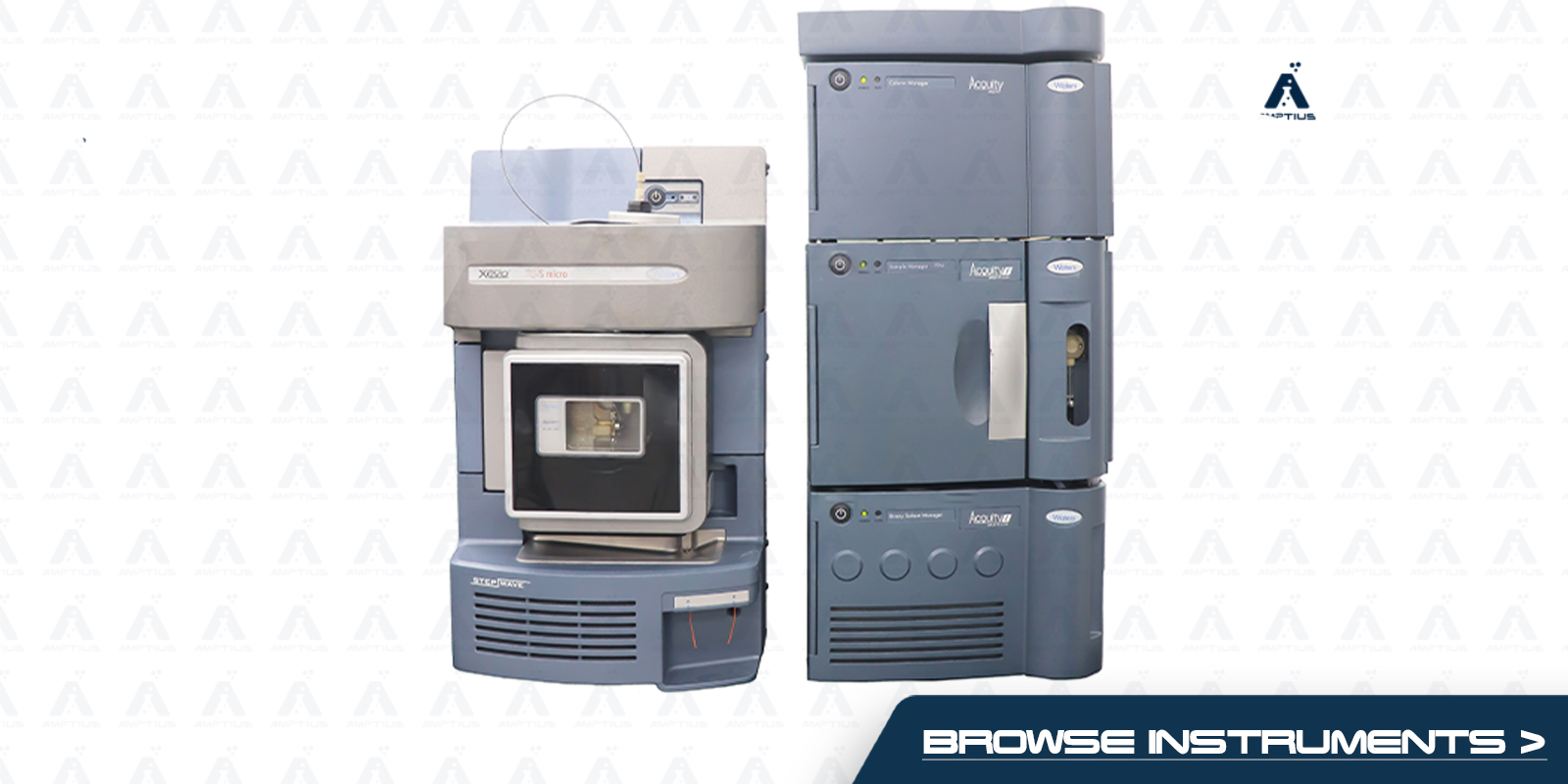
Waters Xevo TQ-S Micro with ACQUITY I-Class UPLC for AOAC Method SMPR 2015.007
The Waters Xevo TQ-S Micro Triple Quadrupole LC-MS/MS system, paired with the ACQUITY I-Class UPLC, provides high sensitivity and selectivity for quantifying withanolide glycosides and aglycones. StepWave ion optics and rapid polarity switching enable clear detection of low-abundance compounds like withanoside IV and withaferin A. The ACQUITY I-Class UPLC enhances chromatographic resolution, allowing better separation of structurally similar analytes and degradation products. The platform supports high-throughput workflows with minimal carryover, which is especially useful for analyzing complex botanical matrices. Its compact design and consistent performance make it a trusted option for regulated environments.
MassLynx software streamlines data acquisition, batch processing, and method validation, allowing laboratories to maintain full traceability and audit readiness. The system supports LOQ thresholds at 10 ppm and meets all SMPR 2015.007 criteria for recovery, repeatability, and reproducibility across a broad dynamic range. Analysts can customize MRM transitions for each withanolide target, ensuring precise quantification even in trace concentrations. Built-in system suitability features help verify performance before each sequence, reducing the risk of method deviation. The Xevo TQ-S Micro is widely used in cGMP-compliant botanical supplement testing environments for its reliability, scalability, and robust quantification performance.
Agilent Ultivo LC/MS/MS with 1260 Infinity II for AOAC Method SMPR 2015.007
The Agilent Ultivo Triple Quadrupole LC/MS/MS, integrated with the 1260 Infinity II UHPLC front end, delivers exceptional accuracy for quantifying Ashwagandha withanolides across a broad dynamic range. Its compact triple quadrupole design features Jet Stream ionization and a precision collision cell that ensures sharp MRM transitions and minimal background noise. These capabilities enable accurate detection of trace-level glycosides and aglycones, meeting the LOQ threshold of 10 ppm required by SMPR 2015.007. The system also offers rapid polarity switching and strong linearity, which are critical for analyzing diverse compound classes in complex herbal matrices. This configuration provides the performance needed to support both method development and routine quality control testing.
MassHunter software streamlines method validation, calibration tracking, and audit trail reporting, helping laboratories meet cGMP compliance expectations. The software includes advanced quantitation tools and automated system suitability verification, enhancing reproducibility and traceability. The Ultivo’s reduced footprint also makes it ideal for high-throughput testing environments where bench space is limited but sensitivity and speed are essential. It enables clear differentiation between structurally similar compounds such as withanolide A, withaferin A, and withanoside IV. Laboratories implementing this platform can confidently achieve full compliance with AOAC SMPR 2015.007 for both glycoside and aglycone targets in finished products and raw herbal materials.
PerkinElmer QSight 420 LC-MS/MS with UHPLC for AOAC Method SMPR 2015.007
The PerkinElmer QSight 420 LC-MS/MS system, paired with a UHPLC front end, provides precise and reliable quantification of withanolide glycosides and aglycones in Ashwagandha-based products. Its dual-source ionization technology enhances ionization efficiency and stability, enabling accurate detection at the 10 ppm LOQ required by AOAC SMPR 2015.007. The system is engineered for high sensitivity and minimal background interference, which is critical when analyzing low-level compounds in complex herbal matrices. With strong reproducibility across multiple matrices—such as extracts, capsules, and powders—it supports compliance with performance criteria for recovery, repeatability, and reproducibility. Laboratories appreciate its ability to maintain stable response factors even under demanding batch workflows.
Simplicity 3Q software is optimized for regulated testing environments and simplifies tasks such as calibration curve management, recovery verification, and documentation. Its intuitive interface guides users through setup, validation, and data review, supporting full cGMP traceability. The platform includes automated quality checks and system suitability alerts to prevent compliance deviations before analysis begins. The QSight 420 is especially valuable for supplement manufacturers and third-party labs looking to validate plant-based ingredients with confidence. This system offers a scalable, user-friendly solution for achieving full alignment with AOAC Method SMPR 2015.007.
SCIEX Triple Quad 6500+ LC-MS/MS with ExionLC AD UHPLC for AOAC Method SMPR 2015.007
The SCIEX 6500+ Triple Quad LC-MS/MS system with ExionLC AD UHPLC offers ultra-trace level sensitivity and robust reproducibility, making it ideal for testing botanical compounds in Ashwagandha. Its Turbo V ion source maximizes ion transmission and minimizes background noise, enabling the precise quantification of low-level withanolides such as withanolide A, B, and withanoside V. Scheduled MRM Pro technology improves cycle time efficiency and data quality, ensuring full quantitation of complex target panels within a single injection. The system supports a wide analytical range and meets the LOQ requirement of 10 ppm outlined in SMPR 2015.007. Its consistent peak shape and minimal carryover further strengthen its suitability for regulated botanical testing.
SCIEX OS software provides an integrated platform for quantitative analysis, regulatory reporting, and system suitability verification. Laboratories benefit from intuitive workflows that support calibration, recovery validation, and real-time quality control monitoring. The 6500+ system delivers exceptional intra- and inter-day repeatability, which is critical when verifying withanolide content in dietary supplements. Its proven ability to meet AOAC-defined recovery and reproducibility thresholds makes it a preferred instrument in cGMP-compliant laboratories. This system is widely adopted for both routine and confirmatory testing of natural products due to its high-performance capabilities and method development flexibility.
Shimadzu LCMS-8060NX with Nexera X3 UHPLC for AOAC Method SMPR 2015.007
The Shimadzu LCMS-8060NX, combined with the Nexera X3 UHPLC, delivers fast acquisition rates and high ion stability for reproducible quantitation of withanolide glycosides and aglycones. Its ultra-fast polarity switching allows for the detection of multiple target compounds in a single run, reducing analysis time while maintaining accuracy. The system features a redesigned ion path and UF-Qarray to minimize noise and enhance signal clarity, making it well-suited for detecting trace-level withanolides down to the required 10 ppm LOQ. With exceptional sensitivity and resolution, the LCMS-8060NX consistently meets SMPR 2015.007 criteria for recovery, repeatability, and reproducibility. This platform provides strong performance across tablets, powders, extracts, and other Ashwagandha-based matrices.
LabSolutions software simplifies quality assurance monitoring, data acquisition, and system validation with built-in compliance features for cGMP environments. It allows users to manage calibration curves, run automated suitability checks, and generate audit-ready reports with minimal manual input. The platform supports high-throughput operations, making it ideal for production testing in supplement manufacturing settings. Its precise quantitation and method consistency ensure reliable results across varying sample types and concentrations. Laboratories focused on botanical quality control rely on the LCMS-8060NX for its proven ability to maintain performance under routine and regulatory testing conditions.
Thermo Scientific TSQ Altis Plus with Vanquish UHPLC for AOAC Method SMPR 2015.007
The Thermo Scientific TSQ Altis Plus Triple Quadrupole LC-MS/MS system, when integrated with the Vanquish UHPLC, delivers high-resolution separation and exceptional quantitative sensitivity for Ashwagandha withanolides. Its Active Ion Management technology and advanced selected reaction monitoring (SRM) capabilities allow precise detection of both glycosides and aglycones at concentrations as low as 10 ppm. The Vanquish UHPLC ensures sharp peak shapes and reproducible retention times, which are essential for accurate quantification of closely related compounds such as withanolide A and withanoside IV. This system is engineered to handle complex botanical matrices with low background noise and high throughput. It supports full compliance with AOAC SMPR 2015.007 performance requirements for recovery, repeatability, and reproducibility.
TraceFinder software simplifies method development, validation, and routine analysis with robust features for compliance tracking, system suitability assessment, and audit-ready documentation. The software allows for easy setup of calibration curves, automated quality checks, and efficient data processing across multiple batches. The TSQ Altis Plus minimizes carryover and supports rapid polarity switching, making it ideal for laboratories conducting routine quality control of Ashwagandha products. Its precision and speed are particularly valuable in high-throughput environments, where batch consistency and regulatory compliance are critical. This platform is widely adopted in cGMP laboratories for validated botanical ingredient testing and supplement verification.
Agilent 1260 Infinity II HPLC with DAD Detector for AOAC Method SMPR 2015.007
The Agilent 1260 Infinity II HPLC with diode array detection provides precise separation and quantification of withanolides in Ashwagandha raw materials and finished products. This system supports validated UV-based methods and is fully capable of achieving the required LOQ of 10 ppm outlined in AOAC SMPR 2015.007. Its advanced gradient pump ensures excellent flow accuracy and retention time reproducibility, critical for resolving similar compounds like withanolide A, withanolide B, and withaferin A. The DAD detector enables multi-wavelength scanning and peak purity analysis, supporting qualitative verification and quantification in one run. This platform is widely used for routine testing of botanical ingredients due to its precision and ease of method transfer.
OpenLab CDS software enhances compliance workflows by integrating automated calibration, system suitability testing, and secure data archiving. Analysts can efficiently monitor performance metrics and document recovery, repeatability, and reproducibility, which are required under SMPR 2015.007. The system is user-friendly and offers scalable configurations for high-throughput labs or smaller QA operations. Its proven performance in regulated testing environments makes it a cost-effective solution for companies seeking robust HPLC-based analysis of herbal constituents. Whether used for R&D or routine batch release, the Agilent 1260 Infinity II ensures reliable results and supports long-term method compliance.
Waters Acquity UPLC with PDA or TUV Detector for AOAC Method SMPR 2015.007
The Waters Acquity UPLC platform with PDA or TUV detection provides fast and reliable quantification of withanolide glycosides and aglycones in Ashwagandha-based samples. Its sub-2 μm particle column compatibility, coupled with high-pressure operation, improves chromatographic resolution and reduces total analysis time. These features are critical for separating structurally similar withanolides such as withanoside IV, withaferin A, and withanolide B. The PDA detector offers full spectral scanning capabilities, enabling peak identification, purity assessment, and confirmation of compound identity. When using validated UV-based methods, this system consistently meets the LOQ, recovery, and repeatability requirements established by AOAC SMPR 2015.007.
Empower chromatography software enhances regulatory compliance by supporting automated calibration, audit trails, and secure electronic data storage. It streamlines sample tracking and simplifies performance monitoring across multiple runs, making it ideal for cGMP workflows. The Acquity UPLC system is frequently used in high-throughput laboratories conducting routine ingredient verification and final product testing. Its precision, reproducibility, and rapid turnaround times make it a valuable asset for manufacturers and contract labs alike. As a trusted platform across the botanical testing industry, it fully supports compliance with AOAC standards for Ashwagandha quantification.
Shimadzu Prominence-i LC-2030 Plus with UV/PDA for AOAC Method SMPR 2015.007
The Shimadzu Prominence-i LC-2030 Plus system combines integrated automation, a compact design, and robust UV/PDA detection to support validated HPLC workflows for botanical testing. Its high-pressure solvent delivery system delivers precise flow control, while the temperature-stabilized column oven maintains consistent retention times across long sequences. These features are essential for separating withanolide glycosides and aglycones in complex Ashwagandha formulations. The PDA detector provides multi-wavelength spectral analysis, allowing for peak purity checks and compound confirmation in accordance with SMPR 2015.007 performance standards. With support for LOQs down to 10 ppm and strong reproducibility, the platform ensures full compliance for quality control testing of Ashwagandha products.
LabSolutions software enhances operational efficiency by offering automated calibration curve management, integrated system suitability checks, and comprehensive audit trail functionality. Analysts can quickly review batch results, verify recovery, and document repeatability with minimal manual input. The system’s touchscreen interface and walk-up usability reduce training demands, making it ideal for labs focused on routine botanical verification. Whether applied in manufacturing QA or third-party testing environments, the LC-2030 Plus offers high throughput and dependable accuracy. This platform remains a reliable solution for laboratories seeking validated performance in line with AOAC Method SMPR 2015.007 requirements.
Thermo Scientific UltiMate 3000 HPLC with DAD or VWD for AOAC Method SMPR 2015.007
The Thermo Scientific UltiMate 3000 HPLC system delivers precise and reproducible quantification of withanolide glycosides and aglycones in Ashwagandha-based products. Available with either a diode array detector (DAD) or a variable wavelength detector (VWD), this system supports validated UV-based methods that require strong linearity, peak purity, and accurate retention time consistency. The platform’s stable gradient delivery and temperature control ensure high-quality separations, which are essential for distinguishing structurally similar withanolides. With LOQ capabilities down to 10 ppm and strong peak resolution, the UltiMate 3000 complies fully with AOAC SMPR 2015.007 for recovery, repeatability, and reproducibility. Its flexibility makes it well-suited for testing a wide range of matrices, from raw plant extracts to finished dietary supplement forms.
Chromeleon CDS software enhances laboratory efficiency by combining data processing, instrument control, and compliance features into a unified platform. The software supports real-time monitoring of calibration standards, system suitability, and audit trail generation—all essential for cGMP environments. Laboratories benefit from simplified batch reporting and automated quality checks, which help ensure consistent output across high-throughput operations. Whether conducting R&D, QA batch release, or third-party verification, the UltiMate 3000 offers a dependable solution for withanolide quantitation. Its proven performance and scalability make it a preferred system for laboratories following AOAC Method SMPR 2015.007.
JASCO LC-4000 Series HPLC with UV/Vis or DAD for AOAC Method SMPR 2015.007
The JASCO LC-4000 Series HPLC system offers versatile detection configurations, including UV/Vis and diode array detectors (DAD), making it suitable for quantifying withanolide glycosides and aglycones in Ashwagandha formulations. The system’s precision flow control, stable gradient delivery, and consistent temperature regulation allow accurate separation of structurally similar compounds like withaferin A, withanolide A, and withanoside IV. The DAD option provides full spectral data, supporting identity confirmation and purity assessment across validated ranges. It meets the required limit of quantitation (LOQ) of 10 ppm and satisfies AOAC SMPR 2015.007 performance standards for recovery, repeatability, and reproducibility. The platform accommodates diverse matrices, including raw botanicals, extracts, and finished dietary supplements.
ChromNAV software supports efficient calibration management, system suitability verification, and documentation for regulatory compliance. It offers a user-friendly interface that simplifies method development, data acquisition, and result interpretation in high-throughput environments. This HPLC system is widely adopted by labs conducting phytochemical testing and routine supplement analysis due to its balance of affordability and performance. Whether deployed in cGMP-regulated QA settings or academic research labs, the LC-4000 Series ensures consistent and traceable results. Its flexibility and robust performance make it a reliable option for laboratories adhering to AOAC Method SMPR 2015.007.
PerkinElmer Series 200 HPLC with UV Detector for AOAC Method SMPR 2015.007
The PerkinElmer Series 200 HPLC with UV detection is a dependable and cost-effective system for routine quantification of withanolides in Ashwagandha-based supplements. Its durable pump and UV detector deliver reliable flow rates and absorbance stability, which are essential for long analytical sequences. The platform supports validated methods that target key analytes like withanolide A, withaferin A, and withanoside IV with LOQs as low as 10 ppm. Its performance meets the required thresholds for recovery, repeatability, and reproducibility under AOAC SMPR 2015.007. This makes the Series 200 a practical choice for supplement manufacturers and quality assurance labs operating within cGMP frameworks.
TotalChrom software enhances data accuracy with integrated calibration tracking, automated performance monitoring, and batch reporting. The software’s streamlined interface supports method validation and ensures traceability for regulated testing. Despite its straightforward design, the Series 200 offers enough flexibility to handle a variety of botanical matrices, including tablets, powders, and extracts. Laboratories seeking affordable instrumentation without sacrificing precision value this system’s proven reliability and minimal maintenance demands. For facilities implementing SMPR 2015.007, the PerkinElmer Series 200 offers consistent compliance with established method standards.
Choosing the Right Instrumentation for AOAC Method SMPR 2015.007
- Best LC-MS/MS platforms: SCIEX 6500+, Thermo TSQ Altis Plus, Waters Xevo TQ-S Micro, and Agilent Ultivo for low-level alkaloid detection
- Reliable HPLC/UPLC systems: Waters Acquity, Agilent 1260 Infinity II, and Shimadzu LC-2030 Plus for validated DAD/PDA-based workflows
- Cost-effective HPLC options: JASCO LC-4000 and PerkinElmer Series 200 for routine botanical supplement testing
AOAC SMPR 2015.007 sets stringent performance requirements for the accurate quantification of withanolide glycosides and aglycones in Ashwagandha ingredients and finished supplements. The instruments listed above, whether based on HPLC or LC-MS/MS technology, have demonstrated compatibility with these requirements when configured with validated chromatographic methods.
We offer a wide selection of certified refurbished systems that support AOAC-compliant testing for botanical compounds. From UV-based HPLC platforms to high-sensitivity LC-MS/MS systems, our inventory includes instruments optimized for precision, reliability, and method adherence. Whether you’re conducting routine QA or validating new methods for Ashwagandha quantification, our team can help match your lab with the right equipment. Each system is inspected, restored, and performance-verified to meet the needs of supplement testing laboratories. Contact us today to find a cost-effective and compliant platform for your workflow.
