
AOAC Method SMPR 2012.007 Instrumentation Guide
Standard Method Performance Requirements (SMPR) for Heavy Metals in a Variety of Foods and Beverages
AOAC SMPR 2012.007 outlines the minimum method performance requirements for determining total arsenic (As), cadmium (Cd), lead (Pb), and mercury (Hg) in food and beverage matrices, including infant formula, juices, rice products, and chocolate. Surveillance methods must achieve limits of quantitation (LOQs) of ≤10 ppb for general foods and ≤8 ppb for infant formula. Recovery must fall within 60–115% for concentrations between 8 ppb and 100 ppb, and 80–115% for concentrations above 100 ppb. Repeatability (RSDr) and reproducibility (RSDR) vary by range: RSDr must be ≤7.3%, and RSDR must be ≤32% for 8–100 ppb, ≤16% for 100 ppb–1 ppm, and ≤8% for 1–10 ppm.
The preferred analytical technique is inductively coupled plasma–mass spectrometry (ICP-MS), which provides the sensitivity and selectivity necessary for trace-level quantitation and interference control. Instruments must demonstrate robust analytical performance across diverse food matrices and analyte concentrations, ensuring accuracy and reproducibility between laboratories. Methods must incorporate internal quality controls, including blanks, check standards at low and mid-range concentrations, and use of certified reference materials (CRMs) when available. The systems listed below meet all performance criteria specified by AOAC SMPR 2012.007 when configured for regulated food and beverage surveillance workflows.
Please click here to learn more about AOAC Method SMPR 2012.007
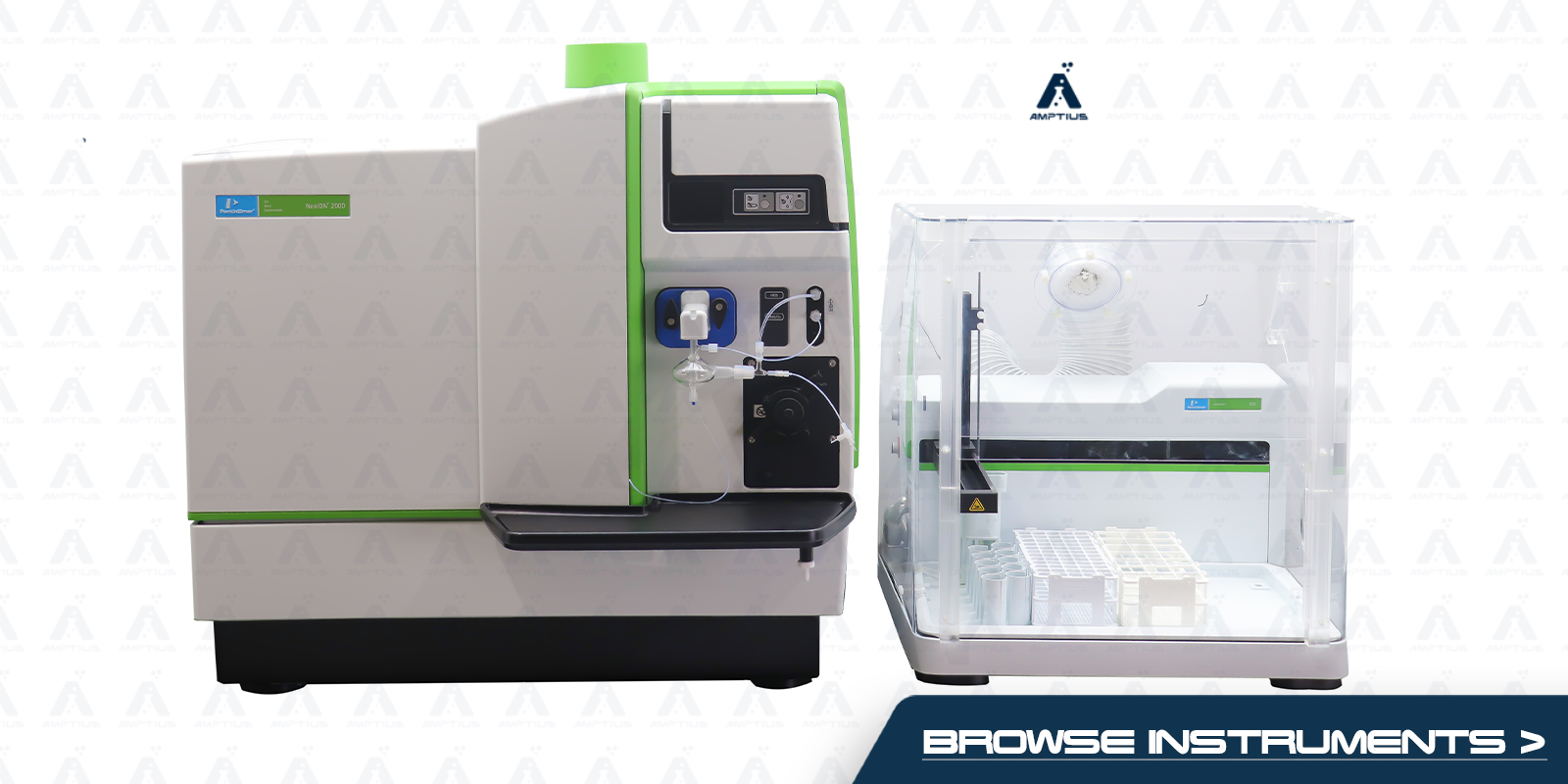
PerkinElmer NexION 2000 B ICP-MS for AOAC Method SMPR 2012.007
The PerkinElmer NexION 2000 B ICP-MS provides high-sensitivity detection of toxic metals such as arsenic, cadmium, mercury, and lead. Its patented Universal Cell Technology and triple cone interface deliver reliable interference removal and low background levels, critical for achieving LOQs at or below 10 ppb. The system’s ability to operate in Standard, Collision, and Reaction modes ensures flexibility across complex food matrices, including those with high chloride or organic content. Its multi-mode plasma capability enables laboratories to adapt quickly to diverse sample types while maintaining precision and recovery targets.
Automated optimization features and intelligent instrument control make the NexION 2000 B ideal for high-throughput food surveillance workflows. The Syngistix software suite supports built-in quality control checks, calibration tracking, and regulatory compliance reporting. This system has been validated for food safety applications requiring exacting method performance criteria, aligning fully with the LOQ, RSDr, and RSDR limits outlined in AOAC SMPR 2012.007. It is particularly well suited for infant formula and juice testing where ultra-trace detection is required.
Agilent 7900 ICP-MS for AOAC Method SMPR 2012.007
The Agilent 7900 ICP-MS offers exceptional trace-level detection with sub-ppb sensitivity and high matrix tolerance, making it a strong candidate for meeting AOAC SMPR 2012.007 specifications. Its ORS4 collision/reaction cell efficiently removes interferences such as ArCl+ and MoO+, which are common in food-based matrices and impact arsenic and cadmium measurements. With robust plasma performance and fast autosampler integration, the 7900 allows consistent quantitation across food types, from rice to chocolate, while maintaining low LOQs and high reproducibility.
MassHunter software enhances method validation with automated quality checks, audit-ready reports, and customizable system suitability tests. The 7900’s wide dynamic range and ability to run undiluted high-matrix samples reduce sample preparation time and risk of error. Its proven repeatability and recovery performance ensure full compliance with AOAC criteria, including RSDr ≤7.3% and RSDR ≤32% depending on the concentration range. This system is widely used in global food testing laboratories for its speed, sensitivity, and reliability.
Thermo Scientific iCAP RQ ICP-MS for AOAC Method SMPR 2012.007
The Thermo Scientific iCAP RQ ICP-MS delivers strong analytical precision for the quantification of heavy metals in foods and beverages. It features QCell collision/reaction technology for effective polyatomic interference removal, enabling detection of arsenic and cadmium at sub-ppb levels. This instrument consistently meets AOAC performance criteria across the entire 8 ppb to 10 ppm range, including challenging recovery requirements and reproducibility in high-matrix samples such as juices and chocolate.
The iCAP RQ system integrates seamlessly with Qtegra software, which supports traceability, system checks, and automated calibration verification. Its intelligent dilution and long-term signal stability allow laboratories to manage large sample batches efficiently while maintaining precision and regulatory compliance. With demonstrated performance on food safety workflows, the iCAP RQ meets or exceeds LOQ, RSDr, and RSDR limits specified by AOAC SMPR 2012.007. It is well suited for labs that require rugged, routine analysis of toxic elements in a wide array of dietary matrices.
Shimadzu ICPMS-2030 for AOAC Method SMPR 2012.007
The Shimadzu ICPMS-2030 offers targeted solutions for regulatory testing of heavy metals in food, including arsenic, cadmium, lead, and mercury. It features helium collision cell technology and an optimized torch design that improves sensitivity and stability, ensuring accurate quantitation at or below the 10 ppb LOQ level. The system’s advanced interference correction functions allow labs to meet AOAC’s precision and recovery benchmarks, even in matrices with high levels of salt, sugar, or organic content.
Smart software features such as automated tuning, maintenance prediction, and built-in compliance workflows enhance usability in food testing laboratories. LabSolutions software provides tools for validation, including internal standard tracking and system suitability checks. The ICPMS-2030 is validated for surveillance-level testing and aligns with all key AOAC SMPR 2012.007 parameters, including RSDr and RSDR thresholds across the full target concentration range. It is an excellent choice for labs requiring dependable and low-maintenance ICP-MS instrumentation for food and beverage monitoring.
Analytik Jena PlasmaQuant MS Elite for AOAC Method SMPR 2012.007
The Analytik Jena PlasmaQuant MS Elite offers outstanding performance for ultra-trace determination of heavy metals, thanks to its ReflexION collision cell and high-frequency RF generator. These technologies enable precise analysis of mercury and arsenic at ppb and sub-ppb levels. The system’s high sensitivity and wide dynamic range ensure it meets LOQ, recovery, and precision requirements across food matrices defined in AOAC SMPR 2012.007. Its durable interface and stable plasma make it particularly suitable for difficult sample types like infant formula and fruit concentrates.
The intuitive software platform supports internal QC features such as blank correction, calibration curve validation, and audit-ready batch reporting. The PlasmaQuant MS Elite’s reproducibility and long-term signal consistency are key advantages for meeting RSDR criteria across the 8 ppb to 10 ppm range. This system is especially useful in labs needing scalable throughput without compromising on performance or compliance. It is a strong option for surveillance testing aligned with AOAC’s food safety standards.
Choosing the Right Instrument for AOAC Method SMPR 2012.007
- High-sensitivity options: PerkinElmer NexION 2000 B and Agilent 7900 offer ultralow LOQs with strong interference removal.
- Best for matrix-rich samples: Thermo Scientific iCAP RQ and Shimadzu ICPMS-2030 support challenging matrices like juice and chocolate.
- Advanced resolution and signal stability: Analytik Jena PlasmaQuant MS Elite offers high precision with long-term reproducibility.
AOAC SMPR 2012.007 requires trace-level detection, strong recovery, and validated precision for heavy metals in food and beverages. The ICP-MS systems listed above meet those requirements when paired with suitable sample preparation and QA protocols. We offer certified refurbished ICP-MS instruments tailored for AOAC-compliant workflows. Contact us today to find a system that fits your lab’s testing needs.