
AOAC Method SMPR 2012.002 Instrumentation Guide
Standard Method Performance Requirements (SMPR) for Whey Protein:Casein Ratio in Infant Formula
AOAC SMPR 2012.002 defines the minimum method performance requirements for determining the ratio of whey protein to casein in infant formula and similar nutritional products. The method must quantify whey protein—including hydrolyzed forms—as a percentage of total protein, with the ability to resolve both fractions. The analytical range must span from 20 to 100 g whey protein per 100 g protein, with a required limit of quantitation (LOQ) of ≤ 10 g/100 g protein. Repeatability (RSDr) must be ≤ 3%, and reproducibility (RSDR) must not exceed ≤ 6%. Recovery across the range must fall between 95% and 105% of the theoretical value.
Only chromatographic or electrophoretic methods that distinguish whey from casein based on protein structure, rather than total nitrogen content, are acceptable. Validated workflows should incorporate hydrolysis or labeling where appropriate to quantify modified or intact protein forms. Techniques such as size-exclusion chromatography (SEC), ion-exchange chromatography (IEC), and reverse-phase HPLC can be employed depending on the sample matrix. Internal validation using certified reference materials or matrix-matched standards is encouraged. The instruments listed below support full method compliance when paired with appropriate workflows.
Please click here to learn more about AOAC Method SMPR 2012.002
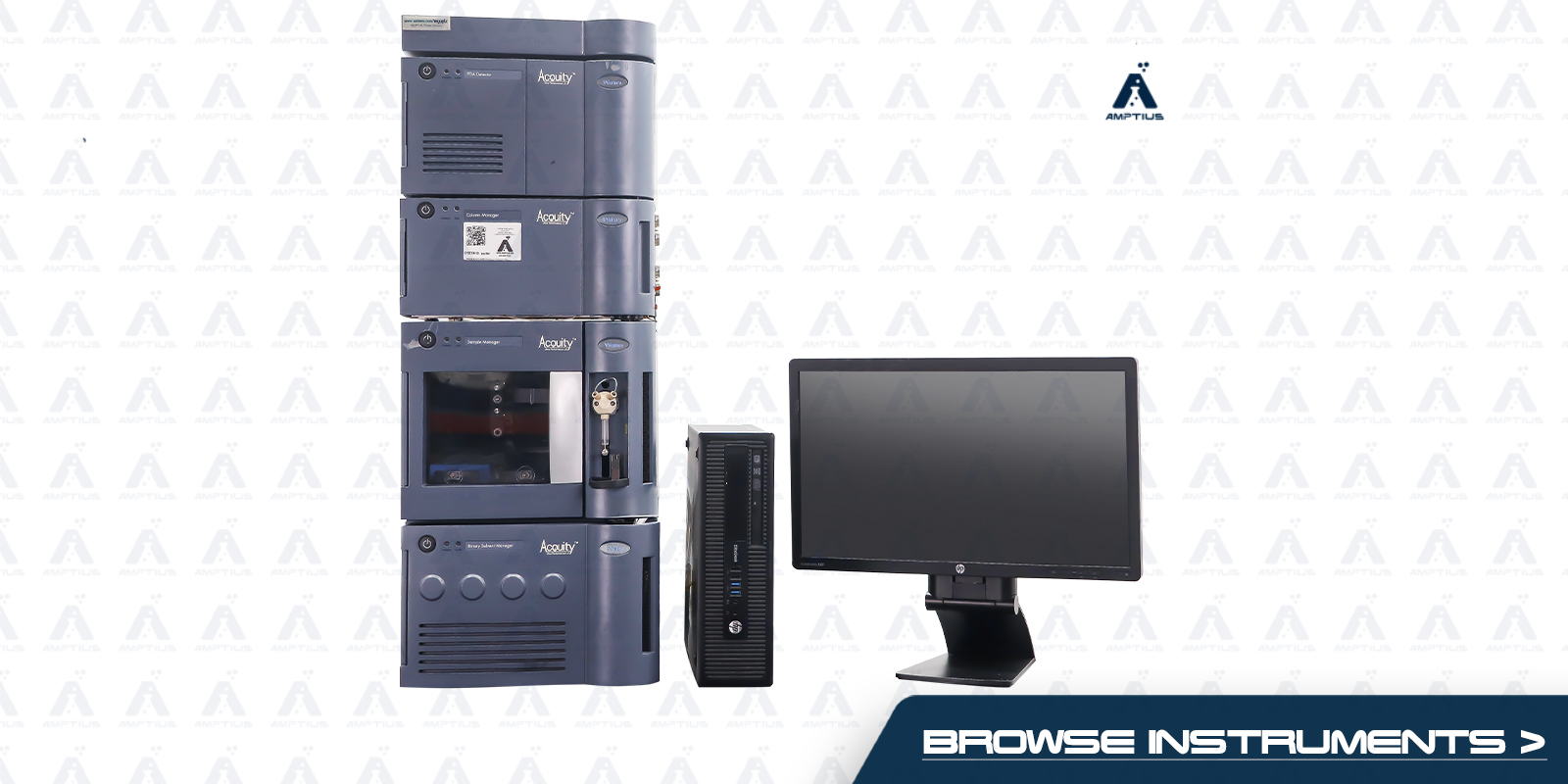
Waters Acquity UPLC System with Empower 3 PDA SM QSM CM for AOAC Method SMPR 2012.002
The Waters Acquity UPLC system, paired with Empower 3 software and PDA detection, offers high-resolution separation for protein-specific applications such as whey-to-casein ratio analysis. Its quaternary solvent manager (QSM) and column manager (CM) ensure stable gradients and temperature consistency, which are critical for resolving closely eluting protein fractions. With the use of validated SEC or IEC columns, the Acquity platform meets the analytical range and LOQ targets of AOAC SMPR 2012.002. It provides strong reproducibility across batches and precise separation of hydrolyzed and native whey components. Empower software supports calibration integrity, recovery tracking, and audit-ready reporting.
This system is particularly effective in regulated dairy labs and research facilities focused on infant formula compliance. The PDA detector offers excellent linearity and spectral resolution for distinguishing between whey and casein peaks. Empower 3 streamlines method validation through automated system suitability checks and recovery reporting. When paired with appropriate protein calibration standards and validated chromatographic methods, this system provides full alignment with SMPR precision and recovery thresholds. It is a proven platform for accurate and repeatable protein ratio determination.
Agilent 1290 Infinity II LC System with UV or FLD Detection for AOAC Method SMPR 2012.002
The Agilent 1290 Infinity II LC System is designed for high-pressure, high-precision chromatographic workflows, making it ideal for separating whey and casein proteins in infant formula. Its compatibility with both UV and fluorescence detection enables flexibility in method development based on the matrix and desired sensitivity. When paired with protein-specific separation columns—such as reversed-phase or ion-exchange—the system meets AOAC SMPR performance requirements for analytical range, LOQ, and precision. Its robust solvent delivery and temperature control ensure reproducibility across sample batches. This system also supports hydrolysis workflows for accurate quantification of modified protein forms.
OpenLab CDS software provides method traceability and built-in calibration and recovery monitoring tools. The 1290 Infinity II supports high-throughput environments while maintaining precise peak resolution, even in hydrolyzed dairy matrices. UV detection allows direct quantitation of native proteins, while the FLD detector enhances sensitivity for fluorescently labeled hydrolysates. The system’s modular design and high linear dynamic range make it well suited for regulatory testing. When validated according to AOAC guidelines, this LC platform ensures full compliance for whey protein:casein ratio testing.
Shimadzu Nexera X3 UHPLC with SPD-M40 PDA or RF-20Axs Fluorescence Detector for AOAC Method SMPR 2012.002
The Shimadzu Nexera X3 UHPLC system offers advanced separation capabilities for analyzing protein mixtures such as whey and casein in infant formula. When paired with the SPD-M40 PDA or the RF-20Axs fluorescence detector, it enables accurate quantification of both intact and hydrolyzed protein forms. The system supports high-throughput analysis with minimal carryover, excellent gradient precision, and strong retention time reproducibility. It can be configured for size-exclusion, ion-exchange, or reversed-phase separations based on validated AOAC workflows. This platform is capable of achieving LOQ ≤ 10 g/100 g protein and precision within SMPR limits.
LabSolutions software enhances regulatory compliance by offering system suitability monitoring, recovery validation, and real-time calibration verification. The PDA detector provides full-spectrum detection for unmodified proteins, while the RF-20Axs detector offers higher sensitivity for derivatized or hydrolyzed samples. These features allow laboratories to customize detection strategies depending on sample complexity. Shimadzu’s UHPLC architecture ensures strong reproducibility and long-term system reliability. This platform is widely used in QA/QC labs monitoring compliance with infant formula protein composition standards.
Thermo Scientific Vanquish Flex UHPLC with FLD or DAD Detector for AOAC Method SMPR 2012.002
The Thermo Scientific Vanquish Flex UHPLC system is well-suited for regulatory testing of protein ratios in dairy-based nutritional products. It supports multiple detection configurations, including diode array (DAD) and fluorescence detection (FLD), both of which meet the method sensitivity and specificity requirements. The system’s low baseline noise and precise temperature control ensure consistent peak shape and retention time reproducibility, even across complex matrices. Paired with ion-exchange or size-exclusion columns, it separates whey and casein fractions effectively. This system meets all AOAC SMPR criteria for LOQ, RSDr, and recovery when validated with standard hydrolysis and derivatization workflows.
Chromeleon Chromatography Data System (CDS) enhances traceability and compliance through automated calibration tracking, system suitability checks, and recovery calculation. The Vanquish Flex platform is compatible with high-throughput sample processing and performs well under GMP and ISO environments. FLD detection increases selectivity for hydrolyzed or labeled proteins, allowing clear differentiation of protein subtypes. When implemented with AOAC-validated separation techniques, this system ensures accurate and reproducible measurement of whey-to-casein ratios. It is an ideal solution for laboratories focused on infant formula regulation and dispute resolution.
JASCO LC-4000 Series with FP-4020 Fluorescence Detector for AOAC Method SMPR 2012.002
The JASCO LC-4000 Series, equipped with the FP-4020 fluorescence detector, delivers high-sensitivity detection of whey and casein protein fractions. It is particularly well-suited for workflows involving derivatized or hydrolyzed proteins, which benefit from the selectivity of fluorescence detection. The system offers stable baseline performance, excellent wavelength accuracy, and reliable peak integration—critical features for protein-specific analysis. With validated ion-exchange or size-exclusion chromatography methods, the LC-4000 Series supports LOQs ≤ 10 g/100 g protein and maintains RSDr and RSDR values within AOAC limits. Its modular design supports precise gradient control and consistent flow rates.
ChromNAV software enables method validation with automated system suitability tests, spike recovery checks, and batch audit trails. This software allows laboratories to maintain regulatory documentation with ease. The FP-4020 detector supports multiple excitation and emission wavelength settings, providing flexibility for method adaptation. The LC-4000 platform is widely used in nutritional research and dairy testing labs. When configured with validated columns and standards, this system ensures full AOAC SMPR 2012.002 compliance.
Bio-Rad NGC Chromatography System with UV/Conductivity Detection for AOAC Method SMPR 2012.002
The Bio-Rad NGC Chromatography System is a flexible platform ideal for protein quantitation workflows in food and nutrition applications. Designed for precision control of gradient formation and fraction collection, it supports techniques such as ion-exchange and hydrophobic interaction chromatography (HIC). UV and conductivity detection provide dual-mode verification of protein elution profiles, making it easier to resolve overlapping whey and casein components. The system supports quantification in both native and modified protein matrices and achieves LOQ and precision requirements under AOAC SMPR 2012.002. Its software supports customizable workflows for regulated testing environments.
NGC software includes real-time monitoring of gradient stability, conductivity profiles, and absorbance thresholds, all essential for protein-specific separation. Analysts can automate calibration routines, implement sample-specific flow paths, and track spike recovery across runs. The platform’s scalability allows for analytical- or preparative-scale workflows depending on sample load. With validated methods, the NGC system enables reproducible and accurate quantification of whey and casein protein fractions. It is a trusted choice for labs needing robust protein separation in infant formula analysis.
Choosing the Right Instrument for AOAC Method SMPR 2012.002
- High-resolution systems: Waters Acquity UPLC and Agilent 1290 Infinity II offer excellent gradient precision and protein separation capabilities.
- Flexible detection options: Shimadzu Nexera X3 and Thermo Vanquish Flex provide PDA and fluorescence configurations for native and hydrolyzed workflows.
- Targeted sensitivity platforms: JASCO LC-4000 and Bio-Rad NGC enable high-selectivity detection for protein fractions in complex dairy matrices.
AOAC SMPR 2012.002 requires protein-specific separation and quantitation of whey and casein with strong reproducibility, recovery, and traceability. The instruments listed above meet these criteria when operated with validated methods that distinguish protein subtypes. Whether your workflow involves native, labeled, or hydrolyzed proteins, these platforms provide compliant and scalable solutions. We offer certified refurbished HPLC and UHPLC systems tailored for AOAC-compliant testing. Contact us today to find the right instrument for your lab’s needs.