
AOAC Method SMPR 2011.009 Instrumentation Guide
Standard Method Performance Requirements (SMPR) for Determination of Chromium, Molybdenum, and Selenium in Infant and Pediatric Nutritional Formula
AOAC SMPR 2011.009 defines strict performance criteria for the determination of chromium (Cr), molybdenum (Mo), and selenium (Se) in infant formula, adult formula, and pediatric nutritional products. The method requires accurate quantitation within specific concentration ranges: 20–1600 ng/g for Cr, 20–1000 ng/g for Mo, and 10–500 ng/g for Se. Laboratories must achieve limits of detection (LOD) ≤ 7 ng/g for Cr and Mo, and ≤ 4 ng/g for Se. Limits of quantitation (LOQ) must be ≤ 20 ng/g for Cr and Mo, and ≤ 10 ng/g for Se. Precision and reproducibility are critical, with repeatability (RSDr) not exceeding 5% and reproducibility (RSDR) remaining within 15%.
The method applies to reconstituted powdered formula, ready-to-feed liquid formula, and 1:1 diluted concentrates. Recovery must fall between 90% and 110% across the analytical range for each analyte. Instruments must deliver low background noise, strong interference removal, and stable results over time. Detection must be sensitive enough to consistently meet low LOQs in complex nutritional matrices. The ICP-MS systems listed below are capable of meeting these rigorous criteria when paired with validated sample preparation and calibration methods.
Please click here to learn more about AOAC Method SMPR 2011.009
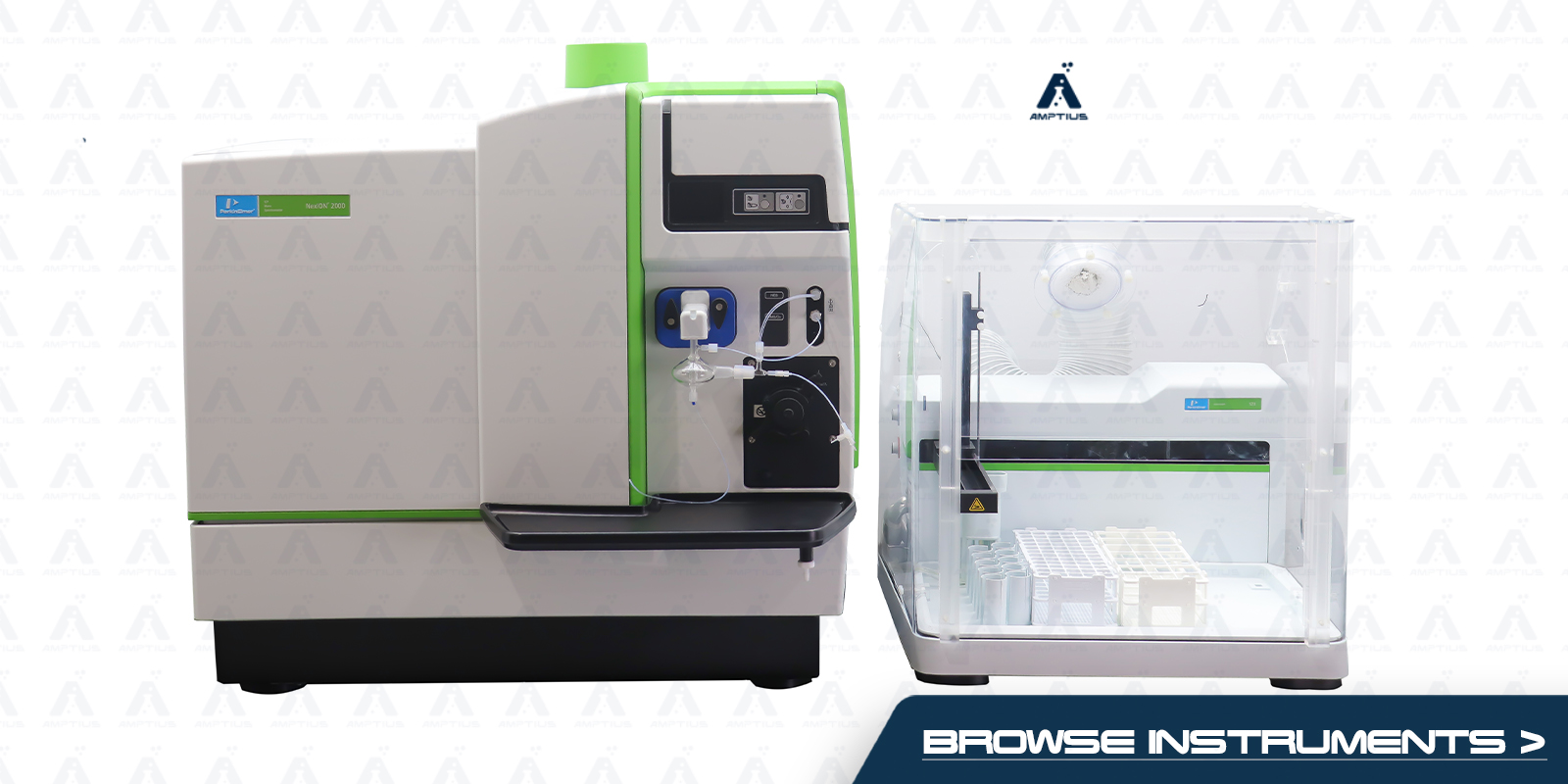
PerkinElmer NexION 2000 B ICP-MS for AOAC Method SMPR 2011.009
The PerkinElmer NexION 2000 B ICP-MS is engineered to deliver ultra-trace detection of elements like Cr, Mo, and Se in nutritional matrices. Its Universal Cell Technology (UCT) and triple cone interface provide powerful interference removal and stable signal performance. With its ability to achieve detection limits well below 10 ng/g, it comfortably meets the LOD and LOQ thresholds required by AOAC SMPR 2011.009. The system also includes an autosampler, chiller, and UPS, ensuring high-throughput capability and operational consistency during batch testing. These features make the NexION 2000 B ideal for complex matrices such as infant formula.
Paired with Syngistix software, the system supports full regulatory compliance with automated calibration, recovery tracking, and audit-ready documentation. It enables repeatability well within the required ≤ 5% RSDr, and spike recovery regularly falls within the 90–110% range. The instrument’s robust plasma stability and collision cell design allow for consistent performance across different formula types. It’s particularly well-suited for high-volume laboratories focused on routine trace metal analysis. When properly validated, the NexION 2000 B ensures reliable, reproducible results across the full AOAC-defined analytical range.
Agilent 7900 ICP-MS for AOAC Method SMPR 2011.009
The Agilent 7900 ICP-MS provides industry-leading sensitivity for multi-elemental analysis, making it well-suited for the determination of Cr, Mo, and Se in nutritional products. With its Octopole Reaction System (ORS4) and helium collision mode, the system effectively eliminates interferences from argon- and matrix-based ions. This technology supports detection limits in the sub-ng/g range, far exceeding AOAC SMPR 2011.009’s LOD and LOQ requirements. The instrument maintains strong repeatability and reproducibility, meeting the required ≤ 5% RSDr and ≤ 15% RSDR standards. Its advanced matrix tolerance allows for reliable results in reconstituted and high-solid formula samples.
MassHunter software further enhances performance with automated calibration curve management, recovery verification, and system suitability tracking. Analysts benefit from full traceability and regulatory readiness throughout the workflow. The 7900 is frequently used in global food and nutrition labs due to its high throughput and minimal maintenance needs. Its robust build and efficient ion optics system deliver consistently low background noise, reducing signal drift across large sample batches. When coupled with validated digestion protocols, this system ensures full compliance with AOAC SMPR 2011.009.
Thermo Scientific iCAP RQ ICP-MS for AOAC Method SMPR 2011.009
The Thermo Scientific iCAP RQ ICP-MS is designed for high-precision trace metal analysis with interference-free detection of Cr, Mo, and Se in infant nutrition matrices. Its Kinetic Energy Discrimination (KED) technology helps mitigate matrix effects and polyatomic interferences, ensuring accurate quantitation across AOAC’s specified range. The system easily meets LOD and LOQ targets, delivering consistent sensitivity even with high matrix complexity. Its quadrupole design and high-resolution signal acquisition provide stable results over long sequences. With detection limits well below 10 ng/g, the iCAP RQ supports full SMPR compliance.
Qtegra ISDS software simplifies regulatory workflows by managing internal standards, calibrations, and system checks. Analysts can configure customized templates for documentation and audit trails, supporting both internal validation and third-party accreditation. The iCAP RQ’s robust construction allows for consistent performance across powdered, liquid, and concentrate formulations. It is widely adopted in laboratories requiring high sample throughput and low maintenance downtime. This system delivers the accuracy and repeatability required to maintain method validity under AOAC SMPR 2011.009.
Shimadzu ICPMS-2030 for AOAC Method SMPR 2011.009
The Shimadzu ICPMS-2030 offers excellent analytical performance for nutritional trace metal testing, especially for selenium, chromium, and molybdenum. Its advanced collision cell and ASSiST (Analytical Scanning for Spectrum Interference Suppression Technology) function enhance accuracy by reducing common spectral interferences. This system achieves detection limits well within the LOD and LOQ ranges defined by AOAC SMPR 2011.009. It also supports high-precision calibration and stable ion signal, maintaining RSDr values at or below 5% for most applications. The instrument is designed for easy maintenance and operation, making it ideal for quality assurance labs.
LabSolutions Insight software supports system validation and method compliance with automated calibration tracking, spiked recovery reporting, and audit-ready batch documentation. The ICPMS-2030 is frequently used in laboratories that need robust performance and reliable data in challenging sample matrices. It supports long sequence runs with minimal carryover and signal drift. With strong spike recovery and reproducibility, it performs exceptionally well in fortified nutritional analysis. When configured with validated sample preparation and digestion workflows, the Shimadzu ICPMS-2030 ensures full compliance with AOAC requirements.
Analytik Jena PlasmaQuant MS Elite for AOAC Method SMPR 2011.009
The Analytik Jena PlasmaQuant MS Elite is a high-performance quadrupole ICP-MS instrument known for its ultra-trace sensitivity and plasma stability. It achieves sub-ng/g detection limits, far exceeding AOAC SMPR 2011.009 requirements for Cr, Mo, and Se. With its ReflexION interface and Intelligent Torch Control, the system manages high-matrix samples with ease, ensuring minimal background interference. Its wide dynamic range and precise ion optics allow for reproducible analysis across all nutritional formula types. The system delivers RSDr and RSDR values well within regulatory thresholds, even during extended batch runs.
ASpect MS software enables full method validation, internal standard correction, and system suitability monitoring. The platform’s automation capabilities streamline workflow and ensure compliance with performance specifications. The PlasmaQuant MS Elite is ideal for laboratories performing regulatory and quality assurance testing on fortified foods. It combines advanced hardware with user-friendly software, reducing analytical errors and improving throughput. For labs that require robust sensitivity and reliable long-term performance, this instrument offers a fully compliant solution.
Choosing the Right Instrument for AOAC Method SMPR 2011.009
- Top trace metal detection: PerkinElmer NexION 2000 B and Agilent 7900 for ultra-low LOQ and automation
- Best for matrix tolerance: Thermo iCAP RQ and Shimadzu ICPMS-2030 for interference management
- Highest sensitivity: Analytik Jena PlasmaQuant MS Elite for sub-ng/g detection and robust QC support
AOAC SMPR 2011.009 mandates highly sensitive and reproducible quantification of chromium, molybdenum, and selenium in nutritional matrices. The instruments listed above meet or exceed the required performance metrics, including LOQ, RSDr, RSDR, and recovery ranges. Each system provides validated trace metal workflows that align with AOAC guidelines for fortified food and formula analysis. Whether you need advanced interference removal or ultra-trace detection, these ICP-MS platforms offer proven solutions for compliant testing. Contact us today to explore certified refurbished options configured to meet your laboratory’s regulatory needs.