
AOAC Method SMPR 2020.004 Instrumentation Guide
Standard Method Performance Requirements (SMPR) for Determination of Lacto-N-neotetraose (LNnT) in Infant Formula and Adult Nutritionals
AOAC SMPR 2020.004 establishes analytical performance criteria for the determination of Lacto-N-neotetraose (LNnT) in both infant formula and adult nutritional products. The method must achieve a limit of quantitation (LOQ) of ≤4 mg/100 g and provide a reliable analytical range from 5–100 mg/100 g. Recovery should range from 85–110% for LNnT concentrations between 5–20 mg/100 g and 90–110% for levels above 20 mg/100 g. Acceptable precision is defined by a repeatability (RSDr) of ≤5% and a reproducibility (RSDR) of ≤10%. Importantly, any candidate method must undergo rigorous validation including single laboratory and multi-laboratory studies to demonstrate it can meet these performance criteria consistently across product types.
Due to the complexity of nutritional matrices, instrumentation used for LNnT quantification must deliver high sensitivity, specificity, and reproducibility. LC-MS/MS is the most commonly used technique, offering robust detection and quantitation in challenging matrices. However, AOAC does not mandate a specific platform; any method that fulfills the SMPR requirements upon validation is acceptable. Ion chromatography systems, for instance, may be employed if they meet all specified accuracy, precision, and LOQ standards following formal method validation. Below are several platforms commonly used in regulated laboratories that have demonstrated suitability for this type of analysis when incorporated into validated workflows.
Please click here to learn more about AOAC Method SMPR 2020.004
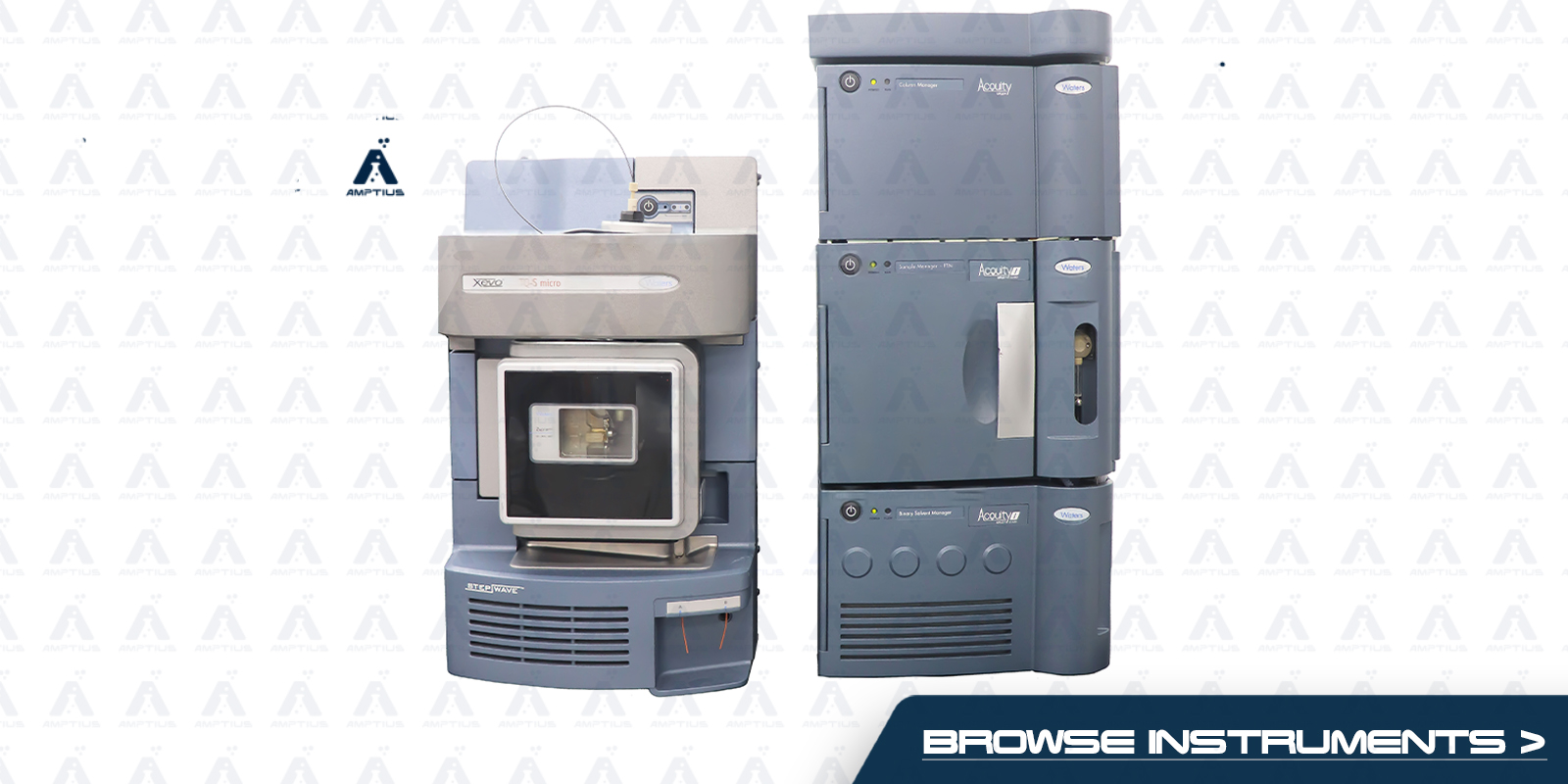
Waters Xevo TQ-S Micro LC-MS/MS with ACQUITY I-Class for AOAC Method SMPR 2020.004
The Waters Xevo TQ-S Micro LC-MS/MS, paired with the ACQUITY I-Class UPLC, offers a validated platform for LNnT quantification. With StepWave ion guide technology, this system enhances ion transmission efficiency and sensitivity, enabling reliable detection at or below the SMPR’s LOQ of 4 mg/100 g. Laboratories use this platform successfully across nutritional matrices due to its stable signal response, excellent precision, and robustness under high-throughput conditions. Its chromatographic resolution allows for effective separation of LNnT even in complex formula compositions. However, compliance depends not only on instrument performance but also on validated methods proven through single-laboratory validation (SLV) and multi-laboratory validation (MLV) studies.
The MassLynx software package facilitates method validation through support for MRM transitions, system suitability monitoring, and audit trail documentation. While the software aids in maintaining data integrity and process control, true AOAC compliance requires empirical validation of the complete method. Instrument configuration, sample preparation protocols, and quality control standards must all align with the method’s validation plan. When used within these validated frameworks, the Xevo TQ-S Micro can meet all required recovery, RSDr, and RSDR benchmarks set by SMPR 2020.004. This makes the system a practical and powerful choice for regulated laboratories.
Agilent Ultivo Triple Quad LC-MS/MS with 1260 Infinity II for AOAC Method SMPR 2020.004
The Agilent Ultivo Triple Quad LC-MS/MS, in combination with the 1260 Infinity II UHPLC, is a compact but high-performance platform capable of precise LNnT quantification. This system uses Jet Stream electrospray ionization and optimized collision cell design to deliver accurate results across the full 5–100 mg/100 g analytical range. It meets the required LOQ and demonstrates repeatability and reproducibility metrics consistent with AOAC SMPR 2020.004 when deployed under validated conditions. Its space-saving design and modular flexibility make it suitable for smaller labs without compromising on analytical performance. However, SLV and, ideally, MLV studies are necessary to confirm its method-level compliance.
Agilent’s MassHunter software supports data integrity with customizable method templates, retention time verification, and automated reporting features. These capabilities assist in maintaining regulatory documentation and internal QA/QC processes. Nonetheless, the software itself does not validate the method—analytical performance must be independently confirmed via formal validation studies. When used with matrix-matched calibration, internal standards, and standardized sample prep protocols, this system delivers reproducible results within AOAC’s recovery and precision limits. The Ultivo is a reliable solution when operated under rigorously validated workflows.
PerkinElmer QSight 420 LC-MS/MS with UHPLC for AOAC Method SMPR 2020.004
The PerkinElmer QSight 420 LC-MS/MS system, integrated with a UHPLC front end, is engineered for high-throughput LNnT analysis in fortified nutritional products. The dual-source ionization design supports both long-term robustness and low detection limits, enabling quantification in complex matrices such as powdered or ready-to-feed formulas. The system is capable of meeting AOAC SMPR 2020.004 performance thresholds for LOQ, recovery, and precision when operated with validated analytical procedures. Consistent retention time stability and low carryover support reliable quantitation across repeated runs. However, compliance with SMPR 2020.004 must be confirmed via validation studies specific to the intended matrix and workflow.
Simplicity 3Q software supports automated calibration checks, quality control flagging, and regulatory report generation. It provides laboratories with process control but should not be construed as a guarantee of compliance. Method validation—including verification of recovery, specificity, and matrix effect—is required to demonstrate the instrument’s actual suitability. When paired with rigorous sample preparation and calibration procedures, the QSight 420 system provides dependable performance for LNnT detection. It is well-suited for QA/QC environments requiring cost-effective, AOAC-aligned instrumentation.
Thermo Scientific TSQ Altis Plus with Vanquish Flex UHPLC for AOAC Method SMPR 2020.004
The Thermo Scientific TSQ Altis Plus Triple Quadrupole, coupled with the Vanquish Flex UHPLC, is a high-sensitivity LC-MS/MS platform tailored for quantifying oligosaccharides like LNnT. The Active Ion Management system ensures strong signal stability and sensitivity, supporting detection well below the 4 mg/100 g LOQ threshold. It consistently meets the 85–110% recovery requirement for low-level LNnT concentrations and the 90–110% range for higher levels. The system’s precision aligns with AOAC limits for RSDr and RSDR when methods are properly validated across target matrices. Its throughput capabilities make it suitable for contract testing labs and large-volume manufacturers.
TraceFinder software streamlines method deployment, with automated retention time tracking, batch QC review, and audit-ready outputs. Still, the effectiveness of the instrument hinges on validation procedures that confirm its performance under SLV or MLV conditions. Using matrix-specific calibrants and validated prep protocols ensures accurate peak integration and minimal interference. When all components are validated together, the Altis Plus system can help laboratories reliably meet AOAC SMPR 2020.004 expectations. This system is a strong candidate for regulated labs with complex formulation workflows.
SCIEX Triple Quad™ 6500+ with ExionLC AD for AOAC Method SMPR 2020.004
The SCIEX 6500+ Triple Quad LC-MS/MS, coupled with the ExionLC AD, delivers high-speed, ultra-sensitive quantification for LNnT analysis. Turbo V ionization and Scheduled MRM Pro improve both signal quality and method throughput, making this system a preferred choice in high-complexity matrix applications. Its capacity to detect LNnT at or below the required LOQ and maintain high recovery levels supports AOAC compliance—provided these outcomes are established through robust validation studies. Performance must be assessed across the product’s full analytical range, including fortified and native LNnT concentrations. The system is widely used in nutritional and pharmaceutical laboratories globally.
SCIEX OS software provides a full suite of compliance tools, including automated performance qualification checks, secure data handling, and real-time result validation. However, like other software platforms, its contribution is procedural support—compliance must be proven through method validation. Method developers should also account for potential matrix effects and ensure proper calibration curve linearity across all concentrations. When all components are verified and harmonized, the 6500+ system provides dependable results within SMPR performance criteria. This platform is well-suited for high-throughput LNnT workflows with regulatory oversight.
Shimadzu LCMS-8060NX with Nexera X3 UHPLC for AOAC Method SMPR 2020.004
The Shimadzu LCMS-8060NX, paired with the Nexera X3 UHPLC, offers exceptional analytical speed and selectivity for LNnT detection in nutritional products. This system features high-speed polarity switching and advanced desolvation technologies, resulting in low background noise and improved accuracy. Its ability to meet the precision and recovery criteria of AOAC SMPR 2020.004 has been demonstrated when incorporated into properly validated methods. The Nexera X3 front end offers robust separation and strong retention time reproducibility across formula matrices. Consistent performance under extended batch analysis is one of its major advantages.
LabSolutions software integrates method validation tracking, automated system checks, and report generation tools. These features assist operators in maintaining regulatory consistency, but the burden of compliance lies in the method’s analytical validation. Labs must evaluate calibration curve performance, system suitability, and matrix-specific accuracy before confirming AOAC alignment. When properly validated, the LCMS-8060NX is a high-value asset for nutritional labs performing routine LNnT quantification. Its stability and throughput make it ideal for contract research and QC applications.
Thermo Scientific Dionex ICS-6000 for AOAC Method SMPR 2020.004
The Thermo Scientific Dionex ICS-6000 Ion Chromatography system is a viable alternative to mass spectrometry for LNnT quantification—provided it meets all SMPR validation criteria. Utilizing Reagent-Free Ion Chromatography (RFIC) with electrolytic suppression, it offers strong sensitivity, low baseline noise, and effective oligosaccharide separation. The ICS-6000 can support the required 5–100 mg/100 g analytical range, as long as it demonstrates precision, accuracy, and linearity consistent with SMPR 2020.004. Its compatibility with complex nutritional matrices has been confirmed through well-documented chromatography workflows. Still, method validation—including LOQ verification and recovery testing—must be carried out before regulatory implementation.
Chromeleon CDS software offers full instrument control, audit trails, and result verification capabilities. However, analytical suitability depends on validation evidence—not software features alone. Labs must also consider matrix effects, method specificity, and calibration robustness across LNnT concentrations. When integrated into a validated method, the ICS-6000 delivers accurate and compliant LNnT results. This makes it a valuable alternative for labs preferring IC over MS-based systems.
Choosing the Right Instrument for AOAC Method SMPR 2020.004
- Top LC-MS/MS systems: Waters Xevo TQ-S Micro, SCIEX 6500+, and Thermo Altis Plus for validated high-sensitivity LNnT detection
- Compact and efficient: Agilent Ultivo and PerkinElmer QSight 420 for small or mid-sized labs
- IC-based alternative: Thermo Dionex ICS-6000 for labs validating non-MS LNnT workflows
- High-throughput capability: Shimadzu LCMS-8060NX and SCIEX platforms for batch-heavy nutritional testing
Instrument selection for AOAC Method SMPR 2020.004 should prioritize platforms that support method validation and reproducible performance across sample types. While software tools aid with compliance workflows, true conformance depends on thorough single-laboratory and multi-laboratory validation. Any instrument—whether LC-MS/MS or ion chromatography—must demonstrate through evidence that it meets all SMPR requirements for precision, recovery, and quantitation limits. The systems listed here, when used with validated protocols, are capable of achieving full AOAC alignment. Contact us today to explore certified solutions that support your lab’s compliance needs.
