
AOAC Method SMPR 2020.009 Instrumentation Guide
Standard Method Performance Requirements (SMPR) for Determination of Adulterants in Floral and Acacia Honey Using Targeted Testing (TT)
AOAC SMPR 2020.009 defines the method performance requirements for detecting economic adulteration in floral and acacia honey using targeted testing techniques. This includes identifying adulterants such as C-4 plant sugars, including those derived from cane and corn syrups, and high-fructose corn syrup. To comply with this SMPR, methods must achieve an LOQ of ≤10%, an analytical range of 10–50%, accuracy within ±20%, recovery between 80–120%, repeatability (RSDr) ≤10%, and reproducibility (RSDR) ≤18%. These requirements apply to the evaluation of targeted testing methods and are intended to support enforcement and quality control of honey purity.
The analytical platforms must provide precise quantitation and reliable detection of adulterants at the specified concentration ranges. Accurate isotope ratio measurements, molecular fingerprinting, and high-resolution chromatographic separations are crucial for ensuring compliance. The following instruments are examples of technologies capable of meeting AOAC SMPR 2020.009 requirements when properly validated. Each system, when configured with validated methods, supports the detection and quantification of common economic adulterants in honey, aligning with AOAC SMPR 2020.009 specifications.
Please click here to learn more about AOAC Method SMPR 2020.009
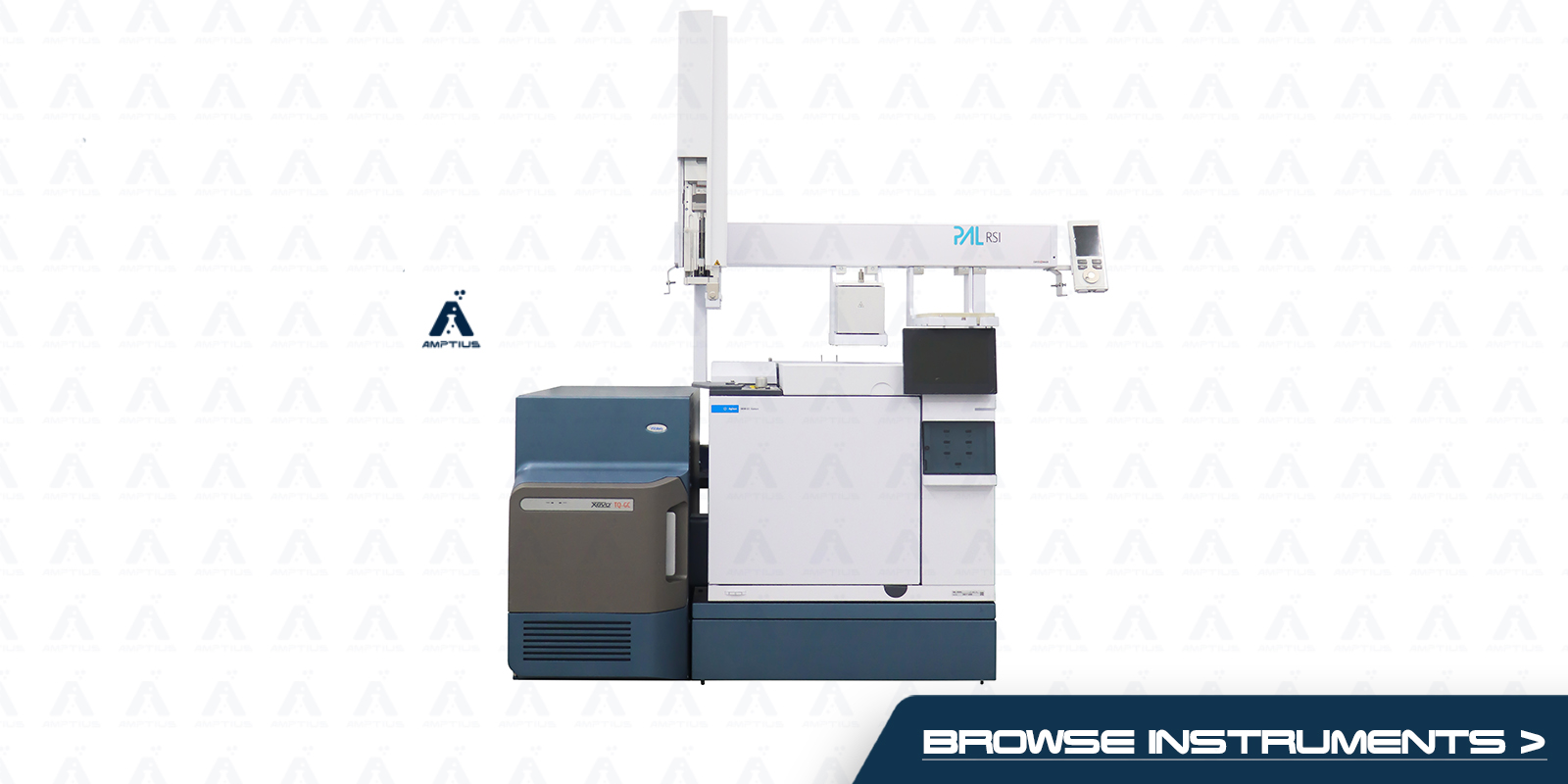
Waters Xevo TQ-GC Triple Quad GC-MS/MS System with Agilent 8890 GC and PAL RSI Autosampler for AOAC Method SMPR 2020.009
The Waters Xevo TQ-GC Triple Quad GC-MS/MS, combined with the Agilent 8890 GC and PAL RSI autosampler, is an example of a system that can be configured to detect volatile C-4 plant sugar adulterants in floral and acacia honey. This setup offers high sensitivity and a wide dynamic range suitable for identifying targeted markers associated with economic adulteration. When implemented with a validated method, it can meet the performance thresholds required by AOAC SMPR 2020.009.
MassLynx software provides tools for audit trails, calibration tracking, and ion transition monitoring. These features support reliable quantification workflows when coupled with appropriate sample prep and analytical protocols. Although not specifically required by AOAC, GC-MS/MS systems like this have demonstrated suitability for identifying adulterants such as high-fructose corn syrup. The system is widely used in food authenticity labs seeking robust separation and detection of sugar-based contaminants in honey products.
Agilent Ultivo Triple Quad LC/MS/MS System w/ 1260 Infinity II for AOAC Method SMPR 2020.009
The Agilent Ultivo Triple Quad LC/MS/MS, paired with the 1260 Infinity II UHPLC, is another example of a technology that can support compliance with AOAC SMPR 2020.009 when validated properly. Its Jet Stream ionization and precision MRM transitions enable high selectivity for sugar profile analysis in honey. This compact platform is often chosen for labs that require performance and footprint efficiency.
MassHunter software supports compliance through features like retention time confirmation, ion ratio validation, and batch reporting. With validated sample preparation and calibration strategies, this LC-MS/MS setup has proven capable of detecting C-4 plant sugar adulterants such as corn and cane syrups. Its flexibility and consistency make it a practical choice for routine economic adulteration screening in honey authenticity programs.
Bruker Avance or FoodScreener 400/600 MHz NMR for AOAC Method SMPR 2020.009
Bruker Avance and FoodScreener NMR systems (400/600 MHz) are examples of platforms used for honey authenticity analysis using NMR-based targeted testing. These systems are capable of detecting molecular fingerprints and markers related to the presence of sugar adulterants, including C-4 plant sugars. Their ability to non-destructively assess complex matrices makes them highly attractive in regulated environments.
The Honey Profiling™ module from Bruker includes a curated database and chemometric analysis tools that support detection workflows aligned with AOAC SMPR 2020.009. Although the SMPR does not prescribe any particular technology, NMR systems like these are routinely used in European and international regulatory frameworks for honey fraud detection. Proper validation and calibration are necessary to ensure alignment with performance requirements including LOQ, reproducibility, and recovery.
Isoprime IRMS with EA/LC Interface (Elementar or Thermo Scientific)
The Isoprime isotope ratio mass spectrometer (IRMS), used with an Elemental Analyzer (EA) or Liquid Chromatography (LC) interface, is a powerful tool for detecting C-4 plant sugar adulteration in floral and acacia honey. This technology measures carbon isotope ratios (δ13C), a critical marker for identifying the botanical origin of sugars used to adulterate honey. AOAC SMPR 2020.009 does not mandate IRMS, but it is one of the widely used techniques in food fraud detection. The system offers excellent precision and repeatability, achieving performance benchmarks such as LOQ ≤10%, RSDr ≤10%, and RSDR ≤18% when used with validated methods. Laboratories conducting targeted testing benefit from its sensitivity and ability to provide isotopic data that differentiates between C-3 and C-4 plant sugars.
Both Elementar and Thermo Scientific offer IRMS platforms with advanced data analysis software for isotopic ratio interpretation. These tools assist in batch comparison, internal standard monitoring, and long-term performance verification. With proper calibration using honey-matrix certified reference materials, IRMS provides traceable results consistent with AOAC expectations. The method is especially useful when identifying high-fructose corn syrup or cane sugar adulterants. Its robustness and international adoption make IRMS an appropriate technology for economic adulteration detection in honey, provided all analytical performance criteria are met.
Thermo Scientific Q Exactive Orbitrap LC-HRMS for AOAC Method SMPR 2020.009
The Thermo Scientific Q Exactive Orbitrap LC-HRMS delivers ultra-high-resolution full-scan capabilities suitable for targeted detection of adulterants in honey. While AOAC SMPR 2020.009 allows any technique that meets the required performance thresholds, Orbitrap-based high-resolution mass spectrometry (HRMS) enables precise mass measurement and spectral confirmation for a broad range of sugar contaminants. Its capability to resolve complex chromatographic co-elutions provides a distinct advantage in detecting low-level economic adulterants. The system can be configured for quantitation and identification of compounds such as C-4 sugar markers through validated targeted testing (TT) workflows. The use of full-scan and data-dependent acquisition (DDA) modes allows retrospective data analysis for new adulterants as regulations evolve.
Thermo’s TraceFinder software facilitates method validation with features such as LOQ monitoring, recovery tracking, and automated calibration. The software also includes tools for customizable audit reporting and compliance flagging aligned with AOAC and ISO requirements. When paired with appropriate sample preparation and matrix-matched standards, the Q Exactive system has been shown to meet AOAC performance criteria such as LOQ ≤10% and accuracy within ±20%. This flexibility makes it a strong candidate for labs involved in food authentication and evolving regulatory needs. While the system is complex, it provides unmatched analytical power for high-confidence detection of honey adulterants.
Shimadzu Nexera X3 UHPLC with LCMS-8050 Triple Quad for AOAC Method SMPR 2020.009
The Shimadzu Nexera X3 UHPLC with LCMS-8050 Triple Quad provides a fast and reproducible platform for detecting syrup-based adulterants in honey using targeted methods. This LC-MS/MS configuration enables precise multiple reaction monitoring (MRM) for quantifying known C-4 plant sugar adulterants. With robust ion source stability and excellent chromatographic resolution, this system is engineered to meet the method criteria outlined in AOAC SMPR 2020.009. Labs using this system can achieve consistent recovery (80–120%) and repeatability (RSDr ≤10%) across a broad range of sugar compositions in floral and acacia honeys. Its high-pressure capabilities support rapid cycle times without compromising resolution or sensitivity.
Shimadzu’s LabSolutions software offers integrated method validation tools, automated quality checks, and audit-ready reporting. This helps ensure each analytical run meets documentation and traceability requirements essential for regulatory testing. When applied with validated TT workflows, this system provides reliable quantitation of cane syrup, corn syrup, and other C-4 sugar adulterants. It also allows batch monitoring to detect potential instrument drift and supports matrix-specific calibration models. These features make the LCMS-8050 well suited for laboratories performing high-volume authenticity testing of honey samples.
Choosing the Right Instrument for AOAC Method SMPR 2020.009
- For LC-MS/MS workflows: Agilent Ultivo, Shimadzu LCMS-8050, and Thermo Q Exactive Orbitrap are capable of meeting SMPR criteria with validated methods.
- For GC-MS/MS analysis: Waters Xevo TQ-GC with Agilent 8890 GC offers robust separation for volatile adulterant markers.
- For isotope ratio analysis: Isoprime IRMS with EA/LC interface provides precise detection of C-4 plant sugar adulterants.
- For NMR fingerprinting: Bruker FoodScreener offers non-destructive profiling for rapid honey authenticity screening.
AOAC SMPR 2020.009 applies to targeted testing of economic adulterants in floral and acacia honey and supports the use of any analytical technology capable of meeting the method’s defined performance requirements. The instruments listed above are examples of validated technologies used in food authenticity laboratories. When implemented with proper sample preparation, calibration, and matrix-specific validation, they support reliable detection of honey adulterants such as C-4 plant sugars. Contact us today to explore AOAC-compliant instrumentation solutions for your honey analysis needs.
