
AOAC Method SMPR 2019.003 Instrumentation Guide
Standard Method Performance Requirements (SMPR) for Quantitation of Cannabinoids in Hemp Plant Materials
AOAC SMPR 2019.003 outlines the method performance requirements for quantifying cannabinoids in plant materials derived from low-THC hemp varieties. The method must accurately measure cannabinoids such as CBD, CBDA, Δ9-THC, THCA, and others, all reported on a dry weight basis. Performance targets include a limit of quantitation (LOQ) of ≤ 0.05%, analytical ranges from 0.05–5% for most cannabinoids (up to 35% for CBD/CBDA), and recovery between 85–118% with precision (%RSDr) typically ranging from 2–5%. These criteria ensure consistent cannabinoid profiling and regulatory compliance across various hemp plant matrices.
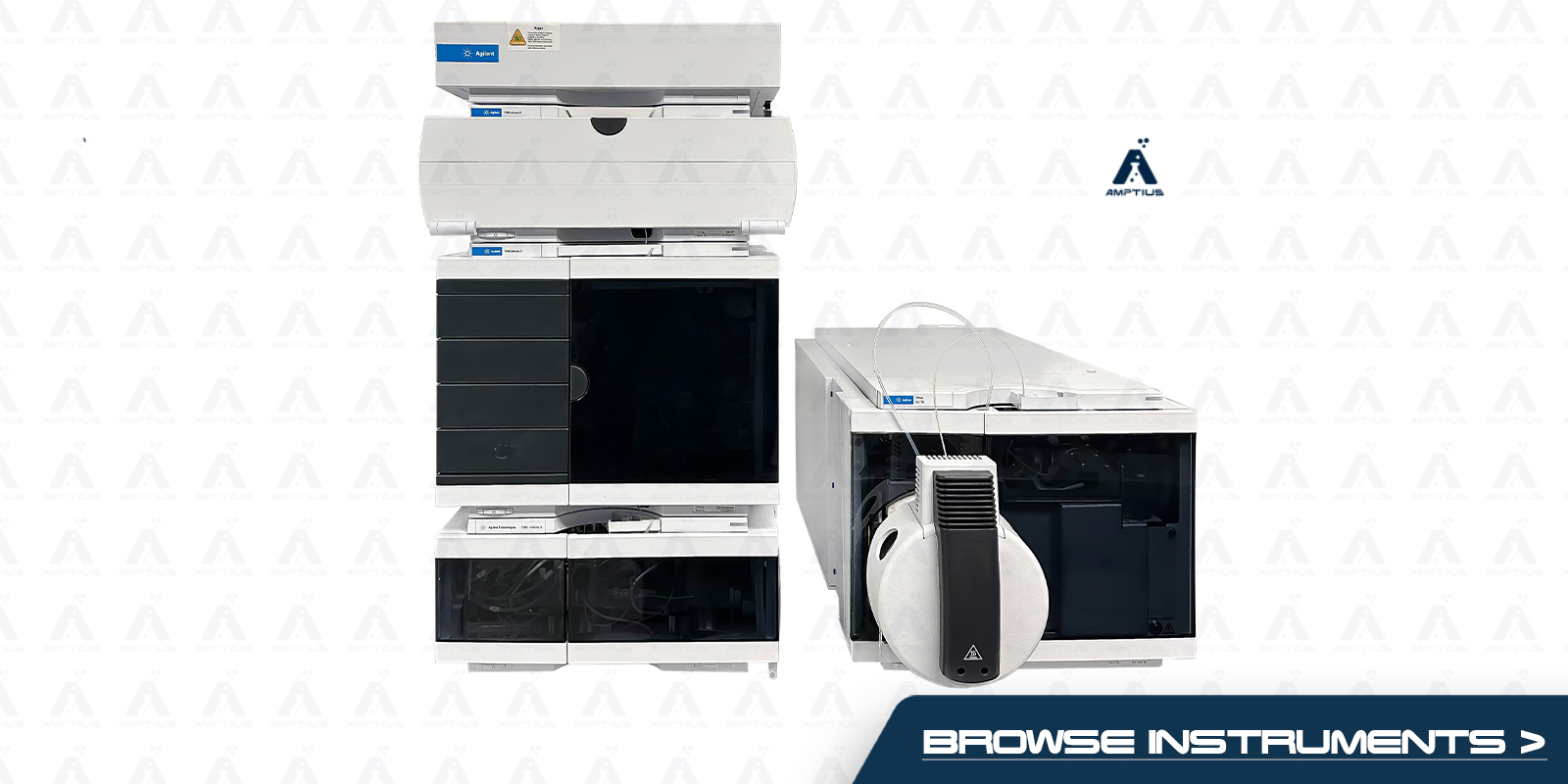
Importantly, SMPR 2019.003 does not require a specific instrument type. As stated in the official document: “Any analytical technique(s) that measures the analytes of interest and meets the following method performance requirements is/are acceptable.” This includes validated methods based on LC-MS/MS, UHPLC-DAD, and other platforms. For example, AOAC Official Method 2018.11, a UHPLC-DAD method, has been validated to meet SMPR 2019.003. The instruments listed below are examples of LC-MS/MS systems that meet these requirements when used with validated workflows. However, laboratories may select any appropriate method or system that achieves the stated performance targets.
Please click here to learn more about AOAC Method SMPR 2019.003
Agilent Ultivo Triple Quad LC/MS/MS System with 1260 Infinity II for AOAC Method SMPR 2019.003
The Agilent Ultivo Triple Quadrupole LC/MS/MS System offers exceptional performance in a compact footprint for trace-level cannabinoid analysis. When paired with the 1260 Infinity II UHPLC, this system delivers excellent peak resolution, retention time precision, and analytical reproducibility. It supports LOQs of ≤ 0.05%, making it suitable for THC compliance testing and potency profiling. Its dynamic range accommodates cannabinoids like CBD/CBDA up to 35%. The Ultivo system is compatible with validated workflows designed to meet AOAC performance metrics.
MassHunter software supports calibration tracking, QC monitoring, and reporting in line with AOAC validation requirements. The Ultivo’s efficient design and robust hardware make it well suited for both compliance and research laboratories. When paired with validated extraction and dry-weight normalization, it helps labs meet all performance targets outlined in SMPR 2019.003. While LC-MS/MS is not required by the SMPR, this system is one of several technologies capable of achieving compliance.
Waters Xevo TQ-S Micro LC-MS/MS with ACQUITY UPLC I-Class for AOAC Method SMPR 2019.003
The Waters Xevo TQ-S Micro LC-MS/MS, with the ACQUITY UPLC I-Class front end, offers high-sensitivity quantification and excellent chromatographic performance for cannabinoid profiling. With StepWave ion optics and a wide dynamic range, it supports cannabinoid detection down to 0.05% LOQ and accurate measurement up to 35% for compounds like CBDA. Its strong signal stability and ion ratio consistency allow for reliable quantitation across hemp matrices.
MassLynx software facilitates audit-ready reporting, system suitability monitoring, and recovery validation within AOAC-aligned methods. This platform has been widely adopted in regulatory labs for cannabinoid testing. Although LC-MS/MS is not a required method under SMPR 2019.003, the Xevo TQ-S Micro exemplifies a system capable of full compliance when configured with validated protocols and dry-weight adjusted workflows.
PerkinElmer QSight 420 LC/MS/MS Triple Quad System with UHPLC for AOAC Method SMPR 2019.003
The PerkinElmer QSight 420 LC-MS/MS system is engineered for rugged, high-throughput cannabinoid quantitation. Its dual-source ionization and robust MRM performance support reproducibility and low carryover across complex plant extracts. The system meets or exceeds the LOQ and recovery specifications defined in SMPR 2019.003, particularly in dry-weight adjusted testing scenarios.
Simplicity 3Q software enables method validation, batch control, and documentation aligned with AOAC and ISO standards. The QSight 420 is suitable for compliance and QA/QC labs managing regulated cannabinoid potency testing. While the SMPR allows use of UHPLC-DAD and other techniques, this LC-MS/MS system demonstrates strong capability for meeting performance benchmarks when used in validated workflows.
SCIEX Triple Quad™ 6500+ LC-MS/MS System with ExionLC AD for AOAC Method SMPR 2019.003
The SCIEX 6500+ Triple Quad LC-MS/MS, paired with ExionLC AD, offers industry-leading sensitivity and throughput for cannabinoid analysis. It achieves LOQs at or below 0.05% and supports accurate quantification of major and minor cannabinoids over a wide dynamic range. The system’s stability and performance are well suited for high-volume cannabis testing labs.
SCIEX OS software provides validation tools, batch quality checks, and customizable audit logs. This system is widely used in AOAC- and ISO-compliant laboratories. While UHPLC-DAD methods like AOAC 2018.11 are acceptable under SMPR 2019.003, the SCIEX 6500+ remains a strong candidate for labs preferring LC-MS/MS-based workflows that meet the same performance criteria.
Thermo Scientific TSQ Altis Plus Triple Quadrupole LC-MS/MS for AOAC Method SMPR 2019.003
The TSQ Altis Plus LC-MS/MS system from Thermo Scientific is designed for sensitive cannabinoid analysis, with fast polarity switching and low LOQ capability. It supports consistent measurement of cannabinoids from 0.05% up to 35%, including compounds like THCA, CBGA, and CBD. With validated sample prep, it fulfills AOAC performance requirements for dry-weight adjusted potency testing.
TraceFinder software includes features for retention time tracking, automated calibration, and audit-traceable reporting. Although SMPR 2019.003 permits other techniques, including UHPLC-DAD, the TSQ Altis Plus provides a validated path to compliance for LC-MS/MS-based workflows in high-throughput settings.
Shimadzu LCMS-8060NX Triple Quadrupole with Nexera X3 UHPLC for AOAC Method SMPR 2019.003
The Shimadzu LCMS-8060NX with Nexera X3 UHPLC supports fast and accurate cannabinoid quantitation in dry-weight adjusted hemp matrices. Its high-pressure UHPLC platform delivers strong chromatographic separation and low carryover, while the mass spectrometer provides trace-level detection down to 0.05% LOQ. The system supports AOAC performance targets across all required cannabinoids.
LabSolutions software enables system suitability tracking, recovery monitoring, and regulatory documentation. Although SMPR 2019.003 does not require LC-MS/MS instrumentation, this platform exemplifies a solution capable of meeting all performance criteria when paired with validated cannabinoid extraction and quantification methods.
Choosing the Right Instrument for AOAC Method SMPR 2019.003
- SMPR-compliant LC-MS/MS systems: SCIEX 6500+, Waters Xevo TQ-S Micro, Thermo TSQ Altis Plus
- Compact options for routine testing: Agilent Ultivo and PerkinElmer QSight 420
- High-speed platforms: Shimadzu LCMS-8060NX for efficient, high-resolution workflows
- Validated non-MS method: AOAC Official Method 2018.11 (UHPLC-DAD) is also acceptable under SMPR 2019.003
AOAC SMPR 2019.003 does not mandate a specific technology. Methods based on LC-MS/MS, UHPLC-DAD, or other platforms are acceptable if they meet the required performance criteria for LOQ, recovery, and precision. The systems listed above are examples of platforms validated to support compliance with AOAC SMPR 2019.003. We offer certified refurbished instruments and consultation services to support your cannabinoid testing workflows. Contact us today to explore AOAC-aligned testing solutions.