
AOAC Method SMPR 2011.004 Instrumentation Guide
Standard Method Performance Requirements (SMPR) for Vitamin D in Infant Formula and Adult/Pediatric Nutritional Formula
AOAC SMPR 2011.004 defines the minimum method performance requirements for quantifying vitamin D₂ and vitamin D₃ in infant, adult, and pediatric nutritional formulas. These requirements apply to fortified products in various forms, including ready-to-feed liquids, reconstituted powders (25 g in 200 mL water), and liquid concentrates diluted 1:1 by weight. The method must support an analytical range of 0.12 to 5.1 µg/100 g and achieve a limit of quantitation (LOQ) of ≤ 0.12 µg/100 g with a limit of detection (LOD) of ≤ 0.02 µg/100 g. Repeatability must be ≤ 15% for concentrations up to 1.5 µg/100 g and ≤ 11% above that, while reproducibility (RSDR) must remain ≤ 15% across the range. Recovery must fall within 80–120% at lower levels and 90–110% at higher concentrations.
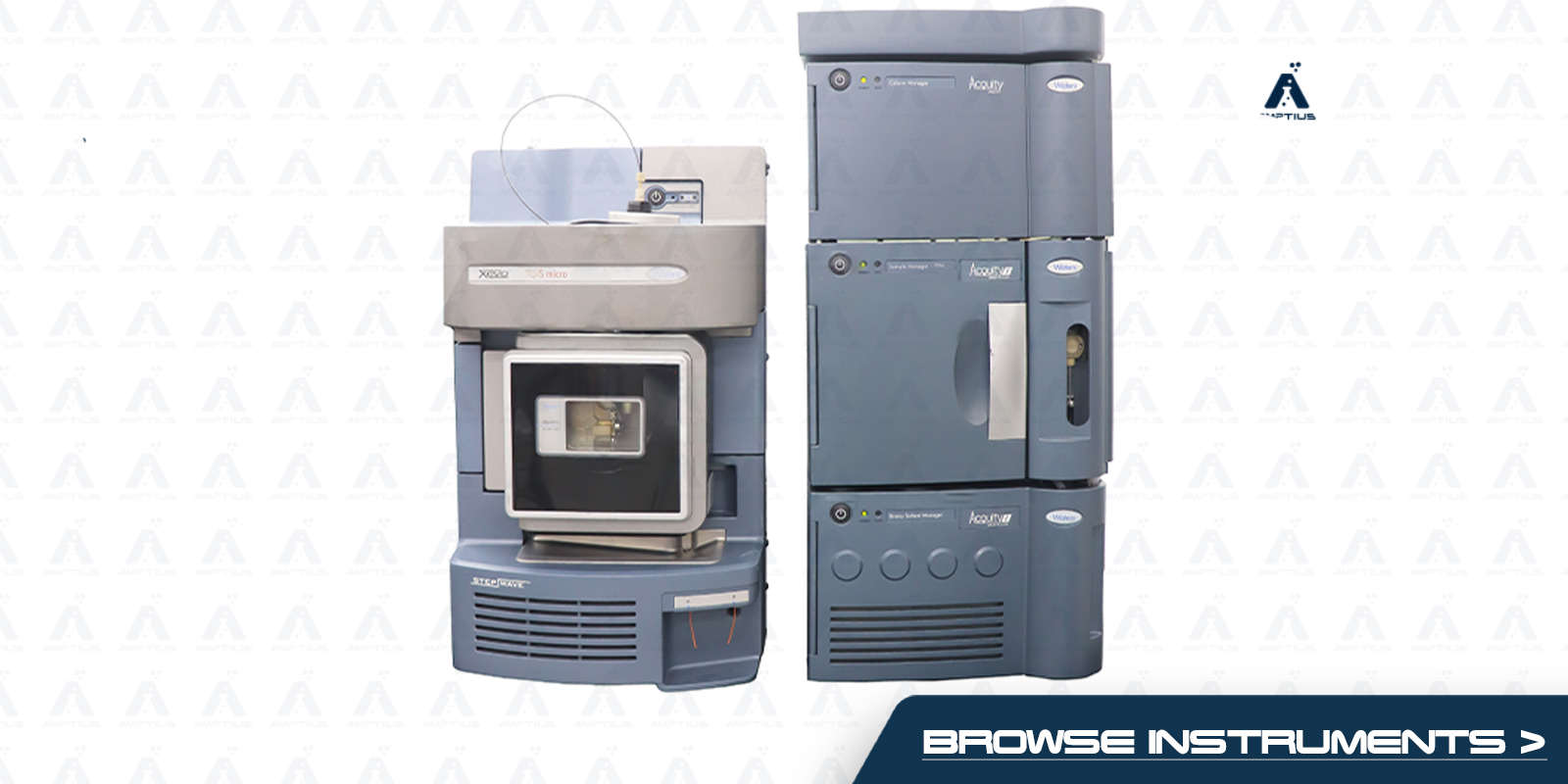
Liquid chromatography coupled with tandem mass spectrometry (LC-MS/MS) is the preferred analytical approach due to its specificity and sensitivity. Instruments must support validated methods for extracting and detecting both D₂ and D₃ using appropriate sample preparation and chromatographic techniques. APCI ionization, C18 column separation, and MRM transitions are commonly employed to meet AOAC’s performance targets. Data acquisition software should support features that facilitate compliance with AOAC SMPR 2011.004, such as traceable calibration, recovery tracking, and audit-ready reporting when used in validated workflows. The systems listed below are suitable for laboratories implementing methods designed to meet the requirements of AOAC SMPR 2011.004.
Please click here to learn more about AOAC Method SMPR 2011.004
Waters Xevo TQ-S Micro LC-MS/MS with Acquity I-Class for AOAC Method SMPR 2011.004
The Waters Xevo TQ-S Micro paired with the Acquity I-Class UPLC system is well-suited for vitamin D₂ and D₃ quantification in fortified nutritional products. It supports APCI ionization and robust MRM methods capable of achieving LOQs below 0.12 µg/100 g. The system offers high chromatographic resolution, consistent retention times, and short run durations. Empower 3 software includes functionality that supports traceable calibration, spike recovery tracking, and system suitability testing within validated AOAC-compliant workflows. This configuration is appropriate for labs implementing regulated testing methods for fortified dairy and pediatric nutrition products.
The Acquity I-Class delivers high injection precision and narrow peak shapes, contributing to reliable quantification. The Xevo TQ-S Micro offers strong performance in complex matrices with low analyte concentrations. Empower’s features—when used within validated protocols—help streamline compliance documentation and batch traceability. This system is suitable for laboratories developing or running methods intended to meet AOAC SMPR 2011.004 criteria. It provides a dependable platform for quantitative vitamin D analysis in diverse nutritional formats.
Agilent Ultivo Triple Quad LC-MS/MS with 1260 Infinity II for AOAC Method SMPR 2011.004
The Agilent Ultivo Triple Quadrupole LC-MS/MS system, paired with the 1260 Infinity II UHPLC, provides a compact and sensitive platform for vitamin D₂ and D₃ analysis. It supports APCI ionization and offers MRM detection capable of meeting the 0.12 µg/100 g LOQ requirement. The 1260 Infinity II ensures gradient accuracy and retention time stability, both essential for AOAC compliance. MassHunter software supports data validation workflows including recovery monitoring, LOQ tracking, and audit-trail generation when configured appropriately. This system is suitable for space-limited labs conducting regulated nutritional testing.
The platform performs well with validated sample preparation protocols and is capable of consistent results across the 0.12–5.1 µg/100 g range. The Ultivo’s compact size does not compromise sensitivity or reproducibility. MassHunter provides tools for method suitability checks and calibration oversight, facilitating AOAC-aligned testing when properly implemented. This configuration supports the analytical performance required for vitamin D testing in infant and pediatric formulas. It is a strong fit for labs seeking compliance in a streamlined footprint.
PerkinElmer QSight 420 LC-MS/MS with UHPLC Front End for AOAC Method SMPR 2011.004
The PerkinElmer QSight 420 LC-MS/MS system with a UHPLC front end is designed for sensitive and reproducible vitamin D testing. It incorporates APCI ionization and dual-source technology that help achieve LOQs under 0.12 µg/100 g. The system supports AOAC-aligned recovery and repeatability through validated MRM workflows. Simplicity 3Q software enables users to manage calibration standards, validate recovery, and document system suitability for traceable reporting. This system is compatible with high-throughput labs aiming to meet AOAC SMPR 2011.004 performance expectations.
The QSight platform minimizes matrix effects and supports uninterrupted routine testing in complex nutritional samples. Its UHPLC component ensures retention stability, efficient gradient delivery, and precision in vitamin D compound separation. Simplicity 3Q software supports method validation through customizable workflows and audit logging features. When used with validated protocols, this platform supports all required performance metrics outlined in the AOAC method. It is a viable solution for routine and regulated environments needing sensitive vitamin D detection.
Thermo Scientific TSQ Altis Plus LC-MS/MS with Vanquish UHPLC for AOAC Method SMPR 2011.004
The Thermo Scientific TSQ Altis Plus paired with Vanquish UHPLC is suitable for trace-level vitamin D₂ and D₃ determination across a wide range of nutritional matrices. It uses APCI ionization and MRM mode to meet the LOQ target of ≤ 0.12 µg/100 g. The Vanquish UHPLC enhances chromatographic performance through precise thermal control and retention time reproducibility. Chromeleon CDS offers tools for spike recovery, system suitability assessment, and validation documentation that support compliance when applied within validated methods. This setup is used in analytical laboratories seeking to meet regulated testing standards.
The TSQ Altis Plus provides stable ionization and fast scanning for reproducible quantitation. Its ability to handle high-throughput workflows makes it a practical choice for production-oriented or reference testing labs. Chromeleon CDS includes audit-traceable features and LOQ verification tools, helping support AOAC SMPR workflows when configured properly. This combination of hardware and software facilitates reliable vitamin D testing in fortified products. It provides the precision and reporting tools necessary for laboratories operating under method performance standards.
Shimadzu LCMS-8060NX with Nexera X3 UHPLC for AOAC Method SMPR 2011.004
The Shimadzu LCMS-8060NX with Nexera X3 UHPLC offers high-speed, high-sensitivity quantification of vitamin D₂ and D₃ in challenging matrices. The system employs APCI ionization and MRM analysis to consistently detect at or below 0.05 µg/100 g. The Nexera X3 ensures gradient stability, temperature precision, and reproducibility in retention time—critical for AOAC method alignment. LabSolutions software supports compliance through method validation, audit-trail documentation, and QC tracking when implemented with validated procedures. This instrument configuration is suitable for labs needing reproducible vitamin D quantitation in fortified formulas.
The LCMS-8060NX delivers fast polarity switching and ultra-stable transitions for high-throughput analysis. Its ability to minimize carryover and matrix effects is especially valuable for nutritional testing. LabSolutions provides tools for system suitability testing and LOQ validation that help support method performance requirements. With validated methods, this system can fulfill AOAC SMPR 2011.004 criteria. It is a dependable option for research, QA, and regulatory testing applications.
SCIEX Triple Quad™ 6500+ LC-MS/MS System with ExionLC for AOAC Method SMPR 2011.004
The SCIEX Triple Quad™ 6500+ LC-MS/MS, paired with the ExionLC system, delivers the sensitivity and repeatability required for accurate vitamin D₂ and D₃ quantification. It offers optimized APCI ionization, precise MRM transitions, and excellent signal stability suitable for complex nutritional matrices. SCIEX OS software enables batch calibration, spike recovery validation, and method suitability analysis, supporting AOAC method compliance when used in validated workflows. This system is suitable for high-capacity laboratories working with fortified nutritional products.
ExionLC ensures high gradient accuracy and column temperature control, contributing to reproducible retention and separation of D compounds. SCIEX’s Turbo V source and Scheduled MRM Pro functionality provide efficient, high-throughput results. SCIEX OS includes tools for traceable documentation and system monitoring, supporting the performance criteria outlined in SMPR 2011.004. This platform is often selected by laboratories building validated methods that require sub-LOQ sensitivity and regulatory robustness.
Choosing the Right Instrument for AOAC Method SMPR 2011.004
- Best for trace-level detection: Waters TQ-S Micro, SCIEX 6500+, and Shimadzu LCMS-8060NX deliver sub-LOQ sensitivity for fortified nutritional products.
- High-throughput and precision systems: Thermo TSQ Altis Plus and PerkinElmer QSight 420 offer repeatable performance and throughput capacity.
- Compact and robust options: Agilent Ultivo provides a space-saving, compliance-ready solution for vitamin D workflows.
AOAC SMPR 2011.004 requires precise, traceable, and validated quantification of vitamin D₂ and D₃ in complex nutritional products. The instruments listed above are suitable for supporting AOAC-compliant methods when properly configured and validated. We offer certified refurbished LC-MS/MS systems tailored for regulatory vitamin D testing in QA and contract laboratories. Contact us today to find the right instrument for your workflow.