
AOAC Method SMPR 2012.001 Instrumentation Guide
Standard Method Performance Requirements (SMPR) for Flavanols in Foods and Beverages
AOAC SMPR 2012.001 outlines the performance criteria for measuring flavan-3-ols—commonly referred to as flavanols—in foods and beverages such as cocoa, chocolate, tea, wine, fruit juices, spices, and herbs. These compounds include monomeric and oligomeric catechins and epicatechins, which must be quantified across a degree of polymerization (DP) range from 1 through 7. The analytical method must support a broad range of concentrations from ≤ 0.05 to ≥ 500 mg/g edible portion, with a minimum limit of quantitation (LOQ) set at ≤ 0.05 mg/g. Repeatability (RSDr) must be ≤ 10% for concentrations below 0.05 mg/g, ≤ 6% for concentrations between 0.05 and 500 mg/g, and ≤ 5% for levels above 500 mg/g. Recovery must remain within 98–101% at 100% concentration, and as broad as 70–125% at trace levels, depending on analyte concentration.
Methods must be specific to flavanols and capable of resolving them from other phenolic compounds and matrix interferences. Acceptable analytical techniques include high-performance liquid chromatography (HPLC) or ultra-high-performance liquid chromatography (UHPLC) with UV, fluorescence, or tandem mass spectrometry detection. Methods must resolve all relevant DP 1–7 flavanol species and maintain reproducibility (RSDR) within ≤ 18% for concentrations < 0.05 mg/g, ≤ 8% for 0.05–500 mg/g, and ≤ 6% for concentrations > 500 mg/g. Calibration against known monomeric and oligomeric flavanol standards is highly recommended, and use of NIST reference materials is encouraged. The instruments listed below meet these method performance requirements when properly configured and validated.
Please click here to learn more about AOAC Method SMPR 2012.001
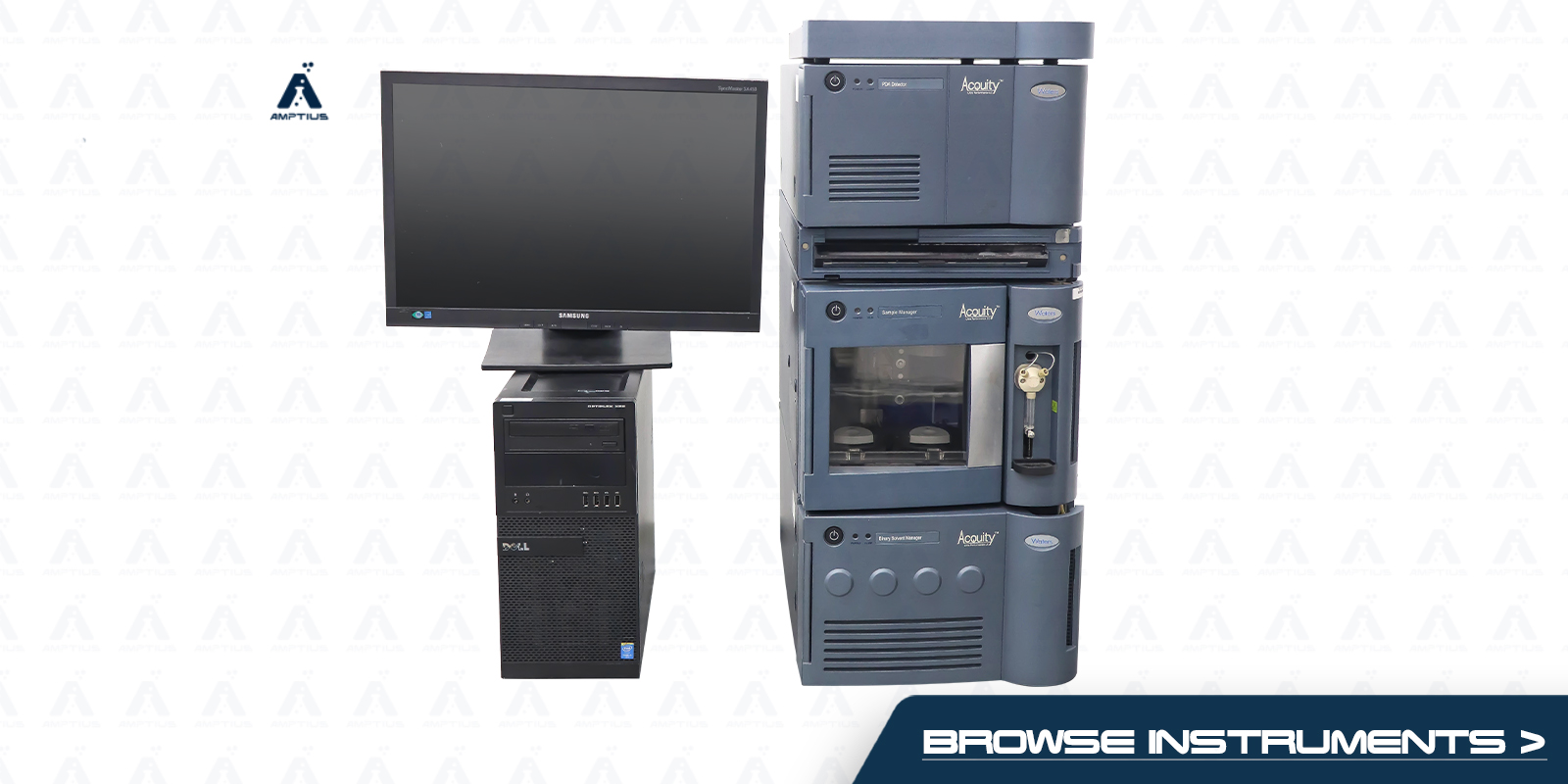
Waters Acquity UPLC System with Binary SM SM PDA Detector for AOAC Method SMPR 2012.001
The Waters Acquity UPLC system with PDA detector offers high-resolution separation of flavanol monomers and oligomers across a wide range of food and beverage matrices. Its Binary Solvent Manager ensures gradient stability, which is essential for reproducibly separating catechins and procyanidins (DP 1–7). The PDA detector allows full-spectrum UV detection for peak purity assessment and quantitation. Empower 3 software provides automated system suitability checks, calibration tracking, and recovery validation, making the platform well-suited for AOAC-compliant workflows. This system is especially effective for cocoa, tea, and chocolate analysis where high flavanol concentrations are expected.
The Acquity system’s column and temperature control modules ensure retention time stability and peak resolution even in complex matrices. When used with validated reversed-phase or HILIC columns, it meets all AOAC method performance requirements, including LOQ, precision, and recovery. Analysts benefit from short run times and robust method transferability across labs. Empower also supports batch reporting and long-term data traceability for regulatory audits. This platform is widely used in both industry and research settings to quantify flavanols in compliance with SMPR 2012.001.
Agilent 1260 Infinity II HPLC System with DAD Detector and BinPump for AOAC Method SMPR 2012.001
The Agilent 1260 Infinity II HPLC system with DAD detector and binary pump configuration is a reliable platform for analyzing flavanols in food and beverage products. While not as high-pressure as UHPLC systems, it supports validated methods that separate DP 1–7 flavanols using reversed-phase columns. The DAD detector provides spectral data from 190 to 600 nm, allowing analysts to differentiate flavanol peaks and monitor for co-eluting compounds. OpenLab CDS enhances traceability with tools for calibration tracking, system suitability testing, and recovery calculation. This configuration is commonly used in quality control labs for chocolate, wine, and fruit juice analysis.
The binary pump enables precise gradient delivery, which is crucial for separating monomers and oligomers with minimal baseline noise. Temperature stability and flow accuracy ensure strong reproducibility within AOAC-defined limits. Analysts can implement recovery studies and validate LOQ performance with known catechin and epicatechin standards. OpenLab’s built-in audit trails and batch reporting capabilities support regulatory documentation. When paired with appropriate reference materials and validated chromatographic methods, the 1260 Infinity II system meets all AOAC SMPR 2012.001 requirements.
Shimadzu Nexera X3 UHPLC with SPD-M40 PDA or LCMS-8060NX for AOAC Method SMPR 2012.001
The Shimadzu Nexera X3 UHPLC platform delivers high-throughput, high-sensitivity performance for flavanol quantification in cocoa, tea, and polyphenol-rich foods. When configured with the SPD-M40 PDA detector, it enables full-spectrum UV detection with excellent wavelength accuracy and peak resolution. This setup supports rapid analysis of DP 1–7 flavanols, especially when paired with validated reversed-phase columns. The system offers minimal carryover and short cycle times, enhancing lab efficiency without compromising analytical integrity. Its column oven and solvent delivery system provide precise control for reproducible retention times.
For ultra-trace sensitivity and isomer-specific quantification, the Nexera X3 can be paired with the LCMS-8060NX triple quadrupole mass spectrometer. This configuration supports MRM transitions for individual flavanol compounds, delivering LOQs well below 0.05 mg/g. LabSolutions software enables automated system suitability checks, spike recovery tracking, and batch validation reporting. Whether using UV or MS detection, the platform meets all AOAC SMPR 2012.001 criteria for precision, recovery, and quantitation. Shimadzu’s hardware and software integration makes it ideal for both research and regulatory labs conducting flavanol analysis.
Thermo Scientific Vanquish UHPLC with FLD, DAD, or TSQ Altis MS for AOAC Method SMPR 2012.001
The Thermo Scientific Vanquish UHPLC system offers a versatile solution for flavanol analysis in foods and beverages, supporting multiple detection modes including FLD, DAD, and mass spectrometry. The DAD option provides spectral confirmation of catechins and epicatechins, while the FLD detector enhances sensitivity for fluorescently active polyphenols. For advanced workflows, the Vanquish can be integrated with the TSQ Altis triple quadrupole MS, enabling MRM-based detection of specific DP levels. This flexibility allows labs to adapt detection strategies based on matrix complexity and regulatory needs.
The Vanquish system maintains strong pressure stability and reproducibility across long analytical runs. Chromeleon CDS software automates calibration verification, recovery tracking, and LOQ validation to ensure full compliance with AOAC SMPR 2012.001. The platform excels in separating and quantifying flavanols in wine, tea, chocolate, and herbal extracts. Its fast injection cycles and precise flow control support high-throughput environments. Whether operating under UV, FLD, or MS conditions, the Vanquish system consistently meets performance targets for recovery, precision, and reproducibility.
JASCO LC-4000 Series with FP-4020 Fluorescence or UV Detector for AOAC Method SMPR 2012.001
The JASCO LC-4000 Series equipped with the FP-4020 fluorescence detector is designed for high-sensitivity detection of flavanols in complex food matrices. Fluorescence detection is particularly advantageous for quantifying catechins and epicatechins in cocoa, tea, and red wine. This system supports validated reversed-phase and normal-phase LC methods that achieve resolution of DP 1–7 flavanol compounds. The FP-4020 delivers excellent wavelength precision and low detection limits, easily meeting the ≤ 0.05 mg/g LOQ required by AOAC. Its stable flow control and temperature regulation ensure method repeatability and peak consistency.
ChromNAV CDS software allows analysts to configure system suitability protocols, monitor calibration integrity, and calculate recovery in real time. The LC-4000 platform also supports UV detection for dual-mode operation if needed. This flexibility enables labs to tailor detection to specific sample types and regulatory requirements. With its modular design and robust detection capabilities, the JASCO system satisfies all AOAC SMPR 2012.001 method performance requirements. It is frequently used in quality control and polyphenol research laboratories worldwide.
SCIEX 6500+ LC-MS/MS System with ExionLC Front End for AOAC Method SMPR 2012.001
The SCIEX 6500+ LC-MS/MS system, paired with the ExionLC front end, is a high-sensitivity platform designed for ultra-trace quantification of flavanols. Using multiple reaction monitoring (MRM), this system provides unparalleled specificity for catechin, epicatechin, and procyanidin oligomers in complex matrices like cocoa powder, chocolate, and tea extracts. It routinely achieves LOQs below 0.01 mg/g, exceeding the minimum sensitivity required by AOAC SMPR 2012.001. The system also supports high-throughput workflows with minimal matrix interference and low carryover.
SCIEX OS software includes tools for batch validation, spike recovery tracking, and calibration monitoring. The system’s rugged design and stable ionization source ensure consistent reproducibility across analytical runs. It is widely used in regulatory environments for method development and routine testing of polyphenol content. When paired with appropriate sample prep and chromatographic separation, the 6500+ system meets or exceeds AOAC requirements for LOQ, RSDr, RSDR, and recovery. It is ideal for laboratories needing precision, sensitivity, and regulatory compliance in flavanol testing.
Choosing the Right Instrument for AOAC Method SMPR 2012.001
- Best for high-sensitivity workflows: SCIEX 6500+ LC-MS/MS and Shimadzu LCMS-8060NX deliver ultra-low LOQs and isomer-specific quantitation.
- Flexible HPLC systems: Agilent 1260 Infinity II and JASCO LC-4000 are ideal for UV or fluorescence workflows in QC labs.
- High-resolution UHPLC platforms: Waters Acquity UPLC, Thermo Vanquish, and Shimadzu Nexera X3 provide precise separation of DP 1–7 flavanols.
AOAC SMPR 2012.001 requires sensitive and specific quantification of flavanols across a broad range of concentrations and matrices. The instruments listed above support compliant workflows using validated chromatographic and detection methods. We offer certified refurbished HPLC, UHPLC, and LC-MS/MS systems tailored for polyphenol and flavanol testing. Contact us today to find the right system for your analytical needs.