
AOAC Method SMPR 2012.005 Instrumentation Guide
Standard Method Performance Requirements (SMPR) for Vitamin E in Pre-Blends, Pre-Mixes, and Pure Materials
AOAC SMPR 2012.005 establishes minimum method performance requirements for the determination of total vitamin E in ingredient-grade materials such as pre-blends, pre-mixes, and pure compounds. The target analytes include α-tocopherol and its esters, which must be hydrolyzed and quantified as free α-tocopherol. The method must support an analytical range of 100 ppm to 100%, with a required LOQ of ≤100 ppm. Precision criteria are strict, with repeatability (RSDr) limited to ≤4% at 0.01%, ≤2% at 1%, and ≤1% at 100%, and reproducibility (RSDR) constrained to ≤8%, ≤4%, and ≤2% at those same levels. Recovery must fall within 90–110% across all validated concentration points.
Chromatographic methods using HPLC or UPLC with UV or fluorescence detection are required for compliance. The analytical system must support hydrolysis workflows and achieve accurate separation of α-tocopherol from matrix components or co-eluting substances. Certified reference materials or validated internal standards should be used for quantification and calibration. Proper system suitability checks, retention time stability, and calibration curve linearity are essential for regulatory alignment. The instruments listed below meet these requirements when paired with validated methods and appropriate QA protocols.
Please click here to learn more about AOAC Method SMPR 2012.005
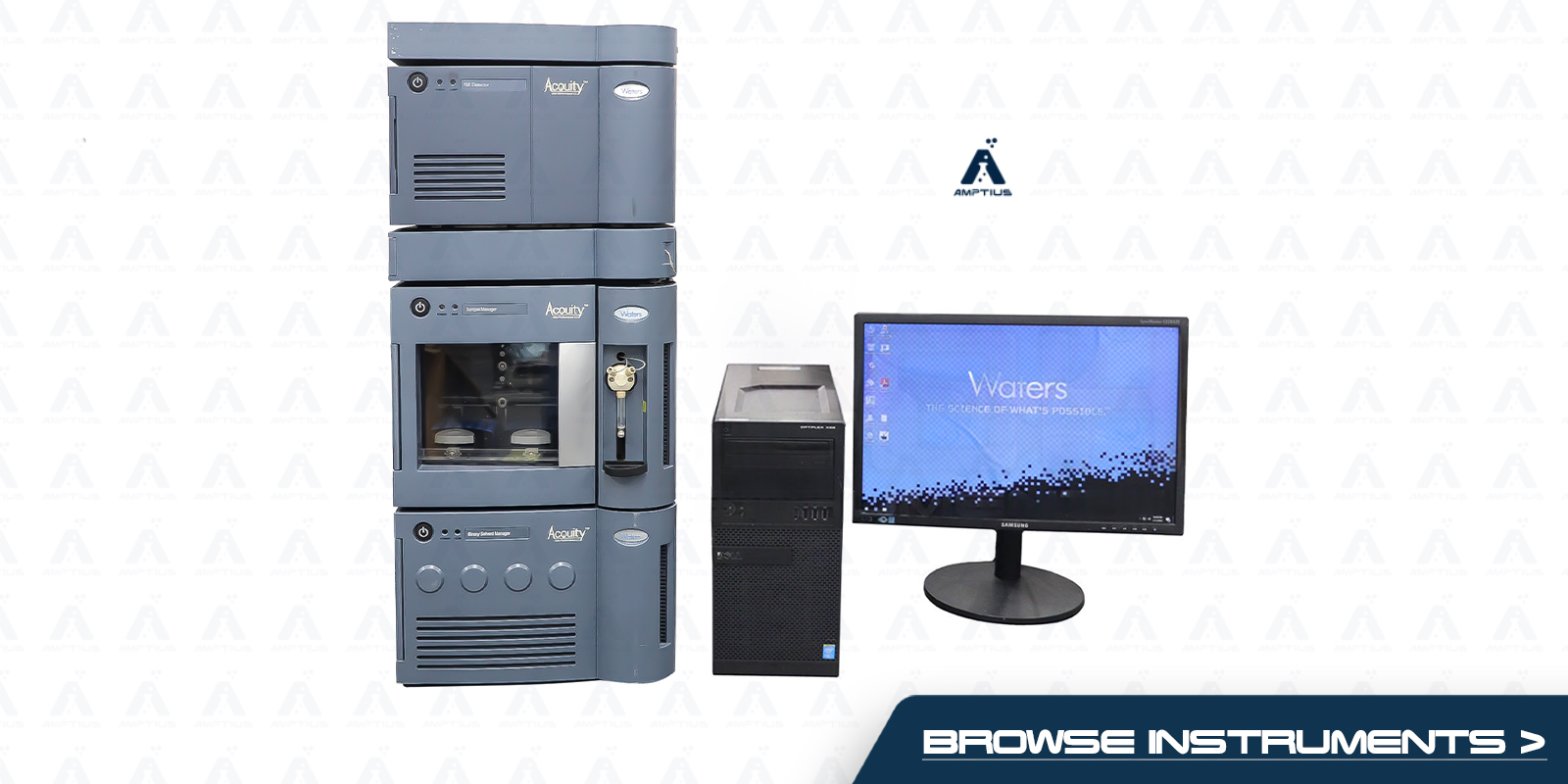
Waters Acquity UPLC System with FLR Detector for AOAC Method SMPR 2012.005
The Waters Acquity UPLC system with FLR detector provides exceptional analytical sensitivity for quantifying α-tocopherol in vitamin E assays. Fluorescence detection offers excellent selectivity and minimizes matrix interference, which is especially beneficial when analyzing oil-based or fortified samples post-hydrolysis. Its high-pressure solvent delivery system and column technology enable rapid, high-resolution separations that reduce runtime and improve throughput. The system achieves limits of quantitation well below 100 ppm and consistently meets RSDr and RSDR criteria across the 0.01% to 100% range. This makes it suitable for laboratories handling complex, high-concentration matrices such as encapsulated premixes or pure ingredients.
Empower 3 software supports robust system validation with features such as audit trails, calibration tracking, and automated system suitability verification. Analysts can easily monitor recovery rates, signal linearity, and method precision over long analytical sequences. The FLR detector provides low baseline noise and strong peak integrity, ensuring accurate quantitation even at trace levels. The Acquity UPLC platform is widely used in regulated environments due to its proven performance and regulatory support features. When paired with appropriate sample preparation and validated hydrolysis protocols, this system fully complies with AOAC SMPR 2012.005.
Agilent 1260 Infinity II LC System with DAD for AOAC Method SMPR 2012.005
The Agilent 1260 Infinity II LC System with Diode Array Detection (DAD) is a highly flexible and robust platform for vitamin E quantification in food-grade materials. The system offers excellent gradient precision, low carryover, and temperature-stabilized separations ideal for hydrolyzed α-tocopherol detection. DAD provides multi-wavelength spectral verification, enabling users to confirm peak identity and distinguish α-tocopherol from matrix co-elutants. Its analytical performance supports LOQ thresholds of ≤100 ppm and meets repeatability and reproducibility expectations defined in the SMPR. This makes it an ideal system for ingredient QC labs with validated UV-based workflows.
OpenLab CDS software enhances analytical traceability through integrated system suitability checks, real-time calibration validation, and compliance-ready reporting. The platform is designed to accommodate long batch sequences and supports automated peak integration and recovery monitoring. Agilent’s hardware and software integration simplifies method validation and ensures consistent data quality across multiple operators and runs. The 1260 Infinity II is well suited for both regulated and non-regulated labs handling a wide variety of sample types. When configured with validated hydrolysis methods and CRMs, this system satisfies all AOAC SMPR 2012.005 criteria.
Shimadzu Prominence-i LC-2030 Plus with UV or RF-20A Detector for AOAC Method SMPR 2012.005
The Shimadzu Prominence-i LC-2030 Plus is an integrated HPLC platform that offers automated functionality and compact design for routine vitamin E testing. With either UV or RF-20A fluorescence detection, the system achieves precise and sensitive quantification of α-tocopherol post-hydrolysis. The RF-20A detector provides enhanced sensitivity and selectivity, allowing for accurate measurement even in challenging matrices. The system reliably meets LOQs of ≤100 ppm and complies with RSDr and RSDR limits at all concentration levels defined by the SMPR. This makes it suitable for high-throughput analysis of pre-mixes, fortified oils, and vitamin concentrates.
Shimadzu’s LabSolutions software offers intuitive system control, audit trails, calibration tracking, and automated report generation. It supports method validation workflows by providing easy-to-configure system suitability tests and recovery checks. The LC-2030 Plus delivers consistent peak shapes, strong reproducibility, and stable baselines throughout long analytical runs. Its automation features streamline sample preparation and injection, reducing user error in regulated testing environments. When validated with proper hydrolysis and calibration protocols, this system delivers full compliance with AOAC SMPR 2012.005.
Thermo Scientific UltiMate 3000 HPLC with DAD or FLD for AOAC Method SMPR 2012.005
The Thermo Scientific UltiMate 3000 HPLC system with either DAD or FLD is designed to handle the precision requirements of vitamin E quantification in ingredient-grade materials. The system’s solvent delivery and column oven modules ensure stable temperature and flow conditions, which are essential for peak reproducibility. Fluorescence detection enables highly sensitive measurement of α-tocopherol following hydrolysis, while DAD provides robust UV-based detection with spectrum verification. LOQs of ≤100 ppm are easily achieved, and precision across multiple concentration ranges remains within AOAC limits. This system is widely implemented in food, supplement, and ingredient laboratories.
Chromeleon CDS provides full integration of instrument control, data analysis, system suitability monitoring, and traceability reporting. The software supports audit-ready environments and includes tools for managing calibration curve integrity and spike recovery documentation. The UltiMate 3000 is suitable for both high-throughput environments and detailed method development work. Its flexibility makes it ideal for testing a variety of matrix types, from encapsulated oils to dry powders. When implemented with validated hydrolysis procedures and internal standards, the system aligns fully with AOAC SMPR 2012.005.
PerkinElmer Series 200 HPLC with UV or FLD Detector for AOAC Method SMPR 2012.005
The PerkinElmer Series 200 HPLC system, when configured with UV or fluorescence detection, offers a cost-effective yet reliable solution for vitamin E analysis. Despite being a legacy system, it provides stable gradient performance, retention time consistency, and strong analytical precision. UV detection enables validated workflows for α-tocopherol quantification in high-concentration matrices, while FLD enhances selectivity and sensitivity at lower levels. With proper hydrolysis and method validation, the system consistently meets LOQ, RSDr, and RSDR requirements outlined in the SMPR. It’s ideal for labs needing durable instruments that can maintain compliance.
TotalChrom software integrates method control, batch reporting, and system suitability documentation to support quality assurance efforts. Laboratories can monitor calibration curve integrity and recovery performance across full batch sequences. The Series 200 remains in active use across the nutraceutical and food ingredient industry due to its robustness and straightforward operation. When paired with high-quality reference materials and established methods, the system meets regulatory expectations for vitamin E quantitation. It continues to be a practical platform for labs seeking low-cost AOAC compliance.
JASCO LC-4000 Series with FP-4020 Fluorescence or UV Detector for AOAC Method SMPR 2012.005
The JASCO LC-4000 Series offers analytical flexibility with either the FP-4020 fluorescence detector or standard UV detection for vitamin E workflows. Its fluorescence option provides enhanced sensitivity and lower background noise, ideal for detecting α-tocopherol at or near the 100 ppm threshold. The system is designed for high-resolution separation, reliable reproducibility, and excellent recovery rates in pre-blend and pure material testing. It maintains method precision across the full 0.01% to 100% analytical range required by AOAC SMPR 2012.005. Its broad wavelength capabilities support full spectral scanning and peak purity assessment.
JASCO’s ChromNAV software supports GLP-compliant environments with built-in audit trails, method validation tools, and recovery calculation features. It offers real-time system monitoring and robust data integrity controls. The LC-4000 system supports a variety of columns and detection configurations, making it adaptable to method-specific requirements. It is well suited for regulated ingredient labs seeking precision and documentation control. With validated hydrolysis and detection protocols, the system ensures full compliance with AOAC SMPR 2012.005.
Choosing the Right Instrument for AOAC Method SMPR 2012.005
- High-sensitivity platforms: Waters Acquity UPLC with FLR and JASCO LC-4000 with FP-4020 are best for low-level α-tocopherol detection.
- Proven UV-based systems: Agilent 1260 Infinity II and Thermo UltiMate 3000 with DAD offer reliable LOQ and precision for validated workflows.
- Accessible options: Shimadzu LC-2030 Plus and PerkinElmer Series 200 meet full AOAC criteria with lower cost and strong reproducibility.
AOAC SMPR 2012.005 requires analytical platforms that combine sensitivity, repeatability, and regulatory traceability. The systems listed above meet those standards when configured with validated hydrolysis, sample preparation, and detection methods. Each platform offers distinct advantages for laboratories working with fortified premixes, oils, or raw ingredients. We provide certified refurbished HPLC systems tailored for AOAC-compliant vitamin E analysis. Contact us today to find the right system for your workflow.