
AOAC Method SMPR 2012.008 Instrumentation Guide
Standard Method Performance Requirements (SMPR) for Iodine in Infant Formula and Adult/Pediatric Nutritional Formula
AOAC SMPR 2012.008 defines the method performance requirements for quantifying total iodine in infant, adult, and pediatric nutritional formulas. The method must measure iodine across a concentration range of 5 to 1000 µg/100 g in ready-to-feed liquids, reconstituted powders, and liquid concentrates. To meet SMPR criteria, instruments must achieve a limit of quantitation (LOQ) ≤ 5 µg/100 g, repeatability (RSDr) ≤ 8%, reproducibility (RSDR) ≤ 15%, and recovery between 90–110%. The method must also complete within 12 hours using validated digestion and detection procedures. These criteria ensure analytical accuracy and consistency across nutritional product types.
Inductively Coupled Plasma Mass Spectrometry (ICP-MS) is the preferred technique due to its high sensitivity, selectivity, and low LOQ. All instruments must be validated against certified reference material such as NIST SRM 1849a. Proper alkaline digestion using reagents like TMAH is essential to release iodine from complex matrices. Validation protocols should include system suitability checks, method recovery, and batch-level reproducibility testing. The systems listed below meet or exceed the SMPR 2012.008 criteria when configured appropriately.
Please click here to learn more about AOAC Method SMPR 2012.008
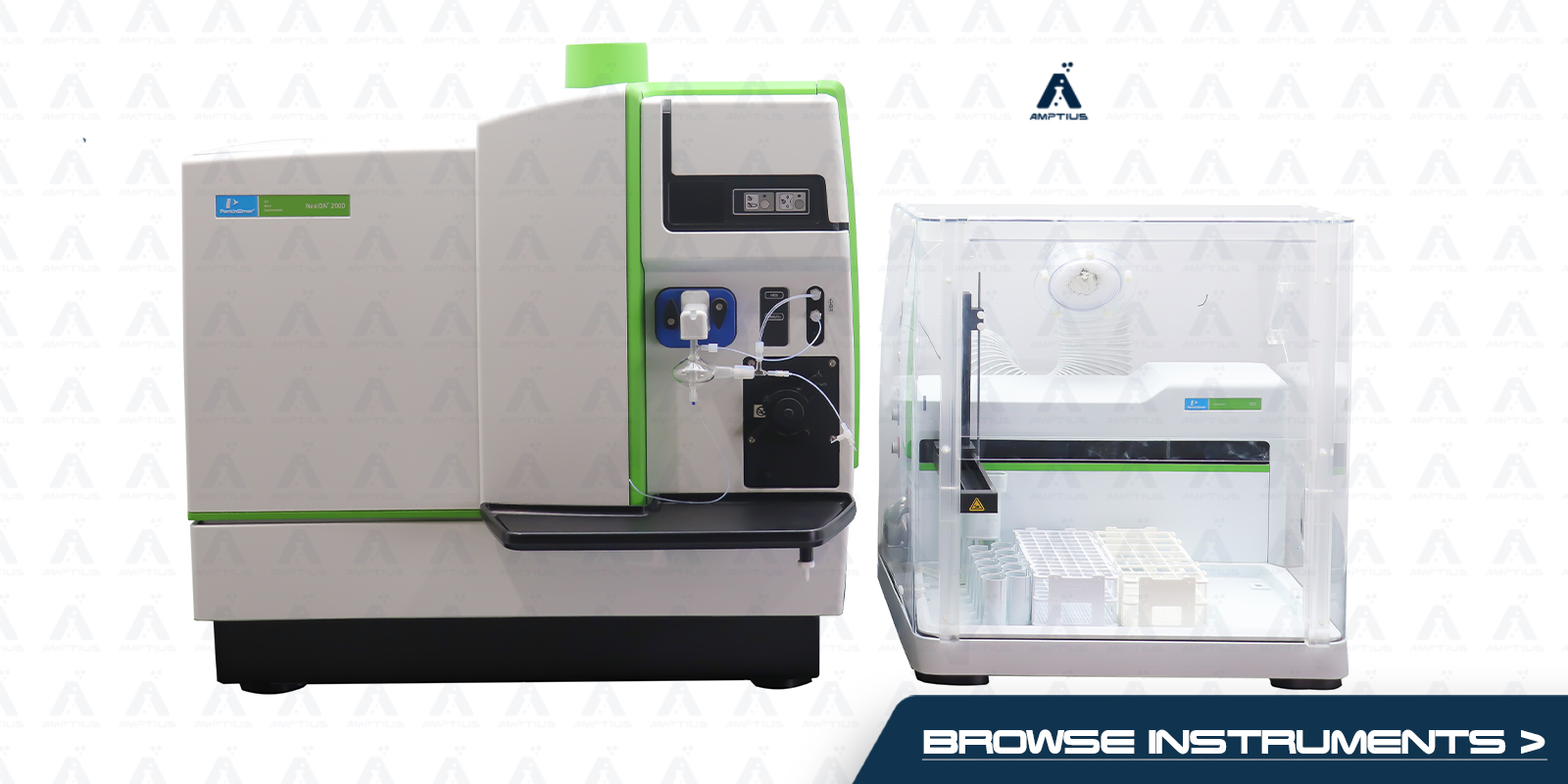
PerkinElmer NexION 2000B ICP-MS with Autosampler, Chiller & UPS for AOAC Method SMPR 2012.008
The PerkinElmer NexION 2000B ICP-MS system delivers high sensitivity and robust matrix tolerance, making it ideal for iodine quantification in fortified nutritional products. Its triple cone interface, quadrupole technology, and dynamic reaction cell ensure accurate detection at concentrations below the LOQ threshold of 5 µg/100 g. The inclusion of an autosampler, chiller, and UPS provides enhanced sample handling efficiency, temperature control, and operational reliability during extended runs. The platform is engineered for both routine and high-throughput testing, maintaining excellent signal stability in complex matrices. It performs well with typical sample preparations involving alkaline extraction methods.
NexION software provides automated performance checks, calibration tracking, and audit-ready reports to support regulatory compliance. The system accommodates various quality control steps, including real-time system suitability monitoring and recovery validation. It has been validated in multiple laboratories for iodine analysis in dairy and soy-based nutritional formulas. With proper configuration, the NexION 2000B can consistently meet all SMPR requirements for LOQ, recovery, RSDr, and RSDR. It is an excellent choice for contract testing labs and manufacturing QA environments.
Agilent 7900 ICP-MS for AOAC Method SMPR 2012.008
The Agilent 7900 ICP-MS is a high-performance quadrupole system featuring an Octopole Reaction System (ORS) and ultra-low detection limits. It provides accurate iodine quantification down to sub-µg/L concentrations, easily surpassing the required LOQ of 5 µg/100 g. The 7900 offers excellent matrix tolerance and is particularly effective at suppressing interferences from complex nutritional samples. Its sensitivity and precision make it suitable for regulatory methods requiring high analytical confidence. This system is well suited for use in both high-volume and R&D applications.
MassHunter software streamlines AOAC validation by supporting automated system checks, recovery tracking, and data integrity verification. It offers a user-friendly interface for method development and validation in both single-lab and multi-lab environments. The 7900 has been used extensively in food safety and supplement testing applications, demonstrating consistent compliance with AOAC SMPR 2012.008. When paired with NIST SRM 1849a and TMAH digestion protocols, it ensures accurate iodine determination across all nutritional formula types. This platform remains a gold standard for trace element analysis in regulated testing environments.
Thermo Scientific iCAP RQ ICP-MS for AOAC Method SMPR 2012.008
The Thermo Scientific iCAP RQ ICP-MS system is engineered for high-sensitivity halogen detection, including iodine in nutritionally fortified formulas. It uses a collision/reaction cell and quadrupole technology to suppress interferences and ensure clean mass spectra. The system’s ability to maintain stable plasma under high-matrix conditions makes it ideal for infant and pediatric formula testing. LOQ performance is well below 5 µg/100 g, enabling precise quantification even at trace levels. The iCAP RQ delivers robust performance without compromising analysis speed or reproducibility.
Qtegra software enables method automation with built-in quality control, system calibration, and compliance documentation tools. Analysts can easily configure runs, review results, and generate audit-ready reports. The system performs well with common digestion workflows using alkaline extractants. Laboratories benefit from fast sample turnaround, strong reproducibility, and full compliance with SMPR performance targets. This instrument is ideal for regulated labs requiring streamlined workflows and reliable iodine quantitation.
Shimadzu ICPMS-2030 for AOAC Method SMPR 2012.008
The Shimadzu ICPMS-2030 is a reliable instrument designed for trace-level elemental analysis, including iodine in nutritional products. It incorporates advanced interference correction algorithms and collision cell technology to deliver accurate results. The system achieves LOQs below 5 µg/100 g, satisfying the minimum SMPR requirement. Its sample introduction system and quadrupole detector offer consistent signal stability for complex formula matrices. This platform is trusted in both academic and regulatory settings.
LabSolutions software provides integrated tools for quality assurance, including batch-level calibration tracking, real-time QC flagging, and automated reporting. The system’s efficient plasma generation and optimized torch design reduce maintenance and increase uptime. When paired with validated digestion protocols and internal standards, the ICPMS-2030 meets AOAC performance criteria for recovery and reproducibility. It is especially valuable for labs looking for a balance of sensitivity, durability, and ease of operation. Shimadzu offers strong support and validation documentation for method implementation.
Analytik Jena PlasmaQuant MS Elite for AOAC Method SMPR 2012.008
The Analytik Jena PlasmaQuant MS Elite is engineered for ultra-trace elemental analysis and delivers outstanding sensitivity for iodine testing. Its dual-stage plasma interface and high-efficiency ion optics allow detection of iodine at concentrations well below 5 µg/100 g. The system maintains linearity and precision across the full SMPR-defined range of 5–1000 µg/100 g. Reflex ion focusing improves signal stability and minimizes matrix interference. It is suitable for both low- and high-volume iodine testing workflows.
ASpect MS software supports streamlined compliance with features such as automated system calibration, method validation, and QA/QC monitoring. It is designed for laboratories that require complete audit trail capabilities and rapid data processing. When used with alkaline digestion methods and NIST SRM 1849a, the PlasmaQuant MS Elite consistently meets AOAC recovery, RSDr, and RSDR targets. This system is widely used in food and nutrition testing labs worldwide. It is an excellent choice for regulated labs demanding top-tier performance.
Choosing the Right Instrument for AOAC Method SMPR 2012.008
- Best for ultra-trace sensitivity: Agilent 7900 ICP-MS and PlasmaQuant MS Elite deliver exceptional LOQs for iodine detection.
- High-throughput and robustness: NexION 2000B and Thermo iCAP RQ support rapid testing with high matrix tolerance.
- Reliable and cost-effective compliance: Shimadzu ICPMS-2030 meets all SMPR criteria with strong repeatability and validation features.
All listed systems meet the performance criteria of AOAC SMPR 2012.008 when paired with validated digestion methods and certified reference materials. Each platform offers unique advantages in sensitivity, automation, and throughput. Laboratories should consider workflow needs, regulatory requirements, and sample load when choosing an instrument. We offer certified refurbished ICP-MS instruments optimized for iodine testing in nutritional products. Contact us today to find an AOAC-compliant system for your laboratory.
