
AOAC Method SMPR 2012.012 Instrumentation Guide
Standard Method Performance Requirements (SMPR) for Vitamin C in Infant Formula and Adult/Pediatric Nutritional Formula
AOAC SMPR 2012.012 establishes the performance standards for quantifying vitamin C, specifically ascorbic acid, in infant formula and adult/pediatric nutritional products. The method applies to powders, ready-to-feed liquids, and liquid concentrates, all expressed as mg/100 g of reconstituted liquid. Acceptable methods must achieve a limit of quantitation (LOQ) ≤ 1.0 mg/100 g, with recovery between 90–110% and reproducibility (RSDR) ≤ 15% for low concentrations and ≤ 10% for higher levels. Repeatability (RSDr) must not exceed 10% for concentrations between 1 and 10 mg/100 g, and 5% for levels above 10 mg/100 g. The most commonly used technique is HPLC with UV detection between 245 and 265 nm.
Validated instruments must ensure consistent quantification of ascorbic acid without degradation, even in complex formula matrices. Systems should demonstrate linearity, retention time stability, and minimal carryover. Certified reference materials such as NIST SRM 1849a are recommended for method validation. The instruments listed below offer robust UV detection, reproducibility, and workflow flexibility suitable for AOAC-compliant vitamin C analysis. Each platform has been widely used in quality control laboratories for nutritional testing.
Please click here to learn more about AOAC Method SMPR 2012.012
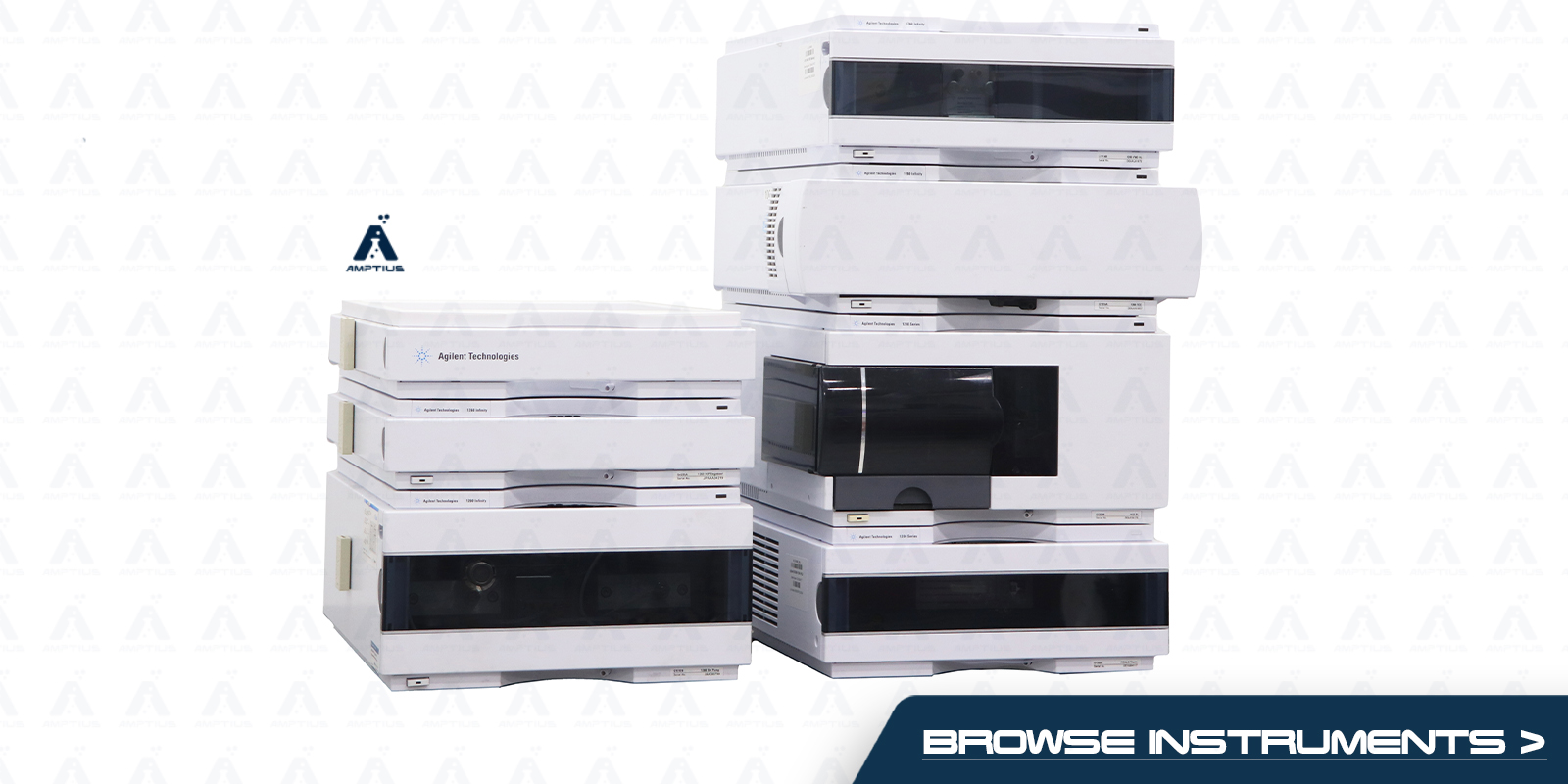
Agilent 7-Piece 1260 1200 Infinity HPLC System w/ VWD + BinPump for AOAC Method SMPR 2012.012
The Agilent 1260/1200 Infinity HPLC system with Variable Wavelength Detector (VWD) and binary pump is a reliable and validated solution for vitamin C analysis. Its excellent flow precision, temperature control, and VWD capabilities allow accurate detection of ascorbic acid at wavelengths around 254 nm. The binary pump supports fast and stable gradients, reducing runtime and enhancing throughput. This system achieves the required LOQ ≤ 1.0 mg/100 g and delivers reproducibility across a range of fortified nutritional matrices. Laboratories using this platform consistently meet AOAC performance thresholds for RSDr and RSDR.
OpenLab CDS software offers full method traceability, automated calibration verification, and secure audit trail functionality. These tools help ensure regulatory compliance and streamline reporting. The system supports multiple assay configurations, making it ideal for facilities testing infant formula, pediatric drinks, or adult medical nutrition. Its modular design also allows customization based on throughput or space constraints. With validated vitamin C methods, the Agilent 1260/1200 Infinity system provides full adherence to AOAC SMPR 2012.012.
Shimadzu Prominence-i LC-2030 Plus with UV Detector for AOAC Method SMPR 2012.012
The Shimadzu Prominence-i LC-2030 Plus is a fully integrated HPLC system designed for high-throughput vitamin C analysis using UV detection. Its advanced temperature-controlled autosampler and precise gradient delivery enable accurate separation and quantification of ascorbic acid in complex nutritional samples. With support for detection around 245–265 nm, the system meets LOQ, RSDr, and RSDR requirements defined by AOAC SMPR 2012.012. It provides excellent retention time stability and repeatability over long batch sequences.
LabSolutions software enhances data security and compliance by supporting calibration management, real-time monitoring, and audit-ready reporting. The LC-2030 Plus simplifies daily operation with touchscreen navigation and automated startup procedures. Its robust hardware and compact footprint make it suitable for routine quality control in infant and adult nutrition manufacturing. When validated with proper reference materials and calibration standards, this Shimadzu system ensures consistent and accurate vitamin C determination.
Waters Alliance HPLC with 2489 UV Detector for AOAC Method SMPR 2012.012
The Waters Alliance HPLC system with the 2489 UV detector is a trusted platform for vitamin C testing in fortified nutritional products. Known for its gradient reproducibility and detector sensitivity, this system ensures reliable quantitation of ascorbic acid at concentrations as low as 1.0 mg/100 g. The 2489 UV detector operates optimally in the 245–265 nm range, allowing accurate detection in line with AOAC SMPR guidelines. Its performance across powdered, liquid, and concentrate forms meets method recovery and repeatability standards.
Empower CDS software supports electronic data integrity, instrument qualification, and system suitability protocols. The system’s flexibility and proven method compatibility make it suitable for laboratories working under FDA and ISO compliance requirements. When paired with validated vitamin C assays and proper sample prep, the Waters Alliance system provides exceptional reliability and long-term performance. It is frequently used in regulated environments for routine monitoring of ascorbic acid in infant and pediatric formulas.
Thermo Scientific UltiMate 3000 HPLC with VWD for AOAC Method SMPR 2012.012
The Thermo Scientific UltiMate 3000 HPLC with Variable Wavelength Detector (VWD) delivers precision and efficiency for vitamin C analysis using UV detection. Its flow stability, gradient control, and consistent baseline performance allow accurate quantitation of ascorbic acid even in complex nutritional matrices. The VWD unit supports multi-wavelength monitoring near 254 nm, making it ideal for single-analyte assays. This system meets AOAC limits for LOQ, RSDr, and recovery when properly validated with calibration standards.
Chromeleon CDS software enhances audit readiness with real-time system suitability checks, calibration management, and secure electronic records. The UltiMate 3000 is scalable for both high-throughput labs and smaller operations, offering reliable performance across multiple workflows. Its long-term baseline stability and peak reproducibility make it an ideal choice for infant and pediatric nutrition analysis. When configured with a validated vitamin C method, the system fully complies with AOAC SMPR 2012.012.
JASCO LC-4000 Series HPLC with UV-Vis Detector for AOAC Method SMPR 2012.012
The JASCO LC-4000 Series HPLC with UV-Vis detector offers dependable vitamin C quantitation through its high optical resolution and stable wavelength output. The system provides robust performance for detecting ascorbic acid in formula matrices, especially when configured for UV detection around 254 nm. Its pump precision, column temperature control, and detector sensitivity meet the analytical demands of SMPR 2012.012. Labs benefit from excellent repeatability, minimal drift, and straightforward method transfer across units.
ChromNAV software supports automated system validation, method development, and real-time data processing for vitamin C testing. The LC-4000 Series is known for its ease of use and longevity, making it suitable for routine QA/QC workflows. With appropriate method validation and use of certified standards, this HPLC platform meets all required performance criteria. It is a cost-effective and reliable solution for regulated testing of ascorbic acid in infant and pediatric nutritional formulas.
Choosing the Right Instrument for AOAC Method SMPR 2012.012
- Best for high-sensitivity workflows: Waters Alliance with 2489 UV and Shimadzu LC-2030 Plus ensure consistent vitamin C detection and recovery.
- Flexible and scalable platforms: Agilent 1260/1200 Infinity and Thermo UltiMate 3000 support AOAC-compliant quantitation with audit-ready software tools.
- Cost-effective HPLC systems: JASCO LC-4000 Series delivers excellent performance and low ownership cost for vitamin C analysis.
AOAC SMPR 2012.012 requires precise and validated quantitation of vitamin C in complex nutritional matrices. All instruments listed above are compatible with UV detection protocols and support method compliance when paired with appropriate standards and validated workflows. We offer certified refurbished HPLC systems tailored for AOAC testing environments. Contact us today to find the right system for your laboratory.
