
AOAC Method SMPR 2014.004 Instrumentation Guide
Standard Method Performance Requirements (SMPR) for Minerals and Trace Elements in Infant Formula and Adult/Pediatric Nutritional Formula
AOAC SMPR 2014.004 outlines the performance criteria for accurately measuring macro and trace elements in infant and pediatric nutrition products. The method supports quantitation of calcium, magnesium, phosphorus, potassium, sodium, iron, zinc, copper, and manganese across multiple matrix types, including ready-to-feed liquids, reconstituted powders (25 g into 200 g water), and liquid concentrates diluted 1:1 by weight. Trace elements such as manganese and copper require limits of quantitation (LOQ) as low as ≤ 0.001 µg/100 g, while macro elements like calcium and phosphorus must be measured at concentrations up to 2000 µg/100 g. Method precision must demonstrate repeatability (%RSDr) ≤ 5% and reproducibility (%RSDR) ≤ 16% for trace elements and ≤ 10% for macro minerals. Recovery must range from 90% to 110% across the full analytical range for all target analytes to meet AOAC compliance.
Trace elements require limits of quantitation (LOQ) as low as 0.001 µg/100 g, especially for copper, manganese, and iron. Macro elements such as calcium and phosphorus demand robust systems capable of detecting concentrations exceeding 1000 µg/100 g. Instruments must be validated using certified reference materials such as NIST SRM 1849a. The platforms below are fully compatible with the SMPR’s stringent criteria when paired with validated methods and appropriate quality control procedures.
Please click here to learn more about AOAC Method SMPR 2014.004
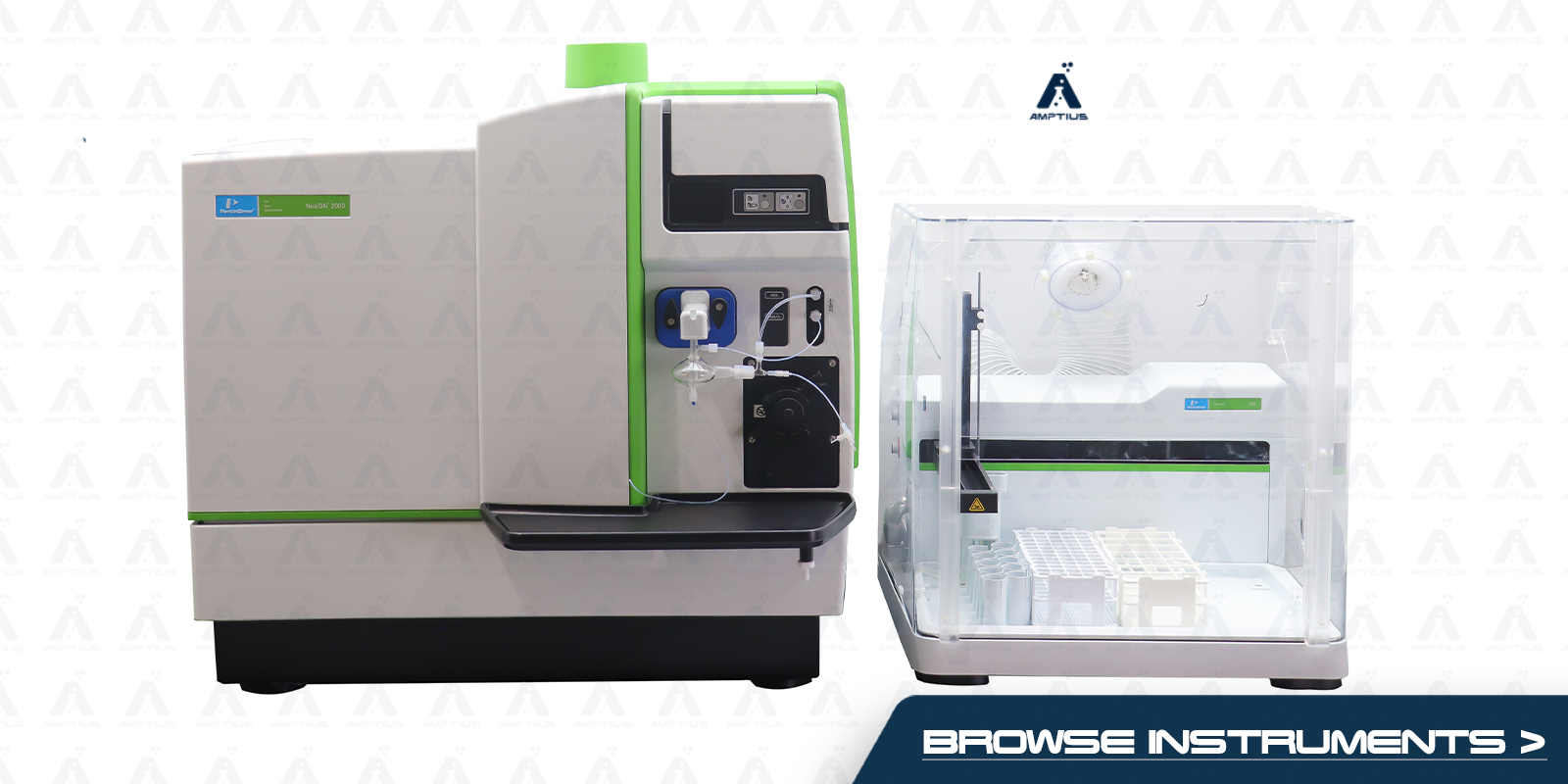
PerkinElmer NexION 2000B ICP-MS for AOAC Method SMPR 2014.004
The PerkinElmer NexION 2000B ICP-MS is engineered for high-sensitivity trace element detection. It integrates a chiller, autosampler, and UPS, ensuring stable performance across long analytical runs. Its quadrupole technology and reaction cell control interferences effectively, enabling it to achieve LOQs well within SMPR 2014.004 thresholds. This makes it ideal for detecting iron, zinc, copper, and manganese in complex nutritional matrices. The system’s modularity also supports method scalability across various lab sizes.
Simplicity and Syngistix software platforms enhance regulatory compliance by offering integrated calibration, traceability, and automated validation workflows. The instrument performs consistently when used with SRM 1849a for method accuracy checks. Its dual-mode plasma system ensures robustness in high-salt samples like powdered infant formula. The NexION 2000B provides laboratories with a powerful tool for meeting AOAC precision and recovery targets. It is an excellent solution for laboratories focused on compliance and throughput.
Agilent 7900 ICP-MS for AOAC Method SMPR 2014.004
The Agilent 7900 ICP-MS system offers superior sensitivity and matrix tolerance, ensuring precise results for trace element determination. It achieves LOQs as low as 0.001 µg/100 g, critical for manganese and copper analysis. Its high-throughput autosampler and robust vacuum system make it suitable for demanding routine workflows. Collision/reaction cell technology enhances selectivity in complex matrices like infant nutritional powders. These features help laboratories achieve full compliance with SMPR 2014.004.
The MassHunter software environment enables seamless method validation, traceability logging, and internal standard monitoring. Users can set system suitability alerts and automate quality control verification. The Agilent 7900 also supports simultaneous multi-element analysis, reducing analysis time. This system is widely adopted in food and pharmaceutical testing labs. It offers excellent reproducibility and is fully compatible with NIST SRM 1849a.
Analytik Jena PlasmaQuant MS Elite for AOAC Method SMPR 2014.004
The Analytik Jena PlasmaQuant MS Elite excels in trace element quantification due to its high-resolution optics and low background noise. This system easily meets LOQ criteria for copper, manganese, iron, and zinc, even in complex matrices. It supports both axial and radial plasma views for enhanced sensitivity and reproducibility. The system’s interference-reduction technology is especially effective in multi-element assays. These features make it highly compatible with SMPR 2014.004.
PlasmaQuant software provides full QA traceability, including auto-calibration checks and validation templates. Analysts can manage long batch sequences with minimal baseline drift. The system’s low argon consumption and high uptime improve cost efficiency without sacrificing performance. Its flexibility makes it ideal for laboratories with diverse testing needs. It pairs effectively with SRM 1849a and standard food safety protocols.
Thermo Scientific iCAP RQ ICP-MS for AOAC Method SMPR 2014.004
The iCAP RQ ICP-MS from Thermo Scientific delivers robust performance for trace mineral detection in fortified nutritional products. Its collision/reaction cell technology minimizes interferences, supporting accurate quantification of low-level analytes. The system consistently meets LOQs for copper, zinc, and manganese as defined by SMPR 2014.004. Its auto-tuning and plasma control ensure optimal stability in high-protein or high-salt matrices. These capabilities make it a reliable solution for AOAC-compliant workflows.
Qtegra software enables automated performance verification, audit trails, and recovery tracking. Labs can create customized templates to streamline method validation using SRM 1849a. The iCAP RQ supports both high-volume and targeted testing applications. Its low carryover and smart sample handling contribute to accurate results. The instrument is frequently used in regulatory and research environments focused on nutritional compliance.
Shimadzu ICPMS-2030 for AOAC Method SMPR 2014.004
The Shimadzu ICPMS-2030 is a compact system offering excellent trace element sensitivity and reproducibility. It features a collision cell and high-efficiency torch system for matrix tolerance. This system can achieve LOQs of ≤ 0.001 µg/100 g for manganese and copper, essential for SMPR 2014.004 compliance. The platform supports automated tuning and calibration, minimizing analyst intervention. It’s well suited for food and nutritional labs focused on trace mineral surveillance.
LabSolutions software includes built-in QA functions, calibration drift alerts, and method templates. The instrument’s intuitive interface reduces setup time and supports 21 CFR Part 11 compliance. It integrates easily with standard operating procedures for AOAC methods. The ICPMS-2030 is validated with SRM 1849a and offers strong cost efficiency. It is ideal for small to mid-sized labs needing high-quality trace analysis.
PerkinElmer Optima 8000 ICP-OES for AOAC Method SMPR 2014.004
The Optima 8000 ICP-OES is optimized for high-throughput analysis of macro minerals such as calcium, phosphorus, potassium, and sodium. Its dual-view plasma torch allows for flexibility in detecting low and high concentration elements. The system meets LOQs and reproducibility targets established by AOAC SMPR 2014.004. Its design supports long analytical runs with minimal drift or carryover. This makes it particularly effective for powder and liquid nutritional formulations.
WinLab32 software supports full method validation with features for internal standard tracking, calibration monitoring, and data reporting. The instrument offers ruggedness and minimal maintenance needs, supporting operational efficiency. It integrates easily with SRM 1849a for calibration verification. The Optima 8000 is well-regarded in regulatory testing environments. It provides consistent results that meet strict accuracy and recovery expectations.
PerkinElmer Optima 8300 ICP-OES for AOAC Method SMPR 2014.004
The PerkinElmer Optima 8300 offers a continuous-view echelle optical system, delivering high spectral resolution across the UV and visible spectrum. It is designed for macro mineral analysis in high-volume settings. The system meets LOQs and precision criteria for calcium, sodium, and magnesium under AOAC SMPR 2014.004. It provides a stable plasma source with minimal matrix interference. These capabilities ensure compliance in fortified formula testing.
With WinLab32 software, users can perform automated QA/QC tracking and system suitability verification. The instrument can handle large sample batches without sacrificing accuracy. It integrates seamlessly with SRM 1849a and AOAC workflows. The Optima 8300 provides reliable results across diverse sample types. It is favored in commercial and regulatory laboratories for its durability and performance.
Agilent 5800 ICP-OES for AOAC Method SMPR 2014.004
The Agilent 5800 ICP-OES features a fully simultaneous detection system and dual-view plasma interface. It provides fast, accurate analysis of calcium, phosphorus, and potassium in nutritional formulas. The instrument meets LOQs for macro minerals as specified in SMPR 2014.004. Its compact design and automation-ready interface enhance throughput and operational simplicity. These benefits support high-volume laboratories managing strict regulatory requirements.
The system’s ICP Expert software includes built-in compliance tools, recovery monitoring, and automated method validation. It supports SRM 1849a for calibration accuracy and recovery assessment. The 5800 is known for its long-term analytical stability and low maintenance costs. Its ability to handle matrix-rich samples without interference is a key advantage. It is ideal for laboratories requiring high performance and fast turnaround.
Thermo Scientific iCAP 7400/7600 ICP-OES for AOAC Method SMPR 2014.004
The iCAP 7400 and 7600 Series from Thermo Scientific offer enhanced analytical performance for macro minerals like magnesium, sodium, and phosphorus. These instruments support both radial and axial viewing, expanding their analytical range. Their optical resolution and robust plasma control meet the precision and LOQ standards set by AOAC SMPR 2014.004. The systems are well suited for labs testing fortified infant and pediatric nutritional products.
Qtegra software offers templates for method validation, calibration monitoring, and regulatory documentation. The platform is user-friendly and designed for 21 CFR Part 11 environments. When validated with SRM 1849a, these instruments demonstrate high reproducibility. Their efficiency and speed make them suitable for high-throughput operations. The iCAP series is trusted in commercial labs for dependable macro element analysis.
PerkinElmer Avio 550 Max ICP-OES for AOAC Method SMPR 2014.004
The Avio 550 Max from PerkinElmer provides rapid and accurate quantification of minerals such as calcium and phosphorus. Its vertical plasma torch and dual-view system enable flexibility in sample types and concentrations. The instrument achieves required LOQs and precision metrics across the full SMPR 2014.004 analytical range. Its compact design makes it ideal for labs with limited bench space. This system excels in both regulated and research applications.
Simplicity software integrates automated batch reporting, system suitability alerts, and calibration verification. The Avio 550 Max supports long analytical runs with minimal carryover and high uptime. It is validated with NIST SRM 1849a and performs well under diverse matrix conditions. Its low argon consumption and maintenance requirements improve operational efficiency. The system is a cost-effective option for compliance-focused laboratories.
Choosing the Right Instrument for AOAC Method SMPR 2014.004
- Top ICP-MS systems for trace elements: Agilent 7900, PerkinElmer NexION 2000B, Thermo iCAP RQ, Shimadzu ICPMS-2030, and PlasmaQuant MS Elite.
- Best ICP-OES platforms for macro minerals: Agilent 5800, PerkinElmer Avio 550 Max, Thermo iCAP 7400/7600, and Optima 8000/8300 series.
- Flexible options for regulated testing: All listed systems can meet SMPR 2014.004 requirements with validated methods and SRM 1849a.
AOAC SMPR 2014.004 requires precise, low-level detection of both trace and macro minerals in nutritional products. The instruments listed here are fully capable of meeting those criteria with proper configuration and quality control. We offer certified refurbished ICP-MS and ICP-OES systems tailored for AOAC-compliant workflows. Contact us today to find the right solution for your laboratory.