
AOAC Method SMPR 2015.001 Instrumentation Guide
Standard Method Performance Requirements (SMPR) for Sodium Fluoroacetate (“Compound 1080”) in Infant Formula
AOAC SMPR 2015.001 defines the performance criteria for detecting sodium fluoroacetate, commonly known as Compound 1080, in infant formula. This toxic compound, historically used as a rodenticide, poses significant health risks at trace levels. The method must reliably quantify fluoroacetate in concentrations ranging from 4 ppb to 100 ppm, with an LOD of ≤1 ppb and LOQ of ≤4 ppb. Recovery must fall within ±20%, with repeatability (RSDr) ≤14% and reproducibility (RSDR) ≤20%. These parameters ensure that analytical methods provide accurate, sensitive, and reproducible results suitable for regulatory enforcement.
To achieve compliance with these standards, laboratories often rely on gas chromatography-mass spectrometry (GC-MS) following derivatization or liquid chromatography-tandem mass spectrometry (LC-MS/MS) with negative ESI. Instruments must provide robust quantification and be validated in both powdered and liquid infant formula matrices. Reference materials and system suitability tests play a critical role in confirming performance. The systems below have demonstrated reliable performance when configured with validated AOAC-compliant methods. Each platform listed meets or exceeds the method’s detection, precision, and quantitation requirements.
Please click here to learn more about AOAC Method SMPR 2015.001
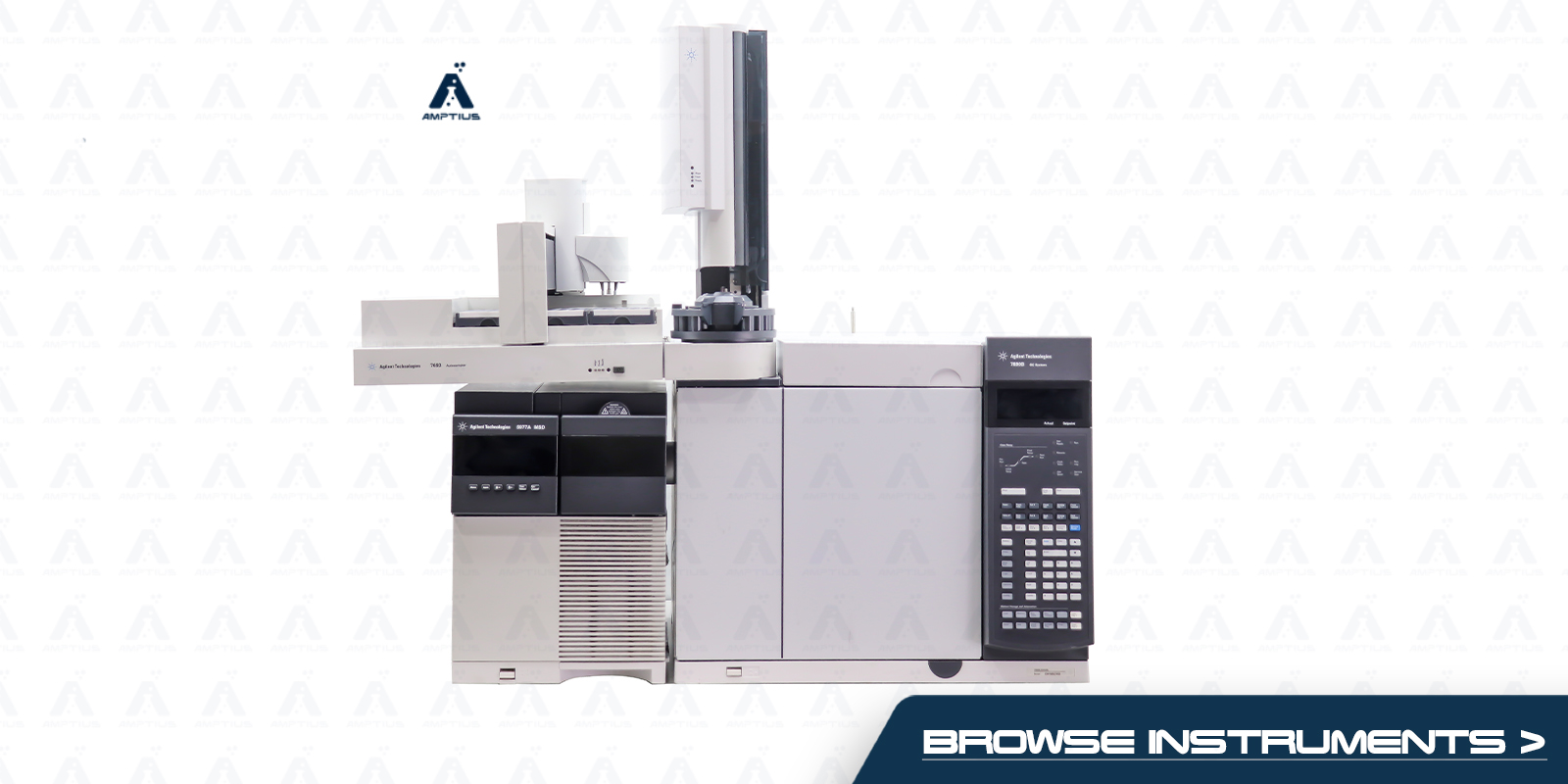
Agilent 7890 GC with 5977A Inert MS and 7693 Autosampler for AOAC Method SMPR 2015.001
The Agilent 7890 GC coupled with the 5977A Inert Mass Spectrometer is a proven solution for volatile or derivatized fluorinated compounds. The system’s inert flow path ensures excellent peak fidelity and prevents analyte loss during injection, which is especially important for trace-level compounds like fluoroacetate. Using selected ion monitoring (SIM) mode, the system achieves sub-ppb detection, making it suitable for compliance with SMPR 2015.001. It supports derivatization techniques such as PFBBr to enhance fluoroacetate volatility and detectability. With consistent retention times and sharp peak resolution, it ensures repeatability and accurate quantification.
The integrated 7693 Autosampler provides automated injection precision across large sample sets, which enhances reproducibility. MassHunter software allows analysts to easily manage system suitability checks, ion ratio verification, and audit-ready documentation. Calibration data and batch reports are traceable and support regulatory validation. This configuration is widely accepted in compliance-driven toxicology and food safety labs. It meets all AOAC performance requirements when paired with an appropriate validated method.
Thermo Scientific TRACE 1310 GC with ISQ 7610 MS for AOAC Method SMPR 2015.001
The Thermo Scientific TRACE 1310 GC paired with the ISQ 7610 MS provides reliable detection of derivatized sodium fluoroacetate. This system supports high sensitivity in SIM mode and is well-suited for volatile analytes, particularly after chemical derivatization. With ExtractaBrite ion source technology, the ISQ 7610 offers consistent ionization efficiency across long sample sequences. This stability is key when testing large batches of nutritional samples under regulated conditions. The platform achieves the required 1 ppb detection threshold with strong precision.
Chromeleon CDS software enables seamless method development, calibration management, and regulatory reporting. Users benefit from simplified system control and validation processes that align with AOAC requirements. The system allows automated data flagging, method traceability, and calibration verification. This platform has been implemented successfully in public health and food surveillance programs. It offers the performance and flexibility needed for high-volume infant formula testing.
Shimadzu GCMS-QP2020 NX for AOAC Method SMPR 2015.001
The Shimadzu GCMS-QP2020 NX is a high-sensitivity system suitable for the quantification of fluoroacetate derivatives. It features the ASSP (Advanced Scanning Speed Protocol) for fast SIM acquisition without sacrificing resolution or signal quality. Analysts using this platform can detect fluoroacetate at or below 1 ppb, meeting the strict LOD and LOQ requirements of SMPR 2015.001. When coupled with validated derivatization procedures, the system performs exceptionally well in complex food matrices. Its baseline stability and precise peak integration support accurate and reproducible results.
LabSolutions software supports automated system suitability testing, calibration monitoring, and audit-ready report generation. The intuitive interface and robust performance make it a popular choice for laboratories focused on food toxicant analysis. This system integrates well with QA workflows and can be scaled for large batch analysis. Laboratories value its low maintenance needs and consistent analytical output. It meets AOAC standards when deployed with validated fluorinated compound methods.
PerkinElmer Clarus 690 GC with SQ 8 C MS for AOAC Method SMPR 2015.001
The PerkinElmer Clarus 690 GC system with the SQ 8 C Mass Spectrometer offers rugged and precise quantification of sodium fluoroacetate following derivatization. It features programmable electronic pressure control, a high-stability oven, and a durable quadrupole MS. These features allow the system to deliver repeatable performance for trace-level volatile analyses. Analysts using this system can confidently achieve the required LOQ and recovery rates when using validated methods. Its ability to handle long sequences with minimal drift improves throughput and consistency.
TurboMass software enables users to perform multi-point calibration, QA tracking, and method compliance checks with ease. The platform supports automated SIM workflows for enhanced detection of derivatized fluoroacetate. Its reliability makes it well-suited for laboratories conducting regulatory infant formula testing. Many labs favor this system for its robust operation and minimal sample carryover. It satisfies all core performance criteria for SMPR 2015.001.
Scion Instruments 436-GC with Single Quad MS for AOAC Method SMPR 2015.001
The Scion Instruments 436-GC with Single Quadrupole MS provides dependable quantification of sodium fluoroacetate when analyzed as a volatile derivative. The system offers strong signal stability and fast heating capability, improving peak separation and analysis time. It supports SIM mode for enhanced selectivity and low background noise, which helps achieve the required LOD of 1 ppb. With appropriate derivatization and calibration, it consistently delivers results within the accepted precision and recovery range. Its detector design minimizes ion suppression and supports extended operation.
Scion’s ChromSpace software allows full traceability of methods, calibration performance, and QA data. System validation tools support AOAC compliance with minimal analyst intervention. This GC-MS system is commonly used in food contaminant and toxicant testing due to its strong reproducibility and low cost of ownership. Its modular design simplifies maintenance and customization for specific workflows. It fulfills AOAC SMPR 2015.001 requirements when configured for fluorinated analyte detection.
Waters Xevo TQ-S Micro LC-MS/MS with ACQUITY I-Class for AOAC Method SMPR 2015.001
The Waters Xevo TQ-S Micro Triple Quadrupole LC-MS/MS, combined with the ACQUITY I-Class UPLC, is ideal for detecting fluoroacetate without derivatization. Its StepWave ion optics and advanced ESI design allow sub-ppb detection in negative ion mode. This system offers rapid polarity switching and robust chromatographic control, essential for complex infant formula matrices. It consistently meets LOQ and recovery requirements with validated methods. Analysts benefit from strong reproducibility and high throughput capacity.
Empower software provides a complete solution for validation, calibration curve management, and QA reporting. Laboratories appreciate its batch processing and audit-trail capabilities that simplify compliance documentation. The system delivers stable retention and excellent ion ratios, supporting regulatory reporting. It is widely adopted in food and toxicology labs for contaminant surveillance. This LC-MS/MS system meets all performance thresholds set by SMPR 2015.001.
PerkinElmer QSight 420 LC-MS/MS with UHPLC Front End for AOAC Method SMPR 2015.001
The PerkinElmer QSight 420 LC-MS/MS system is designed for high-sensitivity detection of ionic analytes like sodium fluoroacetate. Its dual-source configuration and high-resolution ion optics deliver strong signal intensity at sub-ppb concentrations. This system operates in negative ion mode and provides consistent performance across long sample sequences. Its UHPLC front end improves peak resolution and reduces analysis time. When paired with appropriate internal standards, it satisfies LOQ and recovery criteria for SMPR 2015.001.
Simplicity 3Q software automates calibration, method validation, and batch reporting. Users can easily monitor system suitability and recovery through built-in QA workflows. The QSight 420 is popular in regulatory labs for its ruggedness and throughput. It handles complex nutritional matrices well and supports continuous operation with minimal downtime. With proper method development, it meets all critical AOAC performance parameters.
Agilent Ultivo Triple Quad LC-MS/MS with 1260 Infinity II for AOAC Method SMPR 2015.001
The Agilent Ultivo Triple Quadrupole LC-MS/MS with the 1260 Infinity II front end provides compact, high-performance analysis for trace-level fluoroacetate detection. Jet Stream ESI technology enhances ionization of small anions like fluoroacetate, even in matrix-rich samples. This system achieves sub-ppb detection and maintains tight precision across validation sets. Its small footprint is ideal for labs with space constraints, yet it performs on par with larger triple quadrupole systems. The system supports automated batch validation and real-time QC tracking.
MassHunter software enhances regulatory readiness through audit trails, recovery flagging, and calibration stability monitoring. The system handles both fast and gradient-based chromatographic workflows. Its consistent ion response and reproducibility align with the precision requirements of SMPR 2015.001. The Ultivo platform is commonly selected for high-throughput compliance testing. It offers efficient, AOAC-compliant results in a space-saving form factor.
SCIEX Triple Quad™ 6500+ LC-MS/MS with ExionLC AD for AOAC Method SMPR 2015.001
The SCIEX 6500+ Triple Quad LC-MS/MS system, paired with the ExionLC AD, is one of the most sensitive platforms available for low-level toxicant detection. Its Turbo V ion source and high-speed MRM capability allow for detection of fluoroacetate well below the 1 ppb threshold. Analysts benefit from the system’s Scheduled MRM Pro feature, which increases dwell time and improves signal-to-noise for target ions. The instrument delivers excellent reproducibility, even under demanding batch conditions. Its wide dynamic range ensures accurate quantitation from trace to high concentrations.
SCIEX OS software provides built-in validation tools, system suitability alerts, and data integrity monitoring. The platform excels in food and toxicology laboratories requiring reference-quality performance. It supports automated calibration tracking and audit-ready batch reviews. This system remains a top-tier choice for AOAC-compliant infant formula testing. It fulfills all criteria set forth by SMPR 2015.001 with ease.
Shimadzu LCMS-8060NX with Nexera X3 UHPLC for AOAC Method SMPR 2015.001
The Shimadzu LCMS-8060NX Triple Quad LC-MS/MS system with Nexera X3 UHPLC delivers precise and rapid fluoroacetate detection without the need for derivatization. Its enhanced desolvation and ion transfer technologies boost sensitivity in negative ion mode. The system supports high-throughput workflows while maintaining sub-ppb LOQ and low RSD values. It handles complex infant formula matrices effectively, minimizing background interference and maximizing quantitation accuracy. This system consistently meets AOAC recovery and repeatability requirements.
LabSolutions Insight software provides advanced QA monitoring, calibration management, and system validation support. The 8060NX offers strong peak shape consistency and repeatability, even across extended sample runs. Its interface allows analysts to configure, monitor, and validate methods quickly. This platform is preferred for regulatory toxicology due to its speed and accuracy. It is fully aligned with AOAC SMPR 2015.001 performance goals.
Choosing the Right Instrument for AOAC Method SMPR 2015.001
- GC-MS for derivatized workflows: Agilent 7890/5977A, Thermo TRACE 1310 ISQ 7610, and Shimadzu QP2020 NX offer excellent SIM sensitivity
- LC-MS/MS for direct detection: Waters Xevo TQ-S Micro, SCIEX 6500+, and Shimadzu LCMS-8060NX enable ultra-trace quantitation without derivatization
- Rugged, scalable systems: PerkinElmer QSight 420 and Agilent Ultivo provide regulatory-ready performance in compact or high-throughput formats
AOAC SMPR 2015.001 demands reliable, sub-ppb detection of sodium fluoroacetate with strong recovery, precision, and reproducibility. The systems listed above meet all criteria when used with validated chromatographic workflows. We provide certified refurbished LC-MS/MS and GC-MS systems tailored for toxicant surveillance in infant nutrition. Contact us today to find the best solution for your AOAC-compliant Compound 1080 analysis.
