
AOAC Method SMPR 2015.014 Instrumentation Guide
Standard Method Performance Requirements (SMPR) for Determination of Catechins, Methyl Xanthines, Theaflavins, and Theanine in Tea Dietary Ingredients and Supplements
AOAC SMPR 2015.014 establishes the minimum performance criteria for quantifying key bioactive compounds in tea-based dietary supplements and ingredients. These include catechins, methyl xanthines, theaflavins, and theanine in matrices such as tablets, capsules, powders, liquids, and softgels. The method must achieve a limit of quantitation (LOQ) of ≤ 5 ppm, with recoveries ranging from 80–110% for low concentrations and 95–105% for high levels. Repeatability (RSDr) must be ≤ 7% and reproducibility (RSDR) ≤ 10%, depending on the concentration range. Analytical systems must also provide sufficient selectivity to distinguish between similar analytes such as epicatechin and epigallocatechin gallate.
To meet these requirements, laboratories must employ high-resolution HPLC or UPLC systems equipped with UV or diode array detectors. These platforms must support stable gradient delivery, precise wavelength detection, and strong chromatographic reproducibility. When paired with appropriate reference materials such as NIST SRMs and validated methods, these instruments deliver consistent, AOAC-compliant results across tea supplement formats. The systems listed below represent fully compatible solutions that enable precise identification and quantification of tea-based polyphenols and amino acids. Each has been proven effective in regulatory, quality control, and R&D testing environments.
Please click here to learn more about AOAC Method SMPR 2015.014
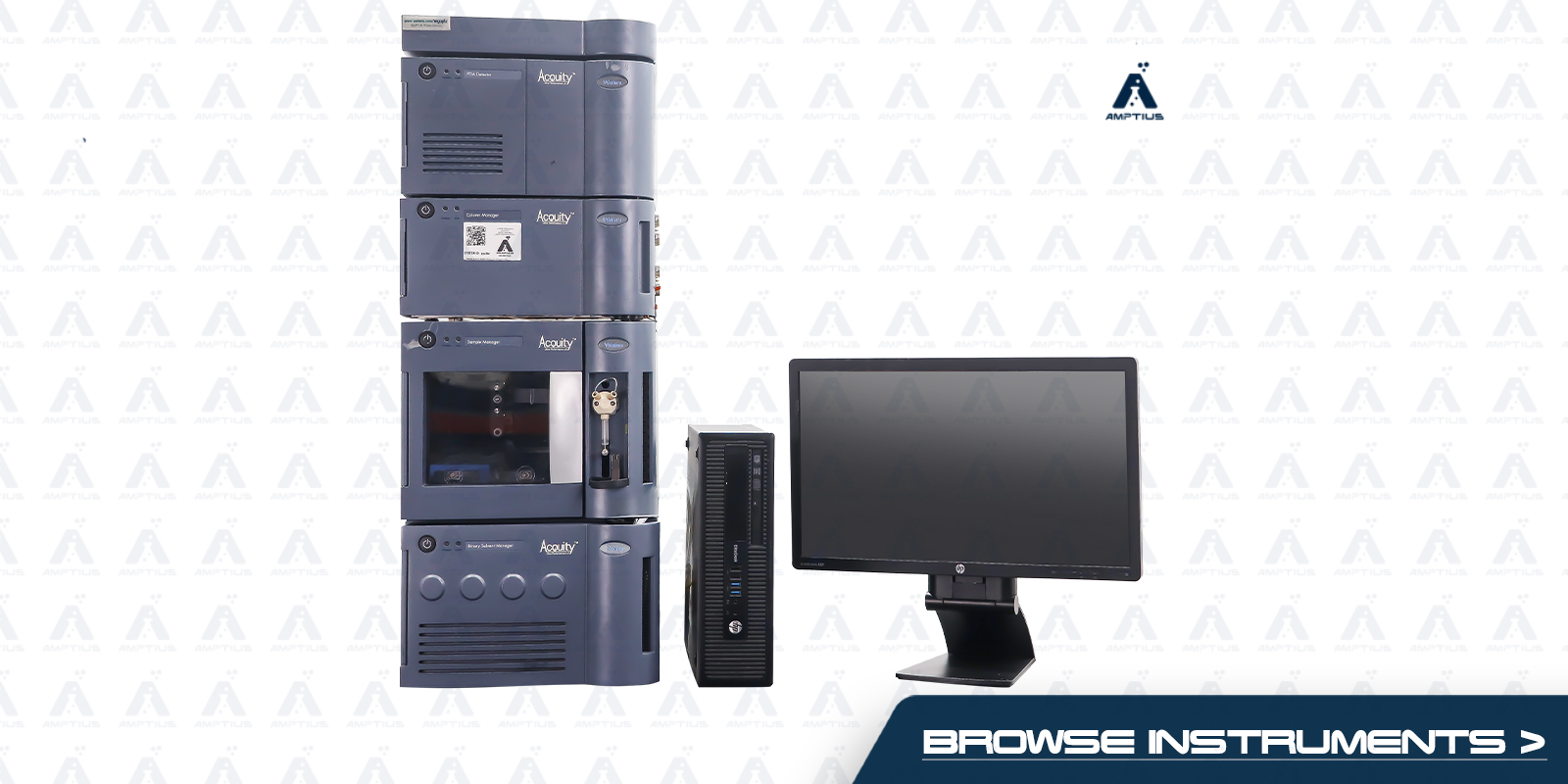
Waters Acquity UPLC System w/ Empower 3 PDA, SM, QSM, CM for AOAC Method SMPR 2015.014
The Waters Acquity UPLC system with Empower 3 software and PDA detector delivers superior chromatographic resolution for separating tea catechins, methyl xanthines, and theanine. Its high-pressure capabilities allow analysts to use shorter columns while maintaining sharp peaks and faster run times. Empower 3 software enhances compliance by supporting full method validation, system suitability tracking, and audit-ready reports. The PDA detector provides excellent sensitivity and spectral confirmation, ensuring confident analyte identification across complex matrices. This configuration easily meets AOAC’s LOQ, recovery, and repeatability requirements across the 10–100,000 ppm range.
The system’s QSM and CM modules offer ultra-stable solvent delivery and precise column heating, improving retention time reproducibility and reducing baseline drift. It is frequently used in high-throughput environments where resolution and efficiency are critical. Analysts can resolve closely eluting catechins and theaflavins with minimal carryover and high injection precision. The Acquity UPLC system is a preferred platform for routine tea supplement testing and new method development. Its precision and versatility make it a top-tier solution for AOAC-compliant workflows.
Agilent 1260 Infinity II HPLC with DAD Detector for AOAC Method SMPR 2015.014
The Agilent 1260 Infinity II HPLC system with a diode array detector (DAD) provides accurate quantitation and clear separation of catechins, methyl xanthines, and theaflavins. Its high optical resolution enables multi-wavelength monitoring and compound confirmation, which is especially important when analyzing overlapping tea polyphenols. The system consistently achieves LOQs below 5 ppm and meets all AOAC recovery and reproducibility requirements. Analysts benefit from excellent baseline stability, strong retention time consistency, and robust gradient control. The 1260 Infinity II is often used in dietary supplement labs due to its flexible configuration and high sensitivity.
OpenLab CDS software enhances traceability with features for audit trails, system checks, and performance documentation. The DAD module supports simultaneous detection of compounds at different wavelengths, improving quantitation accuracy in complex tea matrices. Its rugged hardware design ensures long-term operational stability in quality control environments. The platform adapts well to validated methods using SRMs and can process a wide variety of tea supplement formulations. Agilent’s system is a reliable choice for labs seeking proven AOAC method compliance.
Shimadzu LC-2030 Plus HPLC with UV or PDA for AOAC Method SMPR 2015.014
The Shimadzu LC-2030 Plus HPLC system integrates autosampling, UV or PDA detection, and advanced temperature control in a compact and efficient unit. This platform supports reliable separation of tea analytes, including closely eluting catechins and theanine, with LOQs below 5 ppm. Its consistent performance across various concentration ranges allows labs to meet AOAC-defined recovery and precision targets. The PDA version offers enhanced selectivity, making it ideal for handling overlapping peaks in complex botanical samples. Its stability and ease of use make it well-suited for routine and validation testing of dietary supplements.
LabSolutions software streamlines method validation, data integrity, and batch review processes in regulated environments. Analysts appreciate the system’s user-friendly interface and automated maintenance notifications. The LC-2030 Plus supports high-throughput operation while maintaining analytical precision and linearity across diverse sample types. Whether testing capsules, liquids, or teas, the system consistently delivers AOAC-compliant results. It is a popular choice for laboratories focused on quality assurance and botanical ingredient verification.
Thermo Scientific UltiMate 3000 HPLC with VWD or DAD for AOAC Method SMPR 2015.014
The Thermo Scientific UltiMate 3000 HPLC platform, available with a variable wavelength detector (VWD) or diode array detector (DAD), provides robust support for polyphenol and alkaloid analysis in tea supplements. With precise solvent delivery and temperature control, this system ensures retention time consistency and baseline stability. Analysts can achieve LOQs of ≤ 5 ppm with high repeatability across a wide range of matrices. The DAD configuration allows simultaneous monitoring of multiple wavelengths, enabling clear differentiation of catechins and methyl xanthines. It meets all method criteria for AOAC SMPR 2015.014 with validated workflows.
Chromeleon CDS software supports compliant data handling, calibration verification, and method traceability. The UltiMate 3000 offers flexible configuration options to support both routine testing and advanced method development. Its compatibility with tea SRMs and its rugged design make it a staple in supplement and botanical laboratories. Whether analyzing dry extracts or beverage forms, this system delivers consistent and reliable results. Thermo’s platform combines high performance and operational flexibility in a single solution.
PerkinElmer Series 200 HPLC with UV Detector for AOAC Method SMPR 2015.014
The PerkinElmer Series 200 HPLC system with UV detection offers a straightforward and reliable solution for analyzing tea bioactives in supplements. With precise flow control and stable wavelength detection, the system achieves LOQs of ≤ 5 ppm and meets the required recovery and precision criteria. It supports isocratic and gradient methods and performs reliably in botanical and nutraceutical applications. Its UV detector is adequate for routine quality control of catechins, caffeine, and theanine when validated methods are in place. The Series 200 remains a practical choice for cost-sensitive labs conducting AOAC-aligned testing.
TotalChrom software facilitates method compliance through integrated calibration, report generation, and performance tracking. While not as advanced as DAD-based systems, it provides sufficient sensitivity for routine quantitation in green and black tea supplements. Analysts appreciate its simplicity, robustness, and ease of maintenance. When paired with validated tea methods and SRM calibration, it supports dependable quantitation across diverse matrices. This system is ideal for laboratories seeking durable instrumentation at a modest investment level.
JASCO LC-4000 Series HPLC with UV/Vis or DAD Detector for AOAC Method SMPR 2015.014
The JASCO LC-4000 Series HPLC system with UV/Vis or DAD detection is a versatile platform for the determination of catechins, methyl xanthines, and theanine in tea-derived supplements. Its high-resolution optical detectors and stable flow control make it ideal for complex polyphenol separations. Analysts can monitor and confirm multiple analytes at different wavelengths, which enhances confidence in results. The system reliably achieves LOQs under 5 ppm and supports recovery and RSDr levels in line with AOAC SMPR 2015.014. Its modular design and scalable performance make it adaptable to both QC and R&D environments.
ChromNAV CDS software allows full method validation, audit trail logging, and calibration tracking within a streamlined interface. JASCO’s system supports long-term consistency with minimal drift and low maintenance requirements. The LC-4000 Series handles high-throughput workflows and matrix-rich supplements with strong reproducibility. It is trusted in botanical testing labs for its reliability and spectral clarity. With proper method setup, this system enables laboratories to achieve complete AOAC compliance for tea-based ingredients.
Choosing the Right HPLC System for AOAC Method SMPR 2015.014
- Top-tier performance: Waters Acquity UPLC and Agilent 1260 Infinity II provide high-resolution separation and regulatory reliability.
- Balanced throughput and precision: Shimadzu LC-2030 Plus and Thermo UltiMate 3000 offer speed and analytical accuracy in one platform.
- Cost-effective compliance: PerkinElmer Series 200 and JASCO LC-4000 Series deliver robust performance for routine tea supplement testing.
AOAC SMPR 2015.014 requires precise, validated methods for quantifying polyphenols and amino acids in tea-based supplements. The HPLC systems listed above support full compliance across a wide range of analytes and concentrations. We offer certified refurbished systems configured for AOAC-approved workflows. Contact us today to find the right instrument for your lab.
