
AOAC Method SMPR 2016.010 Instrumentation Guide
Standard Method Performance Requirements (SMPRs) for DNA-Based Methods of Detecting Burkholderia pseudomallei in Field-Deployable, Department of Defense Aerosol Collection Devices
AOAC SMPR 2016.010 establishes critical performance requirements for the DNA-based detection of Burkholderia pseudomallei in Department of Defense (DoD) aerosol collection devices. This method mandates an acceptable minimum detection level of 2,000 cells/mL with a required probability of detection (POD) of 0.95 or higher. It also enforces a maximum false-positive and false-negative rate of 5%, ensuring high confidence in operational settings. Inclusivity studies must confirm detection of all variant strains at 2× AMDL, while exclusivity must be verified at 10× AMDL. Results must be generated within a maximum of four hours to be applicable for rapid response scenarios. Instruments alone do not ensure compliance—each system must be paired with a validated assay capable of meeting all SMPR benchmarks, including AMDL, POD, and specificity.
The instruments listed below are capable of supporting the method requirements outlined in SMPR 2016.010 when properly validated. These platforms span real-time PCR, digital PCR, isothermal amplification, and sequencing technologies, providing laboratories and field teams with flexible implementation options. Their performance characteristics support both rapid field screening and high-throughput laboratory confirmation. When paired with validated assays, these systems allow for precise detection and verification. Each platform contributes to a robust bio-surveillance strategy aligned with DoD readiness needs.
Please click here to learn more about AOAC Method SMPR 2016.010
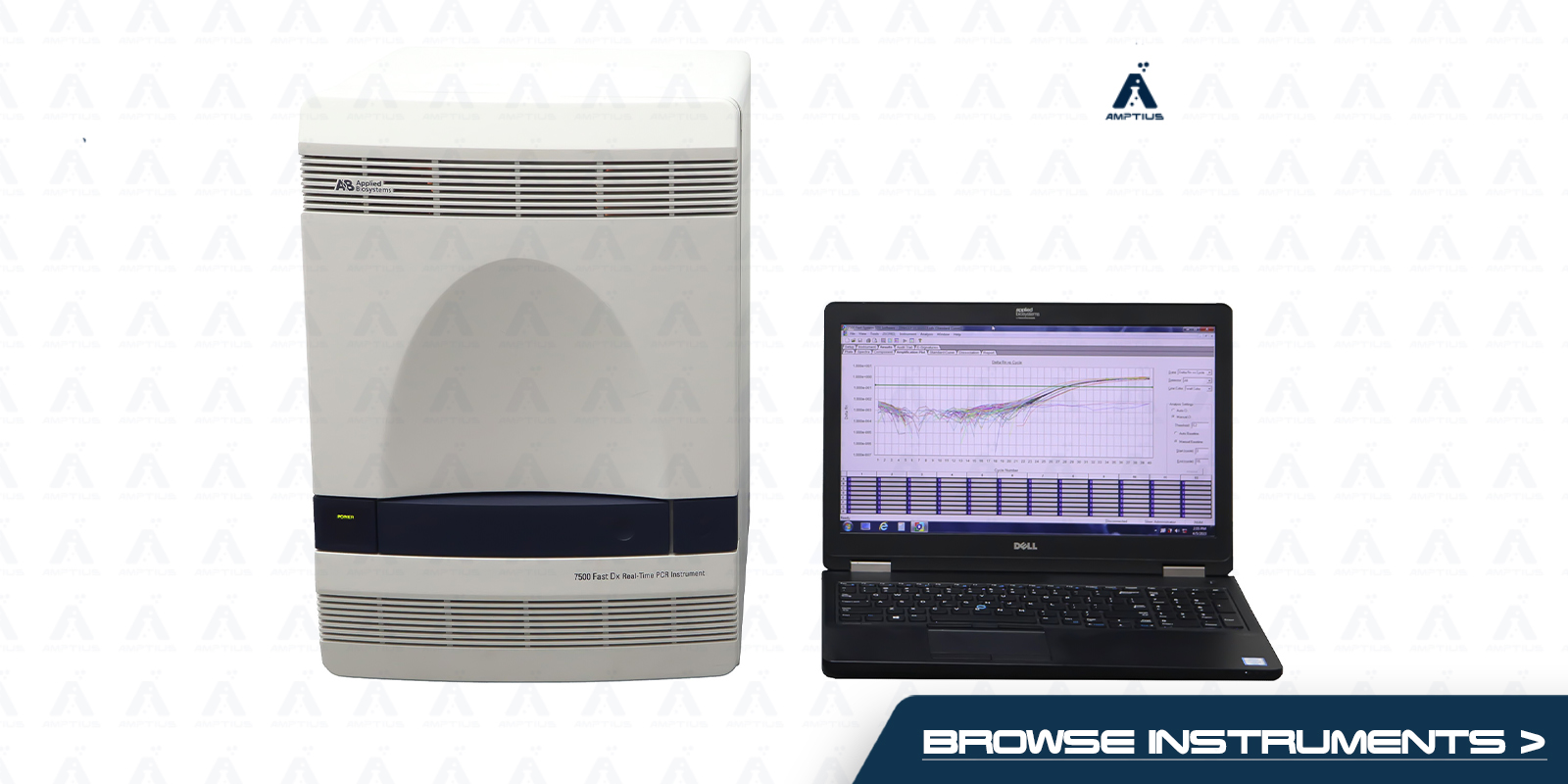
Applied Biosystems ABI 7500 Fast DX Real-Time PCR System for AOAC Method SMPR 2016.010
The ABI 7500 Fast DX Real-Time PCR System from Applied Biosystems is a widely accepted platform for regulated bioassay applications. It supports high-sensitivity detection and rapid thermal cycling, both of which are essential for field-deployable applications requiring results in under four hours. When used with validated primers and probes for Burkholderia pseudomallei, the system consistently achieves the required POD and limit of detection. Its robust hardware and intuitive software make it easy for trained operators to produce reliable and reproducible data. This system has been broadly deployed in government and military testing laboratories for its consistent performance.
The system’s compatibility with multiplex assays allows simultaneous detection of the target organism along with internal controls and other relevant pathogens. Its 96-well capacity provides sufficient throughput for screening multiple aerosol samples in a single run. The ABI 7500 Fast DX has been deployed in both public health and DoD field labs due to its reliability and ruggedness. With proper assay optimization, it offers confidence in inclusivity, exclusivity, and matrix tolerance tests. Overall, the platform is dependable for SMPR-aligned biothreat detection.
Applied Biosystems ABI ViiA 7 Real-Time PCR System for AOAC Method SMPR 2016.010
The Applied Biosystems ViiA 7 Real-Time PCR System is designed for laboratories that require flexibility, scalability, and high assay precision. This system supports both 96- and 384-well formats, enabling high-throughput detection of Burkholderia pseudomallei in complex matrices. With its advanced optical design and thermal block precision, the ViiA 7 ensures repeatable, low-variability amplification cycles. These features are critical for achieving consistent POD values and minimizing false result rates under SMPR 2016.010. Laboratories using the ViiA 7 benefit from robust data quality and streamlined assay development.
Inclusion of multiple optical channels supports multiplexing, allowing operators to include internal inhibition and positive controls without sacrificing speed. The software includes built-in tools for quality control tracking, result flagging, and audit-ready reporting. Its ability to integrate into laboratory information management systems (LIMS) enhances data traceability and compliance. When deployed in a regulated testing environment, the ViiA 7 meets or exceeds the validation benchmarks of SMPR 2016.010. It is a trusted instrument for defense and public health biosurveillance.
QuantStudio 12k Flex Real-Time PCR with OpenArray for AOAC Method SMPR 2016.010
The QuantStudio 12k Flex Real-Time PCR System is a high-throughput platform well-suited for testing large volumes of samples across different conditions. Its compatibility with OpenArray technology allows the simultaneous processing of thousands of individual PCR reactions. This is especially valuable for laboratories conducting method validation, where large-scale inclusivity and exclusivity testing are required. The platform maintains high precision across all reactions, minimizing variability and drift. Its application in high-throughput testing environments supports rapid scale-up during biothreat response.
The AccuFill automation system ensures uniform sample delivery across all wells, further improving reproducibility and reducing hands-on time. Its comprehensive software suite enables easy assay setup, result interpretation, and long-term storage of performance metrics. QuantStudio 12k Flex provides rapid cycling times that keep workflows efficient without compromising assay sensitivity. When paired with properly validated assays, this system fulfills every major requirement in SMPR 2016.010. It is best suited for laboratories that serve as regional or national testing centers.
BioFire FilmArray Torch PCR System for AOAC Method SMPR 2016.010
The BioFire FilmArray Torch PCR System is purpose-built for field-forward applications where speed and simplicity are paramount. This system uses a self-contained pouch format that integrates sample prep, amplification, and detection in a fully automated process. With results available in under an hour, it meets the SMPR time-to-result criteria and minimizes the need for technical expertise in the field. Its modular format allows for expansion depending on sample throughput needs, which is especially useful in mobile operations. FilmArray’s ease of use and speed make it ideal for rapid diagnostics during biological threat assessments.
The closed-cartridge design helps reduce contamination risk, making it ideal for deployed settings and mobile lab environments. BioFire’s menu of pathogen panels includes assays with built-in internal controls, satisfying system suitability and inhibition check requirements. The platform has been tested extensively in military and biodefense environments for robustness and reliability. It’s an optimal choice for rapid response teams that require dependable diagnostics with minimal logistical overhead. With proper validation, FilmArray Torch can contribute to compliance with SMPR 2016.010 in field or command-level response units.
Life Technologies Ion Torrent GeneStudio S5 with Chef System for AOAC Method SMPR 2016.010
The Ion Torrent GeneStudio S5, paired with the Ion Chef System, enables sequencing-based confirmation of Burkholderia pseudomallei identification at the genetic level. While not optimized for frontline or rapid field deployment, this system plays a vital confirmatory role in laboratory-based workflows. It is best used to validate results obtained from field-deployable PCR systems and to confirm inclusivity or exclusivity findings during assay development. The Ion Chef automates template preparation and chip loading, which improves standardization and reduces error. These attributes allow the S5 to function as a secondary, high-resolution tool supporting the specificity components of SMPR 2016.010.
Its relatively fast turnaround—compared to traditional sequencing platforms—allows results within hours for targeted amplicon analysis. The system supports sequencing of specific genetic markers associated with Burkholderia pseudomallei and can confirm strain identity where needed. However, the S5 is not intended for initial biothreat screening or time-sensitive detection due to its complexity and sample preparation time. Its role should be limited to method validation, strain confirmation, and exclusivity checks in well-equipped laboratories. To ensure SMPR compliance, the sequencing workflow must be validated in-house with inclusivity/exclusivity panels and appropriate AMDL studies.
Bio-Rad QX200 Droplet Digital PCR System for AOAC Method SMPR 2016.010
The Bio-Rad QX200 Droplet Digital PCR (ddPCR) System provides absolute quantification of DNA molecules without requiring external calibration curves. Its partitioning technology divides each sample into 20,000 nanoliter droplets, allowing for highly sensitive detection of low-abundance targets like Burkholderia pseudomallei. This level of precision is especially useful during method development and LOD validation processes. Although ddPCR is more commonly used in a laboratory setting, it adds value as a complement to real-time PCR systems. It offers unmatched sensitivity and reproducibility for confirming inclusivity and matrix interference studies.
The QX200’s ability to detect and quantify target DNA in the presence of complex matrices makes it suitable for challenging aerosol samples. Its two-channel detection capability supports multiplexing, and its analysis software allows for threshold setting, drift compensation, and automatic result interpretation. It is frequently used in public health and biodefense settings for validation and confirmatory testing. For labs looking to bolster SMPR compliance beyond PCR alone, the QX200 is a reliable option for LOD, LOQ, and recovery confirmation. This system strengthens assay confidence and regulatory defensibility.
Genie III or Genie HT Isothermal Systems for AOAC Method SMPR 2016.010
The Genie III and Genie HT systems are compact, field-portable devices for loop-mediated isothermal amplification (LAMP) of nucleic acids. Unlike traditional PCR platforms, these instruments do not require thermal cycling, enabling rapid detection of Burkholderia pseudomallei in under 30 minutes. Their battery-operated design and small footprint make them highly suitable for field use, especially in resource-limited or austere environments. The systems support real-time fluorescence detection and can achieve performance thresholds aligned with SMPR 2016.010. Their portability, simplicity, and reliability make them well-suited for military or emergency response teams.
These devices are commonly used by first responders and military teams to quickly assess biological threats in the field. They support internal control detection and inhibition monitoring to ensure valid results under varied environmental conditions. The intuitive interface and low training requirement make the Genie series ideal for point-of-need deployment. While not yet as broadly adopted as qPCR, they offer a validated alternative that aligns well with the speed and specificity goals of SMPR 2016.010. In situations where time and portability are critical, Genie systems can play a key diagnostic role.
Tetracore T-COR 8 Real-Time PCR/Isothermal Device for AOAC Method SMPR 2016.010
The Tetracore T-COR 8 is a rugged, multi-channel system that supports both real-time PCR and isothermal amplification in field environments. It provides simultaneous detection across eight reaction wells and supports rapid testing using either traditional or LAMP-based assays. Designed for defense and emergency applications, the T-COR 8 delivers results in as little as 30 to 60 minutes. Its sealed cartridges and intuitive software reduce the risk of contamination and user error in mobile testing settings. The instrument’s performance aligns well with the key AOAC criteria including AMDL, POD, and rapid time-to-result.
The system meets key AOAC requirements including the 2,000 cells/mL detection threshold and inclusion of system controls. It has been deployed by military units and public health agencies for pathogen surveillance and outbreak response. T-COR 8’s battery operation and transport-ready casing make it ideal for harsh environments where electricity and lab facilities are limited. It supports a variety of assay formats and has a proven track record in biodefense exercises. For rapid, accurate toxin detection in mobile and resource-limited contexts, the T-COR 8 is a top-performing solution.
Choosing the Right Instrument for AOAC Method SMPR 2016.010
- Field-deployable options: Tetracore T-COR 8, Genie III, and BioFire Torch systems meet rapid detection and portability needs.
- Laboratory-based platforms: ABI 7500 Fast DX, ViiA 7, and QuantStudio 12k Flex offer high-throughput and advanced validation tools.
- Confirmatory and quantitation systems: Ion Torrent GeneStudio S5 and Bio-Rad QX200 enable genome-level confirmation and LOD verification.
AOAC SMPR 2016.010 mandates that DNA-based detection systems be rigorously validated for Burkholderia pseudomallei using aerosol samples from DoD collection devices. Instruments must deliver high POD, low false detection rates, and inclusive/exclusive strain identification under operational timelines. Importantly, no system is compliant unless paired with a validated assay that meets these SMPR-defined benchmarks. The instruments listed above provide end-to-end solutions—from tactical field deployment to laboratory confirmation—but all require performance verification specific to the method. Contact us today to find certified refurbished platforms optimized for AOAC SMPR 2016.010 compliance.
