
AOAC Method SMPR 2016.012 Instrumentation Guide
Standard Method Performance Requirements (SMPR) for Detection and Identification of Variola Virus
AOAC SMPR 2016.012 defines method performance requirements for detecting and identifying Variola virus, the pathogen responsible for smallpox. The method must achieve an Acceptable Minimum Detection Level (AMDL) of 50,000 copies/mL of target DNA and a probability of detection (POD) of ≥0.95 in both buffer and aerosol matrices. Additionally, it must demonstrate 100% detection of all inclusivity strains at 2× AMDL and 0% detection of exclusivity strains at 10× AMDL. Acceptable methods must also maintain false-positive and false-negative rates below 5%. In silico bioinformatics screening of oligonucleotide sequences is required to confirm specificity and inclusivity of the assay design.
Real-time PCR is the preferred detection technology due to its speed, sensitivity, and suitability for field and laboratory applications. Digital PCR platforms are also recommended for confirmatory quantification and assay validation, especially when near the AMDL threshold. Next-generation sequencing (NGS) platforms support identity confirmation and exclusivity panel analysis, providing additional confidence in assay specificity and strain resolution. The instruments listed below are commonly used in clinical, regulatory, and emergency response laboratories. Each one, when paired with validated primers and optimized workflows, is capable of meeting the rigorous standards established under AOAC SMPR 2016.012.
Please click here to learn more about AOAC Method SMPR 2016.012
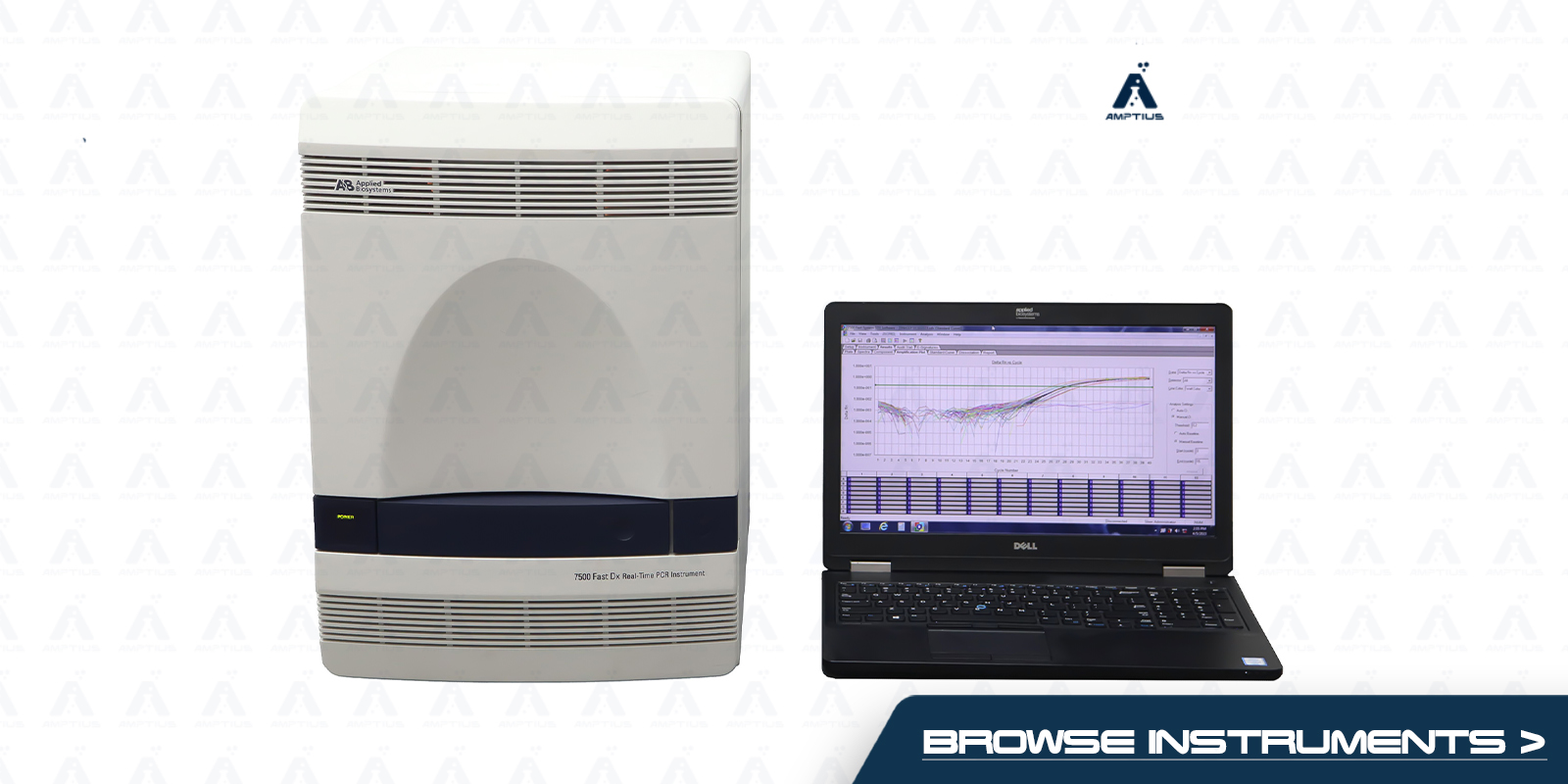
Applied Biosystems ABI 7500 Fast DX Real-Time PCR System for AOAC Method SMPR 2016.012
Regulatory labs frequently rely on the ABI 7500 Fast DX for sensitive detection of infectious agents like Variola virus. This system supports fast cycling, multiplexing, and validated workflows that fulfill AMDL and POD performance benchmarks. Users benefit from five-color detection and compatibility with custom or pre-configured assays. The robust software ensures real-time amplification monitoring and complete traceability. By meeting the demands of clinical diagnostics and environmental testing, the ABI 7500 Fast DX remains a reliable option.
Labs can efficiently validate methods using the instrument’s advanced workflow automation and user-defined settings. Analysts quickly interpret results using intuitive software tools, which help reduce manual errors. The platform integrates seamlessly into existing LIMS systems, streamlining reporting and regulatory documentation. Because it supports high sample throughput and multiplexed detection, labs use it for both confirmatory and screening workflows. This system consistently delivers reproducible performance aligned with AOAC SMPR expectations.
QuantStudio 12k Flex Real-Time PCR with OpenArray for AOAC Method SMPR 2016.012
The QuantStudio 12k Flex delivers ultra-high throughput for labs that process thousands of samples daily. Its OpenArray technology allows simultaneous detection of multiple targets across a vast array of samples. This platform meets POD and AMDL requirements by offering consistent detection across diverse matrices. Technicians reduce pipetting errors with the integrated AccuFill system, which standardizes volume delivery across all wells. Its precision and scalability make it an excellent choice for large-scale biothreat surveillance.
Software automation improves reproducibility and reduces operator variability. Researchers can design custom assays or use pre-validated protocols, adapting quickly to evolving threats. Dual-block design supports varied assay types, and real-time monitoring provides clear data for each reaction. Regulatory teams appreciate the streamlined export features and flexible integration into lab compliance systems. With robust validation support, this system proves essential in high-volume public health settings.
Applied Biosystems ABI ViiA 7 Real-Time PCR System for AOAC Method SMPR 2016.012
The ABI ViiA 7 Real-Time PCR offers exceptional thermal control and supports both 96- and 384-well formats, making it highly adaptable. Labs use it for both research and regulated testing of biothreat organisms like Variola virus. The system’s optical design ensures clear signal detection and supports multiplexing in fast cycling conditions. Analysts rely on its performance to meet SMPR 2016.012’s POD and repeatability requirements. Its design reduces cycle variability and enhances amplification accuracy across runs.
Validation teams benefit from its guided workflows and calibration support. Quality assurance staff can monitor runs in real time and generate audit-ready reports directly from the software. Its flexible plate setup and customizable protocols make it easy to adopt in multi-purpose labs. Managers appreciate the minimal downtime and high instrument reliability. The ViiA 7 remains a preferred tool for diagnostic-grade molecular detection.
Thermo Fisher QuantStudio Absolute Q Digital PCR System for AOAC Method SMPR 2016.012
The Thermo Fisher QuanStudio Absolute Q enables absolute quantification of DNA without relying on standard curves, which enhances low-copy detection. This platform supports closed-tube digital PCR, reducing contamination risk and minimizing manual handling. Technicians achieve consistent droplet formation and fluorescence detection in a single step. Its precision makes it ideal for confirming LOD and POD values as required by AOAC. Regulatory labs use it to verify assay accuracy near detection limits.
Integrated software simplifies threshold analysis, calibration, and result comparison. Teams configure alerts for out-of-spec results and review validation checkpoints within the same interface. It supports quality-controlled workflows in labs with strict compliance policies. Because of its streamlined design and easy setup, labs with limited space can still meet method standards. The Absolute Q remains a powerful tool for confirmatory analysis and regulatory validation.
Bio-Rad QX200 Droplet Digital PCR System for AOAC Method SMPR 2016.012
The Bio-Rad QX200 partitions each sample into 20,000 nanoliter droplets, improving detection of rare targets like Variola virus DNA. Its dual-color detection and droplet reader allow precise, high-resolution analysis. Scientists use it to confirm assay performance near detection limits and to quantify template concentrations with confidence. This platform reduces variability across runs and minimizes operator influence. It remains a benchmark system in digital quantification workflows.
QuantaSoft software helps labs monitor droplet quality, analyze positive/negative calls, and validate precision in real time. Many reference labs trust this instrument for its accuracy, especially during public health response scenarios. The system supports standard PCR reagents and workflows, easing adoption. Because it integrates with common lab automation tools, it fits into diverse laboratory infrastructures. The QX200 has earned its place as a gold-standard solution for LOD verification.
Illumina MiSeq and iSeq 100 NGS Platforms for AOAC Method SMPR 2016.012
The MiSeq and iSeq 100 platforms allow complete genome sequencing, which supports bioinformatic validation of assay specificity. Labs use them to ensure that primers and probes exclusively amplify Variola DNA and not related sequences. These systems generate high-quality reads that support the confirmation of inclusivity and exclusivity claims. Researchers often use MiSeq for full genome runs and iSeq for targeted panels. Both platforms produce actionable data for confirming in silico design parameters.
Sequencing outputs feed into established bioinformatics pipelines for strain typing and sequence alignment. Scientists rely on this data to refine assay components and detect potential off-target amplification. Their ease of use and compatibility with public sequence databases add to their value. The systems also provide built-in tools for QC and sample tracking. These platforms play a key role in high-confidence assay validation under SMPR guidelines.
Oxford Nanopore MinION and GridION Sequencers for AOAC Method SMPR 2016.012
Oxford Nanopore MinION and GridION offer real-time long-read sequencing, making them ideal for field-based confirmation of genome identity. These systems support portable or lab-scale workflows, depending on the scale of investigation. Many emergency response teams deploy MinION to rapidly confirm pathogen identity during outbreaks. GridION supports multiple flow cells in parallel, offering greater throughput for comprehensive genomic analysis. Both systems enable fast and flexible sequencing of target genomes.
Their long-read capabilities allow scientists to map large genomic regions and resolve structural variations. Researchers use them to confirm target specificity and support assay validation through whole genome confirmation. The platforms integrate with tools for real-time base calling and sequence alignment. Because of their scalability and speed, many biosurveillance programs adopt Nanopore technologies. These instruments strengthen assay development and validation workflows by providing genome-wide confirmation.
Choosing the Right Instrument for AOAC Method SMPR 2016.012
- Primary detection systems: ABI 7500 Fast DX, ViiA 7, and QuantStudio 12k Flex deliver high POD and support assay customization.
- Quantitative confirmation tools: Bio-Rad QX200 and QuantStudio Absolute Q for digital PCR verification of LOD and precision.
- Sequencing for identity confirmation: Illumina MiSeq/iSeq and Oxford Nanopore MinION/GridION meet SMPR in silico validation needs.
AOAC Method SMPR 2016.012 demands highly sensitive and specific instruments capable of detecting trace DNA levels with high precision. The instruments listed above support the full range of required validation workflows, from real-time detection to digital quantification and genome sequencing. Each platform has demonstrated its ability to meet POD, LOD, and bioinformatics criteria. Labs can adopt them to build compliant methods that ensure public safety and regulatory accuracy. Contact us today to explore certified refurbished systems optimized for SMPR 2016.012 applications.