
AOAC Method SMPR 2016.016 Instrumentation Guide
Standard Method Performance Requirements (SMPR) for Identification of Non-Animal-Derived Proteins in Dietary Supplements
AOAC SMPR 2016.016 outlines the minimum performance requirements for the identification of non-animal-derived proteins in dietary supplements. The method applies to proteins sourced from soy, pea, rice, hemp, flax, and similar plant-based ingredients. Laboratories must detect these proteins at concentrations as low as 0.1% with a probability of identification (POI) of at least 90%. False positives must be avoided, even in the presence of common adulterants such as melamine, peptides under 10 kDa, or free amino acids. Methods must also pass validation across different matrices through single- and multi-laboratory studies.
Instruments used for this method must support high sensitivity, specificity, and reproducibility. LC-MS/MS platforms are strongly recommended due to their ability to differentiate closely related protein sources using peptide markers. Systems must also accommodate various supplement forms, including powders, capsules, and blends with excipients. To meet AOAC SMPR 2016.016, the instrumentation must deliver consistent results with strong matrix tolerance and accurate identification of low-level proteins. The platforms listed below meet or exceed these requirements when properly validated.
Please click here to learn more about AOAC Method SMPR 2016.016
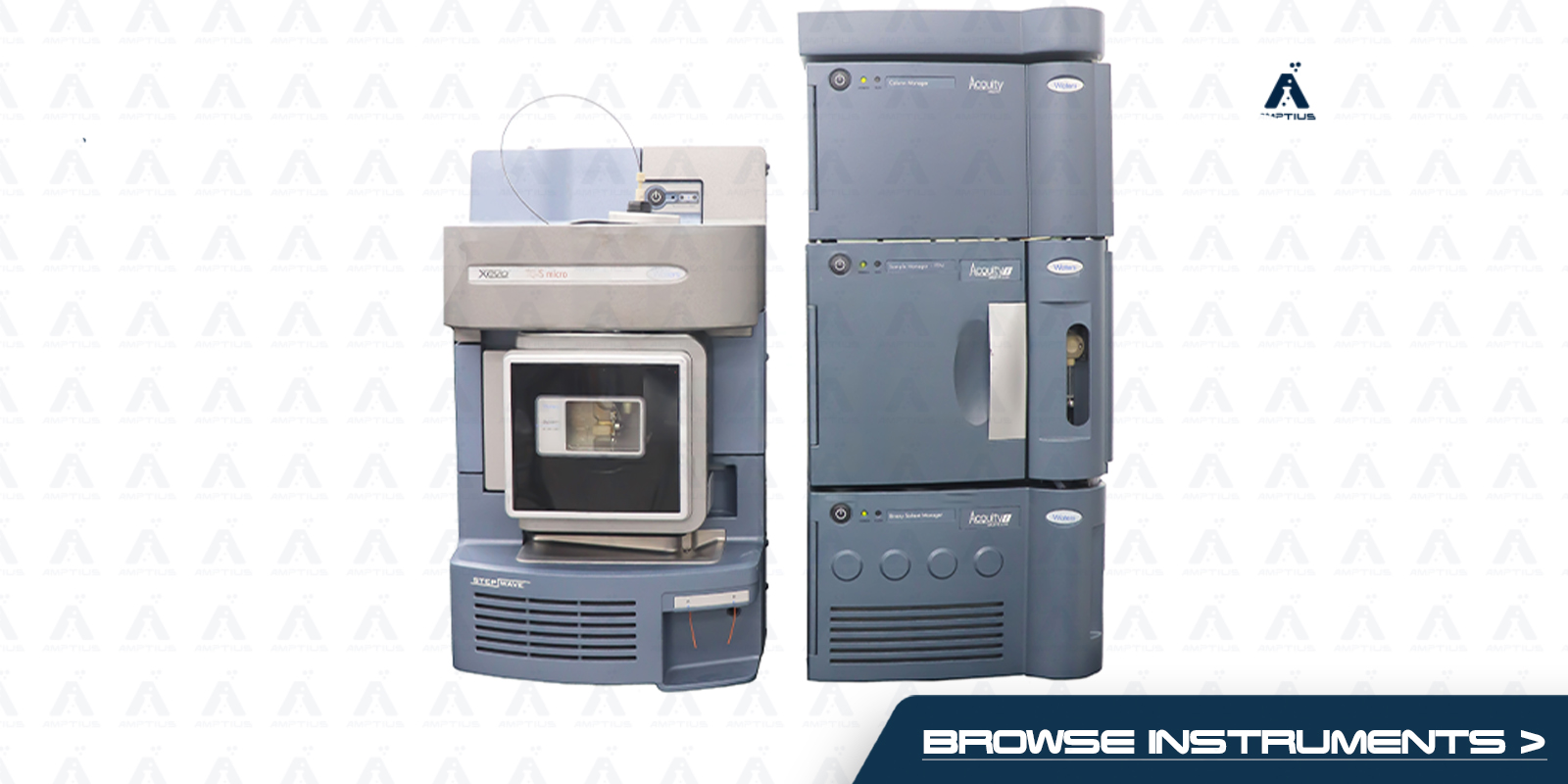
Waters Xevo TQ-S Micro LC-MS/MS with ACQUITY I Class for AOAC Method SMPR 2016.016
The Waters Xevo TQ-S Micro paired with the ACQUITY I Class UPLC provides highly sensitive peptide identification in complex supplement matrices. Its StepWave ion optics improve signal-to-noise ratio, allowing confident detection of trace-level proteins down to 0.1%. The system is capable of discriminating between various plant protein sources using source-specific peptide fingerprints. It also performs well in identifying proteins even when potential adulterants are present. This system is widely used in authenticity and food fraud testing for its reproducibility and reliability.
MassLynx software supports robust method development, batch validation, and spectral library creation for protein source tracking. Analysts can monitor ion ratios, retention time, and transition consistency with ease. The system also provides traceability features for regulatory documentation. Its small footprint and strong performance make it suitable for both high-throughput and quality control environments. With a properly validated peptide marker panel, the Xevo TQ-S Micro fulfills all method requirements outlined in AOAC SMPR 2016.016.
Agilent Ultivo Triple Quad LC-MS/MS with 1260 Infinity II for AOAC Method SMPR 2016.016
The Agilent Ultivo LC-MS/MS system, combined with the 1260 Infinity II UHPLC, offers excellent detection of low-abundance peptides unique to non-animal protein sources. Its compact form factor is ideal for labs with space constraints, while still delivering high sensitivity and resolution. The system’s Jet Stream ESI technology boosts ionization efficiency, supporting low-level detection and high reproducibility. It handles complex dietary supplement matrices without compromising selectivity or peak shape. These features make the Ultivo well-suited for regulated environments requiring precise identification of botanical proteins.
MassHunter software streamlines the analytical workflow, offering tools for method validation, system suitability, and audit-ready reporting. Users can monitor calibration curves, ion transitions, and batch performance over time. The software also supports customizable reporting templates to meet lab documentation needs. The Ultivo is a reliable system for supplement manufacturers and testing labs verifying product integrity. With validated protein-specific peptide targets, it aligns with the sensitivity and POI expectations of AOAC SMPR 2016.016.
PerkinElmer QSight 420 LC-MS/MS with UHPLC for AOAC Method SMPR 2016.016
The PerkinElmer QSight 420 Triple Quad LC-MS/MS system, when paired with a UHPLC front end, is designed for robust and high-throughput identification of protein markers. Its dual-source ionization technology allows consistent detection across varied matrices, including powders and capsules. The system achieves reliable detection of protein-derived peptides at 0.1% concentration and performs well even in the presence of potential interferents. It provides excellent reproducibility across replicate injections and batches. These capabilities support compliance with AOAC SMPR 2016.016 across diverse formulations.
Simplicity 3Q software enhances efficiency by integrating method development, calibration, and performance tracking into a unified platform. It offers real-time monitoring of system suitability, ion ratio consistency, and batch drift. Analysts benefit from easy report generation and quality control alerts to prevent non-compliant runs. The system’s strong matrix tolerance makes it ideal for complex dietary supplement testing. With source-specific peptide workflows, the QSight 420 is fully capable of meeting the performance criteria defined in SMPR 2016.016.
Thermo Scientific TSQ Altis Plus LC-MS/MS with Vanquish UHPLC for AOAC Method SMPR 2016.016
The Thermo Scientific TSQ Altis Plus LC-MS/MS, integrated with Vanquish UHPLC, offers high sensitivity and low chemical background for peptide-based protein identification. Active Ion Management improves signal stability and supports reproducible quantification at 0.1% protein concentration. The system enables fast MRM switching and high-throughput performance, even in supplement matrices that contain excipients or trace-level adulterants. Its robustness and hardware precision make it suitable for regulated testing. These features help ensure that laboratories meet POI and selectivity standards under AOAC SMPR 2016.016.
TraceFinder software offers full control over method setup, data review, and regulatory reporting. It supports real-time system suitability checks and batch-level performance assessments. Users can manage multiple protein markers across runs while maintaining traceability and documentation integrity. The Altis Plus system is trusted in food, supplement, and pharmaceutical testing applications. When configured with a validated set of peptide transitions, it performs reliably across multiple matrices and meets SMPR 2016.016 expectations.
Shimadzu LCMS-8060NX with Nexera X3 UHPLC for AOAC Method SMPR 2016.016
The Shimadzu LCMS-8060NX, coupled with the Nexera X3 UHPLC, delivers fast, reproducible, and highly sensitive peptide detection. Its ultrafast MRM acquisition and efficient desolvation contribute to strong signal stability and reduced carryover. This system excels at detecting unique peptides from soy, pea, hemp, and other non-animal protein sources at concentrations as low as 0.1%. Its high-speed throughput and low background noise make it a competitive option for complex matrix analysis. These characteristics align well with the trace-level detection requirements of AOAC SMPR 2016.016.
LabSolutions software includes integrated modules for system suitability, method validation, and quality assurance documentation. Users can configure system alerts and monitor ion ratios, retention time shifts, and calibration performance. The platform simplifies multi-matrix testing and supports routine and regulatory workflows. It is widely used in food and dietary supplement labs requiring authentication tools. When validated with appropriate peptide panels, this system meets all analytical performance criteria under SMPR 2016.016.
SCIEX Triple Quad™ 6500+ LC-MS/MS with ExionLC AD for AOAC Method SMPR 2016.016
The SCIEX Triple Quad 6500+ LC-MS/MS system, in combination with the ExionLC AD UHPLC, offers unmatched sensitivity and throughput for source-specific protein identification. Turbo V ionization and Scheduled MRM Pro enable reliable detection of plant-derived peptides at trace levels, supporting POI at 0.1% concentration. This system handles high-complexity supplement matrices and minimizes false positives, which is essential for SMPR compliance. It delivers consistent results across multiple batches and matrices. These capabilities make it well suited for high-volume testing of botanical proteins.
SCIEX OS software supports efficient batch management, validation tracking, and real-time monitoring of system performance. Analysts can review retention time stability, ion ratio accuracy, and system suitability within each analytical run. It includes comprehensive features for method auditing and electronic documentation. The 6500+ is frequently adopted by regulated laboratories focused on ingredient verification. When used with peptide-based marker workflows, this system supports all critical metrics outlined in AOAC SMPR 2016.016.
Choosing the Right Instrument for AOAC Method SMPR 2016.016
- High-sensitivity platforms: Waters Xevo TQ-S Micro, Agilent Ultivo, and SCIEX 6500+ meet all trace-level POI targets
- High-throughput labs: PerkinElmer QSight 420 and Shimadzu LCMS-8060NX support complex, matrix-diverse workflows
- Regulatory testing: Thermo TSQ Altis Plus supports reproducible, low-background peptide identification
AOAC Method SMPR 2016.016 requires laboratories to use instrumentation capable of detecting and identifying non-animal-derived proteins in complex supplements. Each LC-MS/MS system listed above offers the necessary performance features, including high sensitivity, matrix selectivity, and peptide-based workflows. Proper method validation is essential to meet POI, reproducibility, and false-positive thresholds. Whether you’re analyzing soy, pea, rice, or hemp proteins, these instruments support SMPR-compliant workflows. Contact us today to find a certified refurbished system that fits your needs.
