
AOAC Method SMPR 2017.009 Instrumentation Guide
Standard Method Performance Requirements (SMPR) for Quantitation of Aloe Vera Characteristic Water-Soluble Main Constituents in Dietary Supplements
AOAC SMPR 2017.009 outlines the method performance criteria for quantifying key water-soluble constituents of aloe vera, including acetylated glucomannan polysaccharides and degradation products like acetic, malic, and lactic acids. These constituents must be quantified accurately in raw materials, finished products, and freeze-dried liquid samples. Accepted analytical techniques include NMR, GC, GPC, colorimetric methods, and others that meet the method’s performance thresholds. The method requires strict limits of quantitation (LOQ), including ≤0.5% for solids and ≤0.15% for freeze-dried liquids. Recovery must fall between 90–110%, with RSDr ≤10% and RSDR ≤15% across matrices.
To comply with AOAC SMPR 2017.009, laboratories must validate instruments to ensure compliance with recovery, precision, and LOQ specifications. The method allows flexibility in the analytical platform but demands specificity and accuracy in identifying aloe vera polysaccharides and related degradation products. Below are recommended instruments from leading manufacturers that meet or exceed these performance benchmarks. Each system supports high-throughput workflows while maintaining compliance with dietary supplement cGMP standards. With proper validation, these instruments can support method suitability testing and robust quantitation across a range of aloe-based products.
Please click here to learn more about AOAC Method SMPR 2017.009
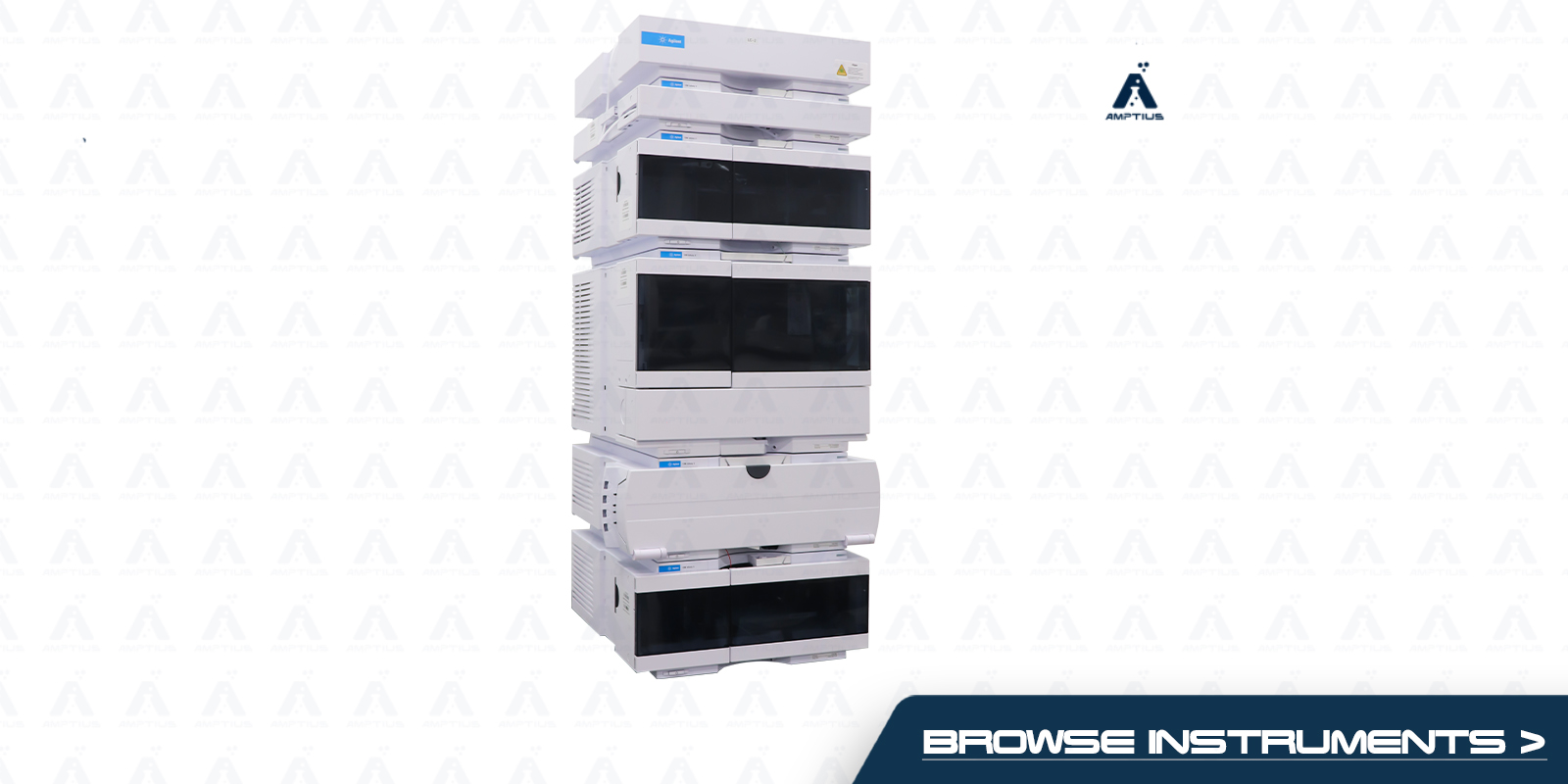
Agilent 1260 Infinity II HPLC GPC/SEC System with RID Detector and IsoPump for AOAC Method SMPR 2017.009
The Agilent 1260 Infinity II GPC/SEC system with RID Detector and IsoPump is well-suited for analyzing high-molecular-weight aloe vera polysaccharides. Its precision flow control and thermal stability ensure accurate size-based separation, critical for distinguishing acetylated glucomannan from other matrix constituents. The refractive index detector provides stable, universal detection of non-UV absorbing components like polysaccharides. This configuration offers high repeatability and meets SMPR 2017.009’s criteria for recovery and reproducibility. When validated properly, it performs reliably across raw materials, powders, and extracts.
This system also includes flexible solvent delivery and advanced autosampler options, which contribute to consistent injection precision and throughput. For quantifying polysaccharides in finished products, the 1260 Infinity II offers superior column compatibility and customizable method development. Laboratories using this platform can achieve method sensitivity requirements across diverse aloe matrices. Its ease of use and regulatory reporting capabilities make it a strong choice for supplement manufacturers. Full method validation must confirm matrix-specific recovery and LOQ for compliance.
Shimadzu Prominence HPLC System with RID-20A Detector for AOAC Method SMPR 2017.009
The Shimadzu Prominence HPLC system with RID-20A refractive index detector is a proven option for quantifying aloe vera polysaccharides. The RID-20A provides high baseline stability and thermal insulation, supporting accurate quantitation of non-UV absorbing carbohydrates. Combined with the Prominence LC architecture, this system ensures repeatable retention times and low carryover—key for analyzing complex botanical matrices. Its robust hardware and software platform supports GMP-compliant data integrity and traceability. With proper calibration, it can achieve the required LOQ and analytical range defined in AOAC SMPR 2017.009.
This system’s scalability and modular design make it adaptable for both raw ingredient and finished product testing. Its integration with LabSolutions software ensures easy management of calibration, audit trails, and system suitability checks. The Prominence platform supports precise gradient delivery and thermal stability, both essential for GPC-based aloe polysaccharide separation. Its consistent performance across sample types supports accurate recovery within the 90–110% range. Validation protocols must confirm system accuracy, precision, and matrix performance for regulatory acceptance.
Waters Alliance HPLC System with 2414 Refractive Index Detector for AOAC Method SMPR 2017.009
The Waters Alliance HPLC system with 2414 RI detector is highly compatible with the requirements of AOAC SMPR 2017.009 for polysaccharide analysis. The 2414 detector offers universal detection of aloe-derived carbohydrates without requiring chromophore labeling. Its stable thermal environment and digital signal processing reduce baseline drift and enhance data reproducibility. This system supports method development for dietary supplement analysis with flexible flow rate control and column selection. It is frequently used in quality control labs due to its rugged design and reliability.
For manufacturers of aloe supplements, the Alliance HPLC system provides consistent quantitation across tablets, powders, and extracts. Its Empower software platform streamlines system suitability testing, data review, and batch reporting. The system easily meets the precision and recovery criteria with appropriate validation and calibration standards. Its robust design ensures minimal downtime and consistent data integrity across multi-matrix workflows. Labs seeking validated solutions for SMPR 2017.009 can trust the Waters Alliance with 2414 RI for polysaccharide profiling.
PerkinElmer Flexar GPC System with RI Detector for AOAC Method SMPR 2017.009
The PerkinElmer Flexar GPC system with RI detector delivers reliable chromatographic resolution for polysaccharide characterization in aloe-based products. It enables accurate separation of acetylated glucomannan from impurities or adulterants using size-exclusion principles. The system’s temperature-controlled components and robust GPC columns ensure reproducible results even in complex matrices. Its RI detector is optimized for carbohydrate detection, making it ideal for aloe vera quantitation. This system meets AOAC SMPR 2017.009 performance thresholds when validated for recovery, repeatability, and matrix specificity.
Flexar’s modular design supports flexible method development, allowing analysts to adapt to various aloe ingredient forms. Its software platform facilitates automated calibration and report generation for GMP compliance. With low baseline drift and consistent performance, the Flexar GPC system enables accurate LOQ and RSDR results across tablet and liquid product forms. When paired with validated reference standards, this system can detect low-level degradation products in processed aloe samples. Laboratories must confirm all method performance parameters before routine use.
Thermo Scientific Vanquish Core HPLC with RefractoMax RI Detector for AOAC Method SMPR 2017.009
The Thermo Scientific Vanquish Core HPLC, integrated with the RefractoMax RI Detector, provides high-performance quantitation of non-UV absorbing aloe polysaccharides. This platform delivers excellent thermal control, precision gradient formation, and low noise for high-sensitivity RI detection. It is particularly effective for analyzing purified or processed aloe ingredients using GPC or conventional reversed-phase methods. The RefractoMax detector ensures accurate identification of glucomannan components across various aloe supplement matrices. It meets SMPR 2017.009’s stringent recovery and precision standards when properly calibrated.
Designed for compliance-focused laboratories, this system features automated qualification workflows and robust chromatography software. Vanquish Core’s modularity allows seamless scaling across low- and high-throughput testing operations. Its precision flow path and enhanced solvent mixing contribute to repeatable retention times and consistent LOQs. Validation of system suitability, calibration linearity, and matrix recovery is essential to ensure AOAC compliance. This system supports traceable, audit-ready analysis of aloe constituents in both raw and finished supplement products.
Waters Xevo TQ-GC Triple Quad GC-MS/MS System with Agilent 8890 GC and PAL RSI Autosampler for AOAC Method SMPR 2017.009
The Waters Xevo TQ-GC system, paired with the Agilent 8890 GC and PAL RSI autosampler, offers outstanding sensitivity and selectivity for quantifying aloe degradation products. Its triple quadrupole configuration enables accurate measurement of volatile acids such as acetic and lactic acid using multiple reaction monitoring (MRM). The 8890 GC provides thermal stability and reproducible injection conditions, while the PAL RSI autosampler supports efficient sample loading. This system meets AOAC SMPR 2017.009 requirements for LOQ, RSDr, and RSDR across freeze-dried liquids and solid product matrices.
This setup is well-suited for cGMP labs focused on botanical quality control. The Xevo TQ-GC delivers excellent chromatographic resolution and matrix tolerance, making it ideal for dietary supplement workflows. It enables rapid switching between target compounds and supports automated quantitation through advanced MassLynx software. The system should be validated to demonstrate accuracy across product forms, especially for low-level analyte detection. Its robust design and triple quad precision make it a top-tier option for aloe supplement testing.
Agilent 8890 5977A GCMS FID System with 7693 Autosampler and Computer for AOAC Method SMPR 2017.009
The Agilent 8890 GC coupled with the 5977A MSD and FID is a dual-detection system ideal for aloe degradation product quantification. The 5977A single quadrupole MS provides sensitive identification of small organic acids, while the FID offers complementary quantitative verification. When used with proper derivatization techniques, this platform supports reliable measurement of acetic, lactic, and malic acids. The 7693 autosampler ensures injection precision, supporting high-throughput workflows. This system, when validated, meets the method’s requirements for LOQ and reproducibility in aloe matrices.
Designed for regulatory laboratories, this GCMS/FID system balances performance and operational flexibility. Its ChemStation or MassHunter software allows integrated QC tracking and data reporting, essential for GMP compliance. For AOAC SMPR 2017.009 applications, the system must demonstrate repeatable performance across solid, powder, and freeze-dried liquid samples. Accurate quantification of degradation markers supports product authenticity and adulteration checks. Laboratories should confirm method suitability through full internal validation across expected concentration ranges.
Shimadzu GCMS-TQ8050 NX Triple Quad GC-MS/MS for AOAC Method SMPR 2017.009
The Shimadzu GCMS-TQ8050 NX delivers ultra-sensitive quantitation of aloe vera degradation products like acetic and lactic acids. Its high-speed scan and MRM capabilities enable separation of volatile analytes from complex supplement matrices. The TQ8050 NX supports trace-level quantification with excellent reproducibility and low detection limits. When paired with a high-throughput autosampler, this system is ideal for routine quality control and product validation. It meets AOAC SMPR 2017.009 precision, recovery, and LOQ thresholds when used with validated protocols.
Shimadzu’s LabSolutions software offers full method development, batch processing, and regulatory reporting features. The TQ8050 NX system is especially effective in differentiating aloe fermentation byproducts from potential adulterants. Its heated transfer lines and split/splitless inlets provide flexible injection conditions to handle varied matrices. Validation across target concentration ranges ensures compliance with SMPR specifications. This platform provides exceptional data integrity and throughput for cGMP and third-party testing laboratories.
PerkinElmer Clarus 690 GC with SQ 8 MS or FID for AOAC Method SMPR 2017.009
The PerkinElmer Clarus 690 GC, configured with either the SQ 8 MS or FID, is suitable for quantifying volatile degradation products in aloe vera dietary supplements. The SQ 8 single quadrupole MS delivers high sensitivity and reliable selectivity for small organic acids following derivatization. Alternatively, the FID supports cost-effective quantitation of thermally stable compounds when MS detection is not required. The Clarus 690’s column oven temperature precision and rapid cooling enhance productivity across multiple sample types. When validated appropriately, this system meets the LOQ and accuracy requirements of AOAC SMPR 2017.009.
This GC platform integrates seamlessly with PerkinElmer’s TurboMatrix headspace systems or autosamplers for efficient volatile analysis. It supports flexible column configurations, making it adaptable for both method development and routine testing. For aloe products, the Clarus 690 ensures consistent peak resolution and calibration accuracy across complex botanical matrices. Full system validation must address matrix interference, RSDR, and method recovery to meet AOAC performance standards. Its versatility and cost-efficiency make it attractive to medium- and high-throughput labs.
Bruker AVANCE NEO 400 MHz or 600 MHz NMR System for AOAC Method SMPR 2017.009
The Bruker AVANCE NEO NMR platform is well-suited for structural confirmation and quantitation of aloe vera polysaccharides. Its high-resolution capabilities allow detailed analysis of acetylated glucomannan and differentiation from adulterants like maltodextrin. Operating at 400 or 600 MHz, this system offers excellent spectral clarity for confirming the presence of aloe’s signature components. NMR provides orthogonal validation alongside chromatographic methods, enhancing confidence in authenticity testing. Bruker’s TopSpin software supports spectral assignment, integration, and automated method validation workflows.
This system is widely adopted in reference laboratories and academic settings for botanical compound verification. It is essential for identity testing in aloe products and is explicitly listed as an accepted analytical technique in AOAC SMPR 2017.009. While not typically used for routine quantitation, NMR plays a critical role in confirming aloe composition during method development or dispute resolution. Laboratories should validate chemical shift reproducibility, integration accuracy, and matrix effects for compliant implementation.
Hach DR6000 Benchtop Spectrophotometer for AOAC Method SMPR 2017.009
The Hach DR6000 is a UV-Vis spectrophotometer that can be used for validated colorimetric assays involving aloe degradation products. While not suitable for polysaccharide analysis, it supports quantitation of compounds like malic or lactic acid when appropriate reagents and calibration standards are applied. Its wavelength accuracy, photometric stability, and method programmability make it suitable for routine quality control. AOAC SMPR 2017.009 allows colorimetric methods if they meet LOQ, recovery, and precision thresholds. The DR6000 is ideal for cost-effective validation of simpler aloe constituents.
This platform includes built-in QA/QC tools and supports USB data transfer, enhancing traceability in GMP-compliant environments. The DR6000’s pre-programmed methods can be customized for aloe supplement testing, provided the method is rigorously validated. Labs must confirm specificity, matrix tolerance, and quantitative linearity across expected ranges. When integrated with certified reference materials, the DR6000 offers reliable screening for degradation markers. Although limited in scope, it provides a budget-friendly option for confirmatory or routine monitoring.
Choosing the Right Instrument for AOAC Method SMPR 2017.009
- Best for polysaccharide quantitation: Agilent 1260 Infinity II GPC/SEC, Shimadzu Prominence with RID, Waters Alliance with 2414 RI
- Best for degradation products: Waters Xevo TQ-GC, Shimadzu GCMS-TQ8050 NX, Agilent 8890/5977A GC-MS
- Best for structural verification: Bruker AVANCE NEO NMR System (400/600 MHz)
- Low-cost screening option: Hach DR6000 Benchtop UV-Vis Spectrophotometer
Each instrument listed above supports different aspects of AOAC SMPR 2017.009 compliance. Laboratories must select and validate platforms based on their specific matrix, target analyte, and regulatory goals. We offer certified refurbished systems tailored for aloe vera quantitation across supplements and ingredients. Contact us today for expert guidance on configuring your analytical workflow for regulatory success.
