
AOAC Method SMPR 2017.014 Instrumentation Guide
Standard Method Performance Requirements (SMPR) for Determination of Select Ginsenosides in Dietary Supplements and Dietary Ingredients
AOAC SMPR 2017.014 outlines the performance requirements for quantifying select ginsenosides in dietary ingredients and supplements containing ginseng. The method targets specific ginsenosides including Rg1, Rb1, Re, Rc, Rd, and Rf, which must be reported individually. The method requires an LOQ of ≤ 0.5 mg/g and an analytical range from 0.5 to 200 mg/g. Acceptable recovery for all targets must fall between 90–110%, with RSDr ≤ 7.5% and RSDR ≤ 10%. Validated LC-MS/MS or HPLC methods must be used with sufficient selectivity, sensitivity, and reproducibility to meet these criteria.
Laboratories must demonstrate that chosen instruments can achieve accurate separation of individual ginsenosides, especially in complex botanical matrices. Sample integrity, proper calibration, and matrix-specific validation are essential to meet method compliance. Analysts must verify the accuracy of each ginsenoside across the specified range. Suitable platforms should offer stable retention times, excellent peak resolution, and automated quality control tools. Below are systems that meet the requirements when paired with validated methods for ginsenoside determination.
Please click here to learn more about AOAC Method SMPR 2017.014
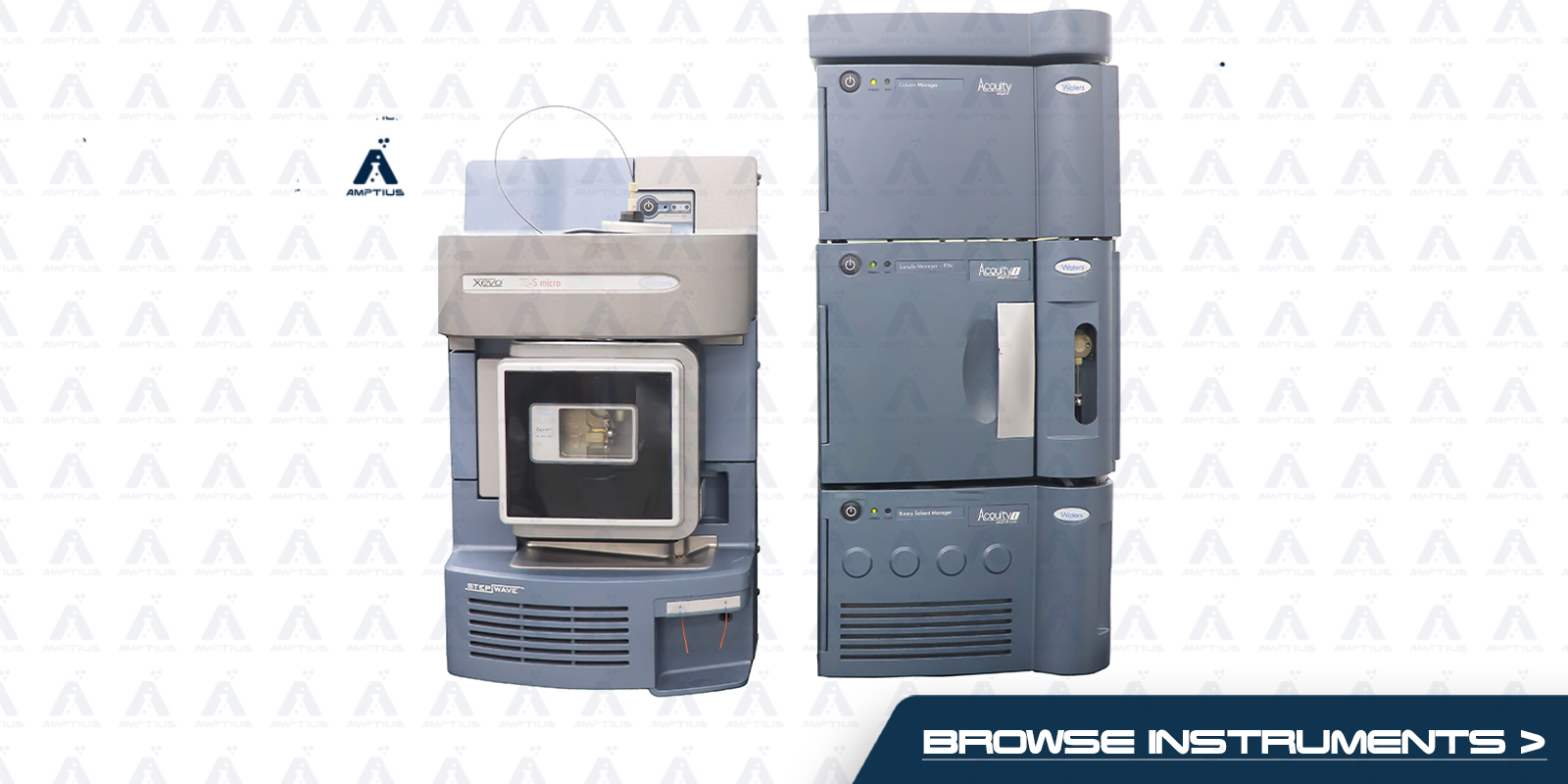
Waters Xevo TQ-S Micro LC-MS/MS with ACQUITY I Class for AOAC Method SMPR 2017.014
The Waters Xevo TQ-S Micro paired with the ACQUITY I Class UPLC provides high sensitivity and strong signal stability for ginsenoside analysis. Its StepWave ion optics enable efficient ion transfer, reducing background noise while improving detection of trace-level analytes. Laboratories can separate and quantify all targeted ginsenosides within the AOAC-defined analytical range. Consistent MRM transitions and robust chromatography ensure high reproducibility even in challenging botanical matrices. This platform supports rapid throughput without sacrificing analytical integrity.
MassLynx software includes tools for system suitability tracking, calibration verification, and automated method compliance reporting. Analysts benefit from easy access to retention time stability data and automated integration for improved consistency. The Xevo TQ-S Micro system is widely trusted in natural product testing and meets all AOAC SMPR 2017.014 requirements when used with a validated method. It provides laboratories with flexibility and regulatory readiness. This system is especially well-suited for herbal and nutraceutical product quality control.
Agilent Ultivo Triple Quadrupole LC-MS/MS with 1260 Infinity II for AOAC Method SMPR 2017.014
The Agilent Ultivo Triple Quad LC-MS/MS system, integrated with the 1260 Infinity II UHPLC, delivers precision and compact design for dietary supplement analysis. Jet Stream ionization enhances sensitivity and robustness in detecting individual ginsenosides. The Ultivo supports precise chromatographic separation across the required range of 0.5–200 mg/g, delivering consistent recoveries within AOAC limits. Its stable ion ratios and high linearity reduce variability in quantitative workflows. The compact footprint makes it suitable for labs with space constraints.
MassHunter software provides real-time system checks, batch reporting, and advanced calibration tools. It includes automated tracking of internal standard performance and quality control metrics. The Ultivo system maintains peak performance across replicate batches and supports AOAC-compliant reporting. With proper method validation, it exceeds recovery, LOQ, RSDr, and RSDR expectations. Its performance in ginsenoside testing makes it a reliable choice for regulated laboratories.
PerkinElmer QSight 420 LC-MS/MS with UHPLC for AOAC Method SMPR 2017.014
The PerkinElmer QSight 420 LC-MS/MS paired with a UHPLC front end offers exceptional performance for trace ginsenoside quantification. Its dual-source design enhances ion stability and sensitivity, making it suitable for high-precision botanical testing. It handles complex matrices with minimal carryover and provides accurate quantitation within the specified analytical range. Recovery consistency and repeatability align with AOAC SMPR standards. Its high-throughput capabilities make it suitable for quality assurance labs.
Simplicity 3Q software facilitates calibration curve tracking, system suitability assessments, and audit-ready documentation. The QSight 420 provides built-in automation features that streamline routine workflows. Its consistent performance across ginsenoside targets ensures reliable data across sample types. Laboratories can expect robust results when using validated separation conditions. This system is a dependable solution for nutraceutical and herbal supplement testing.
Thermo Scientific TSQ Altis Plus LC-MS/MS with Vanquish UHPLC for AOAC Method SMPR 2017.014
The Thermo Scientific TSQ Altis Plus LC-MS/MS system with Vanquish UHPLC delivers ultra-sensitive detection for ginsenosides in dietary supplements. Its advanced ion optics and fast scan speeds support accurate MRM quantification across multiple targets. The system excels at separating ginsenosides within the defined AOAC range, offering high resolution and reproducibility. It operates with low background noise and provides extended uptime for batch testing. Analytical flexibility and strong matrix tolerance are key benefits.
TraceFinder software provides compliance features such as calibration monitoring, internal standard validation, and retention time checks. The system supports streamlined validation and routine use in regulated labs. Its performance exceeds AOAC requirements for accuracy, LOQ, and precision. When used with a validated gradient and authentic standards, it ensures accurate quantification across complex herbal matrices. This system is an excellent choice for high-volume testing environments.
Shimadzu LCMS-8060NX with Nexera X3 UHPLC for AOAC Method SMPR 2017.014
The Shimadzu LCMS-8060NX system, combined with Nexera X3 UHPLC, is engineered for fast and sensitive quantification of ginsenosides in Echinacea and other botanical supplements. It features ultra-fast MRM transitions and improved desolvation, supporting trace-level detection with high repeatability. Chromatographic precision and strong peak symmetry are maintained across complex matrices. The system consistently achieves accurate recovery within AOAC-defined limits. Its performance is ideal for routine QC and regulatory testing.
LabSolutions software offers real-time QA tracking, calibration validation, and batch performance oversight. Method development and deployment are streamlined with automated peak identification and report generation. The 8060NX is designed for minimal maintenance and long-term stability. It meets all AOAC performance benchmarks when configured with an appropriate method. For labs seeking dependable, fast LC-MS/MS systems, this platform delivers outstanding results.
SCIEX Triple Quad™ 6500+ LC-MS/MS with ExionLC AD for AOAC Method SMPR 2017.014
The SCIEX 6500+ Triple Quadrupole LC-MS/MS system with ExionLC AD UHPLC offers exceptional trace-level quantification of individual ginsenosides. Turbo V ionization and Scheduled MRM Pro provide high sensitivity and reproducibility. Analysts can quantify all target compounds down to the LOQ with consistent ion ratios and peak areas. The system is well-suited for high-throughput applications with complex herbal ingredients. Robust data processing tools support confidence in routine testing.
SCIEX OS software enables seamless method validation, system suitability tracking, and batch-level performance evaluation. It simplifies compliance workflows with real-time monitoring and automated flagging of deviations. When paired with validated gradient methods and ginsenoside standards, the system consistently meets AOAC SMPR 2017.014 specifications. Its high speed, accuracy, and flexibility make it ideal for regulated laboratories. Many labs choose the 6500+ for its scalability and reliability.
Agilent 1260 Infinity II HPLC with DAD Detector for AOAC Method SMPR 2017.014
The Agilent 1260 Infinity II HPLC with DAD detector offers a UV-based solution for quantifying ginsenosides when strong chromatographic separation is achieved. Its excellent gradient control, retention time stability, and peak resolution support accurate measurement of individual compounds. DAD detection enables spectral confirmation of target analytes. This system meets performance criteria when used with external calibration and verified retention windows. It is widely used in cost-sensitive QA testing labs.
OpenLab CDS software ensures full traceability with automated reporting, calibration tracking, and peak purity evaluation. Analysts can validate UV-based methods effectively using authentic standards. With strong chromatographic resolution and matrix-specific validation, this system supports full compliance. It is an efficient alternative to MS-based workflows for routine ginsenoside analysis. The 1260 Infinity II remains a preferred choice in dietary supplement testing.
Shimadzu Prominence-i LC-2030 Plus HPLC System for AOAC Method SMPR 2017.014
The Shimadzu Prominence-i LC-2030 Plus is a fully integrated HPLC system that supports UV-based quantitation of ginsenosides in botanical samples. It offers precise flow and gradient control, consistent retention times, and low baseline drift. With validated chromatographic conditions, it can resolve individual ginsenosides and deliver accurate recovery. Its autosampler and DAD detection simplify workflow for batch testing. This system is ideal for labs needing dependable, space-efficient UV detection.
LabSolutions software supports calibration tracking, automated system checks, and compliance documentation. The LC-2030 Plus offers user-friendly operation with advanced analytics features. It handles various sample types including powders, extracts, and tablets. When paired with authentic standards, it supports AOAC compliance across all metrics. The system is a practical solution for routine phenolic and ginsenoside testing in production labs.
Waters Alliance HPLC with 2998 PDA or 2489 UV Detector for AOAC Method SMPR 2017.014
The Waters Alliance HPLC configured with either the 2998 PDA or 2489 UV detector offers reliable UV-based detection for ginsenoside analysis. Its stable gradient control and strong detector performance ensure accurate separation and quantification of targeted compounds. PDA detection provides full-spectrum confirmation for enhanced analyte identification. When used with validated standards and retention times, it delivers reproducible results. The system meets all AOAC SMPR performance criteria for LOQ, accuracy, and precision.
Empower CDS software streamlines validation and QA/QC workflows with audit-ready documentation tools. The Alliance platform performs reliably in regulated labs focused on herbal ingredient quality. It supports calibration verification, peak identification, and consistent integration. With a strong reputation for reliability, it remains a trusted option for HPLC-UV workflows. This system provides high-value performance at a competitive cost.
PerkinElmer Series 200 HPLC with UV Detector for AOAC Method SMPR 2017.014
The PerkinElmer Series 200 HPLC with UV detector is a rugged, proven platform for botanical testing. Its reliable gradient delivery, flow control, and temperature stability help ensure consistent chromatographic performance. With validated UV detection methods, this system supports ginsenoside quantification within AOAC-defined criteria. Its simple design and ease of use make it suitable for daily QA applications. It is especially effective when used with external standards and retention time validation.
TotalChrom software supports calibration curve generation, peak identification, and system suitability verification. It offers robust batch reporting tools for regulatory compliance. The Series 200 is ideal for facilities seeking cost-effective, UV-based solutions for natural product testing. With proper method configuration, it meets AOAC SMPR 2017.014 specifications. This platform continues to be a reliable workhorse in supplement and herbal labs.
Thermo Scientific UltiMate 3000 HPLC with VWD or DAD for AOAC Method SMPR 2017.014
The Thermo Scientific UltiMate 3000 HPLC system offers reliable UV-based detection for ginsenoside analysis in supplement products. It supports both VWD and DAD configurations, enabling strong peak resolution and accurate quantitation. Its precise gradient capability and temperature control ensure repeatable retention times. With validated separation methods, it achieves compliant LOQ and recovery. This system fits well into high-throughput labs needing strong performance from UV-based workflows.
Chromeleon CDS software simplifies method development, audit trail creation, and QA documentation. Analysts can configure automated system suitability checks and peak evaluation tools. The UltiMate 3000 remains a preferred platform for quality control in botanical testing. It provides excellent performance for its class and supports a wide range of dietary formats. With proper validation, it fulfills all AOAC SMPR 2017.014 method expectations.
Choosing the Right Instrument for AOAC Method SMPR 2017.014
- Top LC-MS/MS platforms: SCIEX 6500+, Waters Xevo TQ-S Micro, Thermo TSQ Altis Plus, and Agilent Ultivo meet high sensitivity and accuracy demands.
- Reliable UV-based HPLC systems: Shimadzu LC-2030 Plus, Waters Alliance HPLC, and Agilent 1260 Infinity II with DAD support compliant phenolic quantitation.
- Cost-effective QA solutions: PerkinElmer Series 200 and Thermo UltiMate 3000 HPLC systems offer precision for routine testing.
AOAC SMPR 2017.014 requires validated methods for accurately quantifying individual ginsenosides with strong precision, recovery, and LOQ. All instruments listed above are compatible when paired with validated analytical methods and matrix-specific calibration. We offer certified refurbished HPLC and LC-MS/MS systems tailored for AOAC-compliant botanical testing. Contact us today to explore instruments configured for your analytical needs.