
AOAC Method SMPR 2020.017 Instrumentation Guide
Standard Method Performance Requirements (SMPRs) for Characterization and Quantitation of Residual Resin Acids from Glycerol Esters of Wood Rosin (GEWR)
AOAC SMPR 2020.017 outlines the analytical performance requirements for quantifying residual resin acids in Glycerol Esters of Wood Rosin (GEWR). This includes individual compounds such as abietic acid, dehydroabietic acid, levopimaric acid, and others. These residual acids must be measured accurately to assess product purity and ensure compliance. The method requires instruments to detect concentrations as low as 10 mg/kg and quantify at or below 50 mg/kg. Linearity must reach R² ≥ 0.99 with recovery between 90–107% and repeatability (RSDr) ≤ 6%.
The analytical system must clearly distinguish residual acids from other GEWR fractions such as monoesters, diesters, and neutral compounds. Suitable platforms include LC-MS/MS for high selectivity and sensitivity, HPLC-UV for UV-active acids, and GC-MS for derivatized analytes. The systems listed below meet or exceed the method’s performance criteria. These instruments offer robust workflows for both targeted quantitation and regulatory compliance in quality control or analytical development labs.
Please click here to learn more about AOAC Method SMPR 2020.017
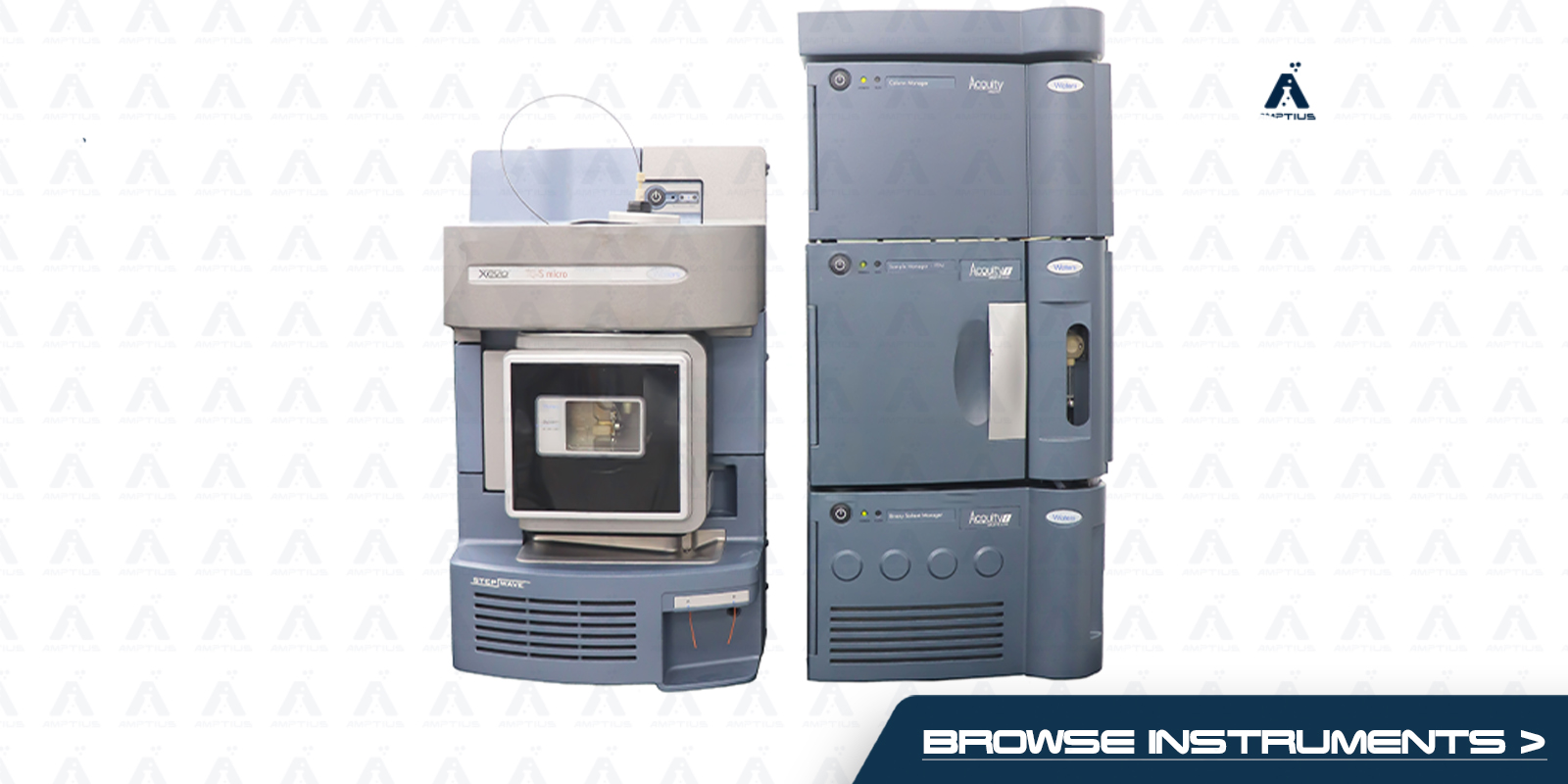
Waters Xevo TQ-S Micro Triple Quadrupole LC-MS/MS with ACQUITY I-Class for AOAC Method SMPR 2020.017
The Waters Xevo TQ-S Micro with ACQUITY I-Class provides powerful LC-MS/MS performance for identifying and quantifying residual resin acids in GEWR. The system’s StepWave ion optics enhance sensitivity, allowing trace detection of compounds like abietic and dehydroabietic acids. The ACQUITY I-Class UHPLC ensures narrow peak widths and excellent chromatographic resolution. Together, these features support reliable quantitation well below 50 mg/kg with strong linearity and repeatability. Its software simplifies MRM optimization, data review, and compliance documentation.
This configuration supports multi-analyte workflows and robust recovery across complex matrices. It also offers accurate quantification of closely related acids without signal interference. Analysts benefit from fast method development and consistent results across production batches. For regulatory labs or commercial testing, this system ensures repeatable, low-level acid quantification. It is an ideal platform for SMPR 2020.017 compliance testing.
PerkinElmer QSight 420 LC-MS/MS Triple Quad System with UHPLC for AOAC Method SMPR 2020.017
The PerkinElmer QSight 420 LC-MS/MS is a versatile system that provides accurate quantitation of residual resin acids at low concentration levels. Its dual-source ionization improves detection of both polar and nonpolar analytes in complex rosin-based samples. The UHPLC module enables efficient separation of structurally similar acids, reducing the risk of co-elution. With strong signal stability, the system consistently meets AOAC method limits for LOQ, recovery, and repeatability. Analysts can rely on its rugged design for routine batch analysis.
Software integration streamlines validation, reporting, and method development tasks. The QSight 420 supports internal standard workflows and real-time monitoring for quality assurance. It is well-suited for labs seeking a balance of speed, sensitivity, and operational simplicity. Whether confirming resin acid levels or performing batch verification, this platform delivers reliable results. It is a solid choice for SMPR-compliant quantitation in regulated environments.
Thermo Scientific TSQ Altis Plus Triple Quadrupole LC-MS/MS with Vanquish UHPLC for AOAC Method SMPR 2020.017
The TSQ Altis Plus with Vanquish UHPLC offers high-sensitivity detection of residual acids in GEWR formulations. Active Ion Management improves signal fidelity, helping analysts achieve excellent peak clarity and signal-to-noise ratios. The Vanquish front end ensures consistent flow and peak shape, allowing accurate quantitation of multiple resin acids in a single injection. This system meets all SMPR 2020.017 performance targets, including recovery, repeatability, and detection limits. It is ideal for compliance-focused workflows in production and quality labs.
TraceFinder software enables automated calibration, data analysis, and regulatory reporting. The platform supports multi-user environments and provides audit-ready traceability. Analysts benefit from consistent system performance across long batch runs. With flexible method configuration and fast polarity switching, it adapts well to varied sample types. This LC-MS/MS solution provides excellent reliability for trace-level resin acid testing.
Shimadzu LCMS-8060NX Triple Quadrupole LC-MS/MS with Nexera X3 UHPLC for AOAC Method SMPR 2020.017
The Shimadzu LCMS-8060NX with Nexera X3 UHPLC supports high-throughput quantitation of individual resin acids in GEWR. Its ultra-fast scan speed and low-dispersion design enable sharp separation and trace-level detection. The Nexera X3 delivers stable gradient performance and high reproducibility, even across extended testing sequences. With low detection limits and precise calibration, this platform meets all AOAC requirements for linearity, LOQ, and recovery. It offers a robust, repeatable solution for routine acid quantification.
LabSolutions software supports full workflow automation, including peak identification, batch calibration, and QC flagging. Analysts can customize methods for different acid profiles or matrix types. The system’s speed and reliability make it ideal for contract labs and high-volume facilities. Whether validating formulations or confirming compliance, the LCMS-8060NX delivers consistent, reproducible results. It is a strong performer for trace-level rosin acid analysis.
SCIEX Triple Quad™ 6500+ LC-MS/MS with ExionLC AD UHPLC for AOAC Method SMPR 2020.017
The SCIEX 6500+ with ExionLC AD UHPLC offers ultra-trace sensitivity and high analytical precision for residual acid quantification. Turbo V ionization and Scheduled MRM Pro ensure consistent ionization and short dwell times for multi-resin acid panels. The ExionLC system maintains retention time precision and gradient stability, even during extended batch processing. This platform exceeds AOAC SMPR targets for LOQ, linearity, recovery, and precision. It is well-suited for regulatory labs requiring full traceability and validation.
SCIEX OS software simplifies compliance workflows through integrated QA/QC tools, audit trails, and report automation. The system provides fast switching between analytes with minimal cross-talk, ideal for GEWR mixtures. Analysts gain confidence in results, even at low concentration thresholds. The 6500+ is a leading option for advanced fractionation and quantitation in resin-based materials. It supports high-performance workflows for accurate and efficient compliance testing.
Agilent 1260 Infinity II HPLC System with DAD Detector and BinPump for AOAC Method SMPR 2020.017
The Agilent 1260 Infinity II HPLC with DAD and BinPump provides reliable quantitation of UV-active residual resin acids such as abietic and dehydroabietic acid. The diode array detector allows multi-wavelength detection, enabling compound identification and purity confirmation. Gradient capability from the binary pump ensures sharp separation of overlapping acids. The system meets AOAC performance requirements for LOQ, linearity, and repeatability in properly validated workflows. It is especially useful for routine quality testing with simplified workflows.
Agilent OpenLab software offers streamlined calibration, reporting, and long-term traceability. This HPLC setup is cost-effective and dependable for labs that primarily quantify UV-detectable acids. For broader coverage, analysts may integrate ELSD or MS detection. Its modular design and established method compatibility make it a versatile tool. This system delivers excellent reproducibility and is well-suited for batch testing of rosin acid levels.
Agilent 8890 GC with 5977 Inert Plus MSD and 7693 Autosampler for AOAC Method SMPR 2020.017
The Agilent 8890 GC with 5977 Inert Plus MSD offers robust analysis of residual resin acids following derivatization. This GC-MS system provides excellent chromatographic resolution and mass spectral confirmation for methylated or silylated acid derivatives. The 7693 autosampler ensures injection precision for reproducible quantitation. When validated, the system meets all SMPR requirements for LOD, LOQ, and recovery. It is ideal for confirmatory testing and identity verification of individual acids in GEWR samples.
MassHunter software supports automated quantitation, spectral library matching, and full report generation. GC-MS is particularly effective for volatile or semi-volatile resin acid forms. The system’s inert flow path ensures compound integrity and reduces adsorption. It serves as a powerful platform for labs needing orthogonal confirmation of LC-based workflows. This configuration is a trusted choice for validated, derivatization-based testing of residual acids.
Choosing the Right System for AOAC SMPR 2020.017
- Best for high sensitivity and multi-acid panels: SCIEX 6500+, Waters Xevo TQ-S Micro, and Thermo Altis Plus
- Balanced and rugged options: PerkinElmer QSight 420 and Shimadzu LCMS-8060NX for batch testing
- UV-based workflows: Agilent 1260 Infinity II for routine quantitation of major acids
- GC-MS confirmation: Agilent 8890 with 5977 MSD for derivatized resin acid profiling
AOAC SMPR 2020.017 requires systems that provide sensitive, selective, and reproducible quantitation of residual resin acids in GEWR mixtures. The instruments above deliver trace-level detection, strong fraction separation, and compliance-ready performance. Whether using LC-MS/MS, HPLC-UV, or GC-MS workflows, these platforms help laboratories meet regulatory and compositional standards. Contact us today to find certified refurbished instruments that meet your resin acid analysis needs.