
EPA Method 1614 A Instrumentation Guide
EPA Method 1614 A is the gold standard for detecting and quantifying polybrominated diphenyl ethers (PBDEs) in environmental samples, including air, water, soil, and biological matrices. These persistent organic pollutants (POPs) pose significant health risks, necessitating highly sensitive and selective analytical instrumentation. High-resolution gas chromatography coupled with high-resolution mass spectrometry (GC-HRMS) is required for ultra-trace detection of PBDEs. The method mandates a resolving power of at least 10,000 to differentiate PBDEs from potential interferences. Laboratories conducting PBDE analysis under EPA Method 1614A must employ robust GC-HRMS systems capable of isotope-dilution quantification to meet stringent regulatory compliance requirements.
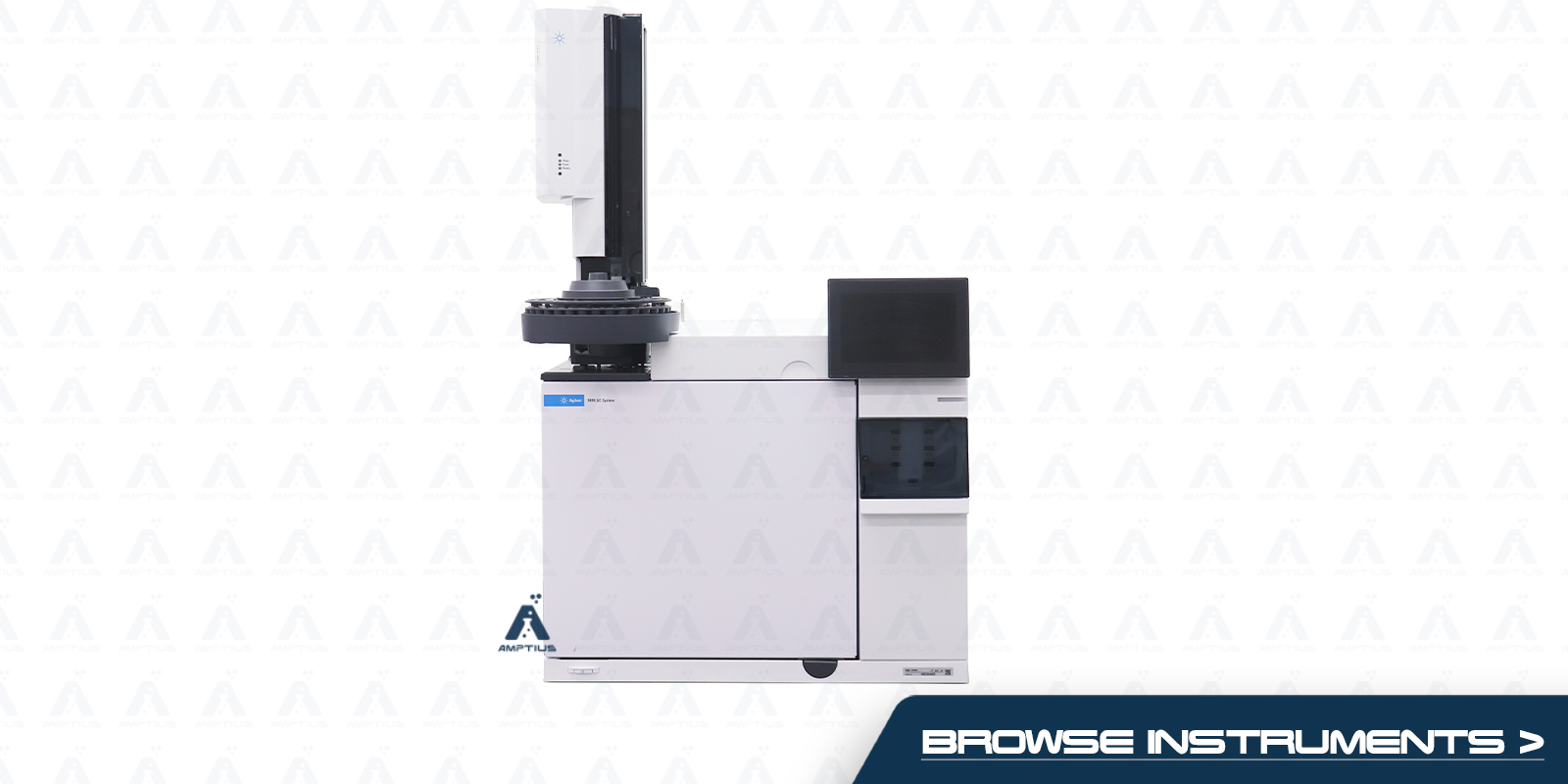
Successful implementation of EPA Method 1614 A depends on the ability of GC-HRMS systems to achieve superior mass resolution, precise ion separation, and consistent quantification of target analytes. Instruments must operate in Selected Ion Monitoring (SIM) mode to enhance selectivity and sensitivity while minimizing background noise. Advanced data processing capabilities and compliance-driven software integration ensure accurate peak identification and quantification. Below, we explore the best analytical instruments available for EPA Method 1614A applications, featuring industry-leading GC-HRMS systems that offer high mass resolution, enhanced stability, and proven reliability for PBDE analysis.
Please click here to learn more about Method 1614 A.
Waters AutoSpec Premier Magnetic Sector HRMS with Agilent 8890 GC for EPA Method 1614A
The Waters AutoSpec Premier Magnetic Sector HRMS, paired with the Agilent 8890 GC, is designed for the highest precision in PBDE quantification under EPA Method 1614A. This system provides exceptional mass resolving power, ensuring accurate separation of target analytes from co-eluting interferences. Operating in high-resolution SIM mode, the AutoSpec Premier enhances detection sensitivity, enabling confident quantification at sub-picogram levels.
The Agilent 8890 GC complements the HRMS with superior column stability and retention time reproducibility, ensuring peak consistency across multiple runs. This system supports automated sample handling, improving workflow efficiency while maintaining data integrity. Waters’ MassLynx software provides sophisticated spectral deconvolution and quantification tools, facilitating regulatory reporting and data validation. Laboratories requiring an industry-leading GC-HRMS platform for PBDE analysis will benefit from the system’s unparalleled sensitivity, accuracy, and long-term performance reliability.
Thermo Scientific DFS Magnetic Sector HRMS with TRACE 1310 GC for EPA Method 1614 A
The Thermo Scientific DFS Magnetic Sector HRMS, paired with the TRACE 1310 GC, is a premier solution for ultra-trace PBDE analysis under EPA Method 1614A. This system’s high-resolution capabilities ensure accurate mass separation, meeting the required resolving power of 10,000. The DFS system operates in SIM mode to enhance selectivity, reducing spectral interferences for precise quantification. Its dual-mode electron ionization (EI) source provides optimal ionization efficiency, ensuring consistent and reproducible detection of PBDE congeners across various sample matrices.
The TRACE 1310 GC enhances chromatographic performance with superior retention time stability, minimizing peak broadening and co-elution of target compounds. Automated sample introduction using a compatible autosampler improves throughput while maintaining data integrity. Thermo Scientific’s advanced data processing software simplifies method validation and regulatory reporting, ensuring compliance with EPA guidelines. Laboratories requiring high-throughput PBDE analysis benefit from the DFS system’s stability, sensitivity, and industry-proven performance in complex environmental sample matrices.
JEOL JMS-800D HRMS with Agilent 7890B GC for EPA Method 1614A
The JEOL JMS-800D HRMS, coupled with the Agilent 7890B GC, delivers exceptional mass resolution and detection accuracy for EPA Method 1614A. This magnetic sector HRMS system meets the required resolving power for PBDE analysis, ensuring interference-free quantification at ultra-trace levels. Its high-mass accuracy and low-background noise make it an excellent choice for environmental monitoring laboratories focused on detecting persistent organic pollutants (POPs) with maximum precision.
The Agilent 7890B GC optimizes chromatographic separation with its advanced electronic pneumatics control (EPC), providing precise retention time reproducibility for accurate peak identification. The system supports automated sample introduction, enhancing throughput while minimizing variability. JEOL’s data acquisition and processing software integrates seamlessly with regulatory compliance workflows, ensuring reliable data management and interpretation. This system is an ideal solution for laboratories prioritizing high selectivity, minimal matrix interference, and robust quantification in PBDE analysis.
Bruker SolariX XR FTMS with SCION 456 GC for EPA Method 1614A
The Bruker SolariX XR FTMS, integrated with the SCION 456 GC, represents the forefront of high-resolution mass spectrometry for EPA Method 1614A applications. This Fourier Transform Mass Spectrometry (FTMS) system provides ultra-high resolving power, far exceeding the 10,000 minimum required for PBDE analysis. Its ability to resolve complex sample matrices makes it an excellent choice for environmental and research laboratories requiring the highest mass accuracy available.
The SCION 456 GC enhances chromatographic performance with minimal peak broadening and superior thermal stability, ensuring consistent separation of PBDE congeners. The system’s high-speed data acquisition and Bruker’s advanced software facilitate precise spectral analysis, automated compound identification, and compliance-driven reporting. The SolariX XR’s ability to provide ultra-high-resolution molecular fingerprinting makes it a preferred choice for laboratories conducting extensive environmental monitoring and forensic-level pollutant analysis under EPA Method 1614A.
Choosing the Right GC-HRMS System for EPA Method 1614 A
- For high-throughput labs: The Thermo Scientific DFS Magnetic Sector HRMS with TRACE 1310 GC provides superior automation and stability, ensuring rapid and reliable PBDE analysis with minimal downtime.
- For ultra-trace detection: The Waters AutoSpec Premier HRMS with Agilent 8890 GC delivers industry-leading sensitivity, making it ideal for detecting PBDEs at sub-picogram levels.
- For cutting-edge resolution: The Bruker SolariX XR FTMS with SCION 456 GC offers unmatched resolving power, enabling precise differentiation of PBDE congeners in complex sample matrices.
- For laboratories needing robust compliance solutions: The JEOL JMS-800D HRMS with Agilent 7890B GC ensures accurate quantification, reliable data acquisition, and streamlined regulatory reporting.
EPA Method 1614A demands high-performance GC-HRMS technology to ensure precise PBDE quantification while maintaining regulatory compliance. The Thermo Scientific DFS, JEOL JMS-800D, Waters AutoSpec Premier, and Bruker SolariX XR offer state-of-the-art solutions for laboratories performing environmental monitoring and toxicology studies. These systems provide the resolution, accuracy, and selectivity required for ultra-trace PBDE detection, ensuring reliable results for compliance-driven applications.
Contact us today to explore our certified refurbished GC-HRMS systems, designed to deliver precision, efficiency, and compliance in your PBDE analysis workflow.