
EPA Method 537 Instrumentation Guide
EPA Method 537 is a critical analytical method for detecting per- and polyfluoroalkyl substances (PFAS) in drinking water. These persistent environmental contaminants require precise and sensitive instrumentation to ensure accurate quantification. The method employs liquid chromatography-tandem mass spectrometry (LC-MS/MS) to achieve ultra-trace detection levels, ensuring compliance with regulatory standards. As awareness of PFAS contamination grows, laboratories must invest in advanced LC-MS/MS systems to produce consistent and reliable results. The ability to detect PFAS at sub-ppt levels is essential for meeting environmental safety regulations. Selecting the right instrument is crucial for optimizing workflow efficiency, regulatory compliance, and high-throughput PFAS analysis.
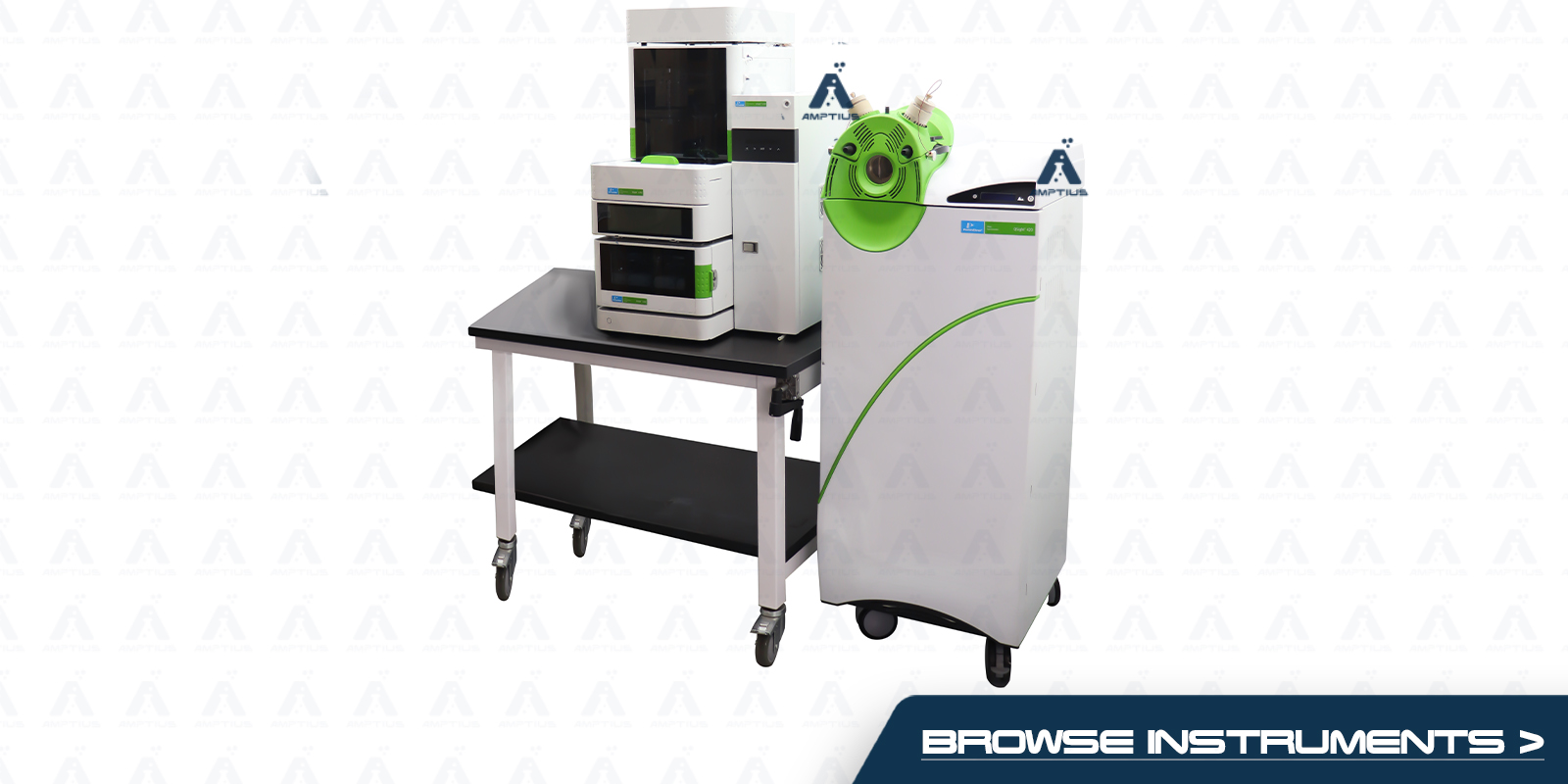
Accurate PFAS detection depends on instruments with high sensitivity, low detection limits, and minimal matrix interference. High-performance LC-MS/MS systems with enhanced ionization efficiency and rapid data acquisition provide reliable results for EPA Method 537. Robust quantification capabilities are necessary for detecting PFAS at ultra-trace concentrations, ensuring laboratories can meet strict compliance requirements. Laboratories must select systems that provide stable performance, automated workflows, and seamless data integration to streamline analysis. Below, we highlight leading LC-MS/MS instruments optimized for EPA Method 537, ensuring precise, efficient, and reproducible PFAS quantification in drinking water while meeting EPA’s stringent environmental testing standards.
Please click here to learn more about Method 537.
PerkinElmer QSight 420 LC-MS/MS for EPA Method 537
The PerkinElmer QSight 420 LC-MS/MS system is a high-sensitivity triple quadrupole platform tailored for PFAS detection in drinking water. Featuring ultra-fast polarity switching and low-dispersion ion optics, it ensures precise detection of PFAS analytes specified in EPA Method 537. Its QSight LX50 UHPLC front end delivers superior chromatographic resolution, enhancing peak separation and minimizing matrix interferences. With an advanced detector, the QSight 420 achieves ultra-low quantification limits, ensuring compliance with regulatory thresholds. This system is designed for high-throughput workflows, making it a top choice for laboratories that require fast, accurate, and reliable PFAS analysis in large sample volumes.
Laboratories utilizing the QSight 420 benefit from automated quality control features and real-time monitoring, reducing variability and enhancing reproducibility. Its user-friendly software improves data processing efficiency, facilitating seamless integration into regulatory testing workflows. The QSight 420 ensures precision, accuracy, and operational efficiency for PFAS detection in environmental applications. With robust hardware construction and excellent long-term stability, this system is ideal for compliance-driven laboratories. Its ability to deliver consistent, high-sensitivity results makes it a reliable option for laboratories conducting routine PFAS monitoring, offering an optimal balance between performance, efficiency, and affordability for high-throughput EPA Method 537 applications.
Agilent Ultivo Triple Quadrupole LC-MS/MS for EPA Method 537
The Agilent Ultivo Triple Quadrupole LC-MS/MS is a compact yet powerful system designed for ultra-trace PFAS detection. Featuring advanced Jet Stream electrospray ionization technology, it enhances ion transmission, ensuring high sensitivity for low-level PFAS quantification. The system integrates seamlessly with the Agilent 1260 Infinity II HPLC, delivering superior chromatographic separation for precise measurements. Equipped with dynamic multiple reaction monitoring (MRM), the Ultivo significantly reduces background interference, improving accuracy across complex sample matrices. Its miniaturized footprint makes it an excellent choice for laboratories seeking a high-performance yet space-efficient solution for PFAS analysis while maintaining stringent compliance with EPA 537.
For EPA Method 537 applications, the Ultivo offers robust method development and automation, reducing manual intervention and increasing throughput. Its MassHunter software provides powerful data analysis tools, enabling accurate and reproducible quantification of PFAS compounds. The Ultivo’s ability to process high sample loads efficiently while maintaining low detection limits ensures reliable performance in regulatory and research laboratories. Designed for high sensitivity and efficiency, this system supports routine compliance testing, making it an excellent choice for environmental testing facilities. The Ultivo provides a cost-effective yet powerful LC-MS/MS platform for laboratories looking to enhance productivity and streamline PFAS quantification workflows.
Agilent 6410A Triple Quadrupole LC-MS/MS for EPA Method 537
The Agilent 6410A Triple Quadrupole LC-MS/MS, coupled with the Agilent 1100 HPLC, is a cost-effective yet highly precise solution for PFAS analysis. Designed with high-sensitivity MRM transitions and an optimized ionization source, it ensures precise quantification of PFAS compounds under EPA Method 537 guidelines. The system’s triple-stage quadrupole technology enhances selectivity, reducing false positives and improving accuracy across various concentration levels. Its robust design allows continuous operation with minimal maintenance, ensuring reliability in long-term PFAS monitoring. Laboratories looking for an affordable alternative without compromising on sensitivity and performance will find the Agilent 6410A a practical choice for compliance.
Despite being an earlier-generation system, the Agilent 6410A remains a trusted solution for regulatory PFAS testing. It delivers excellent precision in complex sample matrices, ensuring stable and repeatable quantification. Integrated MassHunter software simplifies data processing and compliance tracking, improving laboratory workflow. This system’s long-standing reliability and cost-efficiency make it an attractive option for budget-conscious laboratories performing routine EPA 537 analysis. Its durable construction and strong analytical capabilities ensure consistent and reproducible results. For laboratories requiring a dependable LC-MS/MS instrument with proven performance, the Agilent 6410A provides an optimal balance of affordability, stability, and accuracy in PFAS detection.
Waters Xevo TQ-S Micro LC-MS/MS for EPA Method 537
The Waters Xevo TQ-S Micro is a highly sensitive triple quadrupole LC-MS/MS system optimized for PFAS analysis in drinking water. Featuring an advanced ion transfer system, it maximizes detection sensitivity while minimizing matrix interferences. Its ultra-fast data acquisition capabilities make it an excellent choice for laboratories requiring high-throughput EPA Method 537 testing. The system’s compact footprint allows seamless integration into existing workflows, making it ideal for laboratories prioritizing efficiency and analytical precision. With its enhanced signal processing capabilities, the Xevo TQ-S Micro delivers exceptional quantification accuracy, ensuring reliable and consistent PFAS detection in compliance with regulatory standards.
Designed for ultra-trace detection, the Xevo TQ-S Micro offers superior performance in PFAS quantification. Its high-speed multiple reaction monitoring (MRM) ensures precise identification of target analytes, while its MassLynx software simplifies data analysis and compliance reporting. Laboratories benefit from the system’s fast polarity switching, reducing analysis time and improving overall efficiency. The Xevo TQ-S Micro provides exceptional analytical stability, minimizing downtime and maximizing productivity. For laboratories seeking an advanced, high-sensitivity LC-MS/MS system for EPA Method 537 compliance, the Xevo TQ-S Micro offers industry-leading performance, efficiency, and accuracy in the detection of PFAS contaminants in environmental water samples.
Choosing the Right LC-MS/MS Instrument for EPA Method 537
- For high-throughput labs: The PerkinElmer QSight 420 and Waters Xevo TQ-S Micro provide rapid analysis with superior automation for large-scale PFAS testing.
- For budget-conscious labs: The Agilent 6410A offers a cost-effective yet highly sensitive solution for routine PFAS monitoring.
- For ultra-trace detection: The Agilent Ultivo LC-MS/MS ensures sub-ppt detection limits with advanced Jet Stream ionization technology.
EPA Method 537 demands laboratories to adopt precise and reliable LC-MS/MS systems capable of detecting PFAS at ultra-low concentrations. The Agilent Ultivo, PerkinElmer QSight 420, Agilent 6410A, and Waters Xevo TQ-S Micro represent top-tier options for achieving regulatory compliance and high-precision PFAS quantification. Selecting the right system depends on laboratory needs, including sensitivity requirements, sample throughput, and operational efficiency. Contact us today to explore our refurbished inventory and expert support, ensuring accuracy, efficiency, and compliance in your PFAS analysis workflow.
